Introduction to pecan nut casebearer
The pecan nut casebearer (Acrobasis nuxvorella) stands as one of the most formidable pests in pecan orchards, particularly in the southeastern United States, Texas, and Oklahoma. This small moth's larvae construct protective cases from silk and frass, invading young pecan nuts during critical growth stages. First identified in the early 1900s, it has caused yield reductions of up to 90% in unmanaged groves, making vigilant monitoring essential for commercial and backyard growers alike. Understanding this pest's biology is key to implementing targeted controls that preserve nut quality and orchard productivity. For detailed insights on the primary host, see the Pecan (crop) page.
Growers often confuse early infestations with other nut pests like the hickory shuckworm, but the casebearer's distinctive frass-covered cases set it apart. Annual economic losses exceed millions, underscoring the need for integrated pest management (IPM) strategies. This guide provides diagnostic tools, lifecycle details, and organic solutions to safeguard your harvest.
Identifying Symptoms & Damage
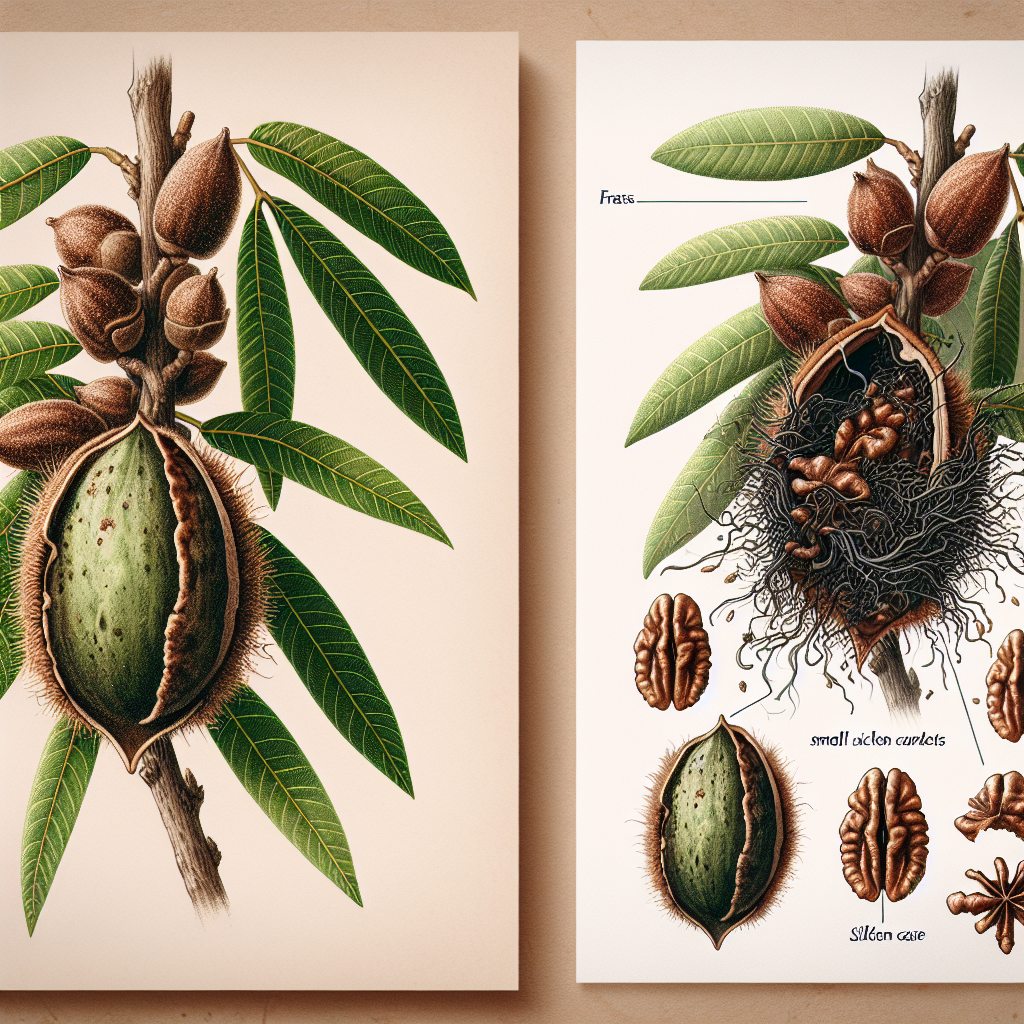
Spotting pecan nut casebearer damage early can prevent widespread loss. Initial signs appear on nutlets 10-15 days after pollination, when larvae enter through the style-end scar. Look for small, silken cases (1/4 inch long) protruding from nuts, often packed with frass resembling sawdust. Infested nuts turn black, shrivel, and drop prematurely, with bore holes visible upon inspection.
Examine clusters: healthy nuts are plump and green, while infested ones show webbing and discoloration. Heavy infestations lead to 'shot-hole' patterns from larval exit. Differentiate from pecan scab by the absence of fungal lesions—casebearer damage is mechanical and frass-laden. Scout trees weekly from May to August, shaking branches over white paper to detect cases or larvae.
Damage thresholds vary: 1-2% infested nuts warrant action in young orchards, rising to 5% in mature ones. Larvae (pinkish-white, up to 1/2 inch) overwinter in cases on branches, resuming feeding in spring. Kernel destruction reduces marketable yield, with secondary issues like sooty mold from frass attracting ants. Use a 10x hand lens for confirmation.
Lifecycle and Progression of pecan nut casebearer
The pecan nut casebearer completes two to four generations annually, synchronized with pecan nut development. Adults are small (1/3 inch wingspan), grayish moths emerging from overwintering cases in late April to early May. Females lay 50-100 eggs singly on young nuts or leaves.
Eggs hatch in 7-10 days into tiny larvae that web together nutlets or leaves, forming a case. First-generation larvae feed externally before boring in, dropping to form summer cases on bark. Second and third generations target mid-season nuts, with peak activity in July-August. Pupation occurs within cases, lasting 10-14 days.
Overwintering prepupal larvae spin cases on twigs (1/8-1/4 inch), dormant until spring. Full cycle: 45-60 days per generation at 80°F. Monitor with pheromone traps: 5-10 moths per trap signals imminent egglaying. Check out this Spring Pest Patrol: Organic AI Strategies to Shield Your Crops from Common Invaders for timely scouting tips.
Environmental Triggers & Risk Factors
Warm, humid springs (70-85°F) accelerate casebearer emergence, with rainfall aiding larval survival. Drought-stressed trees are vulnerable, as weakened nuts attract oviposition. Proximity to wild hickory or unmanaged pecans serves as reservoirs—infestations spread 1-2 miles yearly.
High nitrogen fertilization promotes lush growth, mimicking preferred host tissue. Poor pruning leaves shaded clusters ideal for case formation. Late pollination varieties like Stuart Pecan face higher risk from overlapping generations. Monitor weather: >1 inch rain post-hatch boosts survival by 30%.
Soil type matters—sandy loams in river valleys (e.g., Georgia, Texas) report highest incidences. Companion pests like yellow pecan aphids exacerbate damage via honeydew aiding mold. Climate change extends generations northward, threatening traditional ranges.
Organic Control & Treatment Plans
Organic management emphasizes IPM: monitoring, biologicals, and targeted sprays. Install pheromone traps April-June (1-2 per 10 acres) to time applications. Scout 25 trees/10 acres, treating at 1% case infestation.
Biological Controls: Encourage Trichogramma wasps (release 100,000/acre weekly). Bacillus thuringiensis (Bt) kurstaki targets larvae—apply evenings at petal fall, 7-10 day intervals (0.5-1 lb/acre). Spinosad (organic-approved) at 4-6 oz/acre for 80-90% control; rotate to prevent resistance.
Cultural Practices: Prune overwintering cases pre-budbreak (March). Destroy dropped nuts weekly. Kaolin clay (Surround) barriers reduce oviposition by 50%. Neem oil disrupts feeding (1-2% solution). Avoid broad-spectrum sprays preserving predators like lacewings.
Treatment Timeline:
- Generation 1: Bt at 10% egg hatch.
- Generation 2: Spinosad at 5% cases.
- Post-harvest: Sanitation. Expect 70-85% reduction with compliance. For severe cases, consult extension services.
Preventing pecan nut casebearer in the Future
Long-term prevention builds resilient orchards. Plant resistant varieties like Desirable Pecan, with thicker shells. Maintain 40-50 ft spacing for airflow, reducing humidity. Irrigate deeply but infrequently to avoid stress.
Annual pre-spring cleanup: Flail mow dropped nuts, prune 20% canopy for light penetration. Use reflective mulches around trunks deterring moths. Introduce cover crops like crimson clover suppressing weeds hosting pests. Monitor with degree-day models (base 55°F, 300-400 DD for emergence).
Rotate insecticides, favoring organics. Scout neighbors—coordinate area-wide suppression. Grafted rootstocks improve vigor against secondary stressors. Track via apps for hyper-local alerts. Consistent IPM yields 20-30% higher over 5 years.
Crops Most Affected by pecan nut casebearer
Pecan nut casebearer primarily targets Pecan orchards, infesting 80-100% of susceptible cultivars like Western Schley and Pawnee. Wild hickory (Carya ovata) serves as alternate host, though rarely commercial. No significant impact on Walnut, Almond, or Cashew—host specificity limits spread.
In mixed groves, proximity to water oaks increases spillover. Young trees (<5 years) suffer 2x damage vs. mature. Hickory hybrids in breeding programs face occasional attacks. Focus protection on commercial pecans; other nuts safe.