Introduction to Erwinia amylovora
Erwinia amylovora is the causal agent of fire blight, one of the most economically damaging bacterial diseases of pome fruit crops worldwide. First identified in the 18th century in North America, the pathogen has since spread to Europe, the Middle East, and parts of Asia and Oceania. It infects members of the Rosaceae family, with Apple and Pear being the primary hosts, though quince, hawthorn, and certain ornamental species are also susceptible. The bacterium enters plants through natural openings such as blossoms and wounds, then multiplies rapidly in vascular tissue, causing systemic wilting and tissue necrosis.
Fire blight epidemics can destroy entire orchards within a single growing season when weather conditions favor infection. Losses occur through blossom blight, shoot blight, and the formation of perennial cankers that serve as overwintering sites. Because the pathogen is highly contagious via insects, rain splash, and pruning tools, integrated management combining cultural, biological, and targeted chemical strategies is required. Early detection and strict sanitation remain the cornerstones of successful control programs.
Identifying Symptoms & Damage
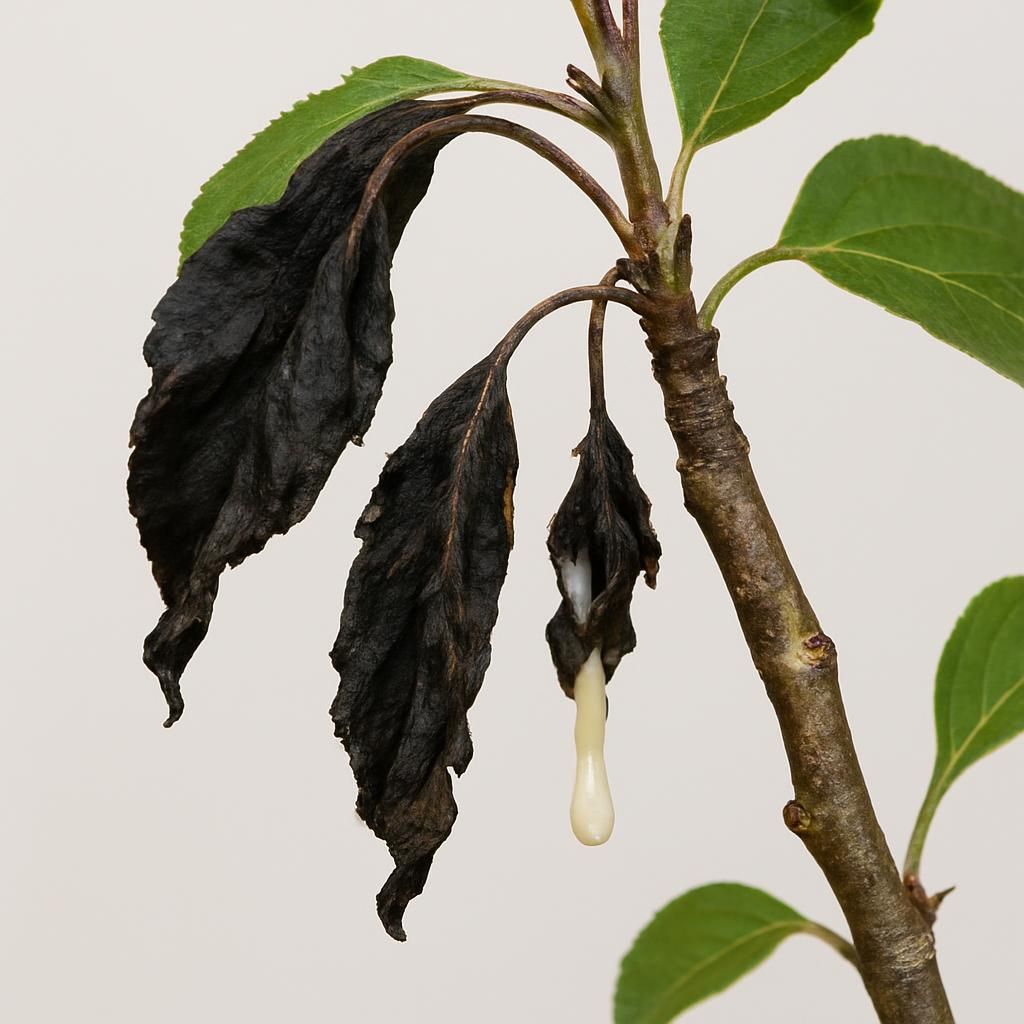
The earliest visible sign of infection is water-soaked, wilting blossoms that quickly turn brown or black and remain attached to the spur. Infected shoots exhibit shepherd’s crook wilting, with leaves turning brown while remaining firmly attached. Dark, sunken cankers develop on branches and trunks, often exuding creamy-white bacterial ooze under humid conditions. Cutting into active cankers reveals reddish-brown streaking in the cambium and xylem.
On fruit, small water-soaked lesions enlarge into sunken, discolored areas that may also ooze. Severe infections girdle limbs, causing dieback and tree death. Secondary symptoms include blackened fruit spurs and the characteristic “holdover” cankers that persist through winter. Accurate diagnosis requires observing the combination of blossom and shoot symptoms plus bacterial streaming tests under a microscope.
Lifecycle and Progression of Erwinia amylovora
Erwinia amylovora overwinters in the margins of cankers on trunks and scaffold limbs. In spring, rising temperatures and moisture trigger bacterial multiplication and ooze production. Insects such as bees and flies, as well as rain, disseminate the pathogen to open blossoms where it colonizes the stigma and nectaries.
Once inside the flower, the bacterium moves through the pedicel into the spur and then into shoots via the vascular system. Systemic movement can reach the roots in young trees. In late summer and autumn, surviving bacteria retreat into canker margins where they remain dormant until the next season.
| Lifecycle Stage | Timing | Key Events | Environmental Conditions |
|---|---|---|---|
| Overwintering | Late fall to early spring | Bacteria survive in canker margins | Temperatures below 5 °C; dormant host tissue |
| Canker Activation | Early spring (bud break) | Multiplication and ooze production begin | Daily mean >12 °C with wetting events |
| Blossom Infection | Bloom period | Bacteria colonize stigmas; entry via nectaries | 18–30 °C with high humidity or rain |
| Shoot Blight | Petal fall through summer | Systemic spread through vascular tissue | Warm days (>24 °C) and frequent rain |
| Fruit Infection | Mid to late summer | Entry through wounds or natural openings | Prolonged leaf wetness and insect activity |
| Canker Formation | Late summer to fall | Bacteria retreat into woody tissue | Cooling temperatures and shortening days |
Environmental Triggers & Risk Factors
Fire blight severity is strongly correlated with temperature and moisture. Optimal infection occurs when daytime highs reach 24–30 °C accompanied by rain or heavy dew. Prolonged wetting periods greater than 9 hours increase blossom infection risk. High relative humidity and moderate wind further facilitate bacterial spread.
Susceptibility is heightened in young, vigorous trees with excessive nitrogen fertilization. Dense canopies that retain moisture and orchards located near hawthorn or wild pome hosts also face elevated risk. Pruning wounds made during active growth provide direct entry points. Soil pH between 6.0 and 7.5 and adequate but not excessive irrigation reduce stress-related susceptibility.
Organic Control & Treatment Plans
Organic management emphasizes prevention, sanitation, and biological suppression. Remove and destroy all infected tissue at least 30 cm below visible symptoms during dry weather. Disinfect pruning tools between cuts with 10 % bleach or 70 % ethanol. Apply copper-based bactericides at 10–14 day intervals from green tip through petal fall when disease risk models indicate moderate to high pressure.
Biological agents such as Bacillus subtilis and Pantoea agglomerans can be integrated during bloom to compete with the pathogen on floral surfaces. Kaolin clay particle films reduce insect vectoring and create a physical barrier. Avoid late-season nitrogen applications that promote succulent growth. Monitor weather-based risk models and remove nearby alternate hosts.
| Treatment Option | Active Ingredient / Method | Application Frequency | Growth Stage | Notes | | --- | --- | --- | --- | --- | --- | | Copper hydroxide | 2–3 kg/ha metallic copper | Every 7–14 days | Green tip to petal fall | Use during high-risk bloom periods; follow local regulations | | Bacillus subtilis | 1–2 kg/ha formulated product | Every 7–10 days | Full bloom to petal fall | Apply in early morning or evening; rotate with copper | | Pantoea agglomerans | 1–2 L/ha commercial formulation | Every 7–10 days | Bloom | Competitive exclusion; compatible with most fungicides | | Kaolin clay | 25–50 kg/ha | Every 7–14 days | Petal fall through summer | Reduces feeding by vectors; reapply after heavy rain | | Sanitation pruning | Remove 30 cm below symptoms | As needed | Dormant and growing season | Sterilize tools between cuts; burn or bury debris | | Resistant rootstocks | Geneva series or Quince A | At planting | Establishment | Improves long-term tolerance; combine with scion resistance |
Preventing Erwinia amylovora in the Future
Long-term prevention begins with planting resistant cultivars and rootstocks such as Gala Apple on Geneva 935 or fire-blight-tolerant pear selections. Maintain balanced nutrition to avoid excessive vigor; use split nitrogen applications timed to crop demand. Space trees to promote rapid drying and prune to an open vase or central-leader system that improves airflow.
Remove or severely prune nearby hawthorn and wild pome species that serve as reservoirs. Implement a strict sanitation protocol: sterilize tools after every cut during the growing season and destroy prunings immediately. Use drip irrigation rather than overhead sprinklers to minimize leaf wetness. Monitor regional fire-blight alerts and apply protective sprays only when risk models indicate action thresholds are exceeded.
Crops Most Affected by Erwinia amylovora
The pathogen primarily attacks members of the Rosaceae subfamily Pomoideae. Commercial Apple and Pear orchards suffer the greatest economic losses, but quince, loquat, and certain crabapple cultivars are also highly susceptible. Ornamental plantings of hawthorn, cotoneaster, and pyracantha frequently harbor the disease and act as inoculum sources for nearby fruit trees. Young trees and newly grafted scions are especially vulnerable due to rapid growth and numerous wounds. In mixed orchards, early removal of infected ornamental hosts is critical to protecting high-value pome fruit blocks.