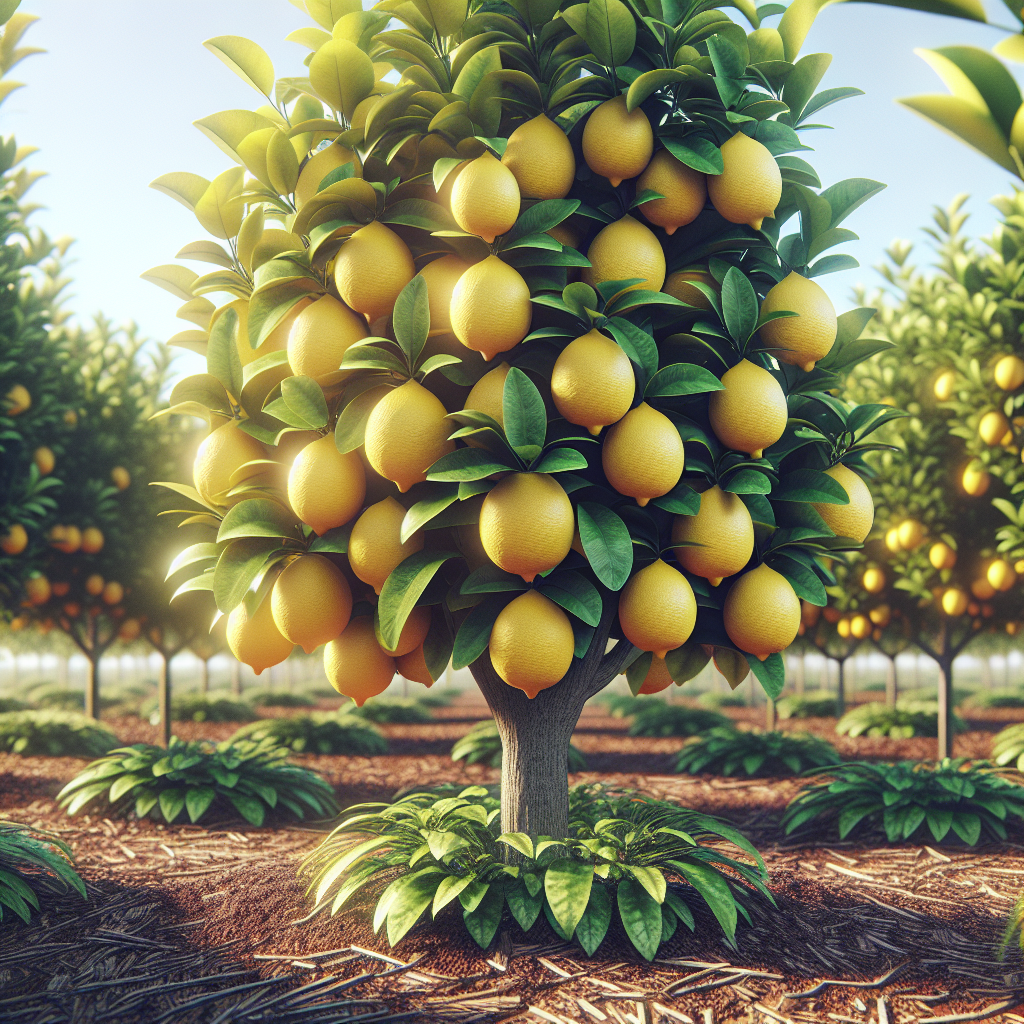
Introduction to Lisbon Lemon
A classic commercial lemon with a long production history, this cultivar is widely regarded as one of the benchmark “true lemons” alongside Eureka. It is believed to have Portuguese roots and was later selected and widely planted in Australia and California, where it became known for productivity, upright vigor, thorniness, and fruit quality suited to both fresh use and processing. Compared with sweeter, less acidic lemons such as Meyer, Lisbon produces intensely tart juice, a relatively thick peel, and a more traditional lemon profile favored by chefs, juice processors, and growers seeking a dependable market lemon.
Its growth habit is more upright and somewhat denser than many backyard gardeners expect. Trees are often vigorous, with strong scaffold development and more interior thorniness, especially on juvenile growth. The canopy also tends to protect fruit better from sunburn than more open lemon types, which is one reason this cultivar performs well in bright, hot districts if irrigation is managed correctly. For growers comparing lemon types, see our Lemon guide.
Commercially, Lisbon is valued for heavy bearing, strong summer and fall production in many climates, and relatively good tolerance of wind and cool conditions once established. Home orchardists appreciate that the fruit stores reasonably well on the tree, allowing staggered harvests. However, that same vigor means neglected trees can become tall, dense, and difficult to pick, so training and pruning are not optional if high-quality fruit and disease prevention are priorities.
Botanical Profile of Lisbon Lemon
This cultivar belongs to Citrus × limon, a hybrid species within the Rutaceae family. Like other lemons, it is an evergreen subtropical fruit tree with glossy, aromatic leaves, fragrant white blossoms often flushed purple in bud, and hesperidium-type fruit rich in citric acid and essential oils. Lisbon is generally classified as a true lemon rather than a sweet or hybrid lemon type.
Key varietal traits include:
- Strong upright growth with a medium to large mature canopy if unpruned.
- Pronounced thorns, especially on vigorous shoots and younger trees.
- Dense foliage that helps shade fruit.
- High-acid juice with classic lemon aroma.
- Medium to large fruit, usually oval to elliptical, often with a noticeable nipple at the blossom end.
- Yellow peel with moderate thickness and good oil content.
On standard rootstocks, mature trees can exceed 4.5-6 m in height if unmanaged, though many orchard and home plantings maintain them at 2.5-4 m through pruning. Rootstock choice heavily influences size, disease tolerance, salinity response, and bearing behavior. Common lemon rootstocks in different regions include rough lemon, trifoliate orange hybrids, citranges, and Volkameriana. In colder or heavier-soil districts, rootstock selection can matter as much as cultivar choice.
Lisbon flowers in flushes, often strongest in spring, but in frost-free areas flowering may recur through the year. Fruit set depends on carbohydrate reserves, temperature during bloom, pollinator activity, and water balance. Although lemons are self-fertile and do not require a pollinizer, bee activity can improve fruit set in some conditions. Excessive nitrogen during bloom can push vegetative growth at the expense of stable fruit retention.
Juvenile trees devote significant energy to framework development. Early flowers on newly planted trees are often best removed for the first 1-2 years so roots and scaffolds establish fully. Once cropping begins, unmanaged alternate bearing is less severe than in some citrus, but trees can still cycle if overcropped one year and nutritionally stressed the next.
Soil, pH, and Climate Requirements for Lisbon Lemon
This cultivar performs best in deep, well-drained sandy loam to loam soils with moderate organic matter and excellent aeration around the root zone. Citrus roots are relatively oxygen-demanding and perform poorly in compacted or waterlogged ground. The top 30-60 cm of soil should drain freely after heavy rain or irrigation; standing water for more than 24-48 hours around the root zone significantly raises the risk of root decline and Phytophthora infection.
Ideal soil pH is generally 6.0-7.0, with acceptable performance from about 5.5-7.5. Below pH 5.5, aluminum and manganese issues may intensify and nutrient balance can become erratic. Above pH 7.5, iron, zinc, and manganese deficiencies become common, often showing first as interveinal chlorosis on new growth. In calcareous soils, routine micronutrient management is usually necessary.
Professional soil targets for productive trees include:
- Good internal drainage and no hardpan in the upper root zone.
- Organic matter around 2-5% in mineral soils.
- Electrical conductivity low enough to avoid salt stress; lemons are not especially salt tolerant.
- Consistent moisture without saturation.
Climate preference is warm temperate, Mediterranean, subtropical, and frost-light citrus country. Lisbon is somewhat more cold tolerant than Eureka, but it is still a frost-sensitive evergreen. Mature, hardened trees may survive brief light freezes better than tender young trees, yet flowers, soft flushes, and small fruit can be damaged at temperatures around -1 to -2°C. Wood injury becomes more likely as temperatures drop further or remain below freezing for longer durations.
Optimal temperatures for active growth and fruit development typically fall between 20-30°C. High heat above 38°C can reduce fruit set, increase moisture stress, and cause leaf curl or fruit sunburn if the canopy is too open. Coastal conditions with mild winters and warm dry summers are excellent, but inland regions can also succeed if frost pockets are avoided and irrigation is dependable.
Choose a site with:
- At least 8 hours of direct sun daily.
- Protection from persistent cold winds.
- Slight slope or raised ground rather than a frost hollow.
- Good air movement without severe desiccating wind exposure.
If planting in marginal climates, use a north-facing wall in the northern hemisphere or equivalent heat-trapping position, and avoid low-lying depressions where cold air pools.
Step-by-Step Planting & Propagation
Most growers establish this cultivar using grafted nursery trees rather than seed. Seedling propagation is unsuitable for true-to-type production and delays fruiting considerably. Grafted trees combine the fruiting characteristics of Lisbon with rootstock advantages such as soil adaptation, disease resistance, or size control.
Step 1: Select the planting material. Choose a certified disease-free tree with a straight trunk, visible graft union, healthy green leaves, and no circling roots. Avoid plants with cankers, gumming, yellow mottling, scale buildup, or root-bound media that smells sour.
Step 2: Time planting correctly. In mild climates, early spring is ideal because soil is warming and frost danger is declining. In very hot areas, planting in early spring or early autumn can reduce transplant shock, provided young trees are protected from cold.
Step 3: Prepare the site. Dig a hole only as deep as the root ball and 2-3 times as wide. Do not create a deep “bathtub” in poorly drained clay. If drainage is questionable, plant on a mound 20-40 cm high and 1-1.5 m wide. Keep the graft union well above finished soil level, usually 10-15 cm or more.
Step 4: Inspect roots. Gently loosen circling roots around container-grown plants. If roots are tightly spiraled, make a few shallow vertical cuts to encourage outward growth. Remove any roots growing upward.
Step 5: Plant at the correct height. Set the tree so the original nursery soil line is level with or slightly above the surrounding soil. Planting too deep is a common cause of failure. Backfill with native soil rather than rich amended compost that creates a texture interface.
Step 6: Water in thoroughly. Saturate the backfilled area to settle soil around roots. Initial irrigation should moisten the full root ball and adjacent soil to a depth of 30-45 cm.
Step 7: Mulch properly. Apply 5-8 cm of coarse organic mulch over the root zone, but keep it 10-15 cm away from the trunk to prevent collar rot. Wood chips, leaf mold, and composted bark are suitable.
Step 8: Stake only if necessary. In windy sites, use a low, flexible tie system and remove support as soon as the trunk is stable. Over-staking weakens trunk development.
Spacing depends on rootstock and pruning intensity. A common backyard spacing is 4-5 m between trees. In more vigorous plantings, 5-6 m may be needed. High-density systems are possible with disciplined canopy control, but overcrowding reduces light penetration and fruit quality over time.
Propagation by budding or grafting is standard. T-budding onto compatible rootstocks during active bark slip is the professional method. For growers interested in broader soil preparation principles before planting perennial crops, this overview on soil health is useful.
Care & Maintenance regimes for Lisbon Lemon
Irrigation should be deep and rhythmic rather than shallow and frequent. The goal is moist, aerated soil in the main root zone, not constantly wet surface soil. In established orchard soils, irrigate when the upper 5-8 cm begins to dry but before the root zone becomes powder-dry. In practical terms, soil at 15-20 cm depth should feel cool and slightly moist, not muddy and not bone dry. Young trees often need watering 1-3 times per week in warm weather, depending on soil texture. Mature trees on well-drained soils may need deep irrigation every 7-14 days in summer, less in cool seasons.
Signs of underwatering include dull or curled leaves, leaf drop from the interior, small fruit, premature fruit drop, and dry soil pulling away from the root ball. Signs of overwatering include yellowing leaves that remain soft, reduced vigor despite wet soil, sour-smelling ground, fungus gnat activity in containers, and eventual root rot symptoms such as branch dieback. Citrus roots require oxygen; chronic saturation is often deadlier than short dry intervals.
Fertilization should be split across the active growing season. Lisbon is a vigorous feeder, particularly for nitrogen, potassium, magnesium, iron, zinc, and manganese. For young trees, apply smaller doses more frequently. For mature bearing trees, divide annual feeding into 3-5 applications from early spring through midsummer. Avoid pushing heavy nitrogen late in the season in frost-prone areas, as this encourages tender flush vulnerable to cold.
A practical program might include:
- Nitrogen-dominant citrus fertilizer in spring as growth resumes.
- Follow-up feeds after bloom and during early fruit sizing.
- Potassium support in fruit development phases.
- Foliar micronutrients where chlorosis is common.
- Magnesium via soil or foliar application if older leaves show yellowing between green veins.
Leaf analysis is the professional standard for precise nutrition. Excess nitrogen causes lush dark growth, more thorny water shoots, softer tissue, and sometimes poorer fruit peel quality. Insufficient nitrogen causes pale foliage and weak growth. Iron deficiency appears first on young leaves as yellow tissue with greener veins, especially in alkaline soils.
Pruning is best kept functional rather than excessive. Remove dead wood, crossing branches, weak interior shoots, rootstock suckers below the graft, and very vigorous vertical watersprouts that crowd the center. Maintain a canopy height that allows harvest and spray coverage. Because Lisbon can become dense, periodic thinning cuts improve light penetration and reduce humid disease pockets. Avoid heavy pruning right before intense heat, as suddenly exposed limbs and fruit can sunburn.
For structure, establish 3-5 well-spaced scaffold limbs in the first years. Keep lower branches initially to build trunk caliper and shade bark, then raise the canopy gradually if needed for access. Paint exposed trunk or major limbs with diluted interior white latex paint if sudden sun exposure occurs after pruning.
Container culture is possible but demanding. Use a very free-draining citrus mix, a large pot with strong drainage, and more frequent feeding. Container Lisbon trees dry rapidly in summer yet are easily overwatered in winter. Repot before the root mass becomes densely circling, and prune both canopy and roots conservatively.
Pests, Diseases & Organic Management
Like many lemons, this cultivar attracts a broad spectrum of citrus pests. Integrated management starts with observation, sanitation, airflow, balanced nutrition, and irrigation discipline. Soft, nitrogen-rich flushes are especially attractive to sap-feeding insects.
Common pests include aphids, scale insects, mealybugs, citrus leafminer, whiteflies, mites, thrips, and ants that protect honeydew-producing pests. aphids cluster on new shoots and distort growth. Scale and mealybugs colonize stems and leaf undersides, producing honeydew that supports sooty mold. Leafminer larvae tunnel through young leaves, creating serpentine tracks and twisted flushes; damage is mainly significant on young trees. mites become more severe in dusty, hot conditions and can bronze leaves or scar fruit.
Organic strategies include:
- Pruning out heavily infested tips when populations are localized.
- Washing foliage with a strong water jet early in the day.
- Applying horticultural oil during mild temperatures, coating scale and mite hotspots thoroughly.
- Using insecticidal soap on aphids and soft-bodied pests, with attention to leaf undersides.
- Managing ants with barriers or baits so beneficial predators can suppress scale and mealybugs.
- Avoiding broad-spectrum insecticides that kill parasitoids and lady beetles.
Disease pressure increases with poor drainage, overhead irrigation, mechanical injury, and dense canopies. Major concerns include Phytophthora root rot and collar rot, citrus canker in affected regions, greasy spot in humid climates, sooty mold secondary to insect honeydew, and occasionally anthracnose on stressed tissues. Root rot often begins subtly: reduced vigor, pale leaves, sparse flush, smaller fruit, and bark issues near the crown. Prevention is far easier than cure.
To reduce disease organically:
- Keep mulch away from the trunk.
- Never let irrigation water pool at the crown.
- Remove fallen diseased fruit and dead twigs.
- Improve light and air movement through selective pruning.
- Use copper-based products only where legally permitted and truly justified, especially for bacterial or fungal pressure.
- Sanitize pruning tools between suspect trees.
Nutrient deficiencies are frequently mistaken for disease. Zinc deficiency can cause small narrow leaves and rosetting. Manganese deficiency resembles iron chlorosis but often appears on slightly older growth. Salinity injury may show as leaf tip burn and marginal necrosis. Accurate diagnosis matters before treatment.
Wildlife may also be an issue. Rodents can gnaw bark on young trunks; use guards if necessary. Birds sometimes damage ripe fruit, and in dry climates they may peck for moisture.
Harvesting, Curing & Optimal Storage
Fruit is harvested when fully colored, well sized, and sufficiently juicy, though lemons can remain on the tree for an extended period once mature. Unlike some fruits, they do not become dramatically sweeter after harvest. Maturity is judged by size, peel color, juice content, and characteristic shape rather than softness. Lisbon generally develops a bright yellow exterior when mature, though cool nights improve color development.
Use clean clippers rather than pulling fruit, especially for fresh-market handling. Clip with a short stem to avoid tearing the rind or puncturing neighboring fruit. Harvest during dry weather when possible. Wet fruit is more prone to postharvest blemishes and handling issues.
Commercial-style handling priorities are:
- Avoid dropping or compressing fruit.
- Keep picked fruit shaded in the field.
- Sort out damaged, cracked, sunburned, pest-scarred, or diseased fruit.
- Wash only if necessary, and dry thoroughly afterward.
Lemons do not require curing in the same sense as onions or sweet potatoes, but a short period of dry, shaded holding after harvest can allow surface moisture to evaporate and field heat to decline. The key postharvest objective is to minimize dehydration and rind injury.
For home storage, keep fruit at cool room temperature for short-term use or refrigerate for longer holding. Ideal storage is around 10-13°C with high relative humidity, roughly 85-90%, to reduce shriveling while avoiding chilling injury associated with excessively low temperatures over long periods. In a household refrigerator, fruit commonly keeps 2-4 weeks or longer if sealed loosely to reduce moisture loss. At room temperature, expect about 1-2 weeks depending on ambient warmth and dryness.
Fruit left on the tree too long may enlarge and lose some acidity intensity, and the rind can thicken. Regular harvest also helps maintain continued flowering and manageable crop load.
Companion Planting for Lisbon Lemon
Good companions support pollinators, improve ground cover, reduce weed pressure, or repel certain pests without competing aggressively with the tree’s shallow feeder roots. The best companions are low-growing, easy to manage, and kept outside the immediate trunk zone.
Thai Basil is useful near but not crowded into the drip line because its flowers attract pollinators and beneficial insects while its aromatic foliage may help confuse some pest activity. Clover works well as a living understory in some orchards, especially where mowing is practical, because it moderates soil temperature, reduces erosion, and can contribute biologically fixed nitrogen when managed carefully. Garlic is often used in small-scale citrus plantings for its strong scent and compatibility in sunny orchard edges, and Onion can fill a similar role in diversified edible landscapes.
Companion plants should never be allowed to form a dense, damp mat against the trunk. Keep a clear trunk zone at least 30-60 cm wide around young trees. In dry climates, companions must not outcompete newly planted lemons for water. In humid climates, avoid overly lush understories that increase splash dispersal and hold moisture around the lower canopy.
Useful companion planting principles for mixed gardens include choosing shallow-rooted herbs and alliums, maintaining mulch breaks around the trunk, and cutting back flowering understory plants before they become woody or rank. Avoid heavy feeders directly over the main feeder-root zone, and do not pair with sprawling vines that shade the lower canopy or complicate irrigation.
Poor companions include aggressive grasses, mint planted without containment, and large thirsty vegetables that require frequent shallow irrigation. Citrus performs better when the root zone experiences deep watering cycles rather than constant light watering meant for annual salad crops.