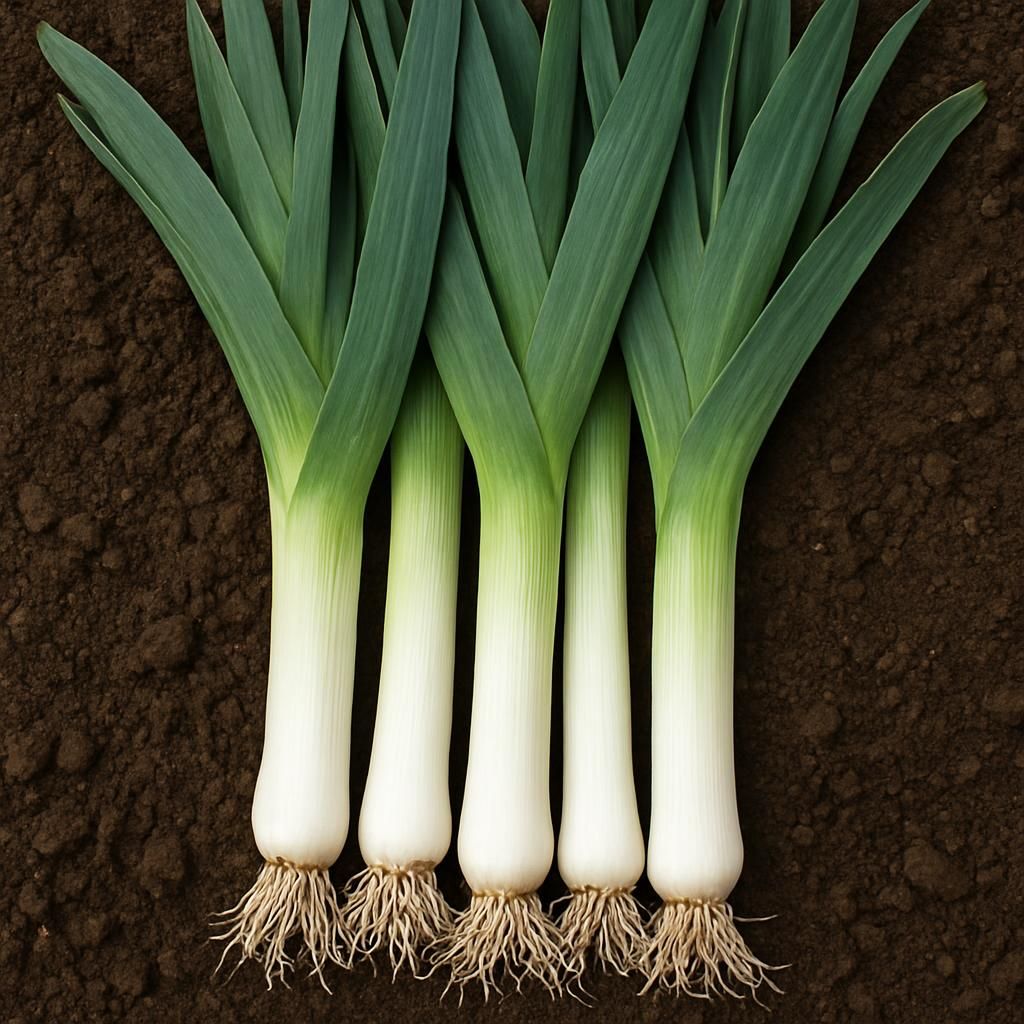
Introduction to leeks
Leeks (Allium ampeloprasum) are a staple cool-season vegetable that belongs to the Allium family alongside Onion and Garlic. Valued for their sweet, mild flavor and versatile culinary uses, leeks have been cultivated for thousands of years across Europe and the Mediterranean. Their long, white shanks result from deliberate blanching practices that exclude light from the lower stem, producing tender, elongated sections prized by chefs and home cooks alike.
Modern growers appreciate leeks for their cold hardiness, extended harvest window, and relatively low maintenance once established. Unlike bulb onions, leeks do not form distinct bulbs; instead, they produce thick pseudostems that can reach 30–40 cm in length with proper soil management. Their nutritional profile includes significant amounts of vitamins A, C, and K, along with dietary fiber and antioxidants, making them a valuable addition to sustainable diets.
Commercial production focuses on varieties bred for uniformity and disease resistance, while home gardeners often select heirloom types for flavor diversity. Leeks store exceptionally well in cool conditions, extending market availability well beyond the growing season. Successful cultivation hinges on understanding their specific soil, climate, and spacing needs, which differ from faster-maturing alliums.
Botanical Profile of leeks
Leeks are biennial plants typically grown as annuals for their edible stems. They develop a fibrous root system and long, flat, strap-like leaves that emerge from a central growing point. The edible portion consists of concentric leaf sheaths that form the shank; the length and diameter of this shank depend on variety, soil fertility, and blanching technique.
Botanically, leeks belong to the Amaryllidaceae family. They produce small, star-shaped flowers on tall scapes in their second year if allowed to bolt. Most commercial varieties are selected for slow bolting and uniform shank development. The plant’s growth habit favors cool temperatures, with optimal vegetative development occurring between 13 °C and 24 °C.
Leek varieties are broadly classified by season: early, mid, and late types. Early varieties mature in 90–120 days and suit short-season regions, while late types may require 180 days or more and offer superior cold tolerance. Stem diameter at maturity typically ranges from 2.5 cm to 5 cm depending on spacing and fertility.
Soil, pH, and Climate Requirements for leeks (MUST INCLUDE A MARKDOWN TABLE OF IDEAL CONDITIONS)
Leeks thrive in deep, fertile, well-drained soils with high organic matter content. Heavy clay soils should be amended with compost or well-rotted manure to improve structure and drainage. Raised beds are recommended in areas with poor drainage to prevent waterlogging, which can lead to root diseases.
Soil pH should be maintained between 6.0 and 7.0 for optimal nutrient uptake. Leeks are moderate feeders and respond well to nitrogen applications throughout the growing season. Consistent moisture is essential; irregular watering can result in tough, fibrous stems or splitting.
Leeks prefer cool climates and can tolerate light frosts. They perform poorly in extreme heat, which accelerates bolting and reduces shank quality. In warmer regions, planting dates should be timed for fall or winter harvest.
| Parameter | Ideal Range/Value | Notes |
|---|---|---|
| Soil Type | Loamy, well-drained, high OM | Amend heavy soils with compost |
| Soil pH | 6.0–7.0 | Test and adjust before planting |
| Temperature Range | 13–24 °C (day) | Cool-season crop; tolerates light frost |
| Spacing (in-row) | 10–15 cm | Wider spacing yields thicker shanks |
| Spacing (between rows) | 30–45 cm | Allows hilling for blanching |
| Planting Depth | 10–15 cm (transplants) | Deeper planting aids natural blanching |
| Organic Matter | 3–5 % | Improves water retention and fertility |
| Moisture | Consistent; 2.5 cm/week | Avoid water stress during shank formation |
Step-by-Step Planting & Propagation
Leeks are most reliably started from seed indoors 8–10 weeks before the last expected spring frost. Sow seeds 6–8 mm deep in well-draining seed-starting mix. Maintain soil temperature at 18–21 °C for rapid germination, which typically occurs within 7–14 days.
Once seedlings reach 15–20 cm in height and pencil thickness, harden them off for 7–10 days before transplanting. Trim leaf tips by one-third to reduce transpiration stress. Transplant into trenches or individual holes 10–15 cm deep, spacing plants 10–15 cm apart within rows 30–45 cm apart.
Direct seeding is possible in mild climates but requires precise moisture control and thinning to final spacing. For continuous harvest, succession plant every 3–4 weeks until midsummer in cooler regions. In warmer climates, start seeds in late summer for winter harvest.
Care & Maintenance regimes for leeks (MUST INCLUDE A MARKDOWN TABLE OF WATER, FERTILIZER, AND PRUNING SCHEDULES)
Leeks require consistent moisture and regular fertility to develop long, tender shanks. Mulching with straw or shredded leaves conserves soil moisture, suppresses weeds, and gradually adds organic matter. Hill soil around stems every 2–3 weeks after plants reach 20 cm to promote blanching and lengthen the white portion.
Weed control is critical during the first 4–6 weeks after transplanting. Hand weeding or shallow cultivation prevents root damage. Avoid high-nitrogen fertilizers late in the season, as excess nitrogen can promote soft growth susceptible to disease.
Leeks generally need little pruning beyond removing yellow or damaged outer leaves. In windy areas, staking may be necessary for tall varieties to prevent lodging.
| Growth Stage | Watering Schedule | Fertilizer Application | Pruning/Other Tasks |
|---|---|---|---|
| Transplanting | Water thoroughly; keep moist 2 weeks | Side-dress with 5-10-10 or fish emulsion | Remove damaged leaves; hill soil lightly |
| Vegetative (4–8 wks) | 2.5 cm/week; mulch to retain moisture | Apply nitrogen every 3 weeks (blood meal) | Hill soil 5–7 cm; remove weeds |
| Shank Development | Maintain even moisture; avoid stress | Reduce nitrogen; add potassium if needed | Hill again; remove yellow leaves |
| Pre-Harvest | Reduce slightly 1 week before harvest | No additional fertilizer | Final hilling for maximum blanching |
Pests, Diseases & Organic Management
Common pests of leeks include Aphids, Thrips, and Cutworms. Aphids cluster on young leaves and can be managed with insecticidal soap or neem oil. Thrips cause silvery streaks on foliage; row covers and reflective mulch help reduce populations. Cutworms sever young transplants at soil level; collars made from cardboard or plastic provide effective barriers.
Diseases such as Rust, Botrytis, and Fusarium can affect leeks, especially in humid conditions. Rust appears as orange pustules on leaves; remove infected foliage and improve air circulation. Botrytis causes gray mold on stored leeks; harvest during dry weather and cure properly. Fusarium wilt leads to yellowing and wilting; rotate crops and use resistant varieties where available.
Organic management emphasizes prevention: crop rotation, resistant cultivars, and beneficial insect habitat. Companion planting with Carrot or Parsley can deter pests, while avoiding planting near Beans reduces shared disease pressure.
Harvesting, Curing & Optimal Storage
Leeks are ready for harvest when shanks reach desired diameter, typically 2.5–5 cm. Loosen soil with a fork and lift plants carefully to avoid bruising. For maximum tenderness, harvest before flowering.
After harvest, trim roots and outer damaged leaves. Leeks can be left in the ground through light frosts for extended harvest in many climates. In colder regions, mulch heavily or move plants to a root cellar.
Curing is minimal for leeks; simply allow surface moisture to dry. Store at 0–2 °C and 85–90 % relative humidity for up to 2–3 months. Bunch and stand upright in moist sand for longest storage life. Avoid storing near ethylene-producing fruits to prevent premature aging.
Companion Planting for leeks
Leeks pair well with Carrot, Lettuce, and Strawberry. Carrots benefit from leek’s pest-repelling properties, while leeks appreciate the shallow root systems of lettuce that do not compete for nutrients. Strawberries provide living mulch that conserves moisture.
Avoid planting leeks near Beans or Peas, as these legumes can increase soil nitrogen levels excessively and promote soft growth. Tomato and Pepper are also poor companions due to shared susceptibility to certain fungal diseases.
Strongly aromatic herbs such as Rosemary and Thyme can further deter insect pests when interplanted. Diverse planting layouts that include flowering companions support beneficial insects and improve overall garden resilience.