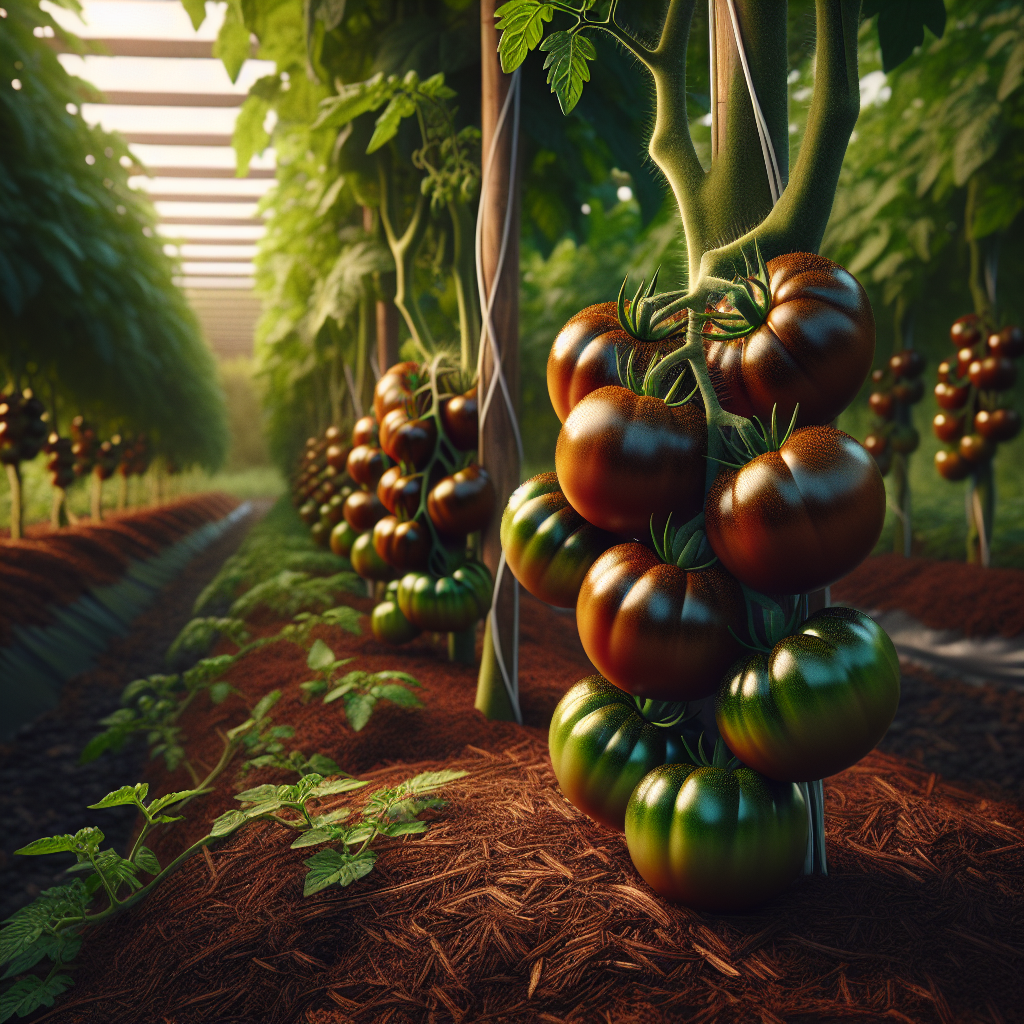
Introduction to Kumato Tomato
Originally developed and commercialized as a specialty brown tomato type, Kumato is best known for its distinctive olive-brown to deep reddish-brown skin, greenish shoulders when less ripe, and a rich, savory-sweet flavor that differs markedly from standard red slicers. It is marketed as a premium salad and fresh-eating tomato rather than a processing type, and much of its appeal lies in a complex taste profile: higher soluble solids than many standard supermarket tomatoes, comparatively low perceived acidity, and firm, juicy flesh that holds shape well in slicing.
From a grower’s perspective, this variety behaves much like other indeterminate fresh-market tomatoes, but fruit quality is more tightly linked to stable environmental conditions than many gardeners expect. Uneven moisture, excessive nitrogen, poor light, and erratic temperature swings can all reduce the very traits growers want most: sweetness, uniform dark coloration, and crack-resistant skin. In commercial settings it is often produced under protected culture, but skilled outdoor growers in warm temperate climates can also achieve excellent results.
If you already grow standard slicing types, think of this cultivar as one that demands slightly more precision but pays back with superior eating quality and visual uniqueness. For broader cultural basics, see our Tomato guide.
Botanical Profile of Kumato Tomato
This crop belongs to the nightshade family, Solanaceae, and is botanically the same species as other cultivated tomatoes: Solanum lycopersicum. Kumato is not a separate species; it is a named cultivar group or proprietary commercial type selected for color, flavor, and postharvest performance.
Key growth characteristics include:
- Growth habit: Generally indeterminate, meaning plants continue to elongate, flower, and fruit over a long season rather than setting one concentrated flush.
- Plant size: Typically 1.5-2.5 m tall in open ground and potentially taller under greenhouse culture if trained vertically.
- Leaf type: Regular-leaf tomato foliage, medium to dense canopy depending on vigor and fertility.
- Flowering: Yellow, self-fertile blossoms borne in clusters. Pollination is usually aided by vibration, wind, or insect movement.
- Fruit type: Medium-sized round to slightly flattened fruits, usually 80-150 g, though size varies by strain and crop load.
- Fruit color development: Immature fruits are green; ripening progresses to green-brown, bronze, mahogany, or dark red-brown. The exact shade is influenced by genetics, sunlight exposure, temperature, potassium status, and stage of harvest.
- Flavor profile: Dense flesh, moderate juice, elevated sweetness, and a notable umami character. Brix can be appreciably higher than many standard field tomatoes when irrigation is balanced and plants are not overfed with nitrogen.
A useful nuance for growers is that dark-fruited tomatoes often show less obvious red ripening cues. Instead of waiting for a bright scarlet color, monitor shoulder softening, background color shift from hard green to bronzed olive, and slight give at the blossom end. Overwaiting can result in mealy texture, especially during hot weather.
Because Kumato is prized for fruit quality rather than sheer bulk tonnage, crop management should focus on consistent fruit finishing rather than maximum vegetative growth. Plants that are too lush often produce larger but blander fruit, delayed ripening, and a more disease-prone canopy.
Soil, pH, and Climate Requirements for Kumato Tomato
Kumato performs best in fertile, deep, well-drained loam or sandy loam with high biological activity and strong structure. The ideal root zone is loose enough for rapid early root exploration yet moisture-retentive enough to prevent repeated wet-dry stress cycles. Avoid compacted soils, heavy clays without amendment, or shallow beds that saturate after rain.
The preferred soil pH is 6.2-6.8, with an optimum near 6.5. Below pH 6.0, calcium, magnesium, and phosphorus availability may become limiting, and Blossom-end rot risk rises if calcium uptake is impaired. Above pH 7.2, micronutrients such as iron, manganese, and zinc can become less available, often showing up as chlorosis in new growth.
For high-end fruit quality, target the following soil conditions:
- Organic matter: 3-6% is excellent.
- Drainage: Water should infiltrate readily, with no standing water remaining longer than 12-24 hours after heavy irrigation or rain.
- Electrical conductivity: Moderate fertility is preferred; overly saline soils can reduce vigor and distort water uptake.
- Calcium supply: Consistent calcium in the root zone is important, but remember Blossom-end rot is often a water-management problem as much as a nutrient problem.
Climate requirements are similar to premium indeterminate tomatoes:
- Optimal daytime temperature: 22-28°C
- Optimal nighttime temperature: 15-18°C
- Flower set begins to suffer: regularly above 32°C daytime or above 21-24°C nighttime
- Cold sensitivity: growth slows sharply below 13°C, and frost is lethal
Kumato tends to color and flavor best when it receives strong light and warm but not scorching conditions. Excessive heat can produce softer fruit, reduced set, pollen sterility, and pale or uneven ripening. In cool summers, fruit may remain greener for longer and flavor may be less concentrated.
Relative humidity around 60-70% is favorable in protected culture. Higher humidity increases fungal pressure and can impair pollination; very low humidity can stress flowers and increase water demand.
A mulch layer is highly recommended. Black plastic is useful in cool climates for soil warming and weed suppression, while organic mulch such as clean straw helps stabilize moisture and reduce splash-borne disease once soil has warmed. If you are improving bed structure and biological fertility before planting, practical soil-building principles are discussed in soil health strategies.
Step-by-Step Planting & Propagation
Propagation is almost always by seed, though commercial growers often start with professionally raised transplants to ensure uniformity.
1. Seed timing
Start seeds indoors 6-8 weeks before the last expected frost. In greenhouse systems, schedule sowing backward from your intended transplant date, taking into account local light levels and heating capacity.
2. Germination conditions
Sow seed 0.5-1 cm deep in a sterile, fine-textured propagation mix. Maintain media temperature at 24-28°C for fast, even germination. Seeds usually emerge in 5-10 days. Keep the medium evenly moist but never waterlogged; the surface should feel damp, not glossy-saturated.
3. Seedling management
As soon as seedlings emerge, provide strong light for 14-16 hours daily or place them in a bright greenhouse with good air movement. Lower temperatures slightly to 18-22°C by day and 16-18°C by night to avoid weak, elongated seedlings. Water when the top 1-2 cm of mix begins to dry. Seedlings kept continuously wet often develop edema, pale leaves, or stem weakness.
4. Potting up
Transplant seedlings into larger cells or pots once they have one to two true leaves. Bury stems slightly deeper if they are leggy; tomatoes readily form adventitious roots along buried stems.
5. Hardening off
Begin hardening plants 7-10 days before transplanting. Gradually expose them to outdoor wind, brighter sun, and cooler nights, but do not expose them to temperatures below about 10-12°C for long periods.
6. Transplant timing
Set plants out only when frost danger has passed and soil temperatures are consistently above 16°C, ideally 18°C or higher. Cold soil delays establishment and increases nutrient stress.
7. Spacing
For staked or trellised indeterminate plants, use:
- 45-60 cm between plants in-row
- 90-120 cm between rows in open field
- tighter spacing in greenhouse only if vertical training and pruning are rigorous
Adequate spacing matters because dense canopies trap humidity, reduce spray penetration, and slow drying after dew or rain.
8. Planting depth
Transplant deeply, burying two-thirds of the stem if practical. Remove lower leaves first. This encourages a larger root system and better drought resilience.
9. Initial irrigation
Water transplants thoroughly at planting to settle soil around roots. Thereafter, avoid daily shallow watering. Instead, irrigate deeply enough to moisten the main root zone, then allow the surface to dry slightly before watering again.
10. Support installation
Install stakes, cages, or trellis strings at planting time. Delaying support installation risks root damage later.
Care & Maintenance regimes for Kumato Tomato
This is where Kumato separates itself from ordinary backyard tomatoes. Premium flavor and finish depend on precision in watering, feeding, pruning, and canopy ventilation.
Water management
Aim for evenly moist soil in the active root zone, generally the top 20-30 cm, without prolonged saturation. As a field rule, soil should feel cool and slightly cohesive at root depth but not smear into a sticky paste. In containers, irrigate when the top 2-3 cm dries but before wilting begins.
A mature in-ground plant often needs roughly 25-40 mm of water per week, but actual demand varies with temperature, wind, fruit load, and soil type. Sandy soils may require more frequent irrigation in smaller doses; loam soils can handle deeper, less frequent watering.
Signs of underwatering:
- Midday wilt that persists into evening
- Blossom drop during hot weather
- small fruit, thick skin, and concentrated but limited yield
- radial cracking after a dry spell followed by heavy irrigation
Signs of overwatering:
- Constantly soggy soil and sour smell in the root zone
- lower leaf yellowing not explained by age alone
- soft, lush growth with delayed flowering
- edema-like bumps, nutrient leaching symptoms, and increased root disease
- fruit with diluted flavor and lower sweetness
The goal is consistency. Large swings from drought to saturation are a common cause of fruit cracking, Blossom-end rot, and erratic flavor.
Fertilization
Before planting, incorporate mature compost and base fertility according to soil testing. Tomatoes generally benefit from a moderate preplant nutrient charge, but avoid overloading with nitrogen.
A practical feeding strategy:
- Preplant: balanced fertility with emphasis on phosphorus and potassium if soil tests are moderate to low
- Early vegetative stage: modest nitrogen to establish canopy
- Flowering and fruiting: increase potassium relative to nitrogen to support sugar movement, color, and firmness
Excess nitrogen causes rank growth, delayed ripening, and bland fruit. If leaves are very dark green, thick, and overly vigorous while fruit set lags, reduce nitrogen inputs.
Calcium is important, but foliar calcium is not a complete fix for Blossom-end rot if irrigation is erratic. Maintain even moisture and avoid root stress. Magnesium may be needed in light soils or where potassium is high, since nutrient antagonism can reduce uptake.
Pruning and training
For best fruit quality, train Kumato to one or two main stems. Remove suckers regularly when they are small, ideally under 5-7 cm long. This improves air movement, light distribution, and fruit uniformity.
Also remove lower leaves as the first truss ripens, especially any touching soil. Do not strip the plant excessively; a healthy canopy still needs enough leaf area to protect fruit from sunscald and fuel sugar production.
Pollination support
In greenhouses or still weather, gently shake support strings or flower clusters around midday a few times per week to improve pollen release. Tomatoes self-pollinate best when humidity is moderate and flowers are dry.
Mulching and weed control
Keep a weed-free zone around the stem base. Weeds compete strongly for water and potassium, exactly the resources needed for consistent fruit sizing and flavor. Organic mulches also reduce soil splash and buffer root-zone temperature.
Environmental fine-tuning for flavor
If fruit is too watery or bland, the usual causes are excessive nitrogen, too much shade, heavy irrigation close to ripening, or harvesting too early. Slightly moderating water near final ripening can improve flavor, but do not induce severe stress; extreme deficit irrigation reduces yield and may trigger cracking when watering resumes.
Pests, Diseases & Organic Management
Kumato is vulnerable to the same major pest and disease complex as other tomatoes, so prevention is more effective than rescue treatments.
Common insect pests
- Aphids: cluster on tender shoots and leaf undersides, causing curling and honeydew. Control with strong water sprays early, insecticidal soap, or encouragement of beneficial insects.
- Whiteflies: especially troublesome in protected culture. They weaken plants and spread viruses. Use yellow sticky traps, reflective mulches where practical, and biological controls such as parasitoids in greenhouse systems.
- Tomato hornworms: large defoliators that can strip foliage quickly. Hand-pick when possible. Parasitized hornworms carrying white cocoons should be left in place because they host beneficial wasps.
- Thrips: damage flowers and can vector Tomato spotted wilt virus. Manage weeds, monitor with blue or yellow traps, and use spinosad carefully where permitted.
- Spider mites: favored by hot, dry conditions. Look for stippling and fine webbing. Increase humidity around the canopy only with caution, avoid water stress, and use horticultural soaps or oils as appropriate.
Common diseases
- Early blight: dark concentric leaf lesions beginning on older foliage. Reduce by spacing well, mulching, rotating crops, and removing infected leaves promptly.
- Late blight: water-soaked lesions and rapid collapse under cool, wet conditions. This disease can destroy a crop quickly. Improve air movement, avoid overhead irrigation, and remove infected plants immediately.
- Septoria leaf spot: numerous small dark spots leading to defoliation. Sanitation and mulch are key.
- Fusarium and Verticillium wilts: soilborne diseases causing yellowing and vascular discoloration. Rotation and resistant rootstocks are important where these are chronic.
- Bacterial spot/speck: favored by wet foliage and splashing water. Use clean seed sources, avoid working plants when wet, and copper-based sprays only as part of a broader preventive program.
- Blossom-end rot: not infectious, but a physiological disorder tied to uneven water supply, root damage, high salinity, or calcium transport failure.
Organic management framework
- Start with clean seed or healthy certified transplants.
- Rotate away from tomatoes, peppers, eggplants, and potatoes for 3-4 years where possible.
- Use drip irrigation rather than overhead watering.
- Mulch to reduce soil splash.
- Prune and trellis to speed leaf drying.
- Scout twice weekly, especially undersides of leaves and growing tips.
- Remove diseased foliage early and destroy badly infected plants.
- Apply biologicals or approved organic protectants preventively, not after severe outbreak.
Avoid planting near Potato if Late blight is a recurring regional issue, since both crops can contribute to disease carryover and epidemic pressure.
Harvesting, Curing & Optimal Storage
Harvest timing is crucial because the best fruit is not necessarily the darkest possible fruit on the vine. Kumato should be picked when it has reached its characteristic brownish-red maturity, with a noticeable background color shift, slight softening, and full varietal size. Fruit harvested too green may color somewhat off the vine, but flavor complexity and sweetness will be reduced.
For local fresh markets, pick at:
- Turning to light brown stage for better transport durability
- Firm-ripe to ripe stage for superior flavor in direct sales or home use
Use clippers or snap fruit carefully without tearing clusters. Handle gently; although Kumato has good firmness, bruising still shortens storage life and degrades appearance.
Unlike onions, tomatoes are not "cured" in the true dry-down sense, but a short postharvest conditioning period in a shaded, ventilated area helps field heat dissipate and surface moisture evaporate. Never leave harvested fruit in direct sun, where internal temperature rises rapidly and flavor quality falls.
Ideal storage conditions
- Short-term ripe fruit: 12-15°C with 85-90% relative humidity
- Do not refrigerate fully ripe fruit unless necessary, because temperatures below about 10-12°C damage flavor and texture, causing mealiness and aroma loss
- For slightly underripe fruit: hold at room temperature until full color develops, then use promptly
Under good handling, sound fruits can store longer than many thin-skinned heirlooms. Sort regularly and remove any cracked or soft fruit to prevent secondary decay. For premium eating quality, consume at room temperature after storage.
Companion Planting for Kumato Tomato
The most useful companions are those that either help suppress pests, improve space efficiency, or avoid competing heavily with the tomato root zone.
- Thai Basil is one of the best companions for nearby planting because it attracts pollinators and beneficial insects while fitting well along bed edges. Its lighter canopy does not strongly compete with the tomato if spacing is sensible.
- Onion can help diversify the planting and may discourage some soft-bodied pests through its pungent foliage. Keep it far enough from the tomato stem to maintain airflow and allow easy pruning.
- Garlic is similarly useful as a border or interplant in wider beds, especially where growers want an aromatic allium presence without creating dense shading.
- Lettuce works well as a shallow-rooted, quick maturing intercrop early in the season before tomato canopy closure. It uses space efficiently and provides ground shading that can modestly reduce weed pressure.
Avoid crowding with vigorous brassicas or sprawling cucurbits that obstruct airflow and complicate harvest. Companion planting should never come at the expense of ventilation, sanitation, and root-zone stability, which matter far more for tomato health than folklore pairings.
In practical terms, the best companion system is one that preserves three things: unobstructed air movement, easy irrigation, and clear access for scouting and harvest.