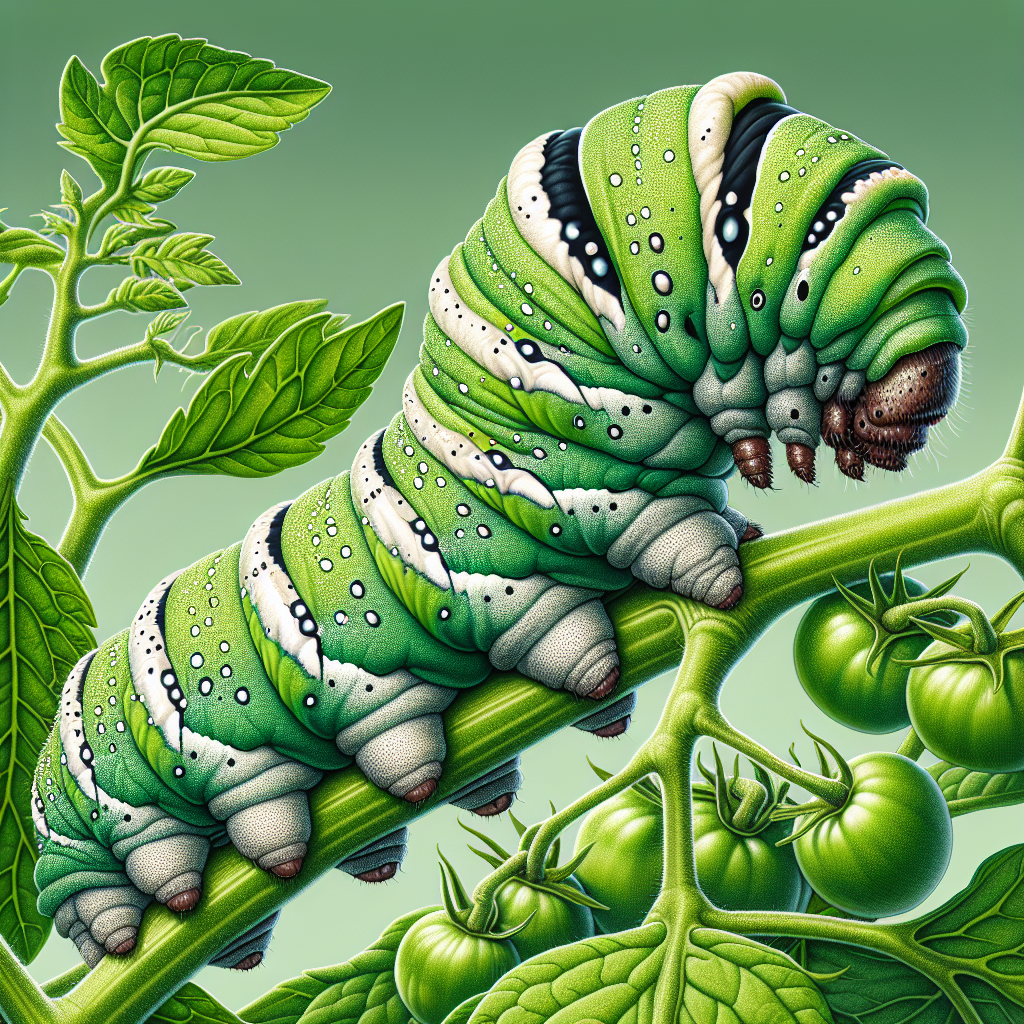
Introduction to Tomato hornworms
Tomato hornworms (Manduca quinquemaculata and Manduca sexta) rank among the most destructive pests in vegetable gardens and commercial tomato fields across North America. These massive green caterpillars, reaching up to 4 inches in length, are the larval stage of sphinx moths (family Sphingidae). Often mistaken for one another, the tomato hornworm has V-shaped white markings along its body, while the tobacco hornworm features diagonal white stripes. Both species share a penchant for Solanaceous crops, defoliating plants with alarming speed.
Adult moths are large, with wingspans up to 5 inches, and are active nocturnal pollinators resembling hummingbirds as they hover over flowers. However, their offspring wreak havoc. A single hornworm can consume an astonishing amount of foliage equivalent to several times its body weight daily. In severe infestations, entire fields of Tomato (crop) can be skeletonized in days, drastically reducing yields. Understanding their biology is crucial for timely intervention. This guide provides professional-grade diagnostics, organic management strategies, and prevention tactics optimized for small farms and home gardens. Early detection prevents losses exceeding 50% in untreated plots, making proactive measures essential for sustainable production.
Identifying Symptoms & Damage
Tomato hornworm damage is unmistakable once established, but early signs are subtle. Initial feeding manifests as small, irregular holes in leaves, progressing to complete defoliation from the top down. Larvae consume entire leaves, leaving only thick veins and stems. Fresh frass—dark green, tomato-seed-filled droppings—is a hallmark sign, often accumulating beneath affected plants like foul-smelling pellets.
Examine stems closely: hornworms blend seamlessly with foliage due to their green coloration and white diagonal stripes or V-markings. A key identifier is the black horn-like projection at the posterior end, though it is harmless. Fruits suffer deep chew marks or boring holes, inviting secondary infections like early blight or Septoria leaf spot. Differentiate from other caterpillars by size (larger than most) and lack of hairs—hornworms are smooth-skinned.
Scout weekly by hand or with a flashlight at dusk when larvae are active. Shake plants over white paper; dislodged frass confirms presence. Damage thresholds: 1-2 larvae per 10 plants warrant action in organic systems. Associated symptoms include sooty mold from honeydew if ants farm the worms, exacerbating spread. Prompt identification averts catastrophe, as a 1-inch larva devours 10 times more than a hatchling.
Lifecycle and Progression of Tomato hornworms
Tomato hornworms complete one to three generations annually, depending on climate. Eggs, pale green spheres 1/16 inch diameter, are laid singly on leaf undersides. Hatching in 3-5 days yields 1st instar larvae (1/8 inch), progressing through five instars over 18-28 days. Final instars dominate damage, growing from 3mm to 100mm.
Pupation occurs in soil 4-8 inches deep, forming reddish-brown cases. In warm regions, adults emerge in 10-14 days; cooler areas overwinter as pupae. Moths mate at night, females ovipositing 200-300 eggs over a week. Lifecycle spans 30-60 days, peaking mid-summer. Hornworms (pest) thrive above 70°F, with development halting below 55°F.
Generational overlap confounds control; monitor from June to September in most zones. Pupae survive winters, emerging as spring migrants. Disrupt at egg/larval stages for best efficacy. Understanding progression enables predictive scouting: expect larvae 2 weeks post-moth sightings.
Environmental Triggers & Risk Factors
Warm, humid conditions (75-85°F, 70%+ RH) accelerate hornworm proliferation. Southern U.S. sees multiple broods; northern areas limit to one. Nearby eggplant, tobacco, or peppers serve as reservoirs. Over-fertilization with nitrogen promotes lush foliage, prime attractant.
Weedy fields harboring nightshade relatives boost populations. Drought-stressed plants suffer amplified damage, as larvae target tender growth. Late-planted tomatoes evade first generation; early plantings face peak infestation. Companion crops like dill attract swallowtail larvae, confusing hornworms visually but not repelling them.
Soil tillage disrupts pupae; no-till risks carryover. Read Spring Pest Patrol: Organic AI Strategies to Shield Your Crops from Common Invaders for predictive tools. Risk spikes post-mild winters, with moths dispersing 100+ miles.
Organic Control & Treatment Plans
Integrated Pest Management (IPM) prioritizes biologicals. Bacillus thuringiensis (BT) kurstaki, applied evenings to young larvae (<1 inch), achieves 90%+ mortality via gut paralysis within 48 hours. Reapply every 5-7 days, 1-2 tsp/gallon water with spreader-sticker. Neem oil disrupts feeding/molting; spinosad offers fast knockdown for larger worms.
Hand-pick visible larvae into soapy water—effective for <10 plants/acre. Introduce trichogramma wasps to parasitize eggs (release 20,000/acre weekly). Bt-tolerant braconid wasps naturally glue eggs to hornworm backs, visible as white cocoons; preserve them.
Treatment ladder: Scout > BT/neem > predators > row covers. Avoid broad-spectrum insecticides preserving ladybugs and birds. For outbreaks, vacuum larvae mornings. Yields recover if <30% defoliation. Rotate with non-hosts like corn to break cycles.
Preventing Tomato hornworms in the Future
Prevention hinges on cultural disruption. Till soil post-harvest to expose pupae to predators. Use reflective mulches (aluminum) deterring egg-laying. Plant trap crops like dill or basil away from tomatoes; hand-remove infested. Yellow sticky traps capture adults (10/acre).
Row covers (1/4-inch mesh) block moths until flowering. Encourage birds with perches; chickens scratch pupae. Crop rotation (3 years) with cabbage or grains minimizes soil reservoirs. Early/late varieties evade peaks. Monitor with pheromone traps for timely BT.
Clean weeds; destroy volunteers. Beneficial nematodes (Steinernema carpocapsae) target pupae (apply fall, 1M/1000 sq ft). Consistent scouting prevents 80% infestations. Integrate with Why Companion Planting Feels Like Guesswork for Small Farms - And How AI Makes It Foolproof for synergistic defenses.
Crops Most Affected by Tomato hornworms
Primarily Solanaceae: tomato, eggplant, bell pepper, potato, tobacco. Tomatoes suffer most, with 100% defoliation possible. Potato (crop) sees tuber yield drops from weakened vines. Peppers get fruit scarring; eggplant total loss in heavy attacks. Rare on non-natives like nightshade weeds. Commercial fields lose $millions annually; home gardens wiped out overnight.