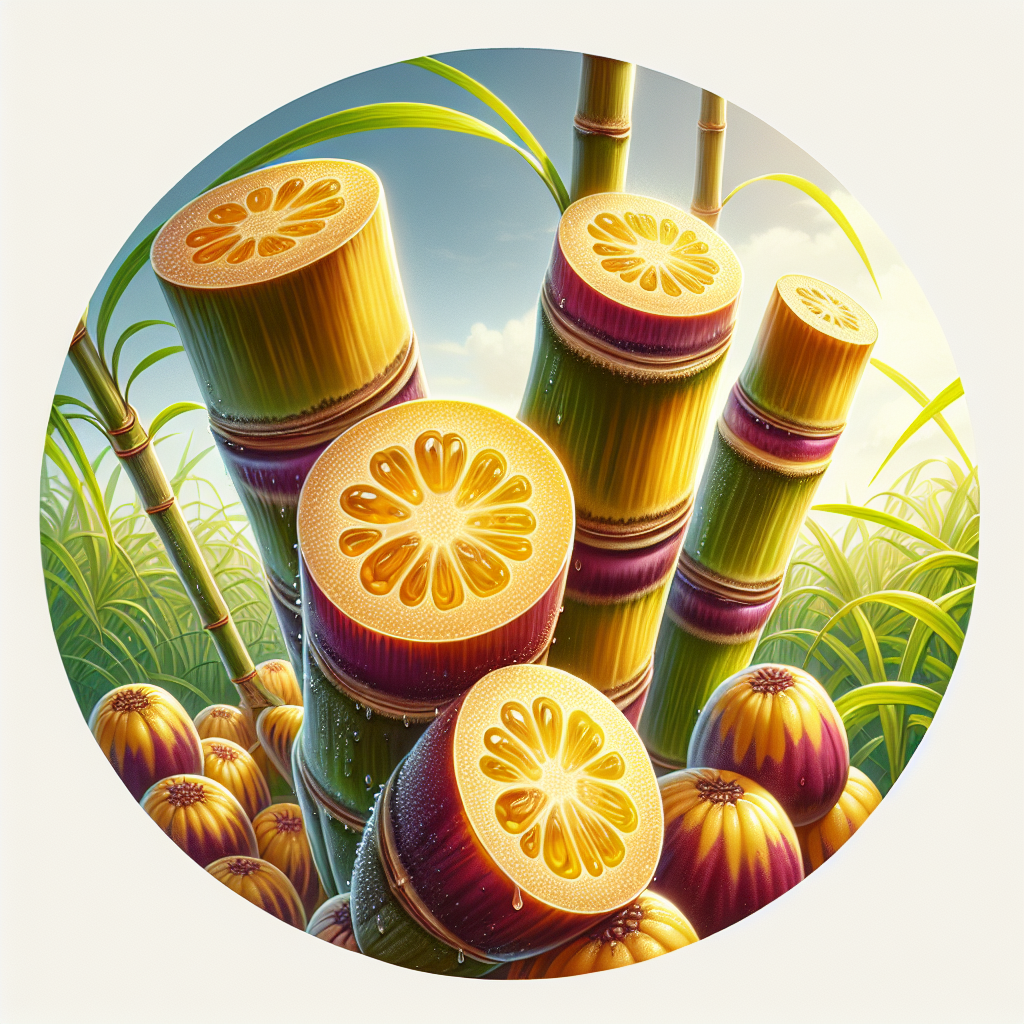
Introduction to Jujube (Sugar Cane)
Jujube Sugar Cane (Saccharum officinarum 'Jujube') represents the pinnacle of sweet cane varieties, renowned for its candy-like flavor profile that sets it apart from standard Sugarcane (crop). Originating from selective breeding in Southeast Asia, this cultivar combines the vigor of noble canes with extraordinary brix levels often exceeding 22-25%, making it a favorite among small-scale farmers, juice vendors, and gourmet sugar producers. Unlike industrial sugarcane focused on ethanol or raw sugar, Jujube Sugar Cane prioritizes fresh market quality—crisp, fiberless stalks bursting with natural sweetness that command premium prices at farmers' markets and specialty grocers.
This comprehensive guide equips growers with professional-grade techniques for maximizing yields while minimizing inputs. From site selection to ratooning management, you'll discover proven strategies honed by generations of tropical agriculturists. With proper care, Jujube Sugar Cane delivers 4-6 commercial crops per planting, offering exceptional return on investment for diversified farms. Its adaptability to intercropping and resilience to common stresses make it an anchor crop for sustainable operations in USDA zones 9-11 or equivalent tropical/subtropical regions.
Botanical Profile of Jujube (Sugar Cane)
Jujube Sugar Cane belongs to the Poaceae family, classified as a perennial C4 grass with a robust, semi-woody habit. Plants reach 3-5 meters in height, featuring thick, wax-coated stalks (3-5 cm diameter) striped in vibrant green and purple hues. Leaves are long (60-120 cm), arching, and lanceolate with serrated edges, emerging from a central crown supported by an extensive fibrous root system penetrating 1-2 meters deep.
The hallmark of this variety is its internodes—short, plump, and packed with sucrose-rich parenchyma tissue, minimizing fibrous core material for superior eating quality. Flowering is rare in cultivated strains due to selective breeding, preventing seed set and ensuring clonal propagation fidelity. Stalks mature in 10-14 months, transitioning from emerald green to golden-yellow with reddish undertones when sucrose peaks. Nutritionally, it boasts 15-25% sugars (mostly sucrose), plus vitamins A, C, and B-complex, positioning it as a functional food crop.
Chromosomally complex (2n=80-140), Jujube Sugar Cane exhibits hybrid vigor from Saccharum officinarum × S. spontaneum ancestry, conferring disease tolerance and environmental adaptability. Tillering produces 10-20 productive stalks per stool, enabling high-density planting (40,000-60,000 per hectare) without compromising vigor.
Soil, pH, and Climate Requirements for Jujube (Sugar Cane)
Jujube Sugar Cane flourishes in deep, well-drained loamy soils rich in organic matter, with sandy loam or clay loam ideal for root expansion and water retention. Avoid heavy clays prone to waterlogging, which invite root rots. Optimal pH ranges 6.0-7.5; test soil annually and amend with dolomite lime if below 6.0 to counter acidity from organic fertilizers. Incorporate 20-30 tons/ha compost or well-rotted manure pre-planting to boost microbial activity and nutrient cycling.
Climatically, it demands full sun (8+ hours daily) and temperatures of 25-35°C (77-95°F), tolerating brief dips to 15°C but suffering frost damage below 10°C. Annual rainfall of 1500-2500 mm evenly distributed suits best; supplement with drip irrigation during dry spells to maintain 400-600 mm crop water requirement. High humidity (60-80%) enhances sucrose accumulation, while windbreaks mitigate lodging in exposed sites. For more on heat management, see Why Summer Heatwaves Are Silently Killing Small Farm Yields - And 7 Organic Strategies to Fight Back.
Salinity tolerance is moderate (ECe <4 dS/m); use gypsum in sodic soils. Mulch with organic matter (10-15 cm) conserves moisture and suppresses weeds, critical in first 3 months.
Step-by-Step Planting & Propagation
1. Sett Preparation (4-6 weeks pre-plant): Select disease-free Jujube stalks from healthy 10-12 month crops. Cut into 35-45 cm setts with 3-4 nodes, dip in 0.1% carbendazim solution for 30 min to prevent fungal entry. Wax ends or shade-dry to minimize moisture loss.
2. Land Preparation: Plow to 30 cm depth, harrow twice, form raised beds (1.5 m wide, 30 cm high) for drainage. Apply 200 kg/ha superphosphate and 100 kg/ha muriate of potash basal.
3. Planting (Spring/Summer): Space setts 5-7 cm deep, 30 cm apart in double rows (75 cm between rows). Plant horizontally, bud-up, at 20-25 tons/ha density. Firm soil, cover with thin soil layer.
4. Gap Filling (10-14 days): Replace failed setts (10-15% expected) with pre-sprouted ones.
5. Mulching & Irrigation: Apply 10 cm dry leaves/straw mulch. Irrigate immediately to establish buds (germination 7-14 days).
Ratooning: After harvest, cut stools 10 cm above ground; fertilize heavily for 4-6 cycles before replanting.
Care & Maintenance regimes for Jujube (Sugar Cane)
Irrigation: Drip system delivering 25-30 mm/week, deficit at maturity (2-4 weeks pre-harvest) boosts sugar by 2-3 brix. Avoid overhead to prevent foliar diseases.
Fertilization: Split-apply 300-400 N, 120 P, 240 K kg/ha/year. Basal: 1/3 NPK; tiller stage (60 DAP): 1/3; grand growth (120 DAP): 1/3. Foliar micronutrients (Zn, Fe, Mn) at 150 DAP. Organic option: 40 t/ha farmyard manure + biofertilizers (Azotobacter, PSB).
Weeding: Manual 3x or pre-emergent atrazine (1.5 kg/ha) + post-directed 2,4-D. Mulch suppresses 80% weeds.
Earthing Up: At 90 DAP, hill soil to 20 cm around stools to support tall growth and deter termites.
Ratooning Management: Top-dress 200 kg N/ha post-harvest; irrigate promptly. Cycle yields decline 15-20% annually—monitor brix.
Pests, Diseases & Organic Management
Key Pests: Sugarcane aphid clusters on undersides—blast with neem oil (5 ml/L) weekly. Stem borers tunnel nodes: apply trichogramma wasps @40,000/ha. Whiteflies vector viruses—yellow sticky traps + reflective mulch. For broader strategies, check Why 90% of Small Farms Fail at Pest Management - And 8 Organic Fixes That Actually Work.
Diseases: Red rot (Fusarium) shows pink discoloration—rogue affected; resistant varieties + hot water treatment setts. Smuts whip-like from tops—clean seedcane, resistant clones. Leaf scald bacterial streak—quarantine new stock.
Organic IPM: Introduce ladybugs, predatory mites. Companion with marigolds deters nematodes. Biocontrol: Trichoderma for rots, Beauveria for borers.
Harvesting, Curing & Optimal Storage
Harvest at 12-14 months when lower stalks yellow and brix >20% (hand refractometer). Use machetes to cut at ground level, avoiding leaf trash. Yield: 80-120 t/ha plant crop, 60-90 ratoons.
Field Curing: Bundle, stand upright 3-7 days under shade to evaporate field heat, concentrate sugars (gain 1-2% sucrose).
Post-Harvest: Transport to mill within 24-48 hrs. Store upright in cool (13-15°C), humid (85-90% RH) sheds <7 days to prevent sucrose inversion.
Process promptly for juice (crush fresh) or jaggery. Yields 10-14% sugar recovery.
Companion Planting for Jujube (Sugar Cane)
Intercrop young cane (0-3 months) with soybeans or cowpeas for nitrogen fixation and ground cover. Plant peanuts between rows for weed suppression and extra income. Nitrogen-fixing clover or pigeon pea enhances soil fertility.
Repel pests with borders of marigold, thyme, or nasturtium. Avoid competitive grasses like sorghum. Shade-tolerant ginger under ratoons boosts diversity. See Fall Companion Planting Guide: Boost Yields and Soil Health for Small Farms and Gardens for seasonal tips.