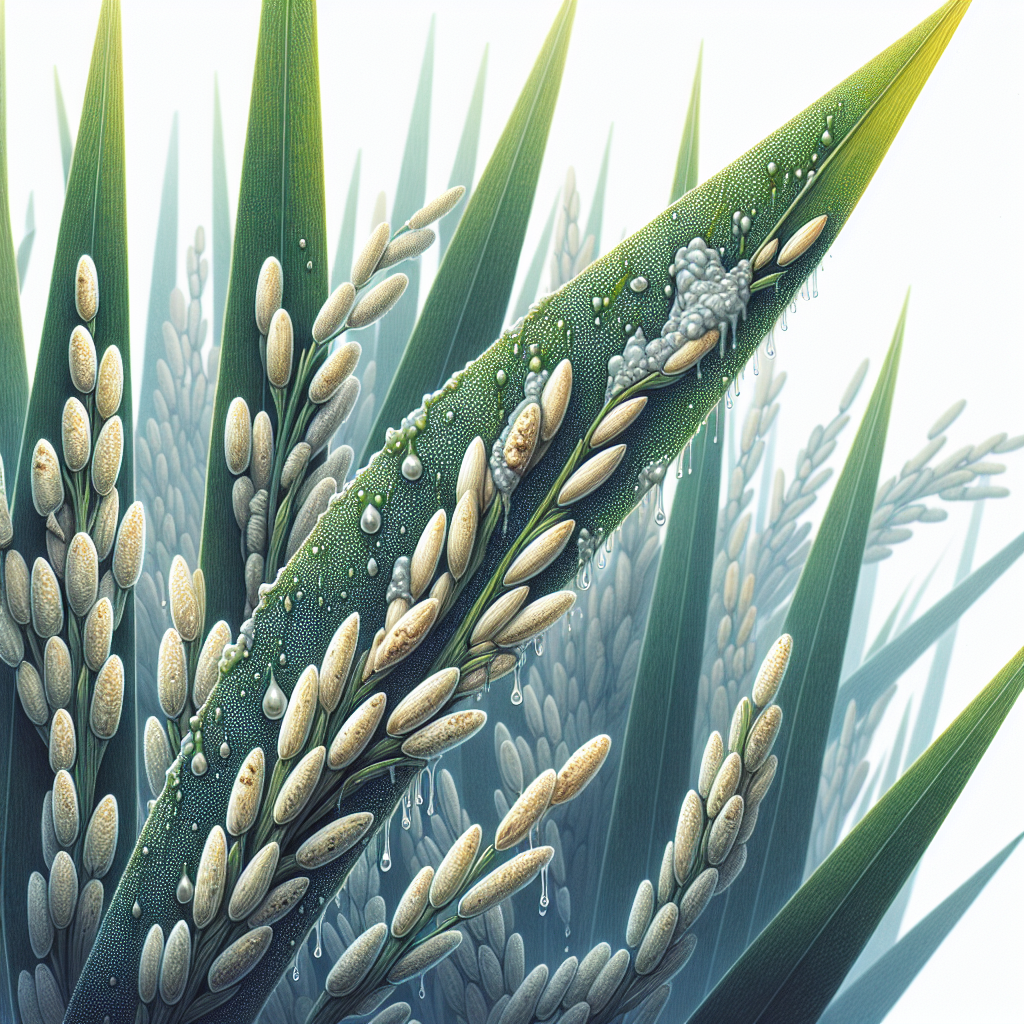
Introduction to Leaf scald
Leaf scald, scientifically known as bacterial leaf blight or caused by Xanthomonas oryzae pv. oryzae (Xoo), stands as one of the most destructive diseases in rice production worldwide. First identified in Japan in 1901, it has since spread to virtually all rice-growing regions, causing annual global losses estimated at 10-50% of yield in severe epidemics. This systemic bacterial infection enters through wounds or natural openings, thriving in warm, humid conditions typical of tropical and subtropical paddies.
Farmers recognize leaf scald by its characteristic progression from water-soaked lesions to dried, grayish-white blighted areas resembling scald burns—hence the name. Unlike fungal diseases, its bacterial nature makes it uniquely challenging, as it spreads via rain splash, irrigation water, and farm tools. In high-risk areas like Southeast Asia, India, and parts of Africa, it can wipe out entire fields if unchecked. Understanding its biology is key to mitigation, especially with increasing climate variability exacerbating outbreaks. This guide equips growers with diagnostic tools, lifecycle insights, and proven organic strategies to safeguard harvests. For more on Scald in related cereals, see the detailed wiki entry.
Identifying Symptoms & Damage
Accurate identification is the cornerstone of leaf scald management. Initial symptoms appear 2-4 weeks after transplanting or seedling stage, starting as small, water-soaked spots on leaf tips or margins. These lesions elongate rapidly into yellow-white streaks, often 1-3 cm long, with wavy margins. A hallmark is the bacterial ooze: creamy, yellow-white exudate that dries into pearl-like beads along the leaf surface, especially visible in morning dew.
As the disease advances, lesions coalesce, turning grayish-white and brittle, giving leaves a 'scalded' appearance. In severe cases, entire leaves wither, flag leaves droop, and panicles emerge partially or not at all, leading to unfilled grains and 20-100% yield loss. Systemic infection causes kresek (Hindi for 'straight-head'), where young tillers wilt from the top, mimicking herbicide damage.
Differentiate from look-alikes: Tungro virus shows stunting without ooze; brown spot diseases have circular lesions; blast features spindle-shaped spots. Damage peaks during tillering to heading stages, reducing photosynthesis by up to 50%. Scout fields weekly, checking 20-30 hills per acre. Use a 10x hand lens to spot ooze. Early diagnosis prevents spread—confirm via lab culture on semi-selective media or PCR for Xoo.
Yield impacts are profound: In irrigated rice, losses average 30%; rainfed systems see 70%+. Secondary infections by fungi worsen necrosis. Economic toll includes replanting costs and market downgrades for blighted grain.
Lifecycle and Progression of Leaf scald
Xoo's lifecycle is polycyclic, with multiple infection cycles per season. The bacterium survives as a saprophyte on rice debris, seeds, and weeds, or in xylem vessels of infected plants. Primary inoculum comes from infested stubble (up to 10^6 CFU/g) or volunteer rice. During wet seasons, bacteria multiply on leaf surfaces, entering via hydathodes, wounds, or stomata.
Optimal infection occurs at 25-30°C with >80% humidity. Bacteria colonize vascular tissues, blocking water flow and causing wilting. Incubation: 4-10 days. Lesions produce secondary inoculum via ooze, splashing to nearby plants during rain or wind. One lesion can infect 10-20 new leaves. Peak sporulation at booting stage aligns with high humidity.
Overwintering: In debris for 4-6 months; seeds carry 1-5% infection. Long-distance spread via contaminated tools, floodwater, or birds. Disease progression: Seedling (rare), tillering (20% incidence), panicle initiation (50%), heading (max damage). In tropics, 3-5 cycles/season. Understanding this enables timed interventions, like avoiding overhead irrigation during tillering.
Environmental Triggers & Risk Factors
Leaf scald thrives in warm (28-32°C), humid (>85% RH) conditions with prolonged leaf wetness (>8 hours). Heavy rains or floods splash inoculum up to 2m. Poor drainage creates anaerobic soils favoring bacterial proliferation. High nitrogen (N>150 kg/ha) promotes succulent leaves, increasing susceptibility—fields with excess N see 2x infection.
Varietal susceptibility: Modern high-yielding rice like IR64 highly vulnerable; traditional landraces more tolerant. Close spacing (<20cm) and double cropping boost humidity microclimates. Seedbeds near infested stubble or ratoon crops amplify risk. Climate change intensifies outbreaks: El Niño patterns bring erratic rains, expanding range to temperate zones.
Soil factors: Neutral pH (6.5-7.5), clay loams retain moisture. Irrigation mismanagement—alternate wetting/drying—stresses plants, opening entry points. Weeds like barnyard grass harbor Xoo. Risk assessment: Fields with prior history, poor rotation, or mechanical injuries (transplanters) score high. For organic farms, read Why 90% of Small Farms Fail at Pest Management - And 8 Organic Fixes That Actually Work for integrated insights.
Organic Control & Treatment Plans
Organic management emphasizes cultural, biological, and resistant varieties—no chemical bactericides are reliably effective against Xoo. Step 1: Sanitation. Destroy stubble by deep plowing (15-20cm) post-harvest; burn or flood fields 30 days to kill 95% inoculum. Use clean seeds: Hot water treat (52°C, 10 min) or solarize (wrap in black plastic, 50°C/48h).
Step 2: Resistant Varieties. Plant Xoo-tolerant cultivars like IR36, NSIC Rc222 (scores 2-4 on standard scale). Intercrop with soybeans to disrupt cycles.
Step 3: Cultural Practices. Space 25x25cm for airflow; avoid N top-dress at tillering. Drain fields 2-3 days/week to dry leaves. Apply silicon (rice hull ash, 2t/ha) strengthens cell walls, reducing lesions 40%.
Biologicals: Seed-treat with Pseudomonas fluorescens (10g/kg, 70% control). Foliar spray Bacillus subtilis (5g/L) every 10 days from tillering. Neem oil (3ml/L) + garlic extract suppresses bacterial multiplication.
Treatment Timeline: Week 1 (symptoms): Prune infected tips, bury debris. Weeks 2-4: Biocontrol sprays 3x. Monitor: <5% incidence = success. Integrate with downy mildew controls for synergy. Field trials show 60-80% reduction vs. untreated.
Preventing Leaf scald in the Future
Prevention hinges on IPM: Rotate with wheat or legumes 1-2 years to break debris cycle. Use certified pathogen-free seeds; rogue volunteers. Site selection: Avoid lowlands; laser-level for uniform drainage. Fertilize balanced (N-P-K 120:40:40 kg/ha); split N applications.
Forecasting: Track rain (>100mm/week) + temp for alerts. Farmer field schools train scouts. Mulch with straw (5t/ha) conserves water, suppresses splash. Biofumigation: Mustard green manure releases volatiles killing Xoo. Long-term: Breed multilines; CRISPR-edited resistance emerging but organic-compatible.
Quarantine tools/machinery between fields. Post-flood, apply lime (1t/ha) to raise pH>7.5, inhibiting bacteria. Annual risk audits prevent recurrence. Success stories: Philippine farms cut incidence 90% via sanitation + biocontrols.
Crops Most Affected by Leaf scald
Leaf scald predominantly targets Oryza sativa (rice), especially irrigated and lowland varieties. Hybrids suffer 40%+ losses; Basmati types moderately susceptible. Minor hosts: Wild rice (O. rufipogon), foxtail millet (foxtail millet). Non-hosts: Upland cereals like corn unaffected. In Asia, 100M+ ha at risk; Africa sees rising threats in new plantings. Susceptibility ranking: Susceptible (IRRI6), Moderately Resistant (TDRI).
Global hotspots: India (30% fields), Vietnam, Bangladesh. Co-infections with sheath blight amplify damage. Diversify to quinoa in rotation for resilience.