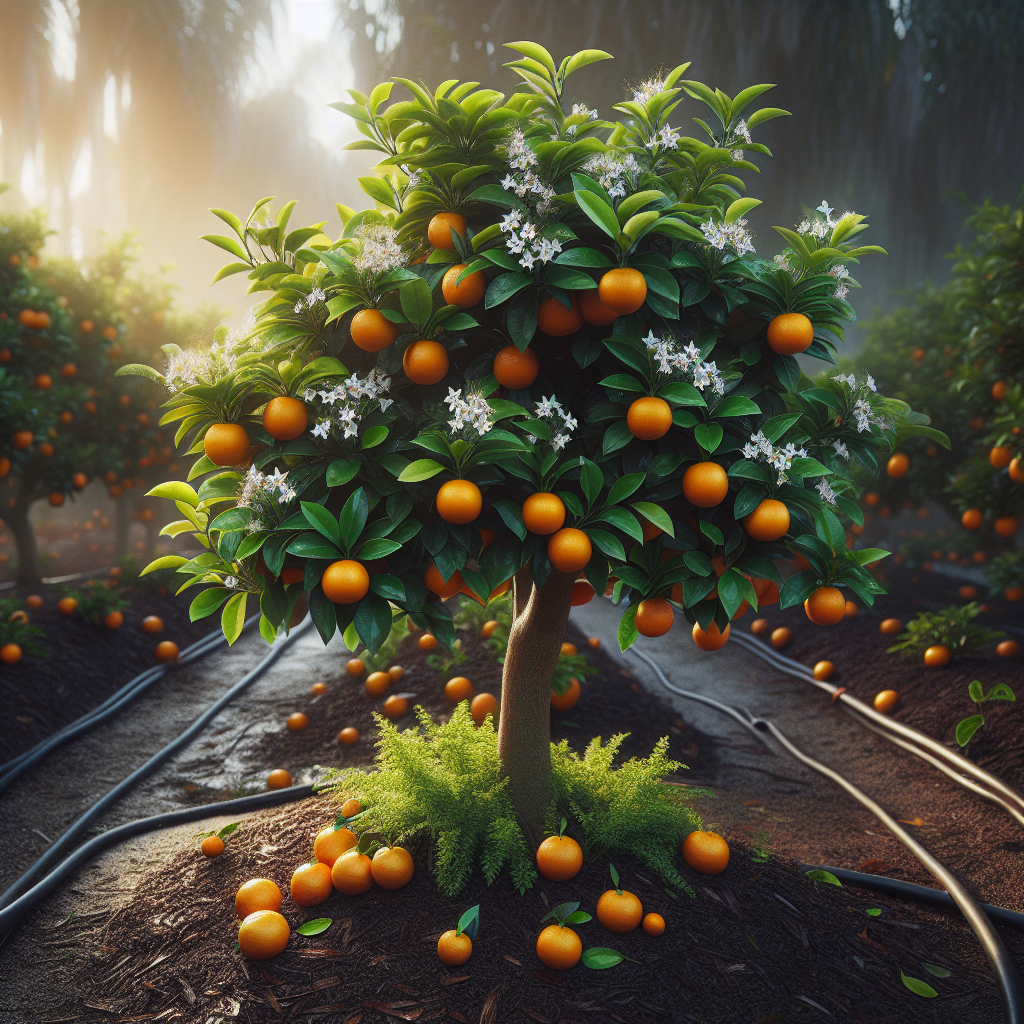
Introduction to Calamondin
A naturally compact citrus hybrid, calamondin is widely believed to be a cross between kumquat and mandarin-type citrus, though its taxonomy has been revised several times and may also appear under older names such as Citrus mitis. It is especially popular across the Philippines, Southeast Asia, and warm subtropical regions because it fruits heavily, flowers repeatedly, and performs well in both ground culture and containers. The fruit is small, thin-skinned, and usually harvested orange-ripe, but unlike sweet mandarins it is sharply acidic, making it more comparable in kitchen use to lime or sour mandarin.
For growers, calamondin offers an unusual combination of landscape and production value. It can carry blossoms, green fruit, and mature fruit at the same time, making it visually striking while also providing a near-continuous harvest in frost-free climates. Commercially, it is used for juice, marmalade, marinades, beverages, and preserved whole fruit. For small-scale growers, its biggest strengths are precocity, dense branching habit, manageable size, and adaptability to pot culture.
Compared with larger citrus such as orange, calamondin tolerates confined root zones better and is often more forgiving for patio or greenhouse production. For broader orchard floor fertility principles, see soil health strategies.
Botanical Profile of Calamondin
This evergreen fruiting shrub or small tree belongs to the Rutaceae family. Mature plants commonly reach 2-4 m in the ground, though container specimens are often maintained between 1-2 m with pruning. The canopy is naturally rounded and dense, with small, glossy, deep-green leaves and occasional short spines on young growth depending on rootstock and line.
Leaves are typically elliptic to narrowly ovate, aromatic when crushed, and arranged alternately. New flushes emerge light green and harden off darker over time. Flowers are white, waxy, and strongly fragrant, usually borne singly or in small clusters in leaf axils. Blossoms are perfect, meaning they contain both male and female organs, and the plant is self-fertile, so one tree can produce fruit without a pollinizer. That said, bee activity often improves fruit set.
The fruit is small, generally 2.5-4 cm in diameter, round to slightly flattened, with a smooth, thin peel that turns from green to deep orange when ripe. The rind is often sweeter and more aromatic than the very sour pulp. Seeds may be present depending on pollination and strain. Calamondin is notable for its capacity to flower multiple times annually in warm conditions, especially when followed by irrigation after a slight dry period.
Rootstock matters. Calamondin may be sold on its own roots, from cuttings, or grafted onto common citrus rootstocks such as trifoliate orange hybrids, rough lemon, or other vigor-controlling stocks depending on region. Grafted trees generally provide more uniform structure, improved soil adaptation, and earlier bearing. Plants on their own roots can still perform well, especially in containers, but may be slower to establish.
Soil, pH, and Climate Requirements for Calamondin
Calamondin performs best in well-drained loam, sandy loam, or structured garden soil with strong aeration and moderate water-holding capacity. The single biggest soil-related cause of failure is poor drainage. Citrus feeder roots require oxygen; when pore spaces remain saturated, roots decline quickly and opportunistic pathogens such as Phytophthora can invade. If water stands after rain for more than 24 hours, the site is unsuitable unless raised beds or mounds are used.
Ideal soil pH is 5.5-6.5, though plants can tolerate about 5.0-7.5 if nutrition is managed carefully. In alkaline soil above pH 7.2, iron, manganese, and zinc become less available, often leading to interveinal chlorosis on young leaves. In strongly acidic soil below pH 5.0, root stress and nutrient imbalance can occur, particularly excess manganese or reduced calcium availability. Before planting, conduct a soil test and correct pH gradually. Use agricultural lime to raise pH or elemental sulfur to lower it, applying well ahead of planting.
Climate preference is tropical to subtropical. Optimal growth occurs between 21-32°C. Vegetative growth slows below 15°C, and injury becomes likely near 0°C, especially on young trees, soft flushes, blossoms, and fruit. Short, light chills may defoliate or scar foliage; prolonged freezing can kill branches or the whole plant. Mature trees are slightly more cold tolerant than many limes, but calamondin should still be treated as frost-sensitive.
Sunlight should be full and direct, ideally 8 or more hours daily. In low-light conditions, flowering declines, internodes stretch, leaf density drops, and fruit quality suffers. In very hot inland climates above 38°C, some afternoon relief can reduce leaf scorch and flower drop, especially for container plants, but daily light intensity must still remain high.
Relative humidity between 50-80% is favorable, though the plant tolerates drier air if root moisture is consistent. Wind protection is important because dry wind can shred flowers, desiccate new flushes, and increase fruit drop. Where storms are common, establish windbreaks or place container plants near bright, sheltered exposures.
For pots, use a coarse citrus mix rather than standard peat-heavy compost. A good professional container blend might contain 35-45% pine bark fines, 20-30% coarse coco coir or composted organic fraction, 20-30% perlite or pumice, and 5-10% sharp sand. The target is rapid drainage with enough fine material to retain even moisture. A container must have multiple drainage holes and never sit in a saucer of standing water.
Step-by-Step Planting & Propagation
Start with certified disease-free nursery stock whenever possible. This is especially important in citrus because systemic diseases and graft-transmissible pathogens can remain hidden early on. Choose a plant with dark green leaves, no canker-like lesions, no scale buildup on stems, and no circling roots clogging the pot.
For in-ground planting:
- Select a site in full sun with excellent drainage.
- Clear a weed-free circle at least 1-1.5 m wide.
- If drainage is marginal, build a mound 30-45 cm high and 1-1.2 m wide.
- Dig a hole only as deep as the root ball and 2-3 times as wide. Planting too deep is a common mistake.
- Set the tree so the root flare sits slightly above final soil grade. If grafted, keep the graft union 10-15 cm above soil level.
- Backfill with native soil rather than a heavily amended pocket. Excess amendment can create a bathtub effect that traps water.
- Water thoroughly to settle soil and eliminate major air gaps.
- Apply 5-8 cm of mulch, keeping it 10-15 cm away from the trunk.
Spacing depends on system. For home orchards, 2.5-4 m between trees is typical. Dense hedgerow-style plantings are possible with regular pruning, but air movement must remain good to reduce foliar disease and scale pressure.
For container planting:
- Move the plant into a container only 5-8 cm wider than the nursery pot if roots are not heavily bound.
- Position the crown slightly above mix level.
- Firm gently without compacting.
- Water until excess drains freely.
- Place in the brightest available location and avoid immediately shifting to extreme full sun if previously greenhouse-grown; harden off over 7-10 days.
Propagation is possible from seed, cuttings, air-layering, and grafting, but each method has tradeoffs. Seedlings are easy to produce and often true enough for home use, but variability and slower bearing make them less desirable for professional production. Semi-hardwood cuttings taken from healthy, non-flowering shoots can root under mist with bottom heat around 24-27°C and rooting hormone, though success rates vary. Air-layering works on well-matured branches and produces own-root plants, but root systems may be weaker initially. Grafting or budding onto adapted citrus rootstocks remains the preferred commercial method because it improves uniformity, vigor control, and tolerance to soil limitations.
Care & Maintenance regimes for Calamondin
Water management should be precise rather than casual. Newly planted trees need frequent irrigation until roots move into surrounding soil. For the first 6-8 weeks, water deeply 2-3 times weekly in warm weather, adjusting for rainfall and soil type. Sandy soils may require smaller, more frequent applications; heavier loams need deeper but less frequent irrigation.
Once established, calamondin prefers a moist but never waterlogged root zone. In practical terms, the upper 2-5 cm of soil may dry slightly between irrigations, but the main root zone from 10-30 cm deep should not be allowed to become bone dry during active growth and fruiting. In containers, irrigate when the top 2-3 cm of mix feels dry but the root ball below still feels faintly cool and slightly moist. If the entire container becomes dry and lightweight, blossoms and small fruit may drop.
Signs of underwatering include curled young leaves, dull foliage, flower abortion, undersized fruit, dry potting mix pulling away from container walls, and rapid wilt in afternoon heat. Signs of overwatering include persistent yellowing, limp but not crisp leaves, sour-smelling potting media, algae on the soil surface, fungus gnats in containers, and leaf drop without preceding dryness. Chronic overwatering often mimics nutrient deficiency because damaged roots can no longer absorb minerals effectively.
Fertilization should reflect citrus' high demand for nitrogen, potassium, magnesium, and micronutrients. Use a citrus-specific fertilizer with a ratio near 2:1:1 or 3:1:2, including iron, manganese, zinc, boron, and magnesium. Young trees can be fed lightly every 6-8 weeks during the warm growing season. Mature in-ground trees generally respond well to 3-4 split applications annually: early spring before flush, late spring, midsummer, and early fall in frost-free regions. Avoid pushing tender late growth where winter cold is possible.
Nutrient symptoms are worth learning. Nitrogen deficiency shows as overall pale foliage, especially on older leaves. Magnesium deficiency often appears as yellowing on older leaves with a green inverted V near the leaf base. Iron deficiency typically affects young leaves first, producing green veins with yellow tissue between. Zinc deficiency can lead to small leaves, shortened internodes, and rosetting. Foliar micronutrient sprays can provide short-term correction, but pH and root health must also be addressed.
Pruning is mainly for shape, light penetration, and removal of dead or crossing wood. Major pruning is best done after the main harvest or between flushes. Remove suckers from below the graft union immediately. Thin dense interiors just enough to improve airflow; avoid over-pruning, since citrus stores energy in its foliage. Container specimens can be tip-pruned to maintain a compact framework. If a branch becomes heavily laden, light structural thinning helps prevent breakage.
Flowering and fruit set can occur multiple times per year. Heavy crops on a small plant may require thinning to prevent limb strain and biennial tendencies. Fruiting also benefits from stable irrigation and adequate potassium. Sudden swings from drought to heavy watering frequently trigger fruit split or drop.
In cold-prone areas, protect plants before freezing weather. Container trees should be moved indoors to a bright, cool room or greenhouse before nights fall below 4-7°C. Outdoor trees can be wrapped with frost cloth that reaches the ground to trap radiant heat. Avoid plastic touching foliage during freezes. Moist soil also retains more heat than dry soil, so irrigating the day before a cold event can help slightly.
Pests, Diseases & Organic Management
Calamondin is susceptible to many standard citrus pests, especially under stress. The most common are scale insects, aphids, spider mites, whiteflies, mealybugs, leafminers, and occasionally thrips. Sap-feeding insects produce honeydew that leads to black sooty mold, reducing photosynthesis and marketability.
Scale often appears as brown, gray, or waxy bumps on stems and leaf undersides. aphids cluster on tender new growth and distort young leaves. spider mites are most problematic in hot, dry conditions, causing stippling and fine webbing. Citrus leafminer larvae tunnel through fresh leaves, creating silvery serpentine trails and twisted foliage; while usually not fatal, repeated infestations weaken young trees.
Organic management begins with prevention: maintain balanced fertility, avoid excess nitrogen that attracts soft-bodied pests, prune for air movement, and inspect new flushes weekly. Encourage beneficial insects by maintaining flowering insectary plants nearby, such as thyme, yarrow, and nasturtium. Small infestations can be suppressed with a strong water spray directed at shoot tips and leaf undersides. Horticultural oil and insecticidal soap are highly effective when coverage is thorough and temperatures are moderate. Spray in early morning or late evening, never during intense heat or on drought-stressed plants, to prevent phytotoxicity.
Disease pressure centers on root and foliar problems. Phytophthora root rot is strongly linked to poor drainage or over-irrigation. Symptoms include gradual canopy thinning, yellow leaves, weak growth, and bark problems near the crown. greasy spot, melanose, anthracnose, and sooty mold may occur in humid regions. citrus canker risk depends on local disease presence and regulatory conditions. Viral and systemic issues are best prevented through clean planting material.
For organic disease management, focus on sanitation and environment. Remove fallen diseased fruit, prune dead twigs, sterilize pruning tools between suspect plants, and avoid overhead irrigation that leaves foliage wet for long periods. Copper-based sprays can help suppress certain bacterial and fungal foliar problems if used preventively and according to label directions, but they are not substitutes for drainage correction and canopy management.
Nutritional stress is frequently mistaken for disease. If leaves yellow uniformly but roots are in poorly drained soil, do not add more fertilizer until the root issue is fixed. Excess salts in containers can also burn roots; leach pots periodically by watering deeply until 15-20% of the volume drains out the bottom.
Harvesting, Curing & Optimal Storage
Fruit is usually harvested when fully orange or nearly so, though some markets and kitchens use partially green fruit for a sharper flavor. Calamondin does not require curing in the same sense as onions or sweet potatoes; instead, quality depends on correct maturity, gentle handling, and cool storage.
Harvest by clipping fruit with small shears or snapping carefully to avoid tearing the thin peel and stem-end rind. Pulling fruit roughly can damage adjacent spurs and increase postharvest decay. Mature fruit should feel firm, heavy for its size, and brightly colored. Juice content generally improves as fruit reaches full color, but acidity remains high.
Harvest interval can be frequent because trees often ripen fruit gradually. In warm climates, pick every 7-14 days to maintain quality and stimulate continued flowering and fruiting balance. Avoid leaving overripe fruit on the tree for too long if you want ornamental neatness, as it can shrivel and attract ants or saprophytic fungi.
After harvest, sort out bruised, punctured, or split fruit. Wash only if necessary, and dry completely before packing. For short-term storage, fruit keeps best at cool room conditions for several days. For longer storage, hold at about 8-12°C with high relative humidity around 85-90%. Temperatures that are too low may cause chilling injury in some citrus, leading to pitting or poor flavor retention. Refrigeration in perforated bags or ventilated containers usually extends storage to 2-4 weeks depending on harvest maturity and handling.
For processing, calamondin is excellent for juice extraction, marmalade, salted preserves, syrups, vinegar infusions, and freezing as halves or juice cubes. The peel is aromatic and useful when the whole fruit is sliced thinly. Because the rind is delicate, dehydration is possible but should be done at low temperatures to preserve volatile oils.
Companion Planting for Calamondin
Good companion planting around calamondin should support pollinators and beneficial insects, reduce bare soil, and avoid intense root competition directly at the trunk. The best companions are shallow-rooted, non-vigorous herbs and flowers placed outside the immediate root crown zone, usually starting 30-45 cm away from young trees and farther from mature trunks.
Thyme is one of the best low-growing companions because it attracts pollinators, tolerates leaner conditions, and can act as a living mulch without smothering the citrus trunk. Yarrow is useful nearby as an insectary plant that attracts predatory wasps, hoverflies, and other beneficials. Nasturtium can function as a trap crop for aphids and also helps draw pollinators into the planting. In some systems, white clover is used between rows for soil cover and improved trafficability, but it should be managed carefully so it does not compete heavily with young citrus for moisture.
Avoid planting heavy feeders or aggressive rooters directly beneath the canopy. Large annual vegetables, sprawling cucurbits, and dense grasses can compete strongly for nitrogen and water. Keep mulch and companion plants pulled back from the trunk to prevent collar rot and rodent shelter. In high-rainfall regions, prioritize airflow over dense understory planting.
A simple, effective pattern is a mulched ring around the trunk, a beneficial flower ring beyond that, and irrigation delivered at the drip line rather than right against the stem. This preserves root oxygen, reduces weed pressure, and creates a biologically active orchard floor without increasing disease risk.