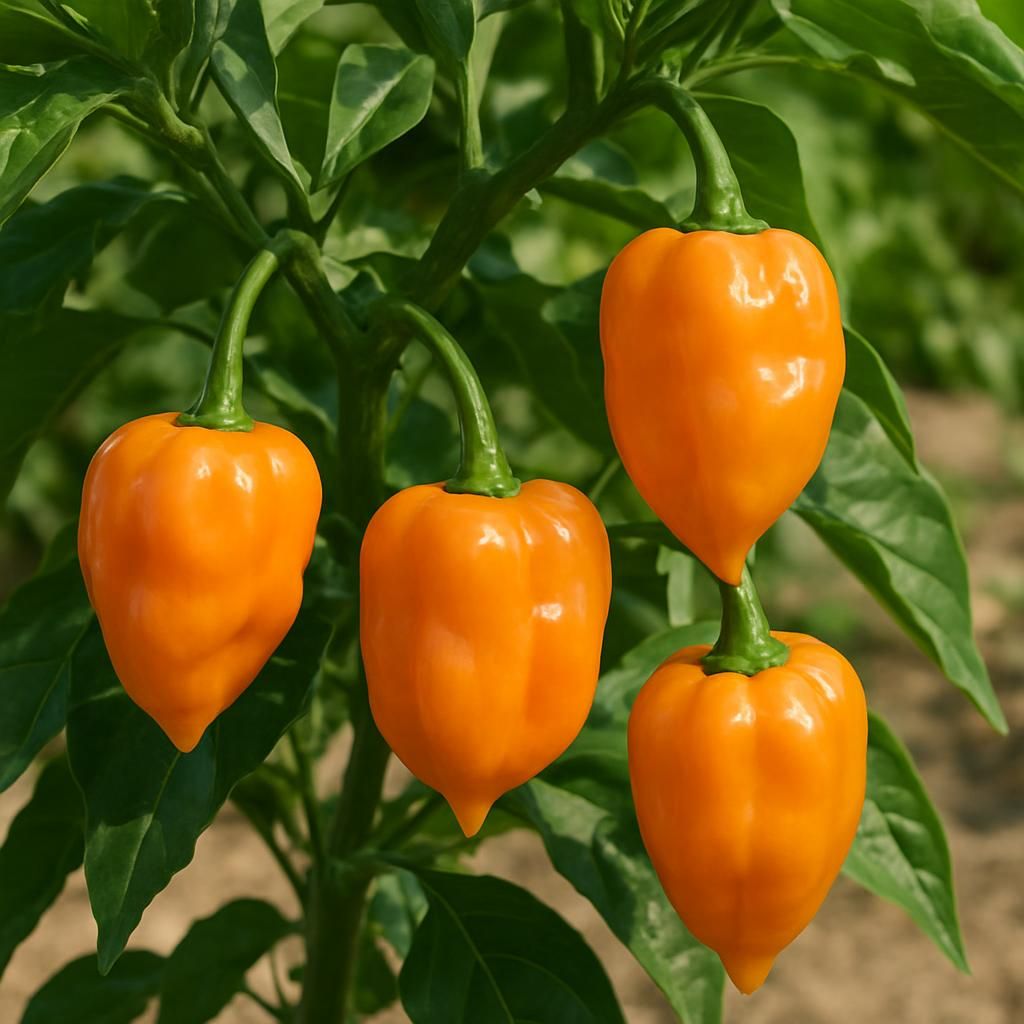
Introduction to Habanero Orange
Habanero Orange (Capsicum chinense) is one of the most recognized hot peppers in the world, delivering 100,000–350,000 Scoville Heat Units with a distinctive citrus-fruity aroma. Professional growers value it for both fresh market sales and value-added products such as hot sauces and dried flakes. Its compact bush habit and high yield potential make it suitable for small farms and commercial polytunnel production alike.
Botanical Profile of Habanero Orange
The plant forms a multi-branched shrub reaching 60–90 cm in height with dark-green, ovate leaves. Small, creamy-white flowers appear 60–70 days after sowing and develop into wrinkled, lantern-shaped pods that ripen from green to a brilliant orange. Each fruit contains numerous small, tan seeds and a thin placental membrane rich in capsaicinoids. The cultivar belongs to the species Chili Pepper and shares close genetic ties with Habanero Pepper and Scotch Bonnet Pepper.
Soil, pH, and Climate Requirements for Habanero Orange
Habanero Orange demands warm temperatures, consistent moisture without waterlogging, and fertile, well-drained soil. The following table summarizes the ideal conditions for commercial production.
| Parameter | Ideal Range | Notes |
|---|---|---|
| Soil Type | Sandy loam to loam | High organic matter improves structure |
| Soil pH | 6.0–6.8 | Slightly acidic to neutral |
| Temperature (Day) | 24–30 °C | Critical for fruit set |
| Temperature (Night) | 18–22 °C | Below 15 °C reduces flowering |
| Frost Tolerance | None | Protect below 10 °C |
| Sunlight | Full sun (8+ hours) | Essential for capsaicin development |
| Spacing | 45–60 cm between plants | 75–90 cm between rows |
| Growing Season | 90–120 days to first harvest | Extend with season extension techniques |
Step-by-Step Planting & Propagation
Start seeds indoors 8–10 weeks before the last frost. Sow 5 mm deep in sterile seed-starting mix at 27–30 °C; germination occurs in 7–14 days. Harden off seedlings for 7–10 days before transplanting into warmed soil once nighttime temperatures remain above 15 °C. Transplant at the same depth as the nursery container and water thoroughly. For direct seeding in warm climates, sow 2–3 seeds per hole and thin to the strongest seedling after emergence.
Care & Maintenance regimes for Habanero Orange
Consistent irrigation, balanced nutrition, and strategic pruning maximize pod size and heat. The schedule below outlines professional best practices.
| Week / Stage | Watering Schedule | Fertilizer Program | Pruning & Training |
|---|---|---|---|
| Transplant–Week 3 | 2–3 L per plant every 2–3 days | 10-10-10 at 50 g/m² | Remove lower leaves below first branch |
| Week 4–Flowering | 3–4 L per plant every 2 days | Switch to 5-10-10 at 60 g/m² | Pinch growing tip at 30 cm for bushiness |
| Fruit Set–Harvest | 4–5 L per plant every 2 days | 8-12-20 every 3 weeks | Remove suckers and diseased foliage |
| Post-Harvest Cleanup | Reduce to 2 L per plant weekly | Light compost tea only | Cut back to 20 cm above soil for ratoon |
Mulch with 5–8 cm of organic material to conserve moisture and suppress weeds. Monitor leaf color weekly; pale foliage indicates nitrogen deficiency while purpling signals phosphorus shortage.
Pests, Diseases & Organic Management
Major threats include Aphids, Spider Mites, Thrips, and Whiteflies. Broad mites can distort new growth in humid conditions. Fungal issues such as Phytophthora and Fusarium wilt arise in poorly drained soils. Deploy yellow sticky traps, release beneficial insects (lady beetles, lacewings), and apply neem oil or insecticidal soap at 7–10 day intervals. Rotate crops every 3–4 years and solarize beds between seasons to reduce soil-borne pathogens.
Harvesting, Curing & Optimal Storage
Harvest pods at full orange color for peak flavor and heat; green fruits can be picked earlier for milder products. Use clean shears to avoid stem tearing. For fresh market, cool pods to 7–10 °C within two hours. For drying, spread single-layer on screens in a shaded, well-ventilated area at 25–30 °C for 7–10 days until brittle. Store dried peppers in airtight glass jars away from light; whole pods retain pungency for 12–18 months. Vacuum-sealed frozen pods maintain quality up to 24 months.
Companion Planting for Habanero Orange
Pair Habanero Orange with Tomato, Basil, Marigold, and Nasturtium to improve pollination and deter pests. Avoid planting near Fennel or members of the Brassica family, which compete for nutrients and attract shared pests. Interplant with Cucumber or Eggplant in a Summer Companion Planting: 10 Organic Pairings to Boost Small Farm Resilience layout for maximum land-use efficiency.