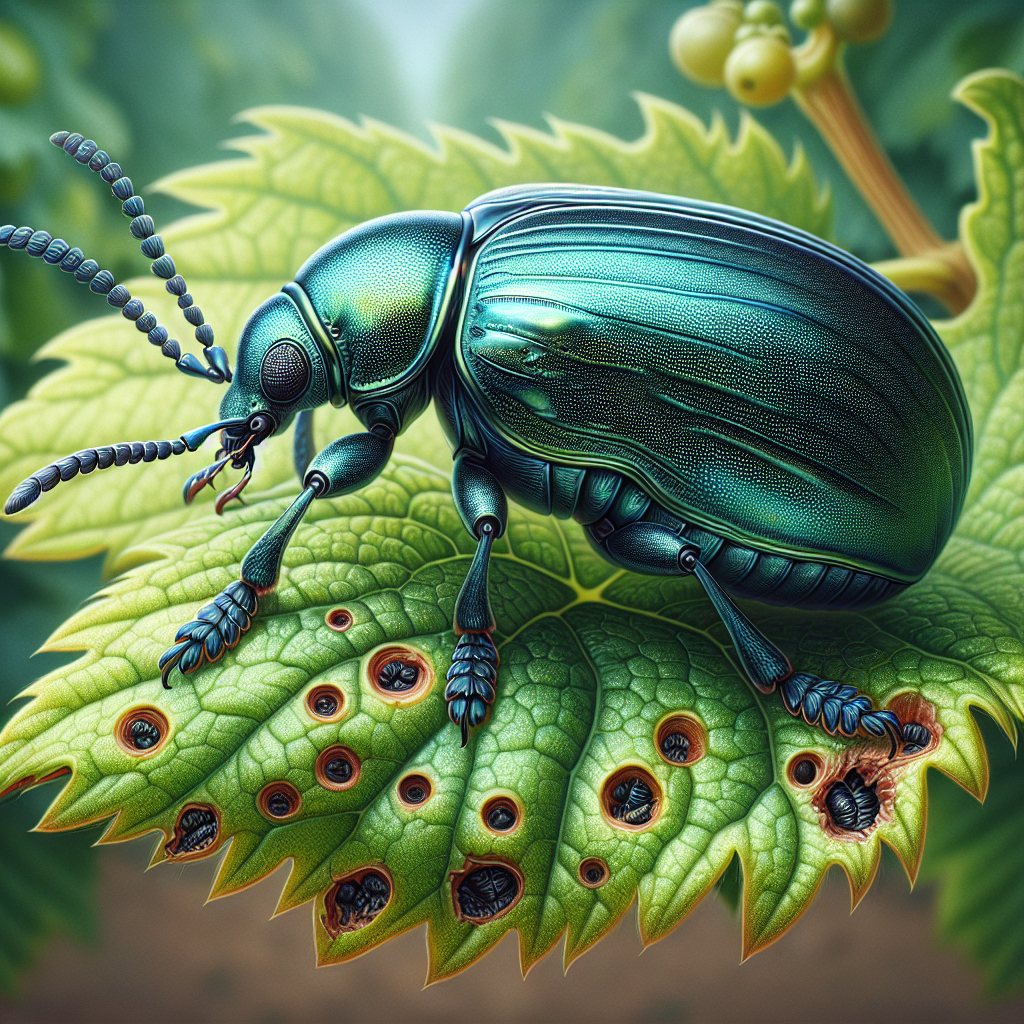
Introduction to grape flea beetle
Grape flea beetles (Altica chalybea) are among the most notorious early-season pests in vineyards, particularly targeting grapes during bud break and shoot growth. These tiny, shiny beetles, measuring just 4-5 mm long, earn their name from their remarkable jumping ability, propelled by powerful hind legs that allow them to evade predators and disperse quickly across fields. Native to North America, they thrive in temperate regions from the eastern U.S. to the Midwest, where grape cultivation is prominent.
Adults overwinter in leaf litter, soil cracks, or under bark, emerging in early spring to feed on swelling buds and tender young leaves. A single infestation can strip vines bare, stunting growth and slashing photosynthesis rates by up to 50% in severe cases. For small-scale growers and commercial vineyards alike, early detection is crucial, as unchecked populations can lead to yield losses of 20-30% in the first year alone. This guide provides comprehensive diagnostics, lifecycle insights, and proven organic management strategies to protect your Thompson Seedless Grapes or Concord Grapes.
Understanding grape flea beetle biology is key to integrated pest management (IPM). Unlike larger beetles, their small size and mobility make them hard to spot until damage appears. For more on related pests, see our flea beetles wiki page. Economic impacts are stark: in high-pressure areas like Ontario or New York wine regions, growers report annual control costs exceeding $100 per acre.
Identifying Symptoms & Damage
Spotting grape flea beetle damage early can save your crop. Adult feeding creates characteristic 'shot-hole' patterns—small, round holes (1-3 mm) in leaves, resembling buckshot blasts. As they chew, leaves turn skeletonized, with only veins remaining, often starting on basal leaves near the ground. Look for shiny, metallic blue-green beetles jumping away when disturbed; their larvae, reddish-brown slugs up to 7 mm, rasp leaf undersides, leaving translucent windows.
Damage peaks from bud swell (April-May) through shoot elongation (June). Young vines under 3 years old suffer most, with defoliation rates hitting 80-100%, delaying fruiting by a season. Differentiate from Japanese beetles (larger, coppery) or caterpillars (webby frass). Use a yellow sticky trap or beat sheet: shake shoots over white cloth; 5+ beetles per 100 taps signals action.
Secondary signs include stunted shoots, yellowing foliage, and reduced cluster development. In wet springs, feeding wounds invite powdery mildew or black rot. Scout weekly from green tip stage; thresholds vary by variety—table grapes tolerate less than wine grapes. For visual ID tips, check Spring Pest Patrol: Organic AI Strategies to Shield Your Crops from Common Invaders.
Lifecycle and Progression of grape flea beetle
Grape flea beetles complete one to two generations annually, synced to vine phenology. Overwintering adults (2-3 mm, metallic blue) emerge at 10-15°C (50-59°F), feeding immediately on buds. Egg-laying starts at bud break: females deposit 300-400 orange-yellow eggs in clusters on leaves or weeds, hatching in 7-10 days.
Larvae progress through three instars over 2-3 weeks, feeding nocturnally before pupating in soil. New adults emerge in 10-14 days, continuing leaf damage through June. Peak activity aligns with 200-400 growing degree days (GDD base 10°C). In warmer climates like California, a partial second generation may occur.
Monitoring GDD via local stations predicts flights: first at 100 GDD, larvae peak at 250. Adults aestivate in summer, resuming fall feeding before overwintering. Lifespan: 40-60 days. Disrupt at eggs/larvae for max impact—handpicking viable on <1 acre.
Environmental Triggers & Risk Factors
Grape flea beetles explode in mild, wet springs (10-20°C, >1 inch rain), favoring weedy vineyards with clover or mustard as alternate hosts. Poor sanitation—unshredded prunings, grassy margins—increases overwintering sites by 5x. New plantings on ex-field sites risk soil pupae carryover.
Soil type matters: sandy loams retain less moisture, stressing beetles; heavy clays harbor larvae. Proximity to wild grapes or raspberry patches amplifies migration. Climate change extends activity windows, with models predicting 15% range expansion northward by 2050.
Risk score: high if >20 weeds/m², low vigor vines, or prior infestation. Companion crops like thyme deter via volatiles.
Organic Control & Treatment Plans
Organic IPM prioritizes prevention but acts decisively on thresholds. Cultural: Flail-mow cover crops pre-bud break to expose adults; till borders (one-time) buries pupae 70% effectively. Biological: Release predatory ground beetles (Pterostichus spp.) or nematodes (Heterorhabditis bacteriophora) at 10^6/m² soil.
Physical: Row covers until 10 cm shoot growth; yellow sticky traps (20/acre) capture 30-50%. Vacuum hand-held for edges. Botanicals: Neem oil (0.5-2%) or spinosad (OMRI, 0.2 oz/gal) at first holes—2 apps, 7-day interval. Pyrethrins for knockdown, but bees beware.
Plan: Scout weekly; treat if 10% shoots hit. Rotate modes; avoid >3 spinosad/year. Efficacy: 80-95% with combo. Test on eggplant first.
Preventing grape flea beetle in the Future
Long-term control builds resilient systems. Plant resistant rootstocks (e.g., 101-14) and delay bud break via late pruning. Maintain weed-free 1 m vine row; mulch with straw suppresses soil emergence. Encourage birds (flea beetles) via perches.
Rotate with cover crops; solarize soil pre-plant. Monitor GDD apps for alerts. Annual fall cleanup cuts next spring pop by 60%. IPM audits yearly; track via spreadsheets. Success: zero treatments after 3 years.
Crops Most Affected by grape flea beetle
Primarily grapes—table (Thompson Seedless Grapes), wine (Cabernet Sauvignon Grapes), juice (Concord Grapes). Weeds: wild grape, Virginia creeper. Minor: raspberry, apple sprouts. Young vines worst hit; mature tolerate 20% defoliation.