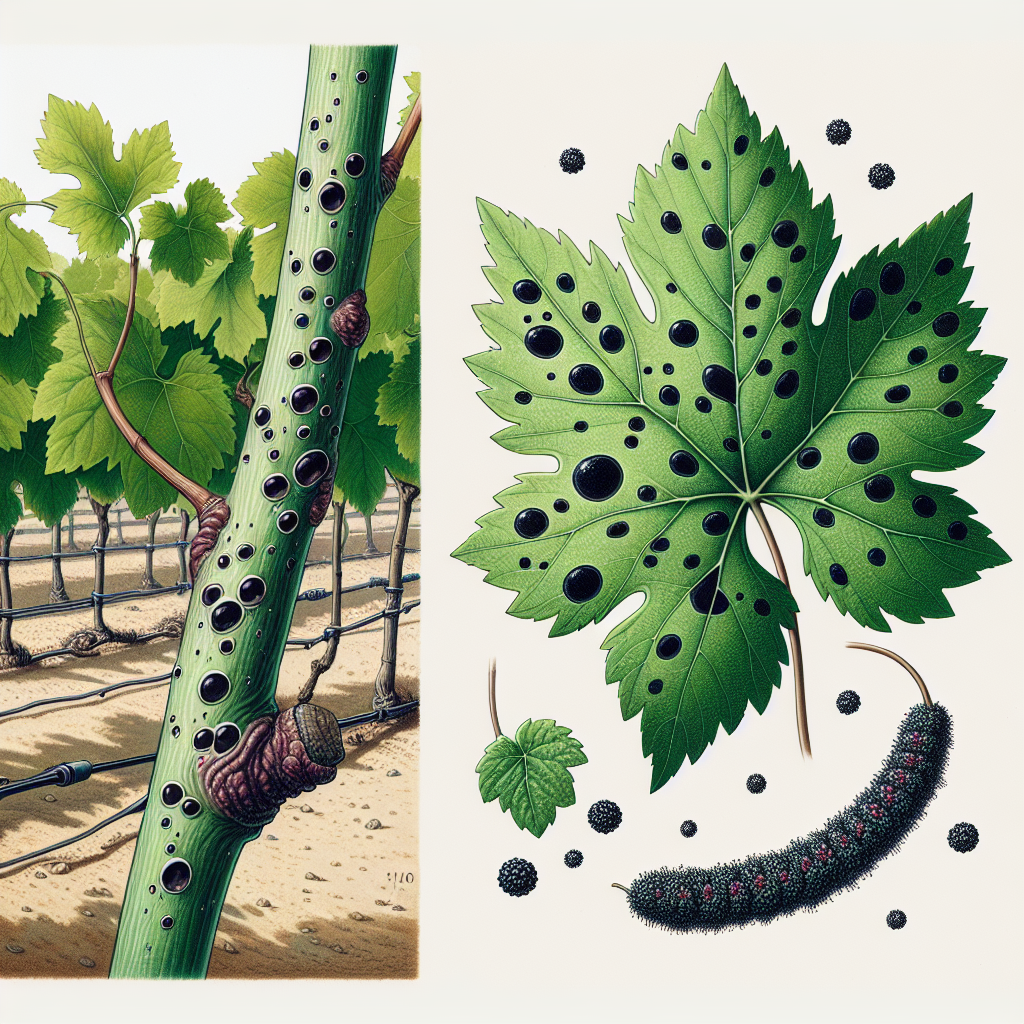
Introduction to Phomopsis cane and leaf spot
Phomopsis cane and leaf spot, caused by the fungal pathogen Phomopsis viticola (teleomorph: Diaporthe viticola), stands as one of the most pervasive diseases threatening grape production worldwide. This necrotrophic fungus targets woody tissues and foliage, leading to cane dieback, leaf necrosis, and fruit infections that drastically reduce yields and quality. First identified in the 19th century in Europe, it has since spread globally, impacting vineyards from temperate to subtropical regions. In severe outbreaks, losses can exceed 50% of the crop, making early detection and proactive management essential for sustainable viticulture.
The disease manifests primarily during the growing season, with symptoms appearing as early as bud break. Spores infect through wounds or natural openings, exploiting prolonged leaf wetness. While grapes are the primary host, related species like Vitis labrusca hybrids show varying susceptibility. Understanding its biology is crucial for growers aiming to protect their investments. This guide provides comprehensive diagnostics, lifecycle insights, organic treatments, and prevention strategies tailored for small-scale and commercial operations. By integrating these practices, farmers can mitigate risks and maintain healthy vineyards year after year.
Identifying Symptoms & Damage
Accurate identification of Phomopsis cane and leaf spot is the cornerstone of effective management. Symptoms first emerge on young leaves and shoots in spring, often coinciding with bud swell. Look for small, dark brown to black spots (1-3 mm) with grayish centers on leaf margins and tips—characteristic 'frog-eye' lesions. These spots may coalesce, leading to shot-hole appearance as centers fall out, impairing photosynthesis and vigor.
On canes, the disease produces elongated, sunken lesions with dark borders, often surrounding leaf scars or pruning wounds. Infected areas turn reddish-brown, progressing to black streaks that girdle the cane, causing dieback above the infection site. Buds at these nodes fail to break, resulting in sparse shoot growth. Ripe fruit shows black, sunken rot starting at the stem end, rendering berries unmarketable.
Damage extends beyond aesthetics: severe infections weaken the vine's vascular system, reducing carbohydrate reserves and predisposing plants to secondary issues like leaf spots or anthracnose. Yield losses stem from fewer clusters, smaller berries, and poor ripening. Differentiate from similar diseases—Phomopsis spots lack halos unlike Septoria leaf spot, and cane lesions are more superficial than those from Eutypa dieback. Use a hand lens to spot pycnidia (spore-producing structures) as tiny black dots in lesions for confirmation. Early scouting during wet springs prevents escalation.
Lifecycle and Progression of Phomopsis cane and leaf spot
Phomopsis viticola follows a polycyclic lifecycle, with multiple infection cycles per season driven by rain events. Overwintering occurs as pycnidia in dead wood, bark, and infected canes from the previous year. In spring, as temperatures rise above 10°C (50°F) and rainfall exceeds 10 hours of leaf wetness, alpha-conidia (primary spores) ooze out in tendrils, splashing onto new tissues up to 1-2 meters.
Primary infections target expanding leaves, shoots, and cluster stems from bud break to bloom (BBCH 10-69 stages). Lesions develop within 7-14 days under optimal conditions (15-25°C, high humidity). Infected tissues produce beta-conidia and eventually pycnidia, releasing secondary spores that perpetuate epidemics. By veraison, fruit infections become evident, though symptoms may not show until harvest.
The pathogen's progression accelerates in dense canopies with poor airflow. Dormant infections activate in subsequent seasons, creating a disease pyramid. Sexual spores (ascospores) from perithecia contribute minimally but enhance genetic diversity. Full lifecycle completion takes 4-6 weeks, with peak sporulation in May-June in temperate zones. Monitoring spore traps or lesion counts aids in timing interventions. For deeper insights into fungal lifecycles, check this comprehensive guide on leaf spot diseases.
Environmental Triggers & Risk Factors
Phomopsis thrives under cool, wet conditions: optimal infection occurs at 15-22°C (59-72°F) with >12 hours leaf wetness. Prolonged spring rains (>20 mm/week) splash spores from debris to shoots, initiating outbreaks. High humidity (>85%) and morning dews exacerbate spread. Poor air circulation in crowded rows or unpruned vines traps moisture, elevating risk.
Susceptible varieties like 'Chardonnay' and 'Pinot Noir' suffer most, while thick-skinned cultivars show tolerance. Overhead irrigation, excessive nitrogen promoting lush growth, and delayed dormancy break heighten vulnerability. Contaminated propagation material introduces inoculum. Soil types matter little, but compacted soils limiting root health indirectly worsen stress. Climate change may shift patterns, with warmer springs potentially shortening latent periods. Assess microclimates using weather stations; avoid planting in low-lying frost pockets prone to dew. Integrated with cultural tweaks, these insights curb epidemics.
Organic Control & Treatment Plans
Organic management emphasizes prevention but includes curative options. Start with sanitation: prune infected canes at dormancy (remove 10-20 cm below lesions), destroy debris by shredding or burning (where permitted). Apply copper-based fungicides (e.g., Bordeaux mixture) at 1-2% from bud swell to pre-bloom, repeating every 7-14 days during wet spells (max 4-6 apps/season). Sulfur products offer secondary protection post-bloom.
Biologicals like Bacillus subtilis or Trichoderma spp. suppress sporulation; apply as foliar sprays per label. Potassium bicarbonate raises leaf pH, inhibiting germination. For active infections, remove blighted shoots promptly. Companion planting with thyme or marigold deters via volatiles. In small vineyards, hand-thinning dense clusters improves drying.
Integrated plans: Scout weekly, using disease models (e.g., 10-10-55 rule: >10°C, >10mm rain, >55% RH triggers spray). Rotate modes of action to prevent resistance. Post-harvest, basal sprays protect dormant canes. Yields recover 20-40% with timely action. As detailed in this Spring Pest Patrol blog, combining organics with monitoring yields robust defense.
Preventing Phomopsis cane and leaf spot in the Future
Long-term prevention hinges on cultural resilience. Select resistant rootstocks (e.g., 101-14 Mgt) and scions like 'Vidal Blanc'. Maintain wide row spacing (2-2.5m), vertical shoot positioning for airflow. Prune to 4-6 canes/vine, balancing crop load (8-12 buds/m). Avoid wounds during wet periods; delay pruning until dry weather.
Mulch to suppress splash but ensure drainage. Foliar calcium strengthens tissues. Cover crops like clover reduce erosion without hosting. Monitor via apps for rain forecasts. Annual debris removal cuts inoculum 70-90%. Rotate vineyard blocks if feasible. Quarantine new plants. These steps, sustained over years, build epidemic thresholds above economic levels, safeguarding profitability.
Crops Most Affected by Phomopsis cane and leaf spot
Grapes (Vitis vinifera and hybrids) bear the brunt, with wine varieties like Cabernet Sauvignon Grapes, Chardonnay Grapes, and table types like Thompson Seedless Grapes highly susceptible. American grapes (Concord Grapes) show moderate resistance. Minor hosts include apple (rare cane spots), cherry, and green pepper, but economic impact centers on viticulture. In mixed plantings, isolate grapes from wild Vitis spp. Global hotspots: France, California, Australia, New Zealand. Emerging reports in blueberry suggest broadening vigilance.