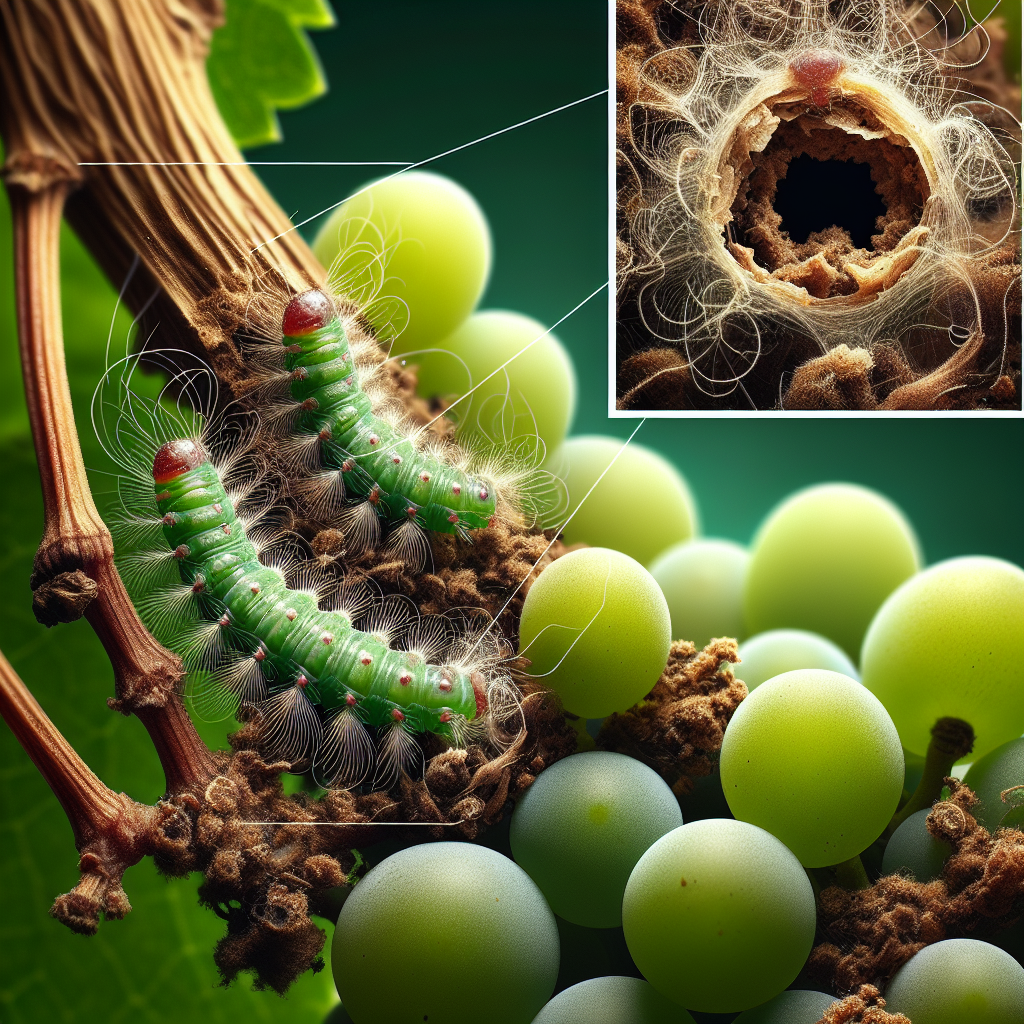
Introduction to Grape berry moth
The grape berry moth, scientifically known as Paralobesia viteana, stands as one of the most notorious pests in viticulture, particularly devastating to Grapes (crop) production across North America. Native to the northeastern United States and southeastern Canada, this tortricid moth has expanded its range westward, threatening commercial vineyards and home gardens alike. Adult moths are small, grayish-brown with a wingspan of about 1/2 inch, but it's the larval stage that inflicts the real damage by feeding directly on developing berries.
Infestations lead to direct berry damage, secondary infections from pathogens like Botrytis (disease), and substantial economic losses—up to 50-90% in unmanaged fields. Early detection through pheromone traps is crucial, as the moth completes multiple generations per season, synchronizing with grape phenology. Vineyard managers must integrate cultural, biological, and organic chemical controls for sustainable suppression. This comprehensive guide equips growers with diagnostic tools, lifecycle insights, and actionable management plans to protect yields effectively.
Understanding the pest's biology is key to timing interventions precisely. For instance, overwintering as pupae in leaf litter or under bark sets the stage for spring emergence, making post-harvest cleanup non-negotiable. With climate change extending growing seasons, monitoring has never been more critical. Pair this with IPM principles for long-term vineyard health.
Identifying Symptoms & Damage
Spotting grape berry moth damage starts with scouting clusters from bloom through veraison. Initial signs appear as tiny entry holes (1-2 mm) on small green berries, often with silken webbing and frass (insect excrement) nearby. Larvae, creamy-white to pinkish caterpillars up to 1/2 inch long, bore inward, hollowing out berries and leaving reddish-brown skins that dry and shrivel.
Advanced infestations show clusters with multiple scarred berries, some split open with visible larvae or pupae. Damage peaks in tight clusters of cultivars like Concord Grapes (crop) or Thompson Seedless Grapes (crop), where larvae web berries together. Secondary symptoms include gray mold (Botrytis bunch rot (disease)) entering wounds, causing rot that spreads rapidly in humid conditions.
Differentiate from similar pests: unlike grape leafhoppers, which cause stippling on leaves, berry moth targets fruit exclusively. Caterpillars (pest) like cutworms feed at night on foliage, while berry moth larvae are diurnal cluster dwellers. Use a hand lens to confirm: fresh frass and silk distinguish active infestations. Thresholds for action: 5-10% infested clusters pre-veraison warrants intervention.
Economic impact is severe; even low-level damage downgrades wine and table grapes, slashing market value. In juice grapes, infested berries impart off-flavors. Regular weekly scouting from petal fall, focusing on cluster bases and interior leaves, prevents surprises. Document patterns to refine future strategies.
Lifecycle and Progression of Grape berry moth
Paralobesia viteana is multivoltine, typically producing 2-4 generations annually, timed to grape development. Overwintering occurs as diapausing third- or fourth-instar larvae in silken cocoons under bark, in cluster trash, or leaf litter. Pupation begins in late spring (May-June) as temperatures exceed 50°F (10°C), with adults emerging over 10-14 days.
First-generation adults are bell-shaped moths with folded wings, active at dusk. Females lay 50-100 eggs singly on bloom clusters or calyces. Eggs hatch in 5-10 days into tiny larvae that mine berries or webbed leaves. Larvae develop through five instars over 20-30 days, pupating in clusters or debris. Second and subsequent generations overlap, with peak larval activity at veraison.
Degree-day models predict flight: base 45°F (7°C), first flight at 200-300 DD, second at 900-1100 DD. In southern regions, up to five broods occur. Pupae are reddish-brown, 1/4 inch long; adults live 1-2 weeks. This tight synchrony with Vitis vinifera makes phenology matching essential for controls.
Environmental Triggers & Risk Factors
Warm, humid summers favor grape berry moth proliferation, with optimal larval development at 77-86°F (25-30°C) and >60% RH. Overwinter survival hinges on mild winters and abundant debris refugia. Vineyard edges near woods or wild grapes amplify invasions, as feral hosts sustain populations.
Susceptible varieties like Concord or Niagara suffer most due to tight clusters; loose-cluster wine grapes like Cabernet resist better. Poor canopy management—excess vigor, shade—creates microclimates ideal for egg-laying. Drought-stressed vines drop leaves, concentrating moths. Nearby Phylloxera (pest) or powdery mildew (disease) weaken plants, indirectly boosting moth success.
Climate shifts extend broods; monitor with local weather data. High nitrogen soils promote lush growth, moth magnets. Risk mapping via GIS helps prioritize border sprays.
Organic Control & Treatment Plans
Organic IPM for grape berry moth emphasizes disruption over eradication. Start with sanitation: post-harvest, flail-mow middles, disk under trash, and apply Spring Pest Patrol: Organic AI Strategies to Shield Your Crops from Common Invaders. This buries 80-90% of overwintering larvae.
Pheromone traps (wing or delta) monitor flights; place 1-2 per 5 acres at bloom. Action threshold: 5-10 moths/trap/week triggers treatment. Bacillus thuringiensis (Bt) kurstaki targets larvae; apply at egg hatch (shuck split, pea-size berries), 7-10 day intervals, with 1-2% coverage. Entrust SC (spinosad) offers knockdown for higher pressures, OMRI-listed.
Biologicals shine: release Trichogramma wasps (1000s/acre) pre-bloom for egg parasitism (>50% control). Conserve predators like spiders, lacewings via reduced tillage. Kaolin clay (Surround) deters oviposition; two apps at bloom. Mating disruption with Isomate GBM hand-applied ties (200/acre) confuses males, slashing second-generation damage 70-90%.
Treatment timeline: Gen1—Bt at petal fall; Gen2—disruption + Bt at veraison; scout weekly. Rotate modes to avert resistance. Cluster loosening pre-bloom exposes eggs. Success metrics: <2% infested berries at harvest. For more on AI-enhanced timing, see Why Timing Kills Small Farm Profits - And How AI Task Scheduling Saves Your Harvests.
Preventing Grape berry moth in the Future
Long-term prevention builds resilient systems. Plant resistant rootstocks and loose-cluster cultivars like Marquette. Maintain open canopies via shoot thinning, leaf pulling (post-fruit set), hedging—reduces humidity 20-30%. Border sprays with Bt target influxes.
Enhance biodiversity: underplant with clover, thyme to boost predators. Degree-day apps forecast flights precisely. Annual cleanup is non-negotiable; burn or compost debris off-site. Scout rigorously: beat sheets quantify larvae.
Rotate treatments, integrate cover crops for soil health. Monitor adjacents for wild grapes. Educate crews on thresholds. Year 1-2: sanitation + monitoring; Year 3+: add disruption. Track via spreadsheets; aim for zero overwinterers.
Crops Most Affected by Grape berry moth
Primarily Grapes (crop)—table, wine, juice varieties. V. labrusca (Concord, Niagara) worst hit due to biology match. V. vinifera (Chardonnay, Cabernet) less, but still vulnerable. Wild Vitis spp. serve reservoirs. Rare spillover to Blueberry (crop) or Strawberry (crop), but grapes dominate losses.