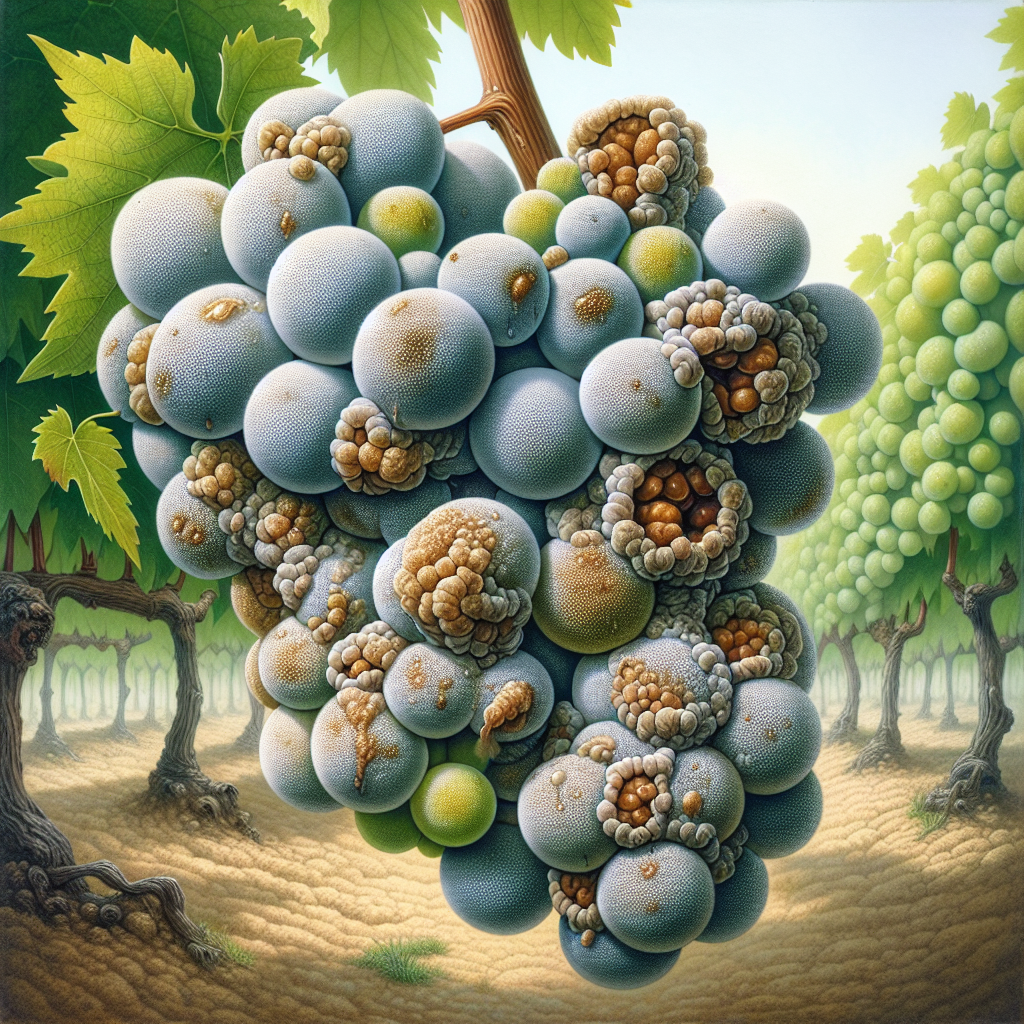
Introduction to Botrytis bunch rot
Botrytis bunch rot, commonly known as gray mold, is one of the most economically damaging fungal diseases in viticulture worldwide. Caused by the necrotrophic fungus Botrytis cinerea, it primarily targets grapes, attacking berries, rachises, and peduncles during the critical pre-harvest period. This disease can lead to 20-80% yield losses in severe epidemics, compromising fruit quality and necessitating costly interventions.
The pathogen is ubiquitous, capable of surviving as dormant mycelium or sclerotia in debris, soil, and infected plant material. Spores (conidia) are airborne, splashing from rain or irrigation, and infect through wounds, senescing tissues, or natural openings like stomata. While B. cinerea can produce noble rot for sweet wines like Sauternes, bunch rot in table and wine grapes results in off-flavors, skin splitting, and vinegar-like spoilage.
Early detection and integrated management are crucial, as chemical controls alone are insufficient due to resistance issues. Organic growers face unique challenges, relying on cultural and biological strategies. This guide provides professional-grade diagnostics, lifecycle insights, and actionable plans to safeguard your vineyard.
Identifying Symptoms & Damage
Symptoms of Botrytis bunch rot typically appear post-veraison, escalating during humid spells. Initial signs include light brown, water-soaked spots on individual berries, often at the distal end or near injuries from birds or insects. Affected berries soften rapidly, turning reddish-brown with a velvety gray spore mass under humid conditions—hallmark of gray mold.
As infection spreads, berries shrivel, forming mummies that release millions of conidia. Rachides brown and necrotic, leading to bunch collapse. In wet weather, entire clusters rot, exuding sugary liquid that attracts fruit flies and vinegar bacteria, amplifying damage. Distinguish from other rots: Botrytis lacks the black fungal growth of anthracnose or the powdery appearance of powdery mildew.
Damage extends beyond yield loss—rotted fruit contaminates healthy ones during harvest, reducing wine quality with earthy, moldy flavors. Economic impact is severe in humid regions like the Pacific Northwest or Europe, where losses exceed $1 billion annually. Scout weekly from bloom, using a 10x hand lens to spot early mycelium on aborted berries or calyptras.
Lifecycle and Progression of Botrytis bunch rot
Botrytis cinerea has a polycyclic lifecycle, with multiple infection cycles per season. Overwintering structures include sclerotia in soil/debris and mycelium in canes/prunings. In spring, apothecia or conidia form on debris, dispersing via wind/rain.
Primary inoculum infects bloom debris, green berries, or leaves, remaining quiescent until veraison triggers necrosis. Conidia germinate in 4-6 hours at 15-25°C (59-77°F) and >90% RH, penetrating via wounds or microcracks. Lesions expand, producing secondary conidia in 48-72 hours, fueling epidemics.
Progression peaks pre-harvest: latent infections activate under prolonged leaf wetness (>12 hours). Sclerotia form in mummies, perpetuating the cycle. For more on the broader pathogen, see our Botrytis wiki page. Optimal spread occurs at 20°C with free water on tissues.
Environmental Triggers & Risk Factors
Botrytis thrives in cool (15-23°C), humid conditions with prolonged leaf wetness. High rainfall (>25mm in 48 hours) or fog near harvest drives epidemics. Canopy density traps moisture, elevating RH to 95%+, ideal for spore germination.
Risk factors include tight clusters like those in Thompson Seedless Grapes, thin-skinned cultivars, and excessive nitrogen promoting lush growth. Overcropping stresses vines, weakening defenses. Poor airflow from dense planting or upright training exacerbates issues.
Secondary factors: wounding by grape leafhoppers or hail, and nutrient imbalances (high K). In organic systems, monitor microclimates using weather stations. Threshold: 2% infected berries signals action. Check Why 80% of Small Farms Battle Weather Disasters - And How Hyper-Local AI Forecasts Can Save Your Harvest for predictive tools.
Organic Control & Treatment Plans
Organic management emphasizes prevention but includes curative options. Cultural: Thin clusters at pea-size to open canopies, removing 20-50% buttons for airflow. Prune for 2-3 ft row middles; train to vertical shoot positioning.
Biological: Apply Trichoderma harzianum or Bacillus subtilis pre-bloom and post-veraison (OMRI-listed products like Serenade). Ampelomyces quisqualis hyperparasitizes Botrytis. Yeast antagonists like Aureobasidium pullulans coat berries.
Biopesticides: Potassium bicarbonate (MilStop) or sodium bicarbonate sprays every 7-10 days in high risk. Horticultural oils with bicarbonates disrupt spore germination. Sulfur (microthiol) pre-bloom, avoiding post-veraison to prevent residue.
Treatment Protocol: At 1-2% incidence, spray bicarbonates + biofungicide; repeat on 70% RH forecast. Remove infected clusters immediately, burying debris. Post-harvest, flail chop prunings and disk into soil for decomposition.
Resistance Management: Rotate modes-of-action; integrate with sanitation. Trials show 70-85% control combining biology and bicarbonates. Monitor via apps for spray timing.
Preventing Botrytis bunch rot in the Future
Long-term prevention starts at site selection: choose well-drained slopes with breezy exposures. Select resistant varieties like Chardonnay over susceptible Pinot Noir. Maintain vigor with balanced nutrition—avoid excess N; apply compost for microbiome health.
Annual practices: Dormant pruning removes 90% inoculum; mulch debris away from trunks. Pre-bloom cluster thinning (hand or mechanical) reduces microclimate humidity by 15%. Cover crops like clover improve airflow.
Monitoring: Use disease models (e.g., BotryCast) integrating temperature, wetness. Scout 20 clusters/acre weekly. Sanitize tools; harvest promptly at optimal ripeness. Post-harvest, rapid drying and sorting minimize storage losses.
Integrated approach yields 90%+ prevention. Build soil health per Soil Health Mastery: 5 Proven Strategies for Small Farms to Build Fertile Ground Without Breaking the Bank.
Crops Most Affected by Botrytis bunch rot
Grapes are primary, especially tight-clustered cultivars like Thompson Seedless. Also severe on strawberry (fruit rot), raspberry (cane blight), blueberry (blossom blight), and cherry (spur blight). Soft fruits like tomato and lettuce suffer gray mold. Ornamentals and vegetables (e.g., onion) affected. Focus viticulture strategies, adapting for berries.