Introduction to foot rots
Foot rots represent a critical group of soilborne diseases that threaten agricultural productivity by targeting the lower stems and root collars of plants, leading to severe yield losses. These diseases, primarily caused by fungi like Sclerotium rolfsii (causing southern blight), Phytophthora spp., Rhizoctonia solani, and Fusarium spp., create water-soaked lesions at the soil line that girdle the plant, disrupting water and nutrient transport. In humid, warm environments, foot rots can wipe out entire fields of susceptible crops, making early diagnosis and proactive management essential for farmers.
Unlike foliar diseases, foot rots are stealthy, often going unnoticed until wilting occurs. They thrive in poorly drained soils, overwatered fields, and areas with high plant density. Global reports indicate losses exceeding 30-50% in affected potato and onion crops annually. This guide provides professional-grade diagnostic tools, lifecycle insights, and organic strategies to combat foot rots effectively. For more on related soil health challenges, check our Soil Health Mastery blog post.
Understanding foot rots is vital for sustainable farming, as they persist in soil for years via sclerotia or oospores, reinfecting new plantings. Integrated management combining sanitation, rotation, and biocontrols can reduce incidence by up to 80%. This comprehensive resource equips growers with actionable steps to protect their operations.
Identifying Symptoms & Damage
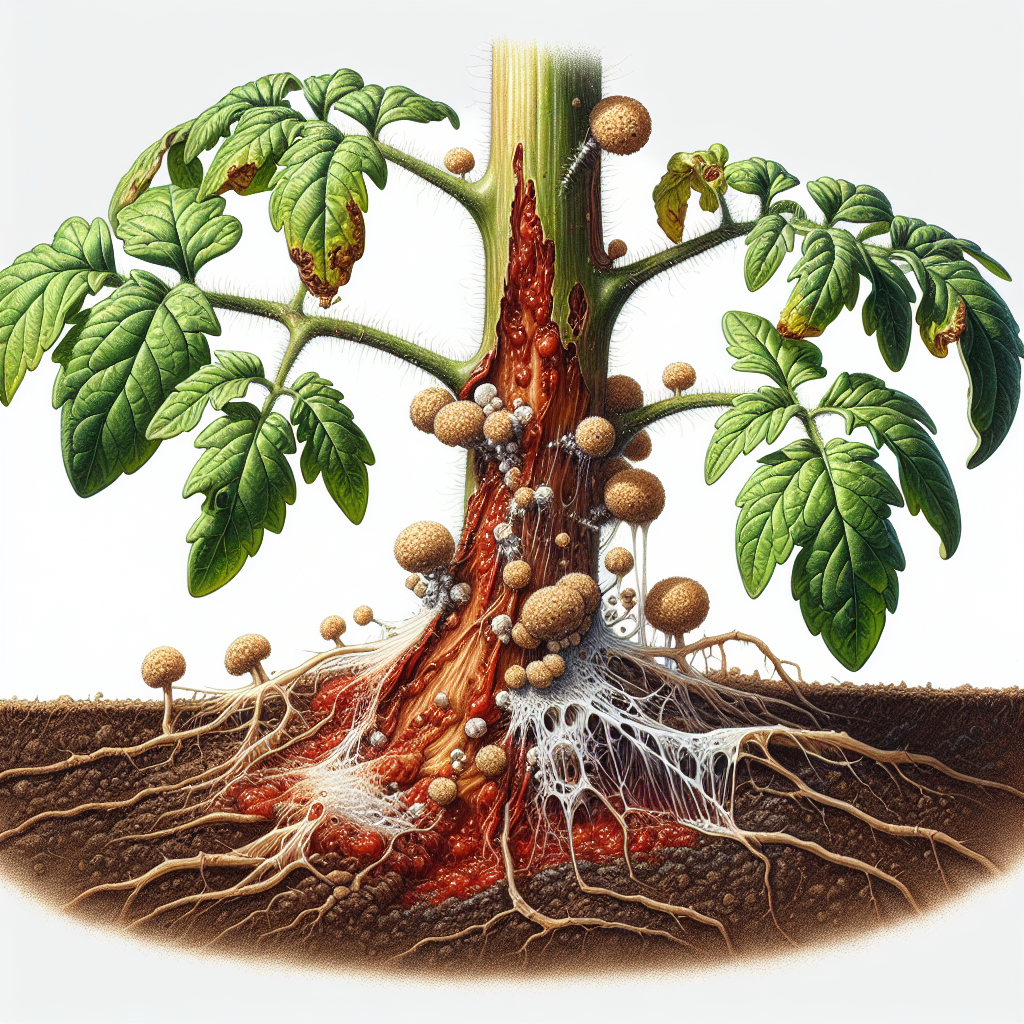
Accurate identification of foot rots is crucial for timely intervention. Initial symptoms appear at the soil line as dark, water-soaked lesions on the stem base or 'foot' of the plant. These lesions expand rapidly, turning brown to black with a shredded, rotted appearance. White mycelium or mustard-seed-sized sclerotia (tan to brown spheres) may cover the infected area in Sclerotium rolfsii cases, especially in warm, moist conditions.
Affected plants exhibit sudden wilting during the day, recovering slightly at night, followed by permanent collapse. Lower leaves yellow and die, and roots may show dark decay. In advanced stages, the stem girdles completely, causing toppling. Differentiate from root rots by the prominent above-soil lesion; foot rots primarily affect the crown.
Damage varies by crop: in tomato, stunted growth and fruit drop occur; in grains like rice, lodging leads to unharvestable yields. Yield losses range from 10-100%, with secondary invasions by root-knot nematodes exacerbating issues. Scout fields weekly, parting soil to inspect bases. Lab confirmation via culturing on selective media identifies the pathogen.
Visual cues include a foul odor from bacterial secondary infections and sparse, stunted root systems. In ginger and turmeric, rhizomes rot internally, oozing liquid. Early detection via symptom scouting prevents spread, as spores splash to nearby plants during rain.
Lifecycle and Progression of foot rots
Foot rots follow a soil-persistent lifecycle adapted to survive harsh conditions. Pathogens overwinter as sclerotia (Sclerotium rolfsii), oospores (Phytophthora), or mycelium (Rhizoctonia). These structures remain viable for 2-5 years, germinating when moisture and temperatures (25-35°C) favor infection.
Infection initiates via hyphae or zoospores contacting wounded or susceptible tissue at the soil line. Penetration occurs through natural openings or injuries from cultivation. The pathogen colonizes vascular tissues, producing enzymes that dissolve cell walls, leading to rot within 3-7 days. Under high humidity, mycelium spreads externally, producing more sclerotia.
Progression accelerates in wet soils: lesions expand 1-2 cm/day, girdling stems in 1-2 weeks. Infected plants serve as sources for secondary spread via splashing rain or tools. Phytophthora produces motile zoospores in waterlogged conditions, infecting up to 10m away. Crop debris harbors pathogens, completing the cycle.
In banana, progression from corm infection leads to pseudostem collapse. Understanding this cycle underscores prevention: break it with rotation and residue removal to starve pathogens.
Environmental Triggers & Risk Factors
Foot rots flourish under specific conditions: prolonged soil moisture (>60% field capacity), temperatures 25-32°C, and neutral to acidic soils (pH 5.5-7.0). Poor drainage, compaction, and over-irrigation create anaerobic zones ideal for oomycetes like Phytophthora.
Risk factors include monocropping, which builds inoculum; mechanical injuries from tillage; and high nitrogen fertilizers promoting succulent growth. Acidic soils favor Sclerotium, while alkaline ones suit Rhizoctonia. Warm, humid climates (tropics/subtropics) see epidemics; temperate areas during rainy seasons.
Crop residues, volunteer plants, and weeds host pathogens. Overcrowding reduces airflow, trapping moisture. Climate change intensifies risks with erratic rains. Test soil drainage: dig 30cm holes; if water stands >48 hours, risk is high. Monitor weather for prolonged wet spells.
Organic Control & Treatment Plans
Organic management emphasizes cultural, biological, and minimal chemical controls. Remove and destroy infected plants immediately, avoiding composting. Solarize soil (clear plastic, 4-6 weeks summer) kills 70-90% sclerotia. Apply biocontrols: Trichoderma viride (5-10g/kg seed) or Pseudomonas fluorescens drenches suppress pathogens by 50-70%.
Use mustard seed meal (4-6 tons/ha) or mustard green manures for biofumigation, releasing isothiocyanates toxic to fungi. Improve drainage with raised beds (20-30cm) and organic mulches (straw, 10cm) to moderate moisture. Seed-treat with hot water (50°C, 20min) or biofungicides.
Rotate with non-hosts like grapes or brassicas (3-4 years). Introduce antagonistic microbes via compost teas. For active infections, apply lime (to pH 7.0+) against Sclerotium and gypsum for calcium-deficient soils. Monitor with baiting tests; integrate with resistant varieties like disease-tolerant sweet potato.
Integrated plans: Week 1 scout/treat; Month 1 solarize/rotate; Ongoing biocontrols. Success rates exceed 75% with diligence.
Preventing foot rots in the Future
Prevention is the cornerstone: select certified, disease-free seeds/seedlings. Implement 3-year rotations excluding hosts. Optimize spacing (e.g., 60x45cm for tomatoes) for airflow. Maintain soil pH 6.5-7.0 with lime; add organic matter (5-10 tons/ha compost) for drainage.
Avoid overhead irrigation; use drip systems. Till minimally to prevent sclerotia burial. Cover crops like mustard or sudangrass suppress via allelopathy. Scout biweekly, using sticky traps for vectors. Build soil biology with vermicompost and mycorrhizae.
Long-term: fumigate with organic amendments pre-planting. Resistant cultivars (e.g., 'Defiant' potato) reduce risk 40%. Annual soil tests guide amendments. Educate workers on hygiene: disinfect tools with 10% bleach.
Crops Most Affected by foot rots
Foot rots strike diverse crops, especially legumes, solanaceae, and alliums. Top victims: tomatoes (30-50% losses), peppers, eggplant, potatoes, onions, garlic, beans, peanuts, soybeans, cassava, ginger, turmeric, bananas, tobacco, and ornamentals like chrysanthemums.
Grains like sorghum and rice suffer in wet fields. Tropicals (mango, papaya) show susceptibility. Economic impact: billions annually. Tailor strategies per crop; e.g., deep planting for peanuts.