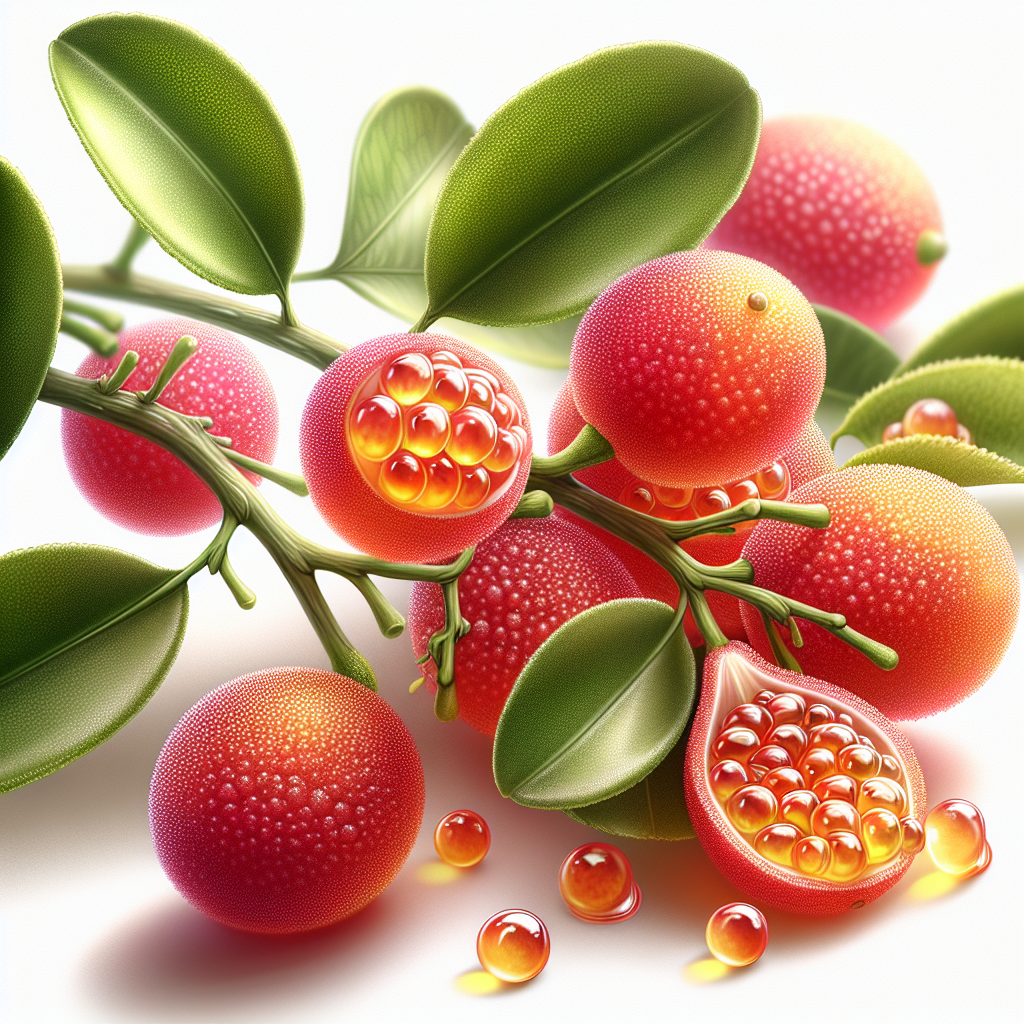
Introduction to Finger Lime (Rainforest Pearl)
Finger Lime (Rainforest Pearl), known scientifically as Citrus australasica 'Rainforest Pearl', represents the pinnacle of native Australian citrus innovation. This select cultivar, developed from wild rainforest genetics in the hinterlands of Queensland and New South Wales, produces finger-like fruits filled with vibrant, pearl-sized citrus caviar. Unlike traditional round limes, Rainforest Pearl finger limes offer a unique texture—popping vesicles that release intense citrus oils, floral notes, and a zesty acidity perfect for gourmet garnishes, cocktails, and fine dining.
Originating from the subtropical rainforests of eastern Australia, this variety has gained global acclaim for its thornless growth habit, compact size (typically 2-4 meters tall), and prolific yields. Commercial growers prize it for its shelf stability and premium market value, often fetching $50-100 per kilogram in specialty markets. Home gardeners appreciate its ornamental appeal, with glossy dark green leaves, fragrant white flowers, and colorful fruit skins ranging from deep green to ruby red at maturity. Finger Lime (crop) shares similar traits but Rainforest Pearl excels in uniformity and flavor consistency.
This deep-dive guide equips professional growers, small farm operators, and enthusiasts with evidence-based strategies for cultivation. From propagation to harvest, discover how to maximize yields while overcoming subtropical challenges like humidity-driven pests. With proper management, expect first fruits in 2-3 years from planting, scaling to 10-20 kg per mature tree annually.
Botanical Profile of Finger Lime (Rainforest Pearl)
Family and Origin: Belonging to the Rutaceae family, Citrus australasica 'Rainforest Pearl' is a primitive citrus species native to Australia's coastal rainforests. Selected for its superior pearl quality and disease resistance, this cultivar traces its lineage to wild finger lime populations between Gympie and Cape York.
Growth Habit: Rainforest Pearl forms a bushy, upright shrub or small tree, reaching 2-4 meters in height and 1.5-2.5 meters wide. It's notably thornless compared to wild types, making it ideal for high-density planting (4-6 meters apart). Leaves are lanceolate, 3-6 cm long, with a glossy, dark green surface and pale undersides. New growth flushes pinkish-red, adding ornamental value.
Flowering and Fruiting: Fragrant white flowers bloom in spring (September-November in Southern Hemisphere), self-fertile with high set rates. Fruits mature over 6-8 months, harvestable from late autumn to winter (April-August). Each finger-shaped fruit measures 6-12 cm long, 1-2 cm diameter, with thin, bumpy skin in shades of green, yellow, pink, or red. Internally, pearl-like vesicles (citrus caviar) range from pale yellow to deep ruby, prized for their burst of flavor—tart with pineapple, passionfruit, and lemongrass undertones.
Nutritional Profile: Rich in vitamin C (up to 100mg/100g), folate, and antioxidants like limonoids. The caviar's high oil content (4-6%) delivers exceptional aroma, making it a chef's favorite for emulsions, desserts, and beverages.
Varietal Distinctions: Rainforest Pearl stands out for its large, uniform pearls and red blush, outperforming green-skinned varieties in visual appeal and taste tests conducted by Australian citrus researchers.
Soil, pH, and Climate Requirements for Finger Lime (Rainforest Pearl)
Soil Preferences: Rainforest Pearl thrives in well-draining, humus-rich soils mimicking its rainforest origins. Loamy sands or clay loams with 5-10% organic matter are ideal. Avoid heavy clays prone to waterlogging, which invite Phytophthora (disease). Incorporate 20-30% compost or aged pine bark at planting for aeration and mycorrhizal support.
pH Range: Optimal 5.5-6.5, slightly acidic to replicate understory conditions. Test soil annually; amend with sulfur if above 7.0 or dolomite lime if below 5.0. Mulch with acidic pine needles to maintain pH stability.
Climate Needs: Subtropical USDA zones 9-11 (minimum -4°C tolerance). Prefers 20-30°C daytime averages, 1,200-2,000 annual chill hours for fruit set. High humidity (60-80%) boosts growth, but ensure airflow to prevent fungal issues. In cooler climates, protect with frost cloth; in arid areas, provide 50% shade cloth during peak summer. Annual rainfall 1,000-1,500 mm ideal, supplemented by drip irrigation (20-40 L/week per tree).
Site Selection: Partial shade (30-50% filtered sun) in first 2 years, full sun thereafter. Wind protection essential—plant as hedges or near Guava (crop) windbreaks. For container growing, use 50-75L pots with citrus mix.
Read our comprehensive guide on Soil Health Mastery: 5 Proven Strategies for Small Farms to Build Fertile Ground Without Breaking the Bank for advanced soil prep techniques.
Step-by-Step Planting & Propagation
Propagation Methods:
- Seed (Not Recommended for True-to-Type): Viable but variable; stratify fresh seeds 4 weeks at 4°C.
- Cuttings (Preferred for Clones): Take 10-15 cm semi-hardwood tips in summer. Dip in 3,000 ppm IBA, root in perlite:vermiculite (1:1) under mist. 60-80% success in 6-8 weeks.
- Grafting (Commercial Standard): Bud or chip graft onto trifoliate orange or flying dragon rootstock for vigor and nematode resistance. Best in late winter.
Planting Guide:
- Timing: Spring after frost risk.
- Site Prep: Dig 50x50x50 cm holes, enrich with compost, gypsum (for clay), and slow-release NPK 8-3-9.
- Planting: Position graft union 5 cm above soil. Backfill, firm, water deeply.
- Initial Care: Mulch 10 cm deep (not touching trunk). Stake if windy. Fertilize monthly with citrus booster.
Spacing: 4x4 m for trees, 2x2 m for hedges. Expect 80% establishment with proper hardening off.
Care & Maintenance regimes for Finger Lime (Rainforest Pearl)
Watering: Deep, infrequent—weekly in dry spells, less in rain. Use tension meters to maintain -10 to -30 kPa soil moisture. Drought-tolerant once established.
Fertilization: Annual regime: Spring—high N (e.g., 200g/tree urea); Summer—balanced NPK; Autumn—high K/P for fruit set. Foliar micronutrients (Zn, Mn, Fe) quarterly. Soil drench with micronutrient chelates yearly.
Pruning: Annually post-harvest: Remove deadwood, thin canopy for light penetration (20-30% removal). Tip prune to encourage bushiness. Thornless nature simplifies this.
Mulching and Weed Control: 10-15 cm organic mulch. Hand-pull weeds; avoid herbicides near roots.
Training: Espalier or hedge for small spaces. Monitor for suckers on grafted plants.
Pests, Diseases & Organic Management
Key Pests:
- Citrus leafminer (pest): Young flush damage. Neem oil sprays at first signs; reflective mulches.
- Scale insects (pest) & Mealybugs (pest): Horticultural oil + insecticidal soap. Introduce ladybirds.
- Aphids (pest): Strong water jet; garlic/chili sprays.
- Spider mites (pest): Sulfur miticide, predatory mites.
Major Diseases:
- Root rot (disease) from Phytophthora (disease): Improve drainage, phosphite drenches.
- Citrus greening (disease): Vector control via psyllid management; remove infected plants.
- Powdery mildew (disease): Potassium bicarbonate sprays.
Organic IPM: Scout weekly, use traps, encourage biodiversity. Check Why 90% of Small Farms Fail at Pest Management - And 8 Organic Fixes That Actually Work for proven protocols.
Harvesting, Curing & Optimal Storage
Harvest Indicators: Fruits drop naturally when ripe (color change, easy detachment). Hand-pick weekly from April-August. Yield: 10-20 kg/tree at maturity.
Techniques: Twist gently; use clipping shears for clusters. Handle caviar carefully to avoid bursting.
Curing: Store at 10-15°C, 85-90% RH for 2-4 weeks to enhance flavor. Avoid refrigeration below 8°C to prevent chilling injury.
Storage: Intact fruits: 4-6 weeks at 12°C. Extracted caviar: Freeze in airtight containers up to 12 months. Market fresh for premium pricing.
Post-Harvest: Clean, grade by size/color. Yields peak in year 5+ with consistent care.
Companion Planting for Finger Lime (Rainforest Pearl)
Enhance growth with synergistic partners:
- Nematode Repellents: Marigold (crop), Nasturtium (crop)—deter root-knot nematodes (pest).
- Pollinator Attractors: Thyme (crop), Yarrow (crop) boost fruit set.
- Nutrient Accumulators: Clover (crop) for nitrogen fixation.
- Shade/Structure: Underplant with Thai Basil (crop); pair with Hass Avocado (crop) for wind protection.
Avoid: Brassicas (disease risk), heavy feeders like Potato (crop). Explore Why Companion Planting Feels Like Guesswork for Small Farms - And How AI Makes It Foolproof for optimization.