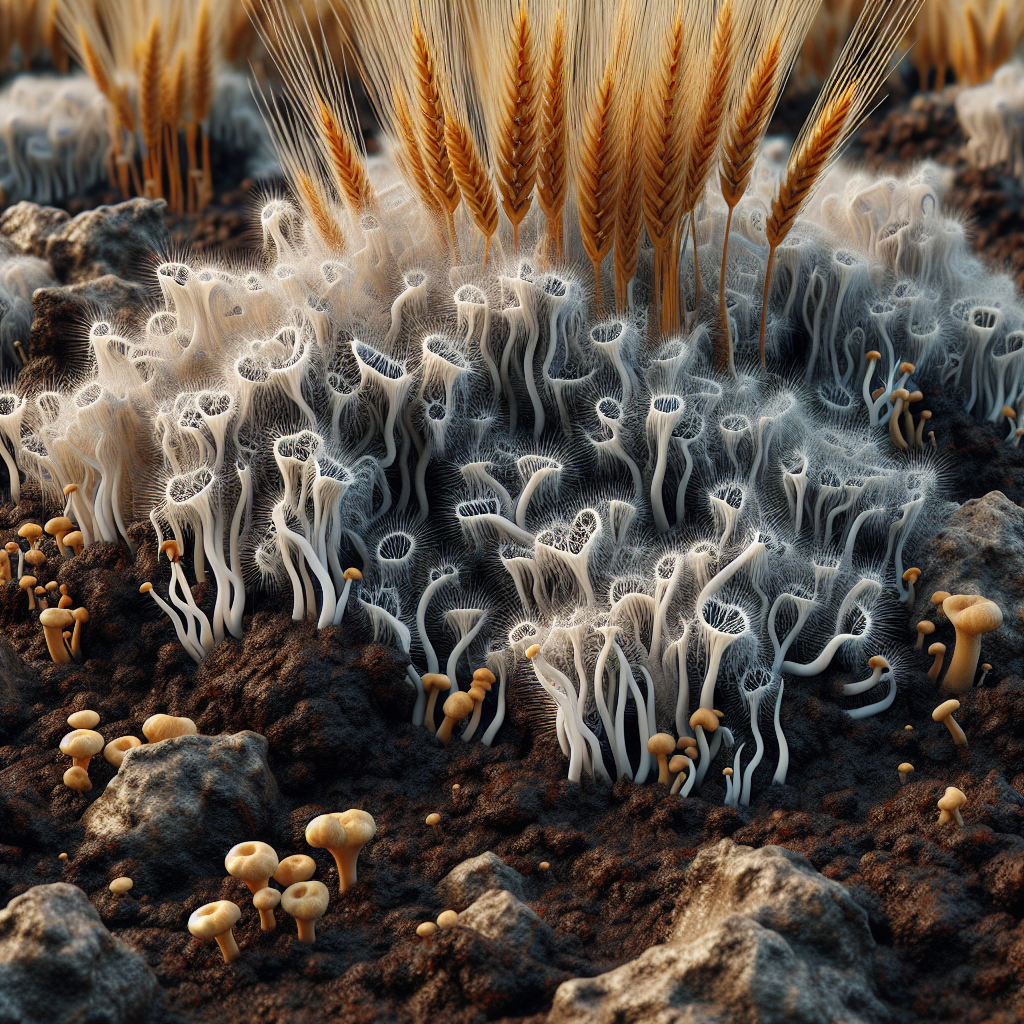
Introduction to Competing wild fungi
Competing wild fungi represent a unique challenge in modern agriculture, particularly for small-scale and organic farmers. Unlike pathogenic fungi that directly infect and damage plants, these are native, saprophytic or mildly mycorrhizal fungi—such as species from genera like Trichoderma, Aspergillus, Penicillium, and Fusarium (non-pathogenic strains)—that aggressively colonize soil, organic residues, and root zones. They 'compete' with crops by rapidly decomposing mulch, crop residues, and even live root exudates, depriving cultivated plants of essential nutrients like nitrogen, phosphorus, and micronutrients. This phenomenon is increasingly common in no-till systems, high-organic-matter soils, and areas transitioning to regenerative agriculture, where wild fungal populations explode due to abundant carbon sources.
In practical terms, competing wild fungi can reduce yields by 20-50% in affected fields, especially in wheat, corn, and soybeans. Farmers often mistake this for nutrient deficiencies or root rots, but the key distinguisher is the healthy appearance of fungi themselves—white, green, or black mycelial mats thriving while crops lag. This guide provides definitive diagnostic criteria, lifecycle insights, and organic management strategies to reclaim your fields. For more on optimizing small farm ecosystems, check this Soil Health Mastery blog post.
Understanding competing wild fungi is crucial as climate change and reduced tillage amplify their prevalence. These fungi are not 'diseases' per se but ecological opportunists that disrupt the delicate balance between cultivated plants and soil microbiota. Early identification and proactive management can prevent yield losses and foster resilient agroecosystems.
Identifying Symptoms & Damage
Diagnosing competing wild fungi requires keen observation of subtle, systemic symptoms rather than overt disease signs. Primary indicators include:
- Vigorous fungal growth in soil and residues: Look for dense white mycelium (e.g., Trichoderma spp.) on mulch, compost, or decaying roots, often covering 20-50% of the soil surface in patches. Unlike powdery mildew, this growth persists in moist, organic-rich soils without aerial spread.
- Stunted crop growth with healthy foliage: Plants exhibit yellowing lower leaves, reduced tillering or branching, and shallow root systems despite adequate moisture and fertility. Roots appear 'clean' but underdeveloped, lacking fine feeder roots.
- Nutrient tie-up: Classic signs of nitrogen starvation—pale green crops, slow maturation—even after fertilization. Phosphorus and potassium uptake is similarly impaired.
- Premature residue decomposition: Crop stubble or cover crop residues break down unusually fast (within 2-4 weeks), releasing nutrients that wild fungi sequester before crops can access them.
Damage quantification: In potato fields, competing fungi can reduce tuber size by 30%, while in rice paddies, they suppress tiller formation, cutting grain yield by 15-25%. Inspect during early vegetative stages (V3-V6 for cereals) by digging profiles: if fungal hyphae dominate rhizosphere over mycorrhizal associations, competition is confirmed.
Advanced diagnostics: Soil plating on potato dextrose agar reveals dominant wild fungal colonies outnumbering beneficials like Glomus spp. Microscopic exam shows rapid-sporing structures. Differentiate from Pythium or Rhizoctonia by lack of plant cell death—crops survive but underperform.
Lifecycle and Progression of Competing wild fungi
Competing wild fungi follow a rapid, opportunistic lifecycle adapted to agricultural disturbances:
- Spore germination (0-48 hours): Abundant conidia or chlamydospores in soil activate with moisture >60% field capacity and temperatures 15-30°C.
- Mycelial colonization (3-7 days): Hyphae radiate from residues, enzymatically degrading cellulose, lignin, and root exudates. Trichoderma produces antibiotics suppressing crop-associated microbes.
- Resource dominance (1-3 weeks): Fungi form mats, immobilizing N as fungal biomass. Peak competition during crop establishment.
- Sporulation and dormancy (ongoing): New spores disperse via wind, water splash, or tools, persisting years in soil.
Progression accelerates in wet springs or after green manures. In tomato crops, early competition leads to 4-6 week setback; untreated, it cascades to poor fruit set. Lifecycle completes in 2-4 weeks per cycle, with multiple generations per season.
Environmental Triggers & Risk Factors
Key triggers include:
- High organic inputs: Excessive mulch (>10 tons/ha) or manure without balancing microbes fuels fungal booms.
- Compacted, wet soils: Anaerobic pockets favor Aspergillus and Penicillium.
- Reduced tillage: Preserves fungal inoculum.
- Monocropping: Depletes antagonists like predatory bacteria.
- Climate: Humid, mild conditions (20-25°C, >80% RH); exacerbated by irrigation.
Risk is highest in fields with pH 5.5-6.5 and OM >4%. Avoid over-reliance on clover covers, which can host competitors.
Organic Control & Treatment Plans
Organic management emphasizes suppression via beneficials and cultural shifts:
- Biological inoculants: Apply Trichoderma harzianum (paradoxically, select strains) or Bacillus subtilis at 10^9 CFU/kg soil pre-planting. Mycorrhizal fungi (Glomus intraradices) at 100 propagules/100g soil outcompete wilds.
- Soil aeration: Subsoiling or broadfork to 30cm disrupts mats; follow with Thai basil companion planting for antifungal volatiles.
- Nutrient pulsing: Foliar NPK sprays bypass soil tie-up; biochar (5 t/ha) adsorbs fungal enzymes.
- Crop rotation: Alternate with brassicas or alliums (onion) to break cycles.
- Mulch management: Use coarse, slow-decomposing mulches; solarize soil 4-6 weeks pre-plant.
Treatment timeline: Week 1—apply inoculants + aerate; Week 2-4—monitor regrowth. Success rates: 70-90% yield recovery in oyster mushroom intercropped systems.
Integrated plan for dragon fruit: Inoculate at transplant, rotate with grains.
Preventing Competing wild fungi in the Future
Prevention is ecosystem engineering:
- Microbial priming: Annual Pseudomonas fluorescens drenches build resilience.
- Diverse rotations: 3-4 year cycles including marigold for nematicidal effects.
- Precision irrigation: Drip to avoid saturation.
- Cover crop cocktails: Mix grasses/legumes to favor mutualists.
- Monitoring: Weekly soil cores; threshold: >30% fungal coverage triggers action.
Long-term: Boost soil biology with compost teas (10:1 aerated). Fields under prevention see <5% incidence.
Crops Most Affected by Competing wild fungi
High-risk crops:
- Cereals: wheat, corn, rice—stunted seedlings.
- Legumes: soybeans, chickpeas—nodulation failure.
- Roots: potato, carrot—small tubers.
- Others: Oyster mushroom (substrate competition), cassava.
Low-risk: Deep-rooted perennials like avocado. Tailor strategies per crop.