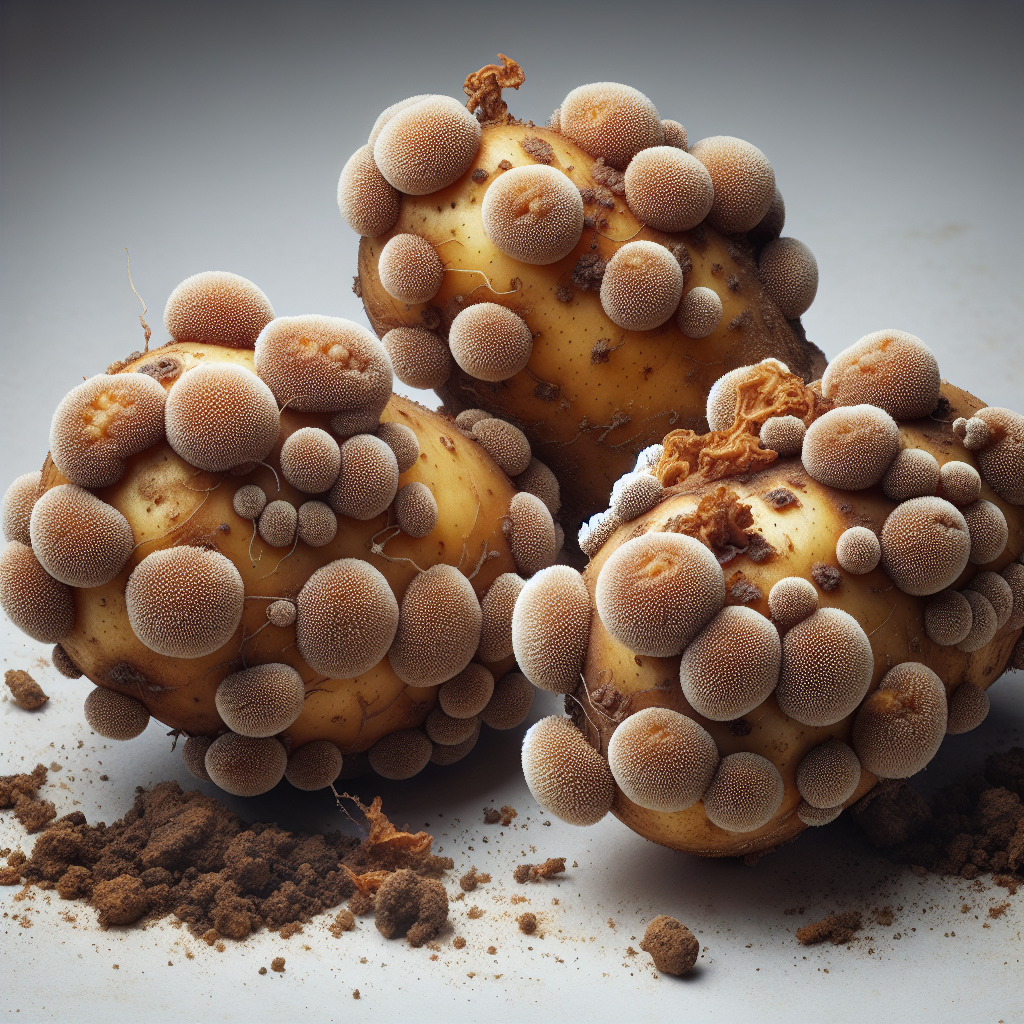
Introduction to powdery scab
Powdery scab, caused by the obligate parasite Spongospora subterranea, is a challenging disease that plagues potato growers worldwide. Unlike fungal pathogens, this protozoan thrives in cool, wet soils, forming persistent spores that can survive in soil for up to 20 years. First identified in the late 19th century, powdery scab has become a significant concern in organic and conventional potato production due to its impact on tuber quality and its resistance to many chemical controls. The disease not only blemishes tubers with raised, powdery lesions but can also facilitate secondary infections like root-knot nematodes or early blight, compounding losses. In commercial settings, infected tubers can lead to rejection at packing houses, slashing marketable yield by 30-70%. For small-scale farmers, understanding powdery scab's biology is crucial for implementing sustainable management strategies that preserve soil health and profitability. This guide provides diagnostic tools, lifecycle insights, and proven organic treatments to combat this stubborn foe effectively.
Identifying Symptoms & Damage
Early detection of powdery scab hinges on recognizing subtle root and tuber symptoms. On roots, look for galls—small, brownish swellings that rupture to release powdery spore balls, often mistaken for root rot. As infection progresses, tubers develop characteristic lesions: small (1-3 mm), raised pustules filled with a fine, brown powder that erodes into open craters under pressure or handling. Unlike common scab, which produces rough, corky pits, powdery scab lesions are initially smooth and powdery, darkening to rusty brown over time. Severe infections create 'honeycombing' with coalesced lesions covering up to 50% of the tuber surface.
Damage extends beyond aesthetics. Lesions serve as entry points for bacteria and fungi, increasing soft rot risk during storage. Yield losses average 10-20% from smaller tubers, but quality rejection can exceed 50% in fresh markets. Inspect daughter tubers on volunteer plants or weeds like black nightshade (if applicable), as they harbor inoculum. Use a hand lens to confirm spore balls—tiny, spherical structures diagnostic of S. subterranea. Differentiate from environmental disorders like russeting (mechanical abrasion) or chemical phytotoxicity (irregular patterns). Field diagnosis: Dig plants at 8-10 weeks post-planting; wet roots reveal powdery discharge when squeezed. Lab confirmation via PCR is ideal for borderline cases.
Lifecycle and Progression of powdery scab
Spongospora subterranea has a complex lifecycle with two spore stages: zoosporangia for root infection and plasmodia forming sclerotia (spore balls) on tubers. Primary zoospores, released from overwintered sclerotia in moist soils (above 50% field capacity), swim to root hairs or tips, penetrating within hours. Optimal infection occurs at 10-15°C (50-59°F), explaining cool-climate prevalence. Inside roots, the pathogen multiplies, producing secondary zoospores that spread to nearby roots or tubers.
On tubers, developing periderm is invaded during late bulking (60-90 days post-emergence). Sclerotia form within 2-4 weeks, maturing into persistent propagules. A single lesion can release millions of spores, contaminating soil, water, and equipment. The disease progresses slowly: root galls appear 3-4 weeks after planting, tuber lesions 8-12 weeks. In dry conditions, progression halts; wet harvest exacerbates spread. Sclerotia germinate repeatedly over years, with viability declining after 10-15 years but remaining infective indefinitely under ideal conditions. Vectors include splashing rain, irrigation, and machinery; volunteer potato plants perpetuate cycles.
Environmental Triggers & Risk Factors
Powdery scab thrives in cool (8-18°C), wet soils with pH 5.0-6.5. High moisture (>60% field capacity) for 48+ hours triggers zoospore release, especially post-rain or overhead irrigation. Sandy or peaty soils retain inoculum longer due to poor drainage. Risk spikes after flooding or prolonged leaf wetness (>10 hours). Acidic soils favor infection, correlating with aluminum toxicity that stresses roots.
Crop rotation history is key: less than 4 years since last potato crop multiplies odds 5-fold. Susceptible varieties like Russet Burbank amplify damage. Compaction reduces aeration, trapping moisture. Fertilizer imbalances—excess nitrogen or low calcium—weaken periderm. Contaminated seed tubers or water sources introduce inoculum. Climate change extends risky windows with wetter springs. Monitor via soil sampling: >10 sclerotia/g soil indicates high risk.
Organic Control & Treatment Plans
No curative organic treatments exist; focus on suppression. Seed tuber treatment: Hot water dip (44°C for 10 min) + biofungicide like Bacillus subtilis reduces surface sclerotia by 70%. Soil amendments: Apply lime to raise pH >6.5, suppressing zoospore motility (300-500 kg/ha). Mustard biofumigant cover crops release isothiocyanates toxic to sclerotia; plant 4-6 weeks pre-potato, incorporate green. Biologicals: Trichoderma spp. or Pseudomonas fluorescens (5-10 kg/ha) colonize roots, outcompeting pathogen (apply at planting).
Cultural IPM: Hill up 20 cm at tuber initiation to shield developing tubers. Avoid overhead irrigation; use drip for 80% moisture control. Foliar calcium (1-2% chelate, 3x applications) strengthens periderm. Resistant varieties: Plant cultivars like 'Ontario' or 'Red Norland' (50% less lesions). Post-harvest: Cure tubers 4-7 days at 12-15°C, 95% RH to heal lesions; store at 4-7°C, low humidity. Integrate with powdery mildew management for broad fungal defense. Track via Spring Pest Patrol: Organic AI Strategies to Shield Your Crops from Common Invaders. Rotate with brassicas or grains 5+ years.
Preventing powdery scab in the Future
Long-term prevention centers on breaking the sclerotia cycle. Extended rotation: 6-8 years out of potato family (includes tomato, eggplant); intersperse with mustard, sudangrass, or sweet corn. Clean inputs: Source certified seed; test soil/water pre-planting. Sanitation: Disinfest tools/equipment with 10% bleach; power-wash harvesters. Site selection: Choose well-drained fields; avoid low spots. Cover cropping: Brassica green manures (e.g., mustard) every other year biofumigate soil.
Monitor with bait tests: Plant susceptible roots, assay for galls. Use GIS mapping for field-risk zoning. Build soil organic matter >4% via compost/manure to enhance suppression. Scout volunteers aggressively. For organics, combine with compost teas boosting Trichoderma. Economic threshold: <5% infection warrants action. See Russet Burbank Potato (crop) for variety tips.
Crops Most Affected by powdery scab
Primarily attacks potato (Solanum tuberosum), with all varieties susceptible but processing types (russets) hit hardest due to thin skins. Secondary hosts include sweet potato, tomato (tomato), and wild Solanaceae like bittersweet nightshade. Rarely affects eggplant or peppers. Global hotspots: Europe (UK, Netherlands), North America (Idaho, Washington), New Zealand, Andes. In potato-intensive regions, incidence >20%; seed production fields suffer most. Differentiate from similar scabs on beet or radish, which are fungal.