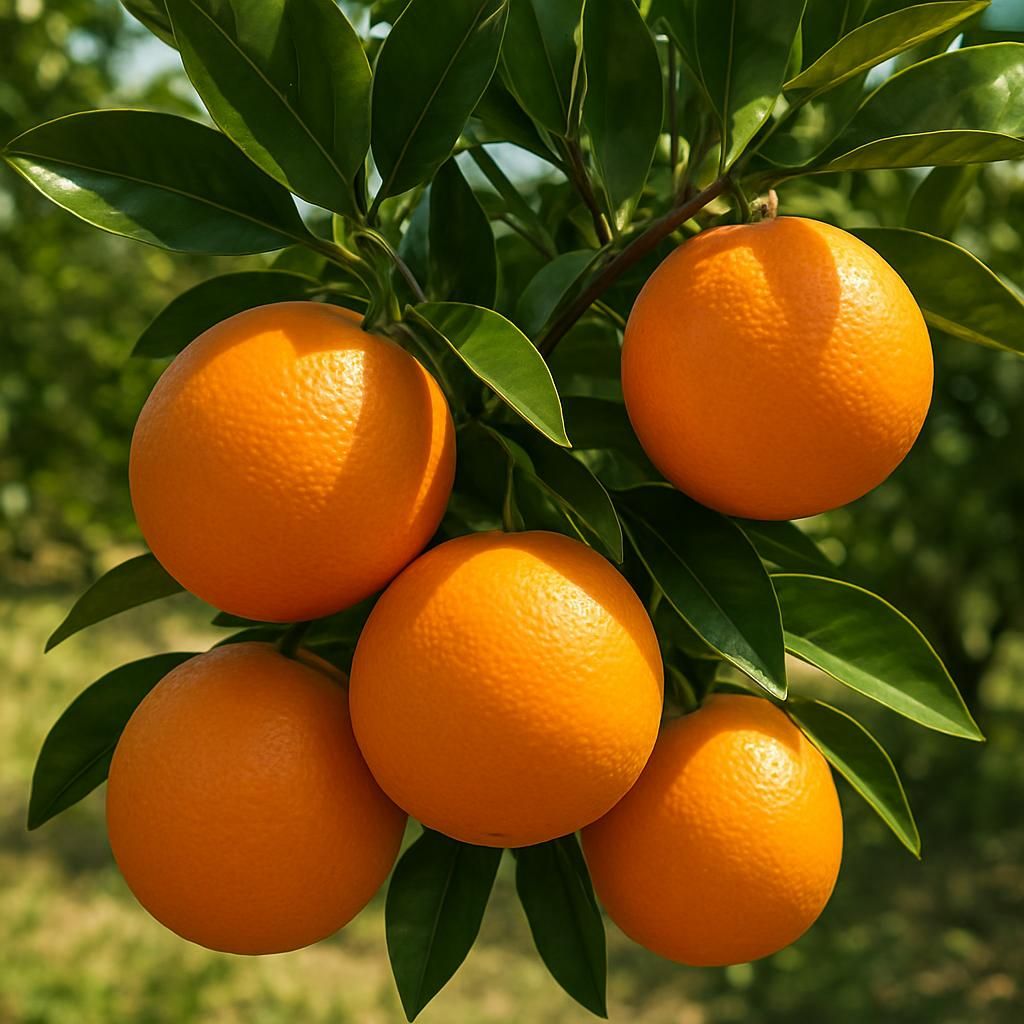
Introduction to Citrus
Citrus trees belong to the Rutaceae family and include oranges, lemons, limes, grapefruits, mandarins, and numerous hybrids. These subtropical evergreens produce fruit high in vitamin C, flavonoids, and essential oils used in food, beverage, and cosmetic industries. Global production exceeds 140 million metric tons annually, with major centers in Brazil, China, the United States, Mexico, and Spain. Successful cultivation requires attention to climate, soil drainage, irrigation, nutrition, and integrated pest management.
Botanical Profile of Citrus
Citrus species are small to medium evergreen trees or shrubs with glossy, aromatic leaves, often bearing spines. Flowers are white, fragrant, and usually borne singly or in small clusters. Fruit is a hesperidium—a modified berry with a leathery rind containing oil glands and juicy segments filled with pulp vesicles. Most commercial varieties are grafted onto rootstocks such as trifoliate orange or citrange to impart disease resistance and control vigor. Orange, Lemon, and Lime represent the three largest commercial groups.
Soil, pH, and Climate Requirements for Citrus
Citrus performs best in deep, well-drained sandy loam to loam soils with high organic matter. Waterlogging quickly leads to root decline. The following table summarizes ideal growing conditions:
| Parameter | Ideal Range | Notes |
|---|---|---|
| Soil Type | Sandy loam to loam | Good drainage essential |
| Soil pH | 6.0 – 7.5 | Slightly acidic to neutral |
| Temperature Range | 13–35 °C (55–95 °F) | Frost sensitive below –2 °C |
| Annual Rainfall | 900–1200 mm | Supplemental irrigation often required |
| Sunlight | Full sun (≥8 hours) | Maximizes fruit quality and yield |
| Elevation | 0–800 m | Higher elevations may need cold protection |
Step-by-Step Planting & Propagation
- Select certified disease-free nursery trees grafted on suitable rootstocks.
- Prepare planting holes 60–80 cm wide and deep; incorporate compost and a balanced slow-release fertilizer.
- Plant at the same depth as the nursery container, keeping the graft union 10–15 cm above soil level.
- Space trees 4–6 m apart in rows 6–8 m wide depending on variety and rootstock vigor.
- Water thoroughly after planting and apply a 5–10 cm layer of organic mulch, keeping it 15 cm away from the trunk.
- Stake young trees if windy conditions are expected.
Care & Maintenance regimes for Citrus
Consistent water, targeted nutrition, and timely pruning are critical. The table below outlines seasonal schedules:
| Season | Watering Schedule | Fertilizer Schedule | Pruning Schedule |
|---|---|---|---|
| Spring | 20–30 L/week for young trees; adjust to rainfall | Apply 1/3 annual NPK (e.g., 8-4-8) plus micronutrients | Remove dead wood; light shaping after bloom |
| Summer | 30–50 L/week; increase during heat waves | Second 1/3 NPK split into two applications | Tip-prune vigorous shoots to encourage branching |
| Autumn | Reduce to 15–25 L/week | Final 1/3 NPK; include potassium for fruit sizing | Remove crossing branches; maintain open canopy |
| Winter | Minimal; only if soil is dry | None unless leaf analysis shows deficiencies | Major structural pruning on dormant trees |
Monitor leaf nutrient levels annually and adjust programs accordingly. Foliar sprays of zinc, manganese, and magnesium are commonly applied during spring flush.
Pests, Diseases & Organic Management
Common arthropod pests include Citrus leafminer, Citrus psyllid, Aphids, Scale insects, Mealybugs, and Spider mites. Major diseases are Citrus canker, Huanglongbing (citrus greening), Phytophthora root and collar rot, greasy spot, and melanose. Organic strategies emphasize prevention:
- Install yellow sticky traps and reflective mulch to reduce psyllid and leafminer pressure.
- Release beneficial insects such as Tamarixia radiata for psyllid control and Chrysoperla lacewings for aphids.
- Apply horticultural oils and neem-based products during crawler stages of scale and mealybugs.
- Maintain strict sanitation by removing fallen fruit and pruning infected wood.
- Use copper-based fungicides only when disease pressure is high and rotate with biological agents.
Harvesting, Curing & Optimal Storage
Maturity is judged by fruit size, color break, and minimum soluble solids-to-acid ratio. Hand-harvest with clippers to avoid rind damage. Cure fruit at 15–20 °C and 85–90 % RH for 3–7 days to reduce post-harvest decay. Store at 3–7 °C depending on cultivar; most varieties maintain quality 4–8 weeks. Avoid ethylene exposure to prevent accelerated senescence.
Companion Planting for Citrus
Citrus benefits from understory plantings that attract pollinators, suppress weeds, and provide habitat for beneficial insects. Nasturtium, Marigold, and Clover are popular choices. Avoid planting Tomato or Potato nearby, as they share susceptibility to certain soil-borne pathogens. Tall windbreaks such as Gliricidia or bamboo reduce wind damage while fixing nitrogen.
For additional background on citrus botany and taxonomy, see the Wikipedia entry on Citrus. Practical small-farm resilience strategies are discussed in the blog post The Truth About Weather Patterns and Small Farm Resilience.