Introduction to Chinch bugs
Chinch bugs (Blissus spp.) are among the most destructive pests affecting turfgrasses, lawns, and select agricultural crops worldwide, particularly in warm-season regions. These tiny insects, often measuring just 1/4 inch long, feed on plant sap, injecting toxic saliva that disrupts water and nutrient transport, leading to rapid decline in affected areas. Native to North America, species like the hairy chinch bug (Blissus leucopterus leucopterus) and southern chinch bug (Blissus insularis) pose significant threats to corn, wheat, sorghum, and golf courses, costing farmers and turf managers millions annually in control and replacement costs.
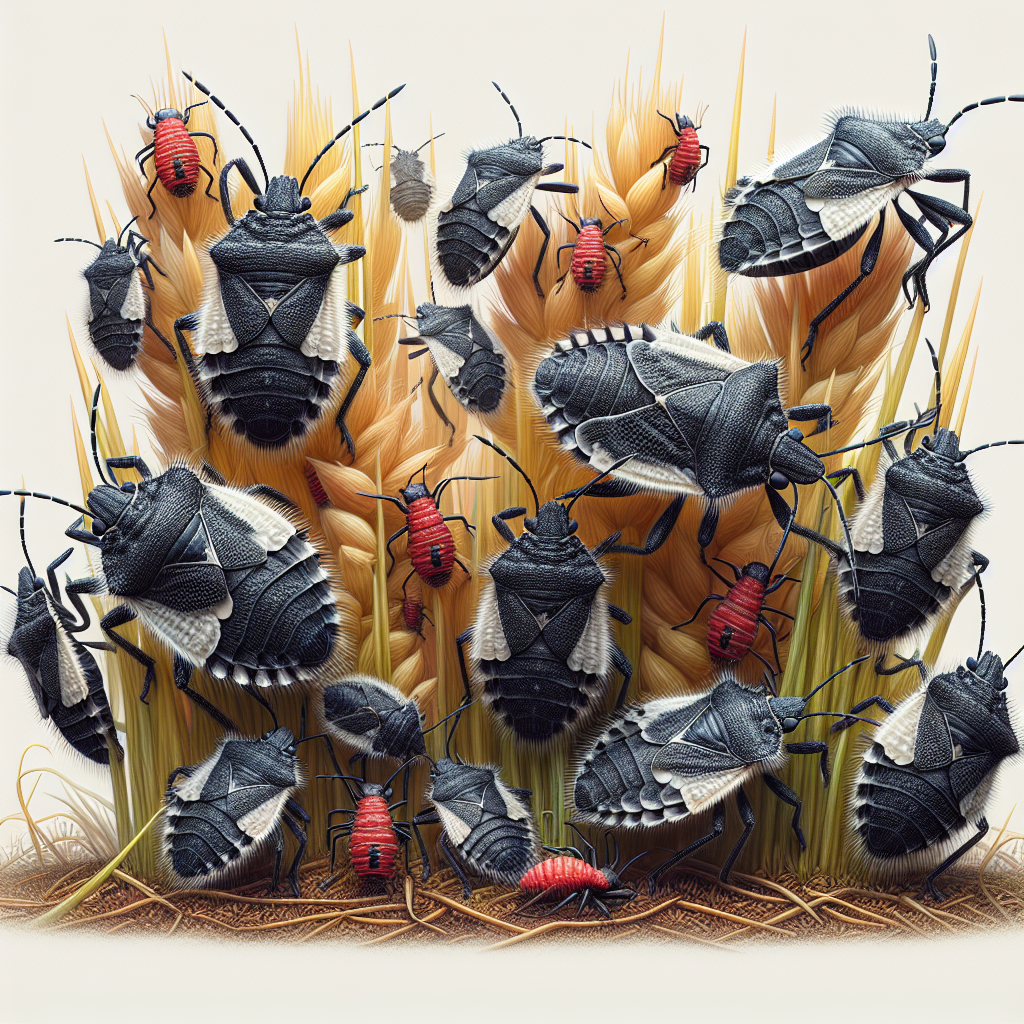
Recognizing chinch bugs early is critical, as infestations can spread quickly during summer months. Adults are black with white wings folded over their backs, while nymphs are red-eyed and wingless. Their damage mimics drought stress, often leading to misdiagnosis. This definitive guide equips agricultural experts, farmers, and homeowners with professional-grade diagnostic tools, lifecycle insights, organic management plans, and prevention strategies. For small farms battling common invaders, check out this Spring Pest Patrol blog post for integrated approaches.
Identifying Symptoms & Damage
Chinch bug damage begins subtly but escalates rapidly, often confused with drought, disease, or army worms. Initial symptoms include yellow or light green patches on turf or crop leaves, progressing to brown, wilted areas that fail to recover with watering. Heavily infested zones show dead patches up to several feet wide, with grass or crop stems appearing water-soaked and greasy.
Inspect by parting the grass or crop canopy; you'll find clusters of bugs hiding at the soil-thatch interface. Use the floatation test: Fill a tuna can level with turf and add soapy water—chinch bugs float to the surface within minutes. Nymphs (1-3mm, gray-red with white band) and adults (3-4mm, black-white) congregate in damaged areas. On crops like sweet corn, expect stunted growth, yellowing lower leaves, and reduced yields. Secondary signs include sooty mold from honeydew excretion and increased spider mites due to stressed plants.
Damage peaks in hot, dry weather, spreading from edges inward. In severe cases, entire fields of sorghum or turf can die, requiring reseeding. Differentiate from root rot by checking for live bugs and lack of fungal growth.
Lifecycle and Progression of Chinch bugs
Chinch bugs complete 2-5 generations annually, depending on climate, with each cycle lasting 4-8 weeks. Eggs (elongated, orange-red) are laid in batches of 20-30 in leaf sheaths or soil, hatching in 7-10 days into nymphs. Nymphs pass through 5 instars over 2-3 weeks, feeding voraciously and causing most damage.
Adults emerge after molting, mate, and overwinter in grass crowns, litter, or nearby weeds. Spring activity ramps up at 50°F (10°C), peaking in summer heat. Southern species overwinter as adults in warm climates, leading to earlier infestations. Populations explode in thatchy areas or drought-stressed wheat fields.
Monitor progression: Eggs in spring, nymphal waves every 30-45 days, adult flights in late summer. Understanding this allows timed interventions. For more on European Corn Borer, a related pest in corn, see our wiki.
Environmental Triggers & Risk Factors
Chinch bugs exploit specific conditions: prolonged heat (above 85°F/29°C), drought stress, and dense thatch (over 1/2 inch). Overfertilized, cool-season turf like fescue or warm-season sorghum in transition zones are prime targets. Poor soil drainage, compacted ground, and excessive nitrogen promote lush growth vulnerable to sap-feeding.
Risk factors include monoculture lawns, late-spring droughts, and proximity to weedy borders harboring overwintering bugs. Climate change extends their range northward. In crops, irrigation deficits and high planting density amplify outbreaks. Avoid overwatering post-damage, as it worsens thatch.
Organic Control & Treatment Plans
Organic management emphasizes integrated pest management (IPM): cultural, biological, and targeted mechanical controls. Begin with cultural practices—mow high (3-4 inches) to shade soil and reduce thatch via core aeration. Water deeply but infrequently to toughen plants.
Biological Controls: Introduce beneficial nematodes (Steinernema carpocapsae) or predatory insects like big-eyed bugs and ground beetles. Apply nematodes in evening with high humidity; they parasitize nymphs effectively. Neem oil or insecticidal soaps smother bugs on contact—apply weekly during nymphal stages, avoiding bees.
Mechanical: Vacuum with shop vac for small areas; power rake thatch. For fields, burn debris post-harvest (where legal) to destroy eggs. Soap-water drenches (2 tbsp dish soap/gallon) flush bugs for drowning.
Thresholds: Treat at 15-20 bugs per sq ft in turf, higher in crops. Rotate botanicals like pyrethrum with azadirachtin. Monitor with sticky traps. Success rates exceed 80% with consistent IPM. Avoid broad-spectrum synthetics to preserve predators.
Preventing Chinch bugs in the Future
Prevention beats cure: Select resistant varieties like St. Augustine 'BitterBlue' for turf or endophyte-enhanced rye grasses. Maintain thatch below 1/2 inch via dethatching and aeration. Fertilize balanced (low N in summer) and irrigate deeply weekly.
Plant diverse borders with clover or thyme to attract predators. Scout weekly spring-fall using float tests. Remove clippings to disrupt lifecycle. Crop rotation with non-hosts like potato breaks cycles in fields. Mulch reduces soil temps, deterring egg-laying. Long-term, soil health via compost suppresses outbreaks. Annual IPM plans yield 90% reduction.
Crops Most Affected by Chinch bugs
Chinch bugs primarily target turfgrasses (90% damage) but devastate grains: Corn suffers whorl feeding, stunting; wheat and barley show flag leaf yellowing, yield loss up to 30%; sorghum and rice experience head blasting. Small grains in Midwest U.S. lose millions yearly. Turf like zoysia, bermudagrass hit hardest; cool-season fescue secondary. Emerging threats to sugarcane in tropics. Link to Corn Earworm wiki for co-management.