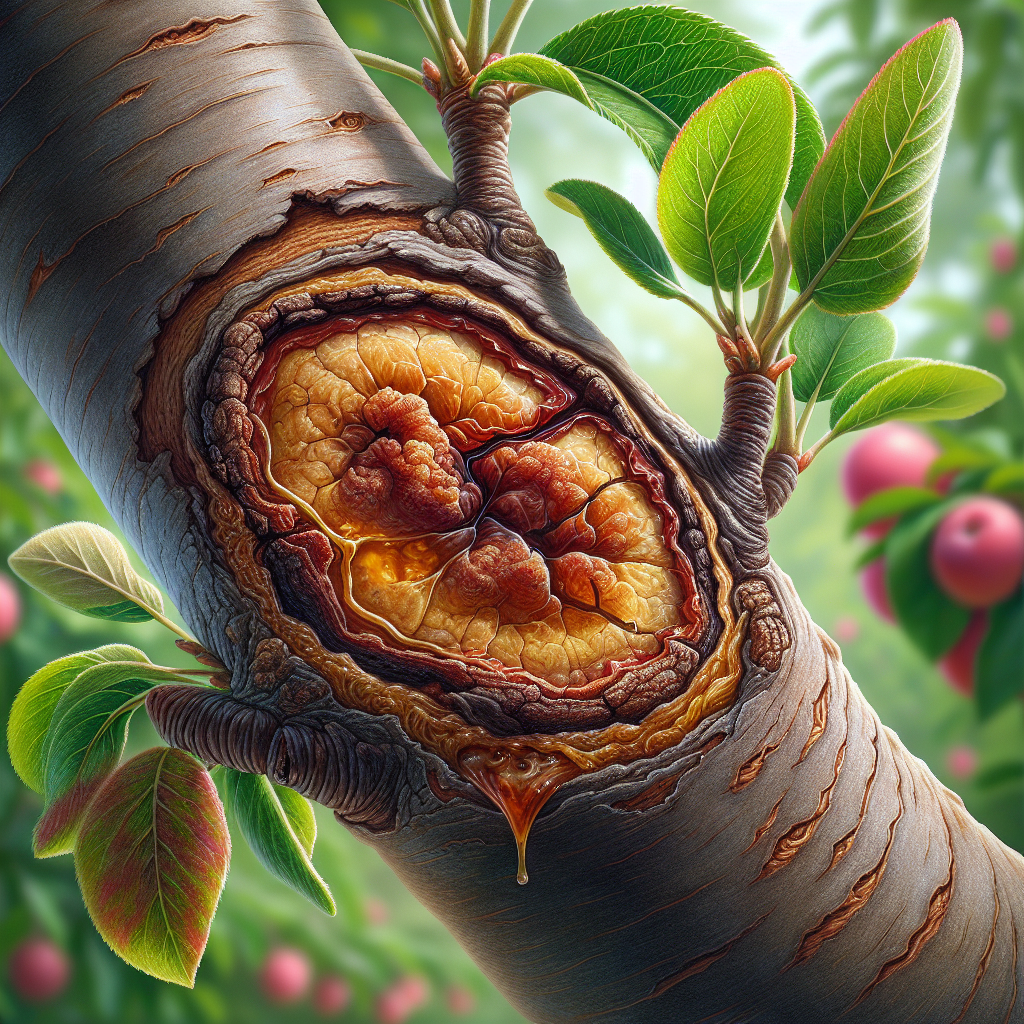
Introduction to Canker
Canker diseases represent one of the most pervasive threats to woody plants and fruit trees in agricultural settings worldwide. These localized necrotic lesions, typically appearing as sunken, discolored areas on bark, stems, branches, or trunks, are primarily caused by fungal pathogens like Nectria (e.g., neonectria canker), Botryosphaeria, or Phytophthora species, bacterial agents such as Pseudomonas syringae, or even abiotic factors exacerbated by injury. Unlike foliar diseases, cankers target the plant's structural integrity by invading the cambium layer—the critical vascular tissue responsible for nutrient and water transport—often leading to girdling, where the flow is completely blocked, causing branch or tree death above the lesion.
In commercial orchards and small farms, canker outbreaks can devastate yields, with losses reaching 20-50% in susceptible crops like apple, cherry, and peach. Early identification is crucial, as advanced cankers are notoriously difficult to cure, emphasizing prevention through cultural practices. This definitive guide draws from botanical, entomological, and agronomic expertise to equip growers with practical diagnostics, organic management strategies, and long-term prevention tactics. By understanding canker's biology and triggers, farmers can protect high-value crops and sustain productivity. For more on tree health fundamentals, see our comprehensive soil health mastery blog.
Identifying Symptoms & Damage
Accurate diagnosis begins with recognizing canker's hallmark signs, which vary slightly by pathogen but share core features. Initial symptoms often emerge as small, sunken depressions on bark, 1-5 cm in diameter, with discolored, cracked, or peeling outer layers revealing reddish-brown, necrotic tissue beneath. In fungal cankers like Cytospora, amber-colored gum or ooze may exude from cracks, especially in stone fruits. Bacterial cankers, common in prune and cherries, produce watery lesions that expand rapidly in wet conditions, often with a foul odor.
Advanced progression reveals target-shaped or elliptical lesions with callus ridges at the margins, indicating the plant's futile attempt to compartmentalize the infection. Wilting, yellowing leaves, and shoot dieback above the canker signal girdling, while internal wood shows dark streaks or sectoring. In severe cases, multiple cankers coalesce, leading to trunk girdling and tree decline. Damage extends beyond aesthetics: vascular blockage reduces photosynthesis, fruit quality suffers with undersized, sun-scalded produce, and predisposes trees to secondary invaders like borers or scale insects.
Differentiate cankers from look-alikes: frost cracks lack ooze and heal annually, while sunken necrotic lesions from Phytophthora often occur at the soil line with root involvement. Use a sterile knife to probe lesions—healthy callus is firm and pale; infected tissue is soft, dark, and malodorous. Scout during dormancy for best detection, as bark splits reveal overwintering structures like fungal pycnidia (pinhead-sized fruiting bodies). Yield impacts are profound: a single canker on a scaffold branch can reduce apple fruit set by 30%, compounding over years.
Lifecycle and Progression of Canker
Cankers follow a perennial lifecycle, with pathogens overwintering in infected bark, wood, or soil as mycelium, spores, or bacteria. Primary infection occurs via wounds from pruning, frost, mechanical injury, or insect vectors like borers, with spores germinating in moist conditions (optimal 10-25°C). Fungal hyphae colonize the cambium, producing enzymes that kill host tissue and form the sunken lesion within weeks.
Progression is cyclical: in spring, pycnidia release conidia in rain splashes, spreading to nearby wounds up to 10 meters. Summer heat stresses trees, enlarging lesions; autumn rains trigger secondary sporulation. Bacterial cankers advance via xylem vessels, causing systemic wilt. Over 2-5 years, untreated cankers girdle branches, leading to epicormic shoots below as stress responses. Perennial nature means spores persist years in dead wood, serving as reservoirs. In citrus, Xanthomonas strains complete cycles in 7-14 days under high humidity, amplifying epidemics.
Environmental cues dictate speed: cool, wet springs accelerate fungal expansion, while drought slows but deepens damage via stress. Understanding this enables timed interventions, like pruning during dry periods to minimize spore dispersal.
Environmental Triggers & Risk Factors
Cankers thrive where stress compromises defenses. Key triggers include wounding from improper pruning (avoid spring wet periods), frost heaving that splits bark, and mechanical damage from equipment. High humidity (>80%) and free water on wounds for >48 hours favor spore germination; temperature swings (day >25°C, night <10°C) crack bark, inviting entry.
Soil factors amplify risk: waterlogged roots from poor drainage promote Phytophthora cankers at the crown. Nutrient imbalances, especially nitrogen excess, produce succulent growth prone to infection. Susceptible varieties like young peach trees or stressed cherry orchards face higher incidence. Insect vectors (aphids) and secondary pathogens compound issues. Overcrowding reduces airflow, trapping moisture. Climate change intensifies risks with erratic freezes and heavy rains, as seen in recent Hass avocado outbreaks.
Organic Control & Treatment Plans
Organic management prioritizes cultural, biological, and minimal chemical tactics. Step 1: Prune aggressively. Remove infected branches 10-15 cm below visible cankers during dry weather, sterilizing tools with 10% bleach between cuts. Burn prunings to eliminate spores. Step 2: Wound protection. Paint fresh cuts with organic latex paint or tree wound dressing to seal against reinfection.
Biological controls: Apply Trichoderma or Bacillus subtilis biofungicides to wounds and soil drenches for Phytophthora suppression, repeating every 14-21 days. Nutritional boosts: Foliar calcium (chelated) strengthens cell walls; potassium enhances resistance. Improve drainage with organic mulch (avoid bark piles at trunks).
Advanced organic sprays: Copper octanoate (low-metallic) at bud swell targets bacteria, limited to 2-3 apps/season. For fungal cankers, potassium bicarbonate sprays disrupt spore germination. Integrate beneficial microbes via compost teas. Monitor with sticky traps for vectors. In small farms, success rates exceed 70% with vigilant pruning and biofungicides, restoring tree vigor within 1-2 seasons.
Preventing Canker in the Future
Prevention hinges on resilience-building practices. Select resistant rootstocks and varieties—e.g., Geneva series for apple. Maintain vigor with balanced fertility: soil test annually, aiming for pH 6.0-7.0. Prune judiciously in late summer, promoting open canopies for airflow.
Site selection avoids low-lying frost pockets; raised beds counter poor drainage. Mulch 5-10 cm deep, keeping 10 cm from trunks to deter rodents and moisture. Sanitize tools religiously. Rotate crops or interplant with thyme for antimicrobial volatiles. Monitor weekly, especially post-injury. Long-term, integrate cover crops like clover for soil health. These IPM strategies reduce incidence by 80-90%, ensuring sustainable yields.
Crops Most Affected by Canker
Canker plagues woody perennials, hitting fruit trees hardest. Top victims: Apple (Cytospora, Nectria), Cherry (bacterial Pseudomonas), Peach (Cytospora), Plum, Pear, Orange (citrus canker), and Hass Avocado (Phytophthora). Stone fruits suffer 30% losses; pome fruits see branch dieback. Vines like grapes face Eutypa cankers. Emerging threats hit mango and olive. Diversified farms must prioritize scouting in these high-risk crops.