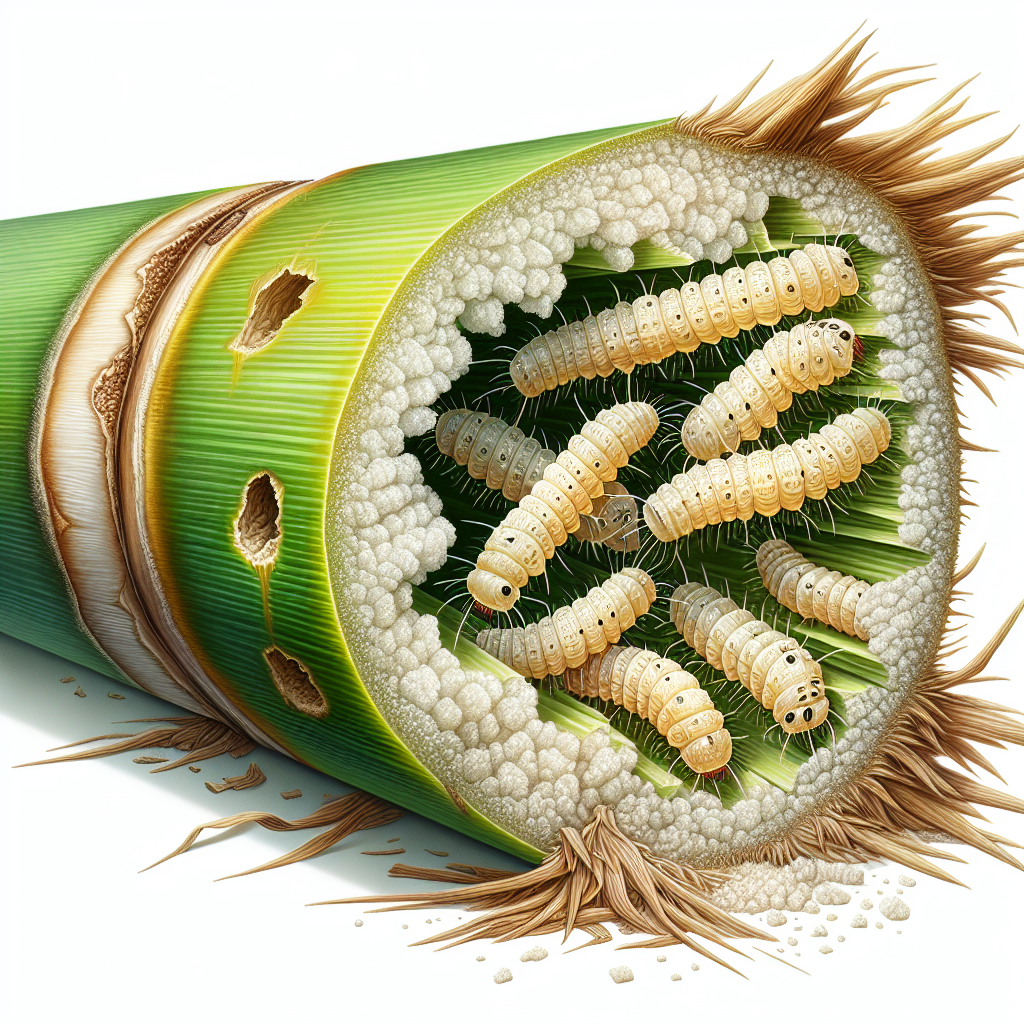
Introduction to Cane borers
Cane borers represent a diverse group of insect pests primarily consisting of beetle and moth larvae that target the structural integrity of plant canes, stems, and stalks. These borers are particularly notorious in perennial crops and grasses, where they excavate tunnels that disrupt nutrient and water transport, leading to plant weakening, dieback, and death. Common culprits include species from the genera Agrilus (metallic wood borers), Oberea (longhorned beetles), and Diatraea (sugarcane borers), each adapted to specific host plants but sharing a destructive boring habit.
In agricultural settings, cane borers can devastate yields by up to 50% in severe infestations, making them a priority pest for growers of sugarcane, brambles like raspberry and blackberry, and tree fruits such as cherry. Their impact extends beyond direct damage, as bored canes become entry points for secondary pathogens like fungal blights or root rots. Understanding their biology and implementing integrated pest management (IPM) is essential for sustainable control. This guide provides professional-grade diagnostics, lifecycle insights, and organic strategies to protect your crops effectively.
Identifying Symptoms & Damage
Accurate diagnosis begins with recognizing the hallmark signs of cane borer activity. The most telltale symptom is the presence of small, round entry holes (1-3 mm in diameter) on canes or stems, often accompanied by piles of sawdust-like frass (insect excrement) at the base or around the holes. Affected canes exhibit wilting tips, yellowing leaves, and a characteristic 'girdling' where larvae chew rings around the base, severing vascular tissues.
Internally, splitting open an infested cane reveals clean, meandering tunnels packed with frass and live larvae—creamy white, legless grubs up to 25 mm long with distinct head capsules. In advanced stages, canes crack, ooze sap, or show dark discoloration. Differentiate from similar pests like stem borers by the frass type: cane borers produce finer, pelletized frass compared to the webbed silk of some moth borers.
Damage progression varies by crop. In sugarcane, 'dead hearts' (central shoot collapse) signal larval feeding in the growing point. Bramble canes show sudden tip dieback, while in fruit trees like peach, oozing gum and branch dieback indicate borer presence. Scout weekly during peak activity (spring-summer), using a knife to probe suspect canes. Early detection prevents spread, as females lay eggs on stressed plants, perpetuating infestations.
Lifecycle and Progression of Cane borers
Cane borers typically complete one to two generations per year, with lifecycle stages finely tuned to host phenology. Adults—slender beetles (5-15 mm) or moths with metallic sheen—emerge in late spring from overwintered pupae in canes. They feed minimally on foliage before females oviposit eggs singly or in clusters under bark flaps or near wounds.
Eggs hatch in 7-14 days into tiny larvae that bore directly into canes, evading surface sprays. Larvae feed and grow through 4-7 instars over 4-8 weeks, tunneling downward or spiraling, often girdling the base. Mature larvae pupate within the cane, forming exit holes for new adults. Overwintering occurs as diapausing larvae or pupae in plant debris.
Progression aligns with environmental cues: first-generation adults peak at 20-25°C, with second generations in warmer climates. In raspberry, the raspberry cane borer (Oberea perspicillata) synchronizes with new cane growth, causing 'double girdles.' Monitoring with pheromone traps or degree-day models (base 10°C) predicts emergence, enabling timely interventions. Lifecycle knowledge is key to breaking the cycle through targeted timing.
Environmental Triggers & Risk Factors
Cane borers thrive under conditions stressing host plants, as healthy vigor deters oviposition. Key triggers include mechanical injury from pruning, frost damage, or herbicide drift, creating entry points. Drought stress weakens cane tissues, increasing susceptibility—infestations surge after prolonged dry spells (>3 weeks without rain).
High nitrogen fertilization promotes succulent growth attractive to egg-laying females, while poor drainage fosters secondary root rot complexes that mimic or exacerbate borer damage. Crop-specific risks: in sugarcane, ratoon crops (second-year regrowth) face 2-3x higher pressure due to residue buildup. Dense plantings reduce airflow, elevating humidity favored by adults.
Regional factors matter—tropical areas see continuous generations, while temperate zones limit to 1-2. Nearby wild hosts like blackberry brambles serve as reservoirs. Climate change extends activity windows, with warmer springs advancing emergence by 1-2 weeks. Mitigate by maintaining even moisture, balanced fertility, and 20-30% canopy openness. For hyper-local insights, check resources like Why 80% of Small Farms Battle Weather Disasters - And How Hyper-Local AI Forecasts Can Save Your Harvest.
Organic Control & Treatment Plans
Organic management emphasizes IPM, layering cultural, biological, and mechanical tactics. Cultural: Prune and destroy infested canes before adult emergence (pre-bloom), removing >90% of overwintering stages. Flame-kill debris or solarize piles to 50°C for 4 weeks. Encourage natural enemies like parasitic wasps (Trichogramma spp.) via flowering borders.
Biological: Release nematodes (Steinernema carpocapsae) at 1-2 million/acre into trunks post-egg hatch, achieving 70% larval mortality in trials. Bt kurstaki targets moth larvae effectively on young tunnels. Neem oil (azadirachtin 0.03%) disrupts adult feeding/oviposition when sprayed at dusk (2-3 apps, 7-10 day intervals).
Mechanical: Wrap canes with burlap or foil collars at planting to block egg-laying. Pheromone traps (1-2/ha) monitor and mass-trap males, reducing mating by 40-60%. For severe cases, inject garlic-neem slurries into entry holes.
Treatment Plan: 1) Scout/confirm. 2) Prune/destroy (Week 1). 3) Apply nematodes/Bt (Week 2). 4) Neem + traps (Weeks 3-6). 5) Monitor 4 weeks post. Rotate tactics yearly to prevent resistance. Success rates exceed 85% with compliance, outperforming single-method approaches.
Preventing Cane borers in the Future
Prevention hinges on resilient systems. Select resistant varieties—e.g., 'Harrow Delight' raspberry or Bt-expressing sugarcane hybrids. Time planting post-adult flight (use degree-days). Maintain vigor with drip irrigation (1-2 cm/week) and compost mulches (5-10 cm) suppressing pupation.
Sanitation is paramount: remove wild brambles within 100m, till residues deeply, and rotate crops (3-4 years). Interplant repellents like thyme or marigold. Barrier screens on young plants block adults. Annual pre-spring cleanups reduce inoculum by 95%. Monitor with sticky cards; intervene at 1-5% infested canes. Long-term, enhance biodiversity to boost predators like birds and ground beetles.
Crops Most Affected by Cane borers
Cane borers strike a wide array of crops, prioritizing those with woody or fibrous canes. Primary hosts: Sugarcane suffers massive losses from Diatraea saccharalis; raspberry, blackberry, and grapes from Oberea spp., with 20-40% yield hits. Tree fruits: Cherry, peach, plum face Agrilus girdlers causing branch drop. Others: Banana pseudostems (Cosmopolites sordidus), elderberry, and roses.
Secondary impacts ripple to nearby corn via shared borers like corn borers. Tropicals like mango and avocado report stem borers mimicking cane types. Global hotspots: US Southeast for brambles, India/Brazil for sugarcane. Tailor prevention to local pressures for optimal protection.