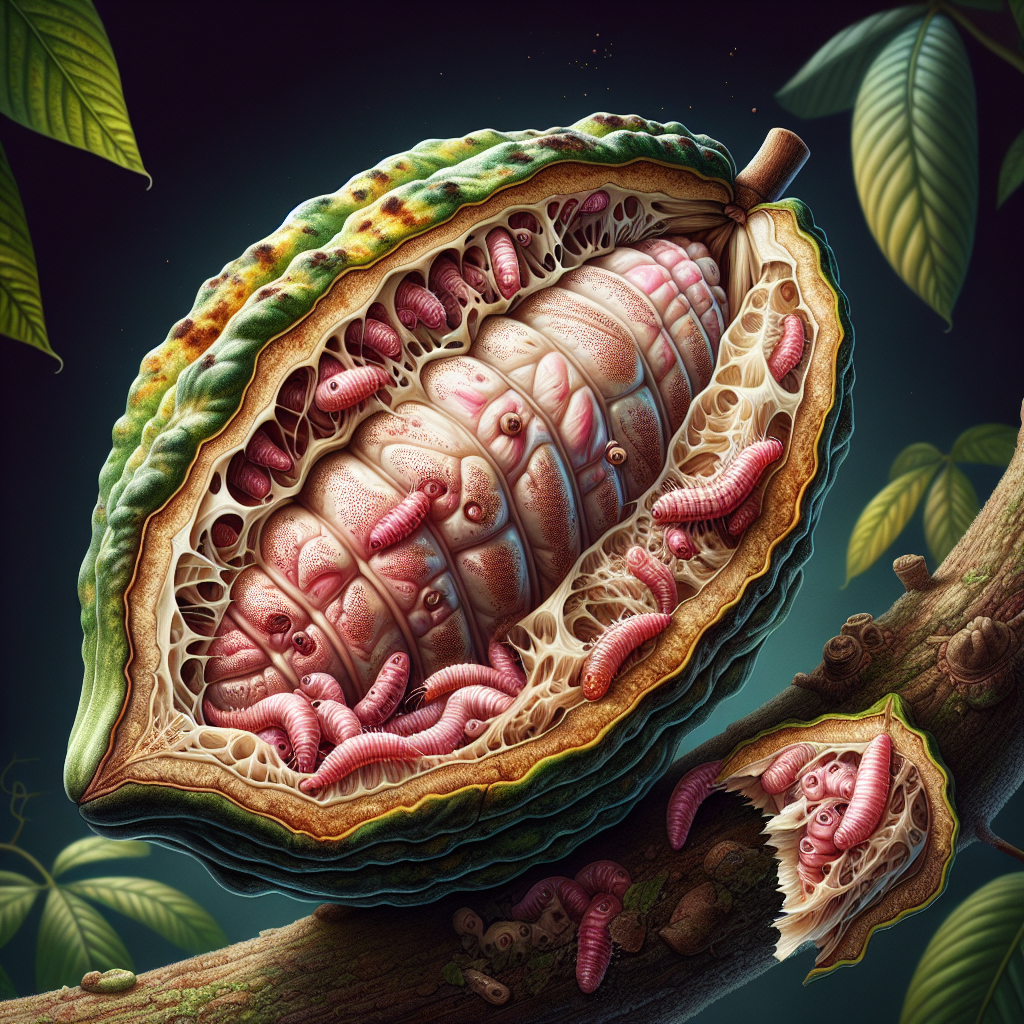
Introduction to Cacao Pod Borers
Cacao pod borers, scientifically known as Conopomorpha cramerella (Snellen), represent one of the most destructive pests threatening cacao production worldwide, particularly in Southeast Asia, West Africa, and parts of Latin America. These small moths belonging to the family Gracillariidae lay eggs on young cacao pods, and their larvae tunnel into the pod, feeding on the beans and pulp. This internal damage leads to pod deformation, premature ripening, and complete pod abortion, resulting in yield losses of up to 50-80% in severe infestations. For cacao farmers, early detection and integrated management are critical to sustaining profitable harvests from this high-value Forastero Cacao and Trinitario Cacao crops.
The economic impact is profound; in major producers like Indonesia, Malaysia, and Papua New Guinea, cacao pod borers have caused billions in losses, forcing many smallholder farmers out of business. Unlike external feeders like ants or mealybugs, these borers are insidious, as damage is hidden until pods split open or rot. This guide equips you with professional-grade diagnostics, lifecycle knowledge, organic controls, and prevention strategies to combat this pest effectively. Understanding cacao pod borers empowers farmers to implement timely interventions, minimizing chemical use and preserving soil health. Check out this Spring Pest Patrol: Organic AI Strategies to Shield Your Crops from Common Invaders for broader pest management insights.
Identifying Symptoms & Damage
Diagnosing cacao pod borer infestations requires keen observation of both external and internal pod symptoms. Early signs include small, pinhead-sized entry holes on young pods (1-3 months old), often surrounded by frass (insect excrement) resembling fine sawdust. Affected pods develop irregular swellings or 'galls' at boring sites, distorting their natural ridge-and-groove shape. As larvae progress, pods may split longitudinally, exuding sticky gum or sap mixed with webbing.
Mature damage manifests as blackened, sunken lesions with multiple bore holes, leading to pod abortion or 'cherelle wilt'—where infected cherelles (immature pods) drop prematurely. Cut open infested pods to reveal creamy-white to pinkish larvae (up to 10mm long) tunneling through the pulp to beans, causing them to shrivel and blacken. Secondary infections from Phytophthora palmivora or anthracnose often follow, accelerating rot. Differentiate from capsule borers by the larvae's serpentine tunnels and silk linings.
Yield impacts are severe: a single larva can destroy an entire pod, reducing marketable beans by 100%. Scout weekly during peak pod development, focusing on lower tree branches. Use a hand lens to spot eggs (tiny, flat, white scales) on pod surfaces. Severe infestations show tree-wide pod drop, with 30-50% affected. Compare with fruit borers which target ripe pods more aggressively.
Lifecycle and Progression of Cacao Pod Borers
Cacao pod borers complete 6-10 generations per year in tropical climates, with a lifecycle of 25-40 days depending on temperature (optimal 25-30°C). Adult moths are tiny (6-8mm wingspan), silver-gray with dark streaks, active at dusk. Females lay 50-100 eggs singly on pods, hatching in 3-5 days into larvae that immediately bore in.
Larval stage (15-20 days) has five instars: first-instars mine superficially under the pod skin, later ones penetrate deeply, feeding on pulp and beans. Full-grown larvae (pinkish, with dark head) exit via bore holes, spin silken cocoons on pods or leaves, and pupate for 7-10 days. Pupae are reddish-brown, 5-6mm long. Overlapping generations mean all stages coexist, complicating control.
Rainy seasons boost populations due to higher humidity (80-90% RH), with peak activity during main cropping (March-June, September-December). Similar to corn earworm, borers overwinter as pupae in fallen pods or debris. Monitor with pheromone traps to track adult flights.
Environmental Triggers & Risk Factors
Cacao pod borers thrive in humid equatorial zones (20-30°C, >80% RH), exploding in rainy seasons with prolonged leaf wetness. Poor farm hygiene—uncollected fallen pods—serves as reservoirs for pupae. Dense planting (<3m spacing) and excessive shade (>50% canopy) create microclimates favoring egg-laying. Monoculture cacao without gliricidia barriers increases vulnerability.
Nutrient imbalances, especially nitrogen excess, promote succulent pods attractive to moths. Proximity to alternate hosts like rambutan or lychee heightens infestation risk. Drought-stressed trees show reduced resin flow, aiding larval penetration. Climate change extends generations, per studies in Indonesia. Link to pod borers in soybeans underscores shared risk factors like humidity.
Organic Control & Treatment Plans
Integrated Pest Management (IPM) emphasizes organic tactics for sustainable cacao health. Cultural Controls: Harvest and destroy infested pods weekly (bury >50cm deep or burn). Prune lower branches to 2m height, improving airflow. Intercrop with marigold or thyme as repellents.
Biological Controls: Release Trichogramma wasps (egg parasitoids) at 20,000/ha every 10 days. Encourage predators like ants (Oecophylla smaragdina) via shade tree banding. Apply Beauveria bassiana or Metarhizium anisopliae fungal sprays (10^9 spores/ml) targeting larvae.
Organic Sprays: Neem oil (5ml/L + 1ml soap) every 7-10 days on young pods. Bacillus thuringiensis (Bt) kurstaki (2g/L) for early larvae. Spinosad (0.5ml/L) as last resort, rotating to prevent resistance. Pheromone traps (delta-type, 4-6/ha) disrupt mating.
Monitoring Plan: Scout 20 trees/plot weekly; treat if >10% pods infested. Threshold: 5 eggs/100 pods. Combine with aphids controls for holistic defense. Expect 70-90% reduction with consistent IPM.
Preventing Cacao Pod Borers in the Future
Prevention hinges on farm design and vigilance. Plant resistant varieties like KA2 or TCS1. Maintain 3x3x3m spacing with 40% shade from banana or coconut. Calendar-based sanitation: pod collection during off-season.
Soil solarization (clear plastic, 4-6 weeks pre-planting) kills pupae. Mulch with neem cake (2kg/tree). Annual tree banding with tanglefoot prevents larval descent. Scout with sticky traps year-round. Educate workers on egg detection. Long-term: breed for pod toughness. Avoid whiteflies vectors worsening outbreaks.
Crops Most Affected by Cacao Pod Borers
Primarily Cacao (Theobroma cacao), all varieties including Criollo Cacao. Minor hosts: rambutan, durian, jackfruit. Unlike vine borers on squash, cacao borers are host-specific. Global impact: 70% of cacao acreage at risk.