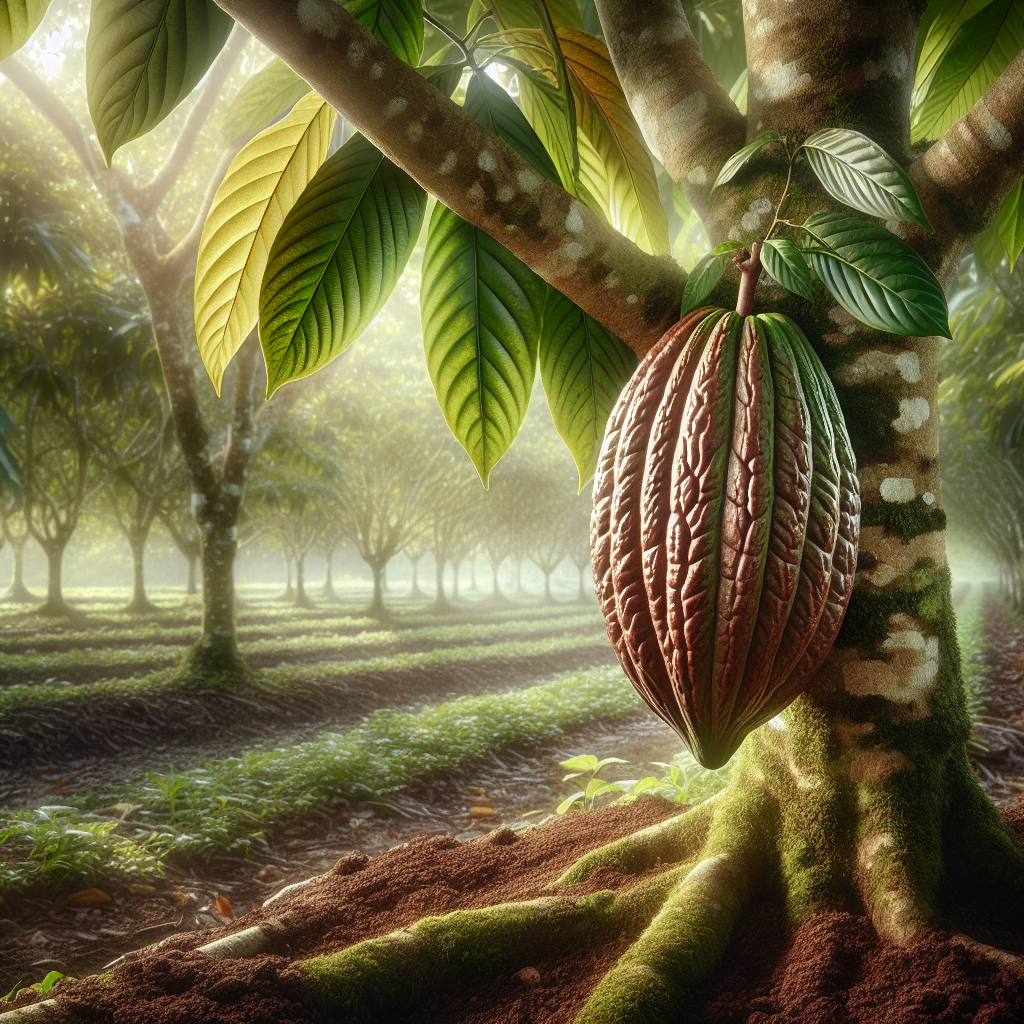
Introduction to Forastero Cacao
Native cacao was domesticated in the humid neotropics, and Forastero emerged as the dominant cultivated group largely because it combines hardiness, productivity, and tolerance of variable tropical conditions better than many premium but more delicate types. In commercial agriculture, the term “Forastero” often covers a broad genetic complex, especially Upper Amazon and Amelonado-derived materials, rather than one perfectly uniform cultivar. That matters for growers: a field sold as Forastero may still contain meaningful variation in pod shape, bean size, disease tolerance, tree architecture, and flavor potential.
This cacao group is the backbone of the global cocoa economy. It is frequently chosen where growers need reliable cropping, stronger establishment, and more resilience under farm conditions that are less than ideal. Compared with highly susceptible heirloom cacao types, Forastero usually shows better canopy vigor, stronger trunk development, and more regular bearing once mature. That does not mean it is carefree. Cacao remains a demanding perennial that requires stable humidity, moderated light, good drainage, disciplined sanitation, and careful post-harvest handling. Growers seeking a broader overview of the species can also see our Cacao guide.
Forastero trees begin commercial bearing in roughly 3 to 5 years from seed or 2 to 4 years from grafted material under strong management, with peak economic production often reached after 7 to 10 years. Productive lifespan can extend well beyond 20 years if pruning, nutrition, and disease management are consistent. Yield per hectare varies enormously with genetics, stand density, shade management, pollination success, and disease pressure, but serious farm planning should treat canopy design and sanitation as yield drivers equal to fertilizer.
Botanical Profile of Forastero Cacao
Theobroma cacao is a small evergreen understory tree in the Malvaceae family. Forastero types typically produce a more vigorous habit than Criollo, with a straight trunk, a distinct jorquette where the first fan branches form, and repeated chupon growth if trees are stressed or heavily pruned. Mature height in unmanaged systems can exceed 8 meters, but well-managed plantations usually maintain trees at 3 to 5 meters for harvest efficiency and canopy health.
Leaves are simple, entire, and glossy, with juvenile flushes often emerging bronze, salmon, or pale green before hardening off. These flushes are significant because they are especially vulnerable to insect feeding and fungal infection. Flowers arise directly on trunks and older branches through cauliflory, a hallmark of cacao. Pollination is mostly carried out by tiny midges, especially in moist, shaded environments rich in decaying organic matter. Poor pollinator habitat is one overlooked reason for low pod set in otherwise healthy fields.
Pods vary by strain but Forastero commonly bears thicker-podded fruits with smoother or moderately ridged surfaces than many Criollo lines. Pod color may be green, yellow, red, or intermediate depending on genetic background. Each pod contains 30 to 50 seeds embedded in a sweet mucilaginous pulp. Bean characteristics are highly relevant to marketing: some Forastero populations produce flatter beans and more robust bitterness, while selected modern clones can deliver stronger fat content, improved fermentation response, and surprisingly refined flavor.
Rooting is relatively shallow in compacted soils, but in well-structured profiles cacao develops an active feeder-root system concentrated in the upper 20 to 30 cm, with deeper anchoring roots if drainage and oxygen are adequate. Because much of the nutrient-absorbing root mass sits near the surface, mulch and organic matter management strongly influence water buffering, nutrient cycling, and heat moderation.
Soil, pH, and Climate Requirements for Forastero Cacao
Forastero performs best in deep, friable, well-drained soils rich in organic matter. Ideal soil texture is loam to clay loam with enough fine particles to retain moisture but enough structure and macroporosity to prevent root suffocation. A minimum effective rooting depth of 1.2 to 1.5 meters is preferred. Shallow soils over hardpan or lateritic crusts reduce anchorage, stunt canopy development, and intensify drought stress during dry spells.
Optimal soil pH is generally 5.5 to 6.8. Cacao can survive in slightly more acidic ground, but performance declines when pH falls low enough for aluminum toxicity or when phosphorus becomes excessively tied up. Below about pH 5.2, root growth can slow and fertilizer efficiency often drops unless liming and organic matter are used strategically. Above pH 7.0, micronutrient imbalances, especially iron, manganese, and zinc availability issues, may appear. If soil testing shows calcium deficiency in acid soils, use finely ground agricultural lime or dolomite in split applications well before planting rather than dumping high rates into the planting hole.
Drainage is non-negotiable. Forastero likes evenly moist soil, not waterlogged soil. Aim for a root-zone moisture condition that feels cool and slightly damp when squeezed, not sticky, anaerobic, or sour-smelling. In practical terms, the top 5 cm may dry slightly between irrigations or rains, but the soil at 10 to 20 cm should remain consistently moist. If standing water remains around trees for more than 24 to 48 hours after heavy rain, root stress and Phytophthora risk rise sharply. Signs of chronic overwatering include yellowing older leaves, sparse new flushes, blackened feeder roots, algae or moss buildup at the collar, and pods aborting under humid conditions.
Climatically, Forastero is a true humid-tropical crop. Ideal temperatures are 21 to 32°C, with best steady growth around 24 to 28°C. Growth slows below 18°C, chilling injury becomes likely below 12 to 15°C, and sustained temperatures above 34 to 36°C can cause leaf scorch, flower drop, and sunburned cherelles if shade and humidity are inadequate. Annual rainfall of 1,500 to 2,500 mm, well distributed, is excellent. A short dry season can be tolerated, but prolonged drought without irrigation suppresses flowering and increases Cherelle Wilt.
Relative humidity between 70% and 90% supports good growth, though extremely stagnant, saturated air also favors Black Pod and other fungal problems. Wind protection is essential. Strong, desiccating winds tear leaves, reduce pollinator activity, increase evapotranspiration, and deform young trees. Shelterbelts or mixed shade systems are highly beneficial.
Young cacao should be established under 40% to 60% shade, gradually reduced to roughly 25% to 40% filtered shade in mature production depending on rainfall, temperature, and disease pressure. Too much dense shade lowers flowering, reduces air movement, and pushes trees toward lanky growth. Too little shade causes leaf bronzing, bark stress, and pod sunburn. Farms integrating temporary and permanent shade species generally outperform monoculture plantings over time. Broad soil-building principles similar to those discussed in soil health strategies are especially useful for cacao systems where roots depend on a biologically active surface horizon.
Step-by-Step Planting & Propagation
Start with elite planting material from a reputable source. Because seed-grown Forastero can segregate significantly, commercial growers who need uniformity should prefer grafted or budded plants from high-yielding, disease-screened mother trees. Seed propagation is still common, especially where access to clonal material is limited, but expect more variability in tree habit, bearing age, and bean quality.
For seed propagation, collect pods only from healthy, highly productive trees with good bean fill and minimal disease history. Seeds lose viability quickly and should ideally be sown within 5 to 7 days of pod opening. Do not sun-dry seeds before sowing. Remove excess pulp gently, then sow in deep polybags or nursery tubes filled with sterile, high-organic growing medium such as loam, composted bark, sand, and well-finished compost. Place seeds on their sides 1 to 2 cm deep. Germination generally occurs within 1 to 3 weeks in warm, humid shade.
Nursery shade should be around 50%. Water enough to keep media evenly moist but never saturated. Seedlings are ready for field transplanting at 4 to 6 months when they are roughly 25 to 40 cm tall, hardened, and free of root spiraling. If using clonal propagation, graft onto vigorous seedling rootstocks at pencil thickness. Side grafting and patch budding are common; maintain high humidity and filtered light until the union takes.
Prepare the field well in advance. Clear invasive weeds, keep useful shade trees, and map drainage before layout. Typical spacing is 3 x 3 m, 3 x 2.5 m, or wider in agroforestry systems depending on clone vigor and shade intensity. Dig planting holes about 45 x 45 x 45 cm or larger in compact soils. Separate topsoil and subsoil; refill with topsoil mixed with mature compost and, if indicated by testing, small corrective mineral inputs. Avoid raw manure in the hole because it can burn roots and attract pests.
Transplant at the onset of the rainy season or just before reliable irrigation begins. Plant at the same depth as in the nursery, keeping the graft union above soil level. Firm gently, water in thoroughly, and mulch 8 to 10 cm deep around but not touching the stem. Install temporary shade immediately if permanent shade is not yet established. Banana-based nurse systems are common; Banana is especially useful for fast early shade, wind buffering, and added organic residue.
During the first year, protect young plants from direct midday sun, weed competition, and stem injury. Replace mortalities quickly to maintain even stand age. If chupons emerge low on the trunk, remove them unless one is needed to reform a damaged tree.
Care & Maintenance regimes for Forastero Cacao
Water management should aim for steady root-zone moisture with high oxygen availability. Young trees need frequent light-to-moderate irrigation; mature trees need deeper wetting with enough interval for gas exchange. In dry periods, many farms target the equivalent of 25 to 40 mm of water per week for established trees, adjusted for soil type and shade. Sandy soils require smaller, more frequent applications; clay loams can take deeper, less frequent irrigation if drainage is good. Do not wait for dramatic wilting. Early drought stress in cacao appears first as reduced flush size, limp but not fully collapsed leaves during the hottest hours, flower abortion, and poor cherelle retention.
Mulching is a major management tool, not a cosmetic one. Maintain an organic mulch ring 1 to 1.5 meters wide around each tree using leaf litter, chopped shade-prunings, composted husks, or dried grass. This suppresses weeds, buffers root temperatures, moderates moisture swings, and fuels microbial activity. Keep mulch 10 to 15 cm away from the trunk to reduce collar rot.
Nutrient programs should be based on soil and leaf analysis, but general needs include nitrogen for vegetative flush and canopy maintenance, potassium for pod filling and disease resilience, calcium and magnesium for structural balance, and boron and zinc in small but critical amounts. Young trees benefit from split applications every 8 to 12 weeks during active growth. Mature bearing trees often receive 2 to 4 annual fertilizer splits timed before major flowering and pod-fill periods. Excess nitrogen without enough potassium or shade management can produce lush, disease-prone canopies with poor bean filling.
Pruning begins early. Train trees to one strong stem up to the first jorquette at roughly 1 to 1.5 meters. Retain 3 to 5 well-spaced primary fan branches. Remove weak, crossing, inward-growing, diseased, and low-hanging branches. Control chupons routinely because they divert resources and clutter the canopy. Productive cacao requires a balance between light penetration and humidity retention. A canopy that is too dense stays wet and harbors disease; a canopy opened too aggressively invites sun scorch and physiological stress.
Shade management must evolve over time. Temporary shade should be reduced gradually as trees mature. Permanent overstory should be pruned to dappled light rather than dense darkness. Observe the foliage: pale yellow-green leaves, bark cracking on exposed sides, and scorched pods suggest insufficient shade; long internodes, sparse flowering, and persistent dampness suggest too much.
Weed management is most important in the first 2 to 3 years. Keep a weed-free basin around young trees, but avoid repeated deep hoeing that damages feeder roots. Slash-and-mulch systems are preferable to bare-soil cultivation. Groundcovers can be useful if non-competitive and regularly managed.
Pests, Diseases & Organic Management
The most serious disease threat in many cacao regions is Black Pod, usually caused by Phytophthora species. Symptoms include brown to black expanding lesions on pods, white fungal growth under humid conditions, and rapid spoilage. Management depends on strict sanitation: harvest ripe pods frequently, remove infected pods from the field, prune for airflow, maintain moderate shade, and prevent standing water. Organic copper products may be used where permitted, but cultural control is the foundation.
Witches’ Broom and Frosty Pod Rot are devastating in some regions. Witches’ Broom causes abnormal broom-like vegetative growth, swollen cushions, and pod deformation. Frosty pod produces cream-colored sporulation on infected pods and can destroy harvests if neglected. Both require rigorous removal of infected tissue, short harvest intervals, and destruction of diseased pods before sporulation peaks.
Cherelle Wilt, the natural abortion of young pods, is not always a disease. It can result from poor pollination, nutrient imbalance, drought stress, excessive fruit load, or temporary physiological imbalance. If wilt is severe, investigate moisture consistency, potassium and boron status, and canopy balance before assuming pathogen involvement.
Common insect pests include Mirids or Capsids, Mealybugs, Cacao Pod Borers, Aphids, and Stem Borers depending on region. Mirid feeding causes lesions, cankers, canopy thinning, and yield decline. Pod borers reduce bean quality and marketable output. Organic management works best as an integrated system: maintain field hygiene, avoid over-shaded neglected blocks, encourage beneficial insects, remove infested pods, and use botanical sprays only when monitoring confirms action thresholds are exceeded.
Ant management deserves special mention because some ant species protect Mealybugs for honeydew. Where mealybug pressure is chronic, break the ant-mealybug cycle by reducing trunk bridges, pruning contact points, and controlling nesting near productive scaffolds. Sooty Mold on leaves and pods often indicates sap-feeding insects rather than a primary fungal issue.
For pollination and beneficial insect support, retain moist organic litter in designated strips rather than over-cleaning the plantation floor. However, diseased pod waste should never remain scattered. Clean, selective sanitation is superior to indiscriminate tidiness.
Harvesting, Curing & Optimal Storage
Harvest only fully ripe pods. Immature pods produce underdeveloped beans with poor flavor precursors, low dry weight, and uneven fermentation. Ripeness cues vary by strain: green pods often turn yellow, while red or purple pods may shift to orange or yellow-red. Learn the specific color break of your planting material. A dull hollow sound when tapped and slight surface texture changes can help confirm maturity.
Use a sharp knife, hook, or secateur to cut pods without tearing cushions or bark, since future flowers arise from the same tissues. Never yank pods by hand. Harvest every 1 to 3 weeks during peak season to reduce losses to pests, Black Pod, and overripe splitting.
Open pods within a few days of harvest, ideally the same day or next day. Separate healthy beans from diseased, germinated, or insect-damaged material. Fermentation is the single most important quality step after harvest. Forastero generally ferments well and often requires about 5 to 7 days depending on bean mass, ambient temperature, and desired flavor style. Use boxes, heaps, or baskets lined with banana leaves. The mass should be large enough to retain heat, commonly at least 50 kg and preferably more for commercial consistency.
Turn the fermenting beans after 48 hours, then every 24 to 48 hours depending on temperature and uniformity. Internal temperatures often rise to 45 to 50°C. Proper fermentation kills the embryo, drains pulp, reduces bitterness, develops brown color, and creates flavor precursors for roasting. Under-fermented beans remain slaty or purple, taste astringent, and often dry unevenly. Over-fermented beans become overly acidic, brittle, or mold-prone if drying is delayed.
Dry beans promptly after fermentation to a moisture content around 6% to 7.5%. Sun drying on raised mats or solar dryers is preferred where weather allows. Dry slowly enough to avoid case hardening but fast enough to prevent mold. Target drying over 5 to 10 days depending on climate. Beans should feel crisp-shelled, break cleanly, and not clump under pressure.
Store only fully dried beans in clean jute sacks or food-grade breathable packaging in a cool, dry, odor-free room with relative humidity ideally below 65%. Keep sacks on pallets, away from walls, and protected from insects and rodents. Cacao beans readily absorb odors, so never store near fuel, spices, agrochemicals, or onions. Regularly inspect for condensation, moldy smell, or insect activity.
Companion Planting for Forastero Cacao
Companion planting in cacao is best understood as functional agroforestry rather than simple bed-scale intercropping. The most useful companions provide filtered shade, wind moderation, organic matter, pollinator habitat, income diversification, or nutrient cycling without becoming aggressive competitors.
Banana is one of the best early companions because it establishes quickly, casts light temporary shade, reduces heat stress on young cacao, and generates large amounts of mulchable biomass. It also offers short-term income before cacao reaches full bearing. Manage banana density carefully so humidity does not become excessive around cacao trunks.
Coconut can function as a higher canopy component in suitable landscapes, especially where spacing and light angles are planned from the start. It provides structural diversity and can help distribute farm income, but over-dense coconut planting can overcompete for water in drier zones.
Vanilla may be integrated on living supports within diversified tropical systems where labor is available for intensive management. Its value can justify the added complexity, though it demands careful humidity and disease monitoring.
Black Pepper can also fit into multi-strata tropical plantings on separate standards or compatible supports near cacao blocks. Keep vine crops from smothering cacao and ensure airflow remains adequate.
Avoid companions with heavy surface-root competition, highly allelopathic leaf litter, or dense shade that persists through the wet season. Whatever the mix, the best companion system is one that preserves filtered light, air movement, and manageable disease pressure while adding resilience and income diversity.