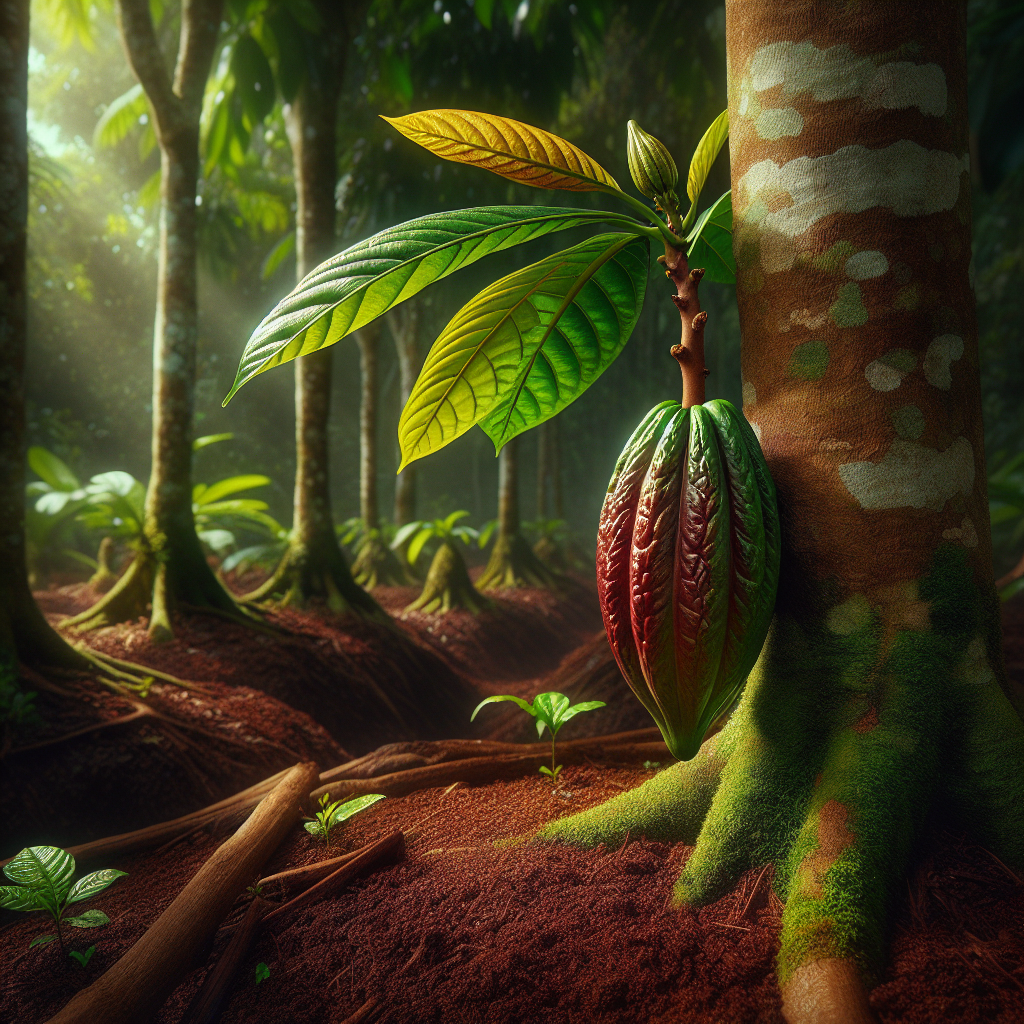
Introduction to Criollo Cacao
Among cacao types, Criollo occupies a near-mythic place because of its historical importance, low tannin bitterness, pale cotyledons, and unusually refined flavor profile. It originated in Mesoamerica and was cultivated for centuries by Indigenous civilizations long before global chocolate trade expanded. In practical farming terms, however, its reputation for quality is matched by a reputation for fragility: lower yields than bulk cacao types, greater sensitivity to drought, stronger susceptibility to several major diseases, and less tolerance for poor management.
Criollo trees are grown primarily for specialty chocolate markets where genetics, terroir, fermentation, and drying determine price premiums. This means the grower must think like both a horticulturist and a post-harvest processor. A well-managed block can produce beans with floral, nutty, caramel, honeyed, cream, dried fruit, and mild spice notes, but only if climate, nutrition, sanitation, pollination conditions, and curing are tightly controlled. For growers comparing fine-flavor cacao types, it helps to understand how Criollo differs from broader Cacao production systems that often emphasize volume over subtle quality.
Botanical Profile of Criollo Cacao
This crop belongs to the family Malvaceae and the species Theobroma cacao, a small evergreen understory tree native to the humid neotropics. Criollo is not a separate species; it is a genetic group or traditional market class within cacao. In the field, trees usually reach 4-8 meters under managed conditions, though unmanaged plants can become taller. Canopies are typically narrower and more open than vigorous bulk cacao selections.
Leaves are simple, entire, glossy, and borne alternately. New flushes often emerge soft and pendulous, with bronze, pinkish, or pale green coloration before hardening off. Like all cacao, Criollo shows cauliflory, meaning flowers and pods develop directly from older wood on the trunk and main scaffold branches. Tiny pinkish-white flowers emerge in clusters from cushion tissue. Pollination is mainly by ceratopogonid midges, so humid, organic-rich environments with leaf litter and sheltered microhabitats are important for fruit set.
Pods are often deeply furrowed, elongated, and pointed, with a rougher surface than many modern hybrids. Color may range from green to red when immature depending on clone, shifting toward yellow, orange, or red at ripeness. Beans are usually larger and rounder, with white to pale violet cotyledons, a hallmark associated with lower anthocyanin pigmentation and gentler flavor. Compared with Forastero Cacao, Criollo generally produces less bitterness and astringency but also less field robustness.
Important agronomic characteristics include:
- Slower early establishment under stress
- Higher demand for uniform moisture
- Greater sensitivity to excessive radiation and wind exposure
- Stronger quality response to careful fermentation
- Lower tolerance of neglected pruning and poor hygiene
In many regions, so-called "Criollo" plantings are actually local fine-flavor selections or hybrids with varying degrees of Criollo ancestry. Serious growers should source from reputable germplasm collections, research stations, or certified nurseries that can provide clone identity and disease history.
Soil, pH, and Climate Requirements for Criollo Cacao
This crop performs best in deep, friable, well-structured soils with high organic matter, excellent drainage, and consistent moisture-holding capacity. The ideal rooting zone is at least 1.5 meters deep, though 1 meter of unobstructed, well-aerated soil can still support acceptable growth if fertility and moisture are carefully managed. Avoid shallow hardpan soils, compacted clay, waterlogged depressions, and droughty sands unless major amendments and drainage engineering are in place.
The ideal soil texture is a loam to clay loam with stable crumb structure. Sandy loams can work if organic matter is maintained above roughly 3.5-5% and irrigation is reliable. Heavy clays can support cacao if slope and drainage prevent standing water, but roots decline rapidly where oxygen is limited. Even 48-72 hours of saturated soil around feeder roots can trigger chlorosis, leaf drop, and opportunistic root disease.
A target pH of 5.5-6.5 is optimal. Criollo tolerates mildly more acidic soils, down to about 5.0, but nutrient uptake becomes less efficient and aluminum toxicity risk rises in strongly acid conditions. Above pH 7.0, micronutrient lockout, particularly iron, manganese, and zinc, becomes more common. If pH is below 5.0, apply agricultural lime gradually and retest before planting; if above 7.0, incorporate abundant compost, acid-forming fertilizers where appropriate, and correct micronutrients with foliar feeding when needed.
Climate requirements are strict. The ideal temperature range is 21-30°C, with the most stable growth around 24-28°C. Growth slows below 18°C, flowers abort in cool spells, and tissue damage may occur when temperatures approach 10-12°C. Sustained temperatures over 32-34°C, especially under low humidity and direct sun, can scorch leaves, reduce fruit set, and stress immature pods.
Rainfall should be 1,500-2,500 mm annually, well distributed. Short dry periods are tolerated if soils remain moist and shade is adequate, but prolonged water deficit is especially damaging to Criollo. Relative humidity between 70-90% supports canopy health and pollinator activity, though excessively stagnant humidity without airflow can worsen fungal disease pressure.
Wind protection is essential. Even moderate exposure can tear leaves, desiccate flushes, reduce midge activity, and cause cherelle wilt. Establish windbreaks before planting if the site is exposed. Partial shade is also critical, especially in the first 3-5 years. Young trees typically need 40-60% shade, gradually reduced to 25-40% as the orchard matures. Excess shade suppresses flowering and prolongs humidity on pods; too little shade causes sunburn and moisture stress. Temporary and permanent shade systems using Banana, Coconut, and leguminous trees are standard in well-designed agroforestry plantings.
For broader strategies on building resilient tropical soils and long-term structure, see soil health tips.
Step-by-Step Planting & Propagation
Propagation can be done by seed, grafting, budding, or rooted cuttings, but premium Criollo production should prioritize clonal propagation from elite mother trees with proven bean quality and local adaptability. Seed propagation creates genetic variation, which may be unacceptable if flavor consistency is the goal. Seedlings also segregate for disease susceptibility and pod traits.
For seedling production, use only fresh seeds extracted from fully ripe, healthy pods. Cacao seed viability declines quickly, often within days if allowed to dry. Sow within 3-5 days after extraction. Rinse off pulp lightly, but do not overdry. Place seeds horizontally or with the broad end down in sterile nursery media made from topsoil, composted organic matter, and coarse sand or rice hulls for aeration. Germination usually begins within 1-2 weeks at warm temperatures.
Nursery containers should be deep enough to support taproot development, commonly 20-30 cm polybags. Provide 50-70% shade, consistent moisture, and protection from heavy rain splash. Seedlings are ready for field planting at 4-6 months when they are 25-40 cm tall with hardened leaves and healthy, white, non-circling roots.
For clonal material, side grafting or patch budding onto vigorous rootstocks is widely used. Select scion wood from disease-free, high-performing mother trees with strong pod set, desirable bean traits, and no signs of Vascular Streak Dieback or canker. Grafts should be made during active but not excessively soft growth flushes. Maintain high humidity around unions until callusing is complete.
Field establishment steps:
- Survey drainage, slope, wind exposure, and shade plan before land preparation.
- Clear only enough vegetation to plant and manage; preserve beneficial canopy and organic ground cover where possible.
- Lay out spacing according to system intensity. Common spacing is 3 x 3 m, 3 x 2.5 m, or 3 x 4 m. Wider spacing improves airflow and disease control in wet regions.
- Dig planting holes about 45 x 45 x 45 cm, larger in poor soils.
- Mix removed topsoil with 5-10 kg well-rotted compost and, if needed from soil test results, rock phosphate or a modest amount of balanced starter fertilizer.
- Plant at the onset of the rainy season or when irrigation can fully support establishment.
- Set trees so the root collar remains at original nursery soil level. Planting too deep encourages collar rot.
- Mulch 8-10 cm deep in a ring, leaving 10 cm clear around the stem.
- Install temporary shade if permanent shade trees are not yet established.
- Water immediately after planting and continue frequent light irrigations until root expansion begins.
In the first 8-12 weeks, mortality usually results from heat, poor root-soil contact, overwatering in compacted soils, or transplant shock from damaged taproots. Shade cloth or leaf thatch shelters can dramatically improve survival in hot sites.
Care & Maintenance regimes for Criollo Cacao
The first principle is moisture consistency. Criollo should never cycle between saturation and drought. In actively growing orchards, the top 10-15 cm of soil should remain lightly moist but never soupy, while the 20-40 cm root zone should feel cool and evenly damp. A practical field test is to squeeze soil from 15 cm depth: it should form a weak ball that breaks easily, not release water and not crumble to dust. Tensiometer targets around 15-30 centibars in loamy soils are often suitable; above roughly 40 centibars, drought stress begins reducing flush and pod retention.
Young trees often need 10-20 liters per plant per irrigation, 2-4 times weekly depending on soil type and rainfall. Mature trees may require the equivalent of 25-50 liters per day during dry periods, usually delivered through drip or micro-sprinkler systems in several pulses per week rather than one heavy soaking on poorly drained ground. Overwatering signs include yellowing older leaves, blackened feeder roots, sour-smelling soil, swollen lenticels near the collar, mossy persistently wet mulch, and increased cherelle wilt despite wet conditions.
Fertilization should follow leaf and soil analysis, but a practical framework is to prioritize nitrogen for canopy renewal, potassium for pod filling and disease resilience, calcium and magnesium for structural health, and boron plus zinc for flowering and meristem function. Split applications are far better than large infrequent doses. In many tropical orchards, 3-6 annual applications work well.
General nutrient tendencies by age:
- Year 1-2: moderate nitrogen, modest phosphorus, steady potassium, high organic matter
- Year 3-5: increased nitrogen and potassium as canopy and first cropping expand
- Bearing trees: potassium demand rises sharply with pod load; calcium, magnesium, sulfur, boron, and zinc must not be neglected
Organic fertility programs often combine compost, vermicompost, cacao pod husk compost, poultry manure that has been fully composted, fish hydrolysate, and mineral supplements such as sulfate of potash-magnesia or rock phosphate where tests justify them. Fresh manure should never contact young roots.
Pruning is central to Criollo management. Formative pruning begins early to establish a clean jorquette, usually at 1.2-1.5 meters depending on the system. Retain 3-5 well-spaced primary fan branches and remove weak, crossing, inward-growing, or crowded shoots. Mature maintenance pruning should be done at least 2-3 times yearly in vigorous climates: remove water shoots, dead wood, diseased branches, trunk suckers, and low pods if they obstruct sanitation. Keep enough canopy for filtered light, but maintain visibility and spray penetration.
Shade management must be dynamic. Young trees need stronger protection, but once regular fruiting begins, excess shade often causes sparse flowering, persistent wetness on pods, and Black Pod outbreaks. Aim for dappled, moving light rather than deep gloom. Shade trees should be pruned before the wettest disease-prone period.
Weed control should avoid root disturbance. Hand slashing, mulching, and living covers are preferred over deep hoeing. Keep a weed-free circle 50-100 cm around young trunks, expanding as needed, but preserve broader ground cover to reduce erosion and support beneficial soil life.
Pollination can be a hidden yield bottleneck. Because cacao relies heavily on tiny midges, excessive cleanup of leaf litter, broad-spectrum insecticides, and overly dry orchard floors can reduce fruit set. A biologically active understory with decomposing organic matter encourages pollinator breeding sites, provided disease sanitation on infected pods remains rigorous.
Pests, Diseases & Organic Management
Criollo's premium value is offset by notable vulnerability, so integrated management must be preventive rather than reactive. The most important strategy is orchard hygiene plus airflow. Harvest ripe pods frequently, remove diseased pods promptly, prune for ventilation, and never leave infected material clustered near the trunk.
Key diseases include Black Pod, Frosty Pod Rot, Witches' Broom, Vascular Streak Dieback, and various Cankers depending on region. Black Pod, often caused by Phytophthora species, appears as water-soaked lesions that spread rapidly into brown to Black Pod rot. In humid conditions, white sporulation may appear. Organic management centers on sanitation, wider spacing, reduced shade density, improved drainage, regular harvest intervals, and permitted copper products or biological antagonists where local regulations allow. Pods touching soil or shaded damp crotches are especially vulnerable.
Frosty Pod Rot causes creamy to white powdery sporulation on pod surfaces and can devastate susceptible orchards. Remove infected pods before sporulation whenever possible and destroy them away from the block. Witches' Broom deforms shoots, cushions, and pods into swollen, broom-like growth; cut infected tissue well below symptoms and destroy it. Delayed pruning allows inoculum buildup.
Common insect pests include Mirids/Capsids, Mealybugs, Scale Insects, Stem Borers, Cocoa Pod Borer in some regions, and Rodents that attack ripening pods. Mirid feeding causes lesions, dieback, and entry points for pathogens. Organic suppression includes habitat management for predators, neem-based products where permitted, kaolin barrier sprays, and regular scouting of young stems and cherelles. Mealybugs and scales often increase in ant-protected colonies; controlling ants around the trunk can reduce outbreaks. Remove heavily infested chupons and prune to reduce sheltered pest refuges.
Rodents and squirrels can ruin quality by chewing pods and introducing contamination. Sanitation, trapping, exclusion, and reducing unmanaged adjacent habitat near harvest zones are more dependable than poison in diversified farms.
A professional scouting routine should include:
- Weekly inspection during wet periods
- Counting cherelle wilt levels and mapping hotspots
- Checking trunk cushions and lower canopy for early pod lesions
- Opening suspect pods to distinguish insect, fungal, and physiological problems
- Recording shade density and drainage failures alongside pest observations
Organic disease prevention is strongest when nutrition is balanced. Excess nitrogen with low potassium often produces lush, disease-prone tissue. Conversely, trees with adequate potassium, calcium, silicon where available, and moderate vegetative growth typically show better tolerance.
Harvesting, Curing & Optimal Storage
Premium Criollo quality is won or lost after maturity. Pods should be harvested only when fully ripe according to the clone's color break and characteristic sound. Under-ripe harvest reduces sugar availability for fermentation, while overripe pods invite germination, insect damage, and mold. Use sharp knives or hooked harvest tools that cut the peduncle cleanly without damaging flower cushions, since future pod production depends on preserving those tissues.
Typical maturity indicators include:
- Distinct final color change from green to yellow or from red to orange/yellow depending on selection
- Slight dulling of the pod surface sheen
- A more hollow sound when tapped in some clones
- Full bean size and slippery, sweet mucilage when opened
Do not heap harvested pods in direct sun for long periods. Pod storage for 2-5 days before breaking can improve pulp chemistry for fermentation in some systems, but this must be done under shade with airflow and without allowing fungal growth. Break pods with wooden clubs or blunt tools to avoid cutting beans. Discard diseased, germinated, insect-damaged, or flat beans.
Fermentation for Criollo is usually shorter and gentler than for more robust bulk cacao because the beans are less pigmented, less bitter, and easier to overferment. A typical range is 3-5 days, though local conditions, box size, pulp volume, and market preference matter greatly. Use small wooden boxes, tiered boxes, or heaps wrapped in banana leaves. Turn once after 48 hours, then evaluate temperature and aroma. Fermentation mass should rise into roughly 45-50°C. If temperatures exceed 50°C for too long, delicate flavors can collapse into flat or hammy notes.
Well-fermented Criollo beans should show:
- Reduced raw bitterness
- Cotyledons transitioning from white or pale violet toward light brown internally
- Shell separation beginning to improve
- Pleasant fruity, floral, winey, or bready aromas without putrid odor
Drying should reduce moisture from about 55-60% after fermentation to 6.5-7.5% for safe storage. Sun drying on raised trays is ideal when weather permits, but drying must be gradual. Very harsh early drying can trap acids and cause case hardening. Start with filtered or morning sun, then increase exposure over 5-7 days or longer in humid conditions. Stir regularly. Beans are adequately dry when they feel firm, shells are brittle, and cotyledons snap rather than smear when cut.
For storage, use clean jute sacks or food-grade breathable bags in a cool, dry, odor-free room with relative humidity below about 65%. Keep bags off the floor on pallets and away from walls. Never store near fuels, spices, soaps, or pesticides because cacao readily absorbs odors. Recheck moisture if storage exceeds a few weeks. Mold risk climbs quickly above 8% moisture.
Companion Planting for Criollo Cacao
This crop is best grown in a structured agroforestry system rather than as an isolated monocrop, especially in hot or wind-exposed landscapes. The best companions are those that provide moderated shade, mulch biomass, pollinator habitat, wind buffering, and diversified income without competing aggressively for surface moisture.
Banana is one of the most useful early companions. It establishes quickly, creates temporary filtered shade, contributes large amounts of organic residue, and can generate short-term cash flow before cacao reaches full production. Manage spacing so bananas do not create stagnant humidity around poding zones; thin aggressively in high-rainfall districts.
Coconut can serve as a higher canopy component in well-spaced tropical systems, especially in coastal or island environments where vertical layering is desirable. Its filtered light pattern can be suitable when palms are not overcrowded, though growers must monitor root competition on poor soils.
Gliricidia is widely valued where available as a service tree for nitrogen contribution, repeated chop-and-drop mulch, and adjustable shade. Because it responds well to pruning, it allows the grower to fine-tune light levels seasonally. Similarly, Vanilla may be integrated at small scale in premium agroforestry systems by training it onto living supports at orchard margins, adding diversification without heavy soil competition.
Avoid companions that cast dense permanent shade, host shared severe diseases, or demand intensive soil cultivation near cacao roots. The ideal system has layered height, year-round organic litter, moderate airflow, and manageable competition. In professional orchards, companion planting is less about random beneficial pairings and more about designing a stable, humid-but-aerated forest microclimate that protects Criollo's fragile physiology while preserving bean quality.