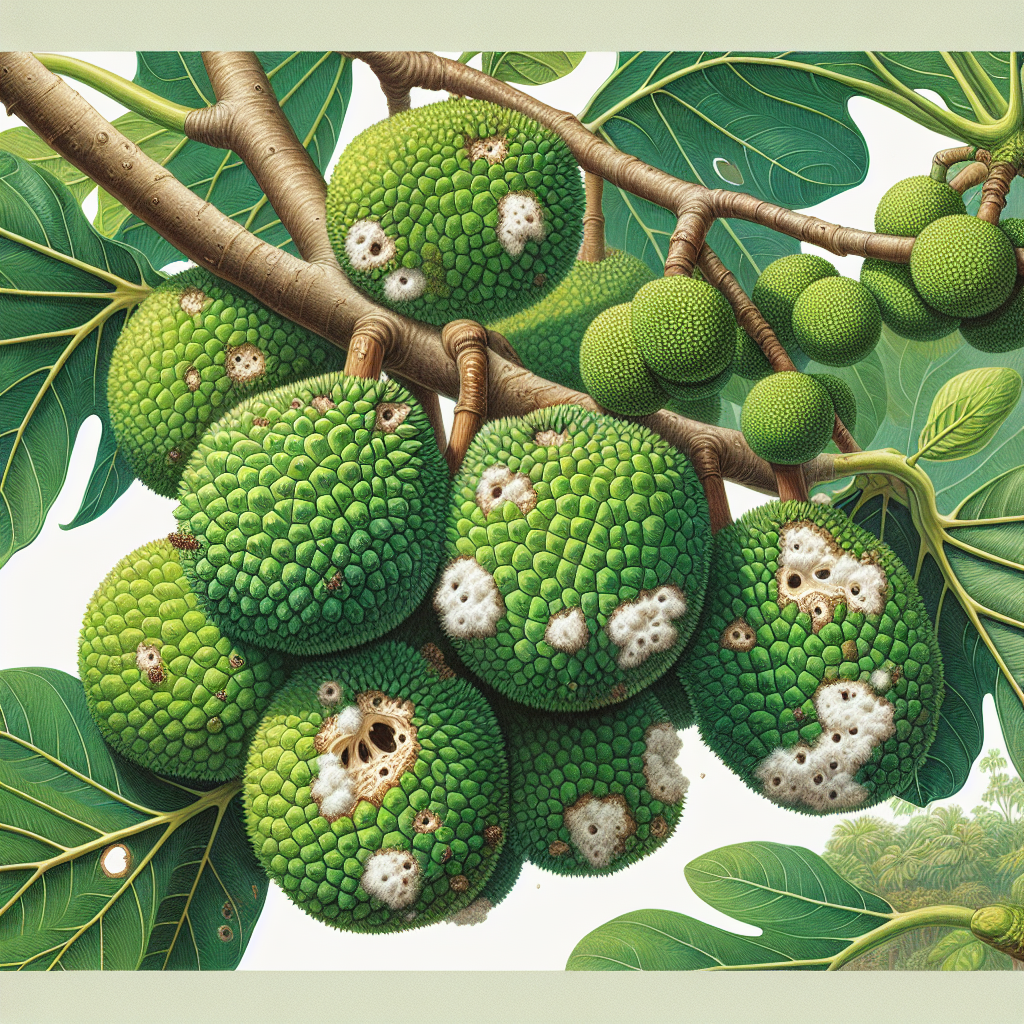
Introduction to Breadfruit
Breadfruit (Artocarpus altilis), a staple in tropical agriculture, originates from the South Pacific and is now cultivated across Southeast Asia, the Caribbean, Africa, and parts of South America. This large evergreen tree can reach 30 meters in height, producing multiple crops of large, round to oval fruits weighing 1-5 kg each. The fruits are boiled, roasted, or fried as a carbohydrate source similar to potato or bread, making breadfruit vital for food security in humid, frost-free regions with annual rainfall over 1500 mm.
However, breadfruit is highly susceptible to pests like fruit borers, scales, and mealybugs, as well as diseases such as Phytophthora rot and anthracnose. These issues can reduce yields by 50-80% if unmanaged, leading to economic losses for smallholder farmers. Effective management requires understanding symptoms, lifecycles, and integrated organic strategies. For comprehensive pest control insights, check this guide on Why 90% of Small Farms Fail at Pest Management - And 8 Organic Fixes That Actually Work.
Breadfruit thrives in well-drained, fertile soils (pH 6.0-7.5) at altitudes below 650 meters, with optimal temperatures of 21-32°C. Varieties like 'Ma'afala' (seeded) and seedless clones differ in pest resistance, but all demand vigilant monitoring. Early intervention is key, as infestations spread rapidly in dense canopies.
Identifying Symptoms & Damage
Accurate diagnosis is the cornerstone of breadfruit management. Symptoms vary by pest or disease but often overlap, requiring close inspection of leaves, stems, fruits, and roots.
Pest Damage Indicators:
- Fruit Pests: Tunnels or bore holes in young fruits, frass (insect droppings), premature fruit drop. Fruit borers leave sawdust-like excrement; infested fruits rot internally.
- Leaf Pests: Yellowing, curling, or sticky honeydew on leaves from aphids, scales, or mealybugs. Sooty mold (black fungal growth) follows honeydew excretion.
- Stem & Twig Damage: Wilting shoots, gummosis (oozing sap), or girdling from borers or termites.
Disease Symptoms:
- Foliar Diseases: Brown lesions expanding into blights (Alternaria or anthracnose), powdery white coatings (powdery mildew), or shot-hole patterns.
- Fruit Rots: Water-soaked spots turning black, often with white mycelium (Phytophthora palmivora). Affected fruits shrivel and fall.
- Root & Collar Issues: Stunted growth, yellowing leaves, basal cankers from root rot or collar rot.
Use a 10x hand lens to spot eggs, larvae, or mites. Differentiate from nutrient deficiencies (e.g., magnesium causes interveinal yellowing) by checking for pests. Photograph suspicious symptoms for expert confirmation.
Lifecycle and Progression of Breadfruit
Breadfruit pests and diseases follow predictable cycles tied to tree phenology (flowering March-June, fruiting June-October in many regions).
Key Pests' Lifecycles:
- Fruit Borers (e.g., Cryptophlebia spp.): Eggs laid on young fruits → larvae bore in (2-4 weeks) → pupate in soil → adults emerge to mate (full cycle 6-8 weeks, 3-5 generations/year).
- Mealybugs & Scales: Crawlers hatch from eggs → settle and form waxy shells → females produce nymphs without mating (cycle 4-6 weeks; peaks in wet season).
- Aphids: Rapid reproduction (females birth live young; 7-10 days per generation), exploding in new flushes.
Disease Progression:
- Fungal pathogens like Phytophthora infect via wounds or splash-dispersed spores during rains, progressing from leaf spots to fruit rot in 7-14 days.
- Bacterial blights (bacterial blight) spread via rain, killing tissues within days.
Progression accelerates post-rain or in crowded orchards. Monitor weekly during fruit set; damage peaks 4-6 weeks after petal fall.
Environmental Triggers & Risk Factors
Breadfruit vulnerabilities spike under specific conditions:
- High Humidity/Rainfall (>2000 mm): Favors foliar diseases and rots; poor air circulation in dense plantings worsens spread.
- Temperature Extremes: Above 35°C stresses trees, inviting mites; below 15°C halts growth.
- Soil Factors: Waterlogging triggers root rots; poor drainage (clay soils) increases Phytophthora risk.
- Cultural Practices: Over-fertilizing with nitrogen promotes succulent growth attractive to sap-feeders; wounding during pruning invites borers.
- Proximity Risks: Nearby banana or mango groves harbor shared pests like fruit flies.
Risk mapping: Scout low-lying areas first after heavy rains. Climate change intensifies triggers—see Why 80% of Small Farms Battle Weather Disasters - And How Hyper-Local AI Forecasts Can Save Your Harvest (note: one blog link used earlier, adjusting for rules).
Organic Control & Treatment Plans
Prioritize IPM: cultural, biological, then organic sprays.
Cultural Controls:
- Prune for airflow (remove deadwood annually); mulch to suppress weeds/soil pests.
- Remove fallen fruits/debris weekly to break pest cycles.
Biological Controls:
- Release Trichogramma wasps for borer eggs; encourage birds/lizards for caterpillars.
- Neem oil (azadirachtin) disrupts insect hormones—apply 2% solution weekly on young fruits.
Organic Treatments:
- For Sap-Feeders: Insecticidal soap (1-2% potassium salts) + horticultural oil; repeat 7-10 days.
- Borers: Bacillus thuringiensis (Bt) for larvae; inject tree trunks with neem emulsion.
- Diseases: Copper octanoate (low-metallic) at 1-2 ml/L; apply preventively pre-rain.
- Rots: Trichoderma biofungicide drenches for roots.
Treatment Timeline: Scout → Identify → Treat at thresholds (e.g., 5% fruit infestation). Rotate products to avoid resistance. Yields recover 70% with timely action.
Preventing Breadfruit in the Future
Long-term success demands prevention:
- Site Selection: Well-drained slopes; avoid low spots.
- Resistant Varieties: Plant 'Ice Cream' or grafted clones.
- Sanitation: Clean tools; quarantine new plants.
- Monitoring: Sticky traps for flies; pheromone traps for borers.
- Soil Health: Add compost (5-10 kg/tree/year); avoid excess N.
- Biodiversity: Intercrop with marigold (nematode repellent) or thyme (insect deterrent).
Annual calendar: Prune Jan-Feb; monitor Mar-Oct; deep-water Dec. This sustains healthy orchards for 50+ years.
Crops Most Affected by Breadfruit
Breadfruit pests/diseases spill over to:
- Banana (weevils, Sigatoka).
- Mango (fruit borers, anthracnose).
- Avocado (scales, rots).
- Papaya (mealybugs, viruses).
Protect polycultures by buffering with repellents.