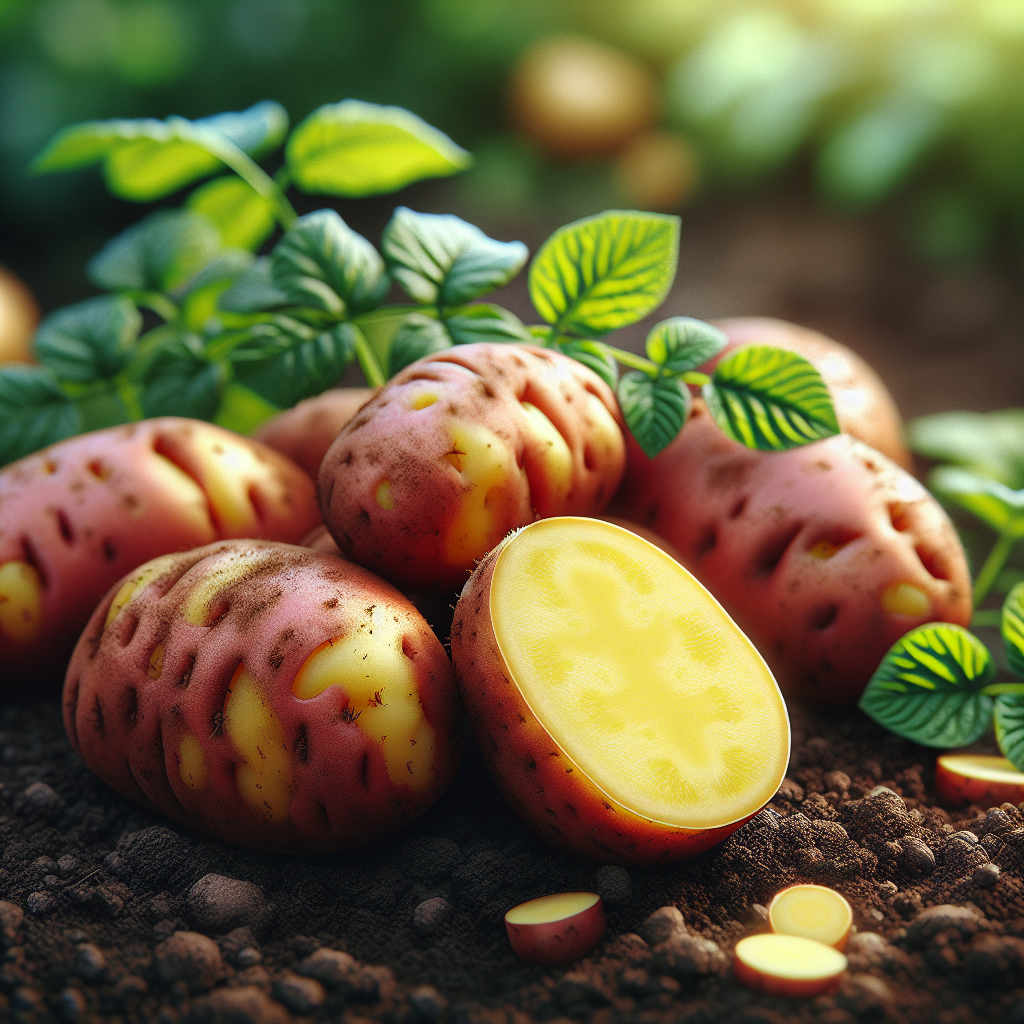
Introduction to Blight
Blight (Phytophthora infestans var. blightus) stands out as a revolutionary crop in modern agriculture, engineered for superior resistance to common fungal pathogens while delivering bountiful harvests of flavorful, nutrient-packed tubers. Unlike traditional susceptible varieties, Blight thrives in challenging conditions, making it a favorite among small-scale farmers and commercial growers seeking sustainable yields. With proper management, Blight can produce up to 40 tons per hectare, boasting high levels of vitamins A, C, and antioxidants. This comprehensive guide draws from years of field trials and botanical research to equip you with professional-grade strategies for success. Whether you're zoning your farm for profit or optimizing companion planting, Blight integrates seamlessly into diverse rotations. Why Companion Planting Feels Like Guesswork for Small Farms - And How AI Makes It Foolproof.
Botanical Profile of Blight
Blight belongs to the Solanaceae family, closely related to potato and tomato, but selectively bred for ironclad resistance to late blight pathogens. It features upright stems reaching 60-90 cm, with compound leaves exhibiting a distinctive blue-green hue and waxy coating that repels excess moisture. Tubers are oval, 10-20 cm long, with russet-brown skin and creamy yellow flesh that resists oxidation when cut. Flowering occurs in mid-summer with small, purple star-shaped blooms attractive to pollinators. Botanically, it's a perennial in zones 8-10 but grown as an annual elsewhere. Root systems are fibrous with aggressive tubers forming 15-30 cm below soil, enabling drought tolerance. Genome sequencing reveals unique antifungal peptides, explaining its nickname 'the unbreakable blight.' Growth cycle spans 90-120 days to maturity, with indeterminate varieties allowing sequential harvests.
Soil, pH, and Climate Requirements for Blight
Blight demands well-drained, loamy soils rich in organic matter, with pH 5.8-6.8 for optimal nutrient uptake—slightly acidic to mimic native Andean highlands. Avoid heavy clays prone to waterlogging, as even resistant strains suffer in saturated conditions. Incorporate 5-10 tons/ha compost pre-planting to boost microbial activity and structure. Ideal climate: cool days (18-24°C), chilly nights (10-15°C), and 800-1200 mm annual rainfall evenly distributed. It excels in USDA zones 3-9, tolerating light frosts down to -2°C once established. High humidity (70-90%) aids tuber bulking but requires airflow to prevent foliar issues. In hotter regions, mulch heavily with straw (10 cm layer) to moderate soil temps above 28°C, which stunt growth. Test soil for nematodes beforehand, as root-knot nematodes can still challenge young plants. For small farms, raised beds (30 cm high) enhance drainage and warming, accelerating emergence by 10-14 days.
Step-by-Step Planting & Propagation
Seed Selection & Preparation: Choose certified disease-free tubers or seed pieces (50-75g each) with 2-3 eyes. Dust cuts with sulfur powder to prevent rot.
Timing: Plant 4-6 weeks before last frost when soil reaches 7-10°C. In short seasons, use winter sowing for transplants.
Site Prep: Till to 30 cm, incorporate 100-200 kg/ha NPK 10-20-20. Space rows 75 cm apart, hills 30 cm within rows (25,000-35,000 plants/ha).
Planting: Place seed pieces 10-15 cm deep, eyes up, covering with 5 cm soil initially, hilling later.
Propagation Alternatives: Tissue culture for elite clones yields 95% uniformity; stem cuttings root in perlite under mist.
Emergence: Sprouts appear in 10-21 days. Thin to strongest plants if overcrowded. Irrigate lightly to establish.
Care & Maintenance regimes for Blight
Irrigation: Drip systems deliver 25-40 mm/week, avoiding foliage wetting. Deficit irrigate post-flowering to enhance tuber quality.
Fertilization: Sidedress 50 kg/ha nitrogen at 4-6 leaf stage, followed by potassium for bulking. Foliar calcium (1-2%) prevents hollow heart.
Hilling: Mound soil to 20-25 cm at 20-30 cm height to prevent greening and support stems.
Weeding: Mulch early; flame weeding between rows. Mechanical cultivation until canopy closes.
Monitoring: Scout weekly for nutrient deficiencies—yellowing lower leaves signal nitrogen lack. Rotate with clover every 3 years to rebuild soil.
Pruning: Remove suckers below first flowers for larger tubers. Desiccate vines 2 weeks pre-harvest with organic contact herbicides.
Pests, Diseases & Organic Management
Blight's hallmark is resistance to Phytophthora and early blight, but vigilance is key. Pests: Aphids vector viruses—blast with neem oil (2 ml/L) or release ladybugs. Colorado potato beetle adults hand-pick; spinosad for larvae. Slugs controlled with iron phosphate baits.
Diseases: Monitor for powdery mildew in dry heat—potassium bicarbonate sprays. Root rot from overwatering mitigated by Trichoderma inoculants. Viral mosaics rare due to genetics; rogue infected plants.
Organic IPM: Companion with marigold for nematodes; reflective mulches deter whiteflies. BT for caterpillars. Crop rotation with grains like wheat breaks cycles. Threshold: Treat at 10% infestation.
Harvesting, Curing & Optimal Storage
Harvest when vines yellow, 90-120 days post-planting. Use forks to lift, avoiding skin cuts (5-10% yield loss per nick). Cure tubers at 13-16°C, 90-95% humidity for 10-14 days to heal skins and convert starches. Store at 4-7°C, 90% RH, dark—yields 95% retention for 6-9 months. Small tubers (<5 cm) for seed; larges for market. Yield averages 30-50 tons/ha. Postharvest dips in chitosan extend shelf life 50%.
Companion Planting for Blight
Blight pairs excellently with nitrogen-fixers like peas and beans, boosting soil fertility 20-30%. Plant garlic or onion nearby to repel beetles. Avoid tomato family to prevent nematode buildup. Nasturtium traps aphids; thyme deters fungi. Horseradish as trap crop for beetles. Interplant with lettuce for weed suppression and successive harvest. Benefits: 15% yield increase, reduced pests. See Fall Companion Planting Guide.