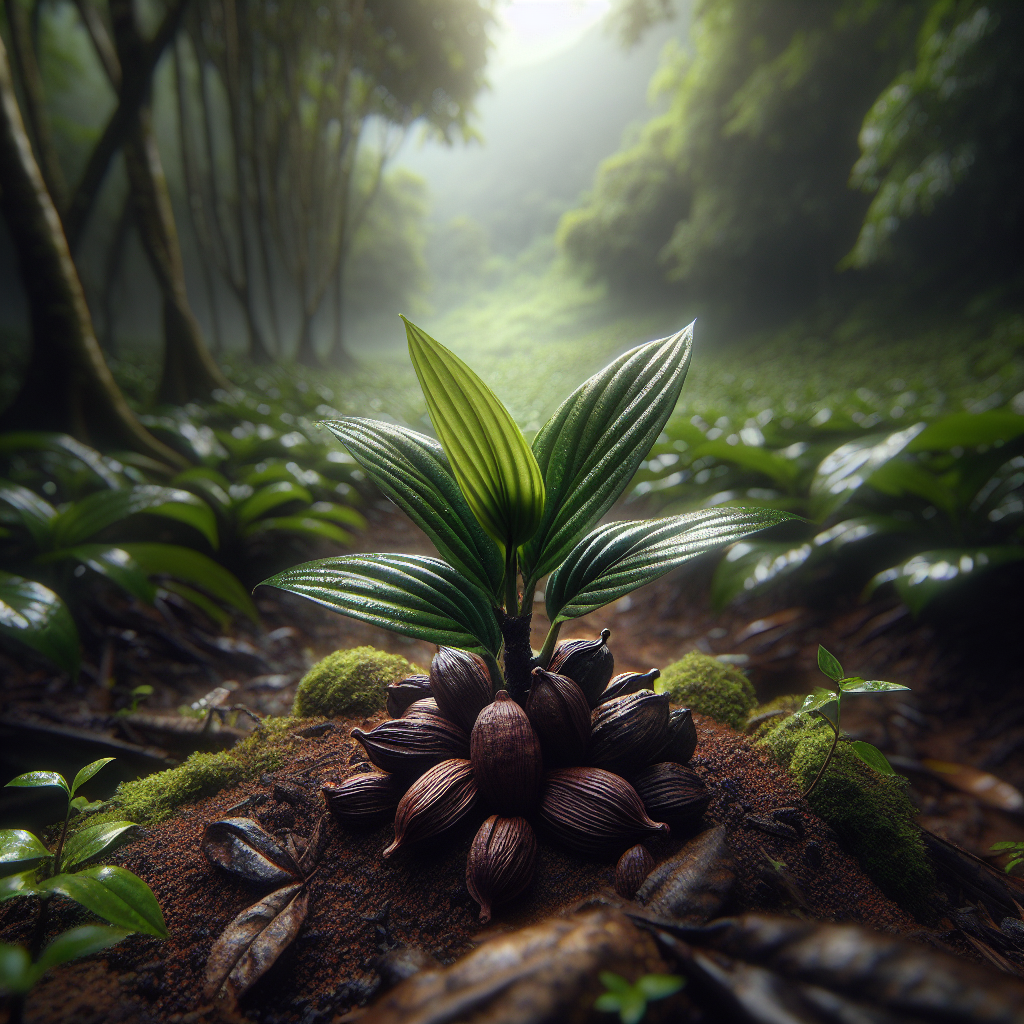
Introduction to Black Cardamom
Aromatic, bold, and distinctly different from green cardamom, this perennial spice belongs to the ginger family and is cultivated primarily in the eastern Himalayan belt, especially in India, Nepal, and Bhutan. Its dried capsules are larger, darker, and smokier than those of true small cardamom, making it indispensable in savory cuisines, spice blends, broths, and traditional medicines. In commercial production, black cardamom is valued not only for capsule yield but also for its fit within forest-edge and shade-based mountain farming systems.
Historically, the crop evolved as an understory species adapted to cool, misty elevations with heavy monsoon influence. Traditional production systems often relied on naturally shaded slopes, leaf-litter accumulation, and community-managed springs. Modern growers still benefit from those ecological lessons: black cardamom performs best when managed less like an exposed field crop and more like a structured understory plantation. For growers already familiar with rhizomatous spices, some management overlaps exist with ginger, especially around moisture, mulching, and organic matter, but black cardamom is more demanding about shade, altitude, and long-term disease prevention.
Economically, it is a long-duration crop that can remain productive for years once established. The key to profitability is not just plant survival, but producing uniform, mature, disease-free capsules and curing them without scorching, mold, or excessive smoke taint. Plantation success depends on site selection more than almost any other factor. A poorly drained site can destroy a stand through rhizome decline and fungal disease, while an overly exposed site leads to leaf scorch, weak tillering, and poor capsule set.
Botanical Profile of Black Cardamom
This species, Amomum subulatum, is a robust perennial herb in the Zingiberaceae family. It produces thick underground rhizomes from which arise leafy pseudostems formed by tightly wrapped leaf sheaths. Unlike woody shrubs, the apparent stem is herbaceous, and the true growing structure lies at or just below the soil surface in the rhizome network.
Plants typically reach 1.5 to 3 meters in height depending on elevation, nutrition, shade intensity, and cultivar. Leaves are long, lanceolate, and arranged distichously, with a glossy to matte green surface. Healthy leaves should be broad, turgid, and deep green. Pale green foliage often indicates low nitrogen, root stress, or excessive sun exposure.
Flowering occurs on basal inflorescences emerging near the ground from the rhizome zone rather than high on the leafy shoots. Flowers are borne in compact heads, and successful capsule development depends on strong clump vigor, adequate moisture, and favorable pollination weather during bloom. Capsules are ellipsoid to ovoid, ribbed, and harvested mature before curing.
Several named local types and landraces are cultivated across the Himalayan region, often selected for altitude adaptation, capsule size, disease tolerance, and curing quality. In some areas growers distinguish types by maturity class, capsule boldness, or tolerance to Chirke and Foorkey viral syndromes. Because much planting material still circulates locally through suckers and rhizome divisions, field uniformity can vary considerably between farms.
The crop grows in clumps, and over time each clump expands through rhizome branching. Productive clumps contain multiple vigorous tillers of different ages. Yield is usually highest when a plantation maintains a balanced age structure: enough young shoots to renew the clump, enough mature shoots to support flowering, and enough open space to prevent stagnation and disease buildup.
Soil, pH, and Climate Requirements for Black Cardamom
This crop is exceptionally sensitive to site ecology. The ideal soil is a deep, friable, humus-rich loam or sandy loam with very high organic matter and excellent drainage. Heavy clay can be used only if it is on a slope and heavily amended with leaf mold, compost, and coarse organic residues to improve aeration. Water stagnation around the rhizome zone is one of the fastest ways to lose plants.
Optimal soil pH is slightly acidic, generally 5.5 to 6.5. It can tolerate somewhat more acidic conditions down to around 5.0 if organic matter is abundant and calcium-magnesium balance is maintained, but production usually declines in excessively sour soils. If pH falls below 5.0, rhizome growth may become weak and nutrient uptake, especially phosphorus, calcium, and magnesium, can become limiting. Where liming is needed, use finely ground dolomitic lime in small split applications rather than heavy one-time doses, and incorporate it well in advance of planting.
Black cardamom prefers cool, humid subtropical to montane tropical climates. The most favorable elevation range is commonly about 800 to 2,000 meters above sea level, depending on latitude and local temperature patterns. Ideal temperatures are roughly 10 to 25°C. Short warm spells above 28°C can be tolerated under dense humidity and adequate shade, but persistent heat reduces plant vigor. Frost can severely injure foliage and inflorescences, while prolonged drought causes flower drop, poor capsule filling, and reduced tillering.
Annual rainfall of 1,500 to 3,500 mm is generally suitable if well distributed and if the site drains freely. The crop thrives in regions with monsoon moisture followed by humid, mild post-rainfall conditions. Relative humidity above 60% is helpful, and 70 to 90% during active growth is common in good production zones.
Shade is essential. About 30 to 50% filtered shade is usually ideal. Dense overhead shade from a managed agroforestry canopy protects leaves from scorch, reduces evapotranspiration, buffers temperature swings, and helps maintain litter-based soil structure. Too much shade, however, can suppress flowering and increase fungal pressure. Suitable shade can come from mixed perennial systems including banana, provided spacing and airflow are maintained. For broader agroecological planning, see this practical piece on soil health.
On sloping land, north- or east-facing aspects are often preferred in warmer regions because they reduce afternoon heat load. On very steep slopes, contour planting with vegetative barriers is important to prevent erosion, root exposure, and nutrient washout.
Step-by-Step Planting & Propagation
Propagation is usually vegetative because seed-grown plants are variable and slower to establish. The standard method is clump division or rhizome sucker planting from healthy, high-yielding, disease-free mother plants. Select propagules only from plantations with no visible viral symptoms, Rhizome rot, or chronic decline.
Select mother clumps carefully. Choose 2- to 3-year-old vigorous clumps with bold capsules, strong tillering, and dark green foliage. Avoid any clump showing mosaic, stunting, narrow leaves, tufting, or poor flowering.
Prepare planting material. Separate suckers or rhizome pieces with at least one healthy growing shoot and a substantial rhizome segment carrying active roots. A good planting unit often has 1 to 2 tillers and 20 to 30 cm of shoot height. Trim damaged roots and remove dead sheath tissue.
Treat before planting. Dip propagules in a biological fungicide slurry such as Trichoderma-enriched compost tea or a suspension of approved biocontrol agents. This helps suppress early rhizome pathogens. Ash plus finely sieved compost can also be dusted onto cut surfaces if local practice supports it.
Prepare the site. Clear invasive weeds but preserve useful tree shade. Dig pits approximately 45 x 45 x 30 cm on poor soils, or smaller holes where soil is already deep and loose. Refill with topsoil mixed with 5 to 10 kg well-decomposed farmyard manure or leaf compost. Never use fresh manure directly in the pit.
Set spacing according to vigor and terrain. Common field spacing ranges from 1.5 x 1.5 m to 2.0 x 2.0 m. Closer spacing gives faster ground cover but can intensify disease and make harvesting difficult. On fertile, humid sites, wider spacing is safer.
Plant at the correct depth. Set the rhizome so the collar sits just below the soil surface, generally 3 to 5 cm deep. Planting too deep delays emergence and encourages rot; too shallow exposes rhizomes to desiccation.
Mulch immediately. Apply a 5 to 10 cm layer of leaf litter, chopped straw, or forest biomass around but not smothering the shoot base. Good mulch conserves moisture, buffers soil temperature, feeds soil biota, and reduces splash-borne disease.
Time planting with rainfall. The best season is usually early monsoon or just before steady rains begin, so plants establish under natural moisture. In some mountain systems, late spring to early monsoon is ideal. Avoid planting into cold, saturated soil.
Nursery raising is possible where disease-free multiplication blocks are maintained. Tissue culture is less common at field level but may be useful for sanitation and rapid multiplication if trustworthy sources are available.
Care & Maintenance regimes for Black Cardamom
Moisture management is the single most important ongoing task after site selection. The root zone should remain consistently moist but never waterlogged. As a practical target, soil in the top 10 to 15 cm should feel cool and crumbly, not dusty and not sticky-sour. When squeezed in the hand, it should form a weak ball that breaks apart easily. If it compacts into a wet mass or releases free water, the site is too wet. If mulch lifts to reveal powder-dry soil and brittle feeder roots, the crop is under drought stress.
Young plantings need the most attention during the first 8 to 12 months. Irrigate lightly and frequently during dry spells rather than flooding. In shaded mountain systems, a deep wetting every 5 to 10 days in dry weather may be enough, depending on soil depth and mulch cover. Sandy slopes may need more frequent irrigation; humus-rich loams under dense mulch may need much less. Overwatering symptoms include yellowing lower leaves, soft pseudostem bases, sour smell in the rhizome zone, reduced new shoot emergence, and easy collapse of plants during warm afternoons despite wet soil.
Nutrient management should prioritize organic matter first and concentrated fertilizers second. A mature plantation benefits from annual applications of well-rotted manure, compost, forest litter, vermicompost, or composted cattle bedding. Many successful growers apply 5 to 10 kg organic manure per clump yearly in split doses, often before the monsoon and again after peak growth begins. Supplementary nutrition should focus on nitrogen for vegetative growth, phosphorus for root and flowering support, and potassium for capsule filling and resilience.
Where nutrient testing is available, adjust inputs to leaf and soil analysis. In the absence of testing, pale leaves, weak tillering, and small capsules often indicate insufficient nitrogen; marginal scorch and weak stalk strength may suggest potassium shortage; poor rooting and reduced flowering can point toward low phosphorus. However, these symptoms also overlap with root disease, so diagnosis should be field-based and cautious.
Mulching should be continuous, not occasional. Replenish litter whenever the original layer decomposes to less than about 3 cm. Organic mulch also reduces weed pressure, but manual weeding is still necessary. Weed shallowly to avoid disturbing feeder roots. Aggressive hoeing around clumps can wound rhizomes and create infection courts.
Shade regulation is often neglected. Prune overhead shade trees annually to maintain filtered light and airflow. If leaf blades become yellow-green with scorched margins, increase shade slightly. If plants produce lush leaves but few capsules, and the plantation remains persistently damp and dark, reduce shade and improve ventilation.
Clump management is essential in older stands. Remove dead, diseased, and senescent shoots to keep the center open. This improves light penetration to the clump base, lowers humidity around inflorescences, and reduces inoculum buildup. In high-rainfall zones, sanitation pruning can dramatically improve longevity.
In productive systems, yield often begins from the second or third year, rises through the mid-years, and gradually declines if clumps become congested or infected. Rejuvenation through selective division and replanting is often better than trying to force old, exhausted stands back into heavy production.
Pests, Diseases & Organic Management
The most serious constraints are usually diseases rather than insect feeding. Viral syndromes such as Chirke and Foorkey have historically devastated plantations in some regions. Plants with viral infection may show mosaic or streaking, reduced leaf size, excessive tillering, bushy appearance, narrow leaves, stunting, and almost complete collapse in capsule production. There is no curative treatment. The only effective response is strict rouging: remove the entire affected clump, including rhizomes, and destroy it away from the field. Never use suspect planting material.
Rhizome rot and Clump rot are major fungal or fungus-like disease problems, especially in poorly drained or overmulched, stagnant sites. Early signs include yellowing from the lower leaves upward, wilting despite adequate moisture, soft pseudostem bases, browning at the collar, and foul-smelling rhizomes. Prevention depends on drainage, clean planting stock, biological seedling treatment, and sanitation. Drenching with Trichoderma-based preparations around the root zone can be useful in organic systems. Remove severely affected plants immediately and improve runoff channels before replanting.
Leaf blight, Leaf spot, and Capsule rots increase under prolonged wetness and poor air movement. Prune to open the canopy, avoid overhead irrigation late in the day, and remove heavily infected leaf material. Silica-rich amendments and balanced potassium often improve leaf toughness and reduce severity.
Aphids can be important not only for sap feeding but also because they may vector viral diseases. Monitor the undersides of tender leaves and new shoots. Encourage predators by maintaining biodiversity and avoiding broad-spectrum insecticides. If pressure rises, use neem-based sprays, insecticidal soap, or a strong water spray directed carefully in dry morning conditions.
Shoot borers, Capsule feeders, Slugs, and Snails may also appear, depending on locality. Hand collection, trap boards, ash barriers in small plantings, pheromone monitoring where available, and habitat management all support organic control. Excessively dense mulch right against the pseudostem can harbor mollusks; keep a small collar area slightly clearer while maintaining broader soil cover.
Integrated management is strongest when it combines: disease-free planting stock, regulated shade, clean drainage, routine rouging, clump sanitation, balanced nutrition, and biological antagonists. In black cardamom, prevention always outperforms rescue treatments.
Harvesting, Curing & Optimal Storage
Plants usually begin commercial harvest 2 to 3 years after planting, though timing depends on altitude, cultivar, and management. Capsules must be harvested at full maturity but before splitting or weather damage. Mature capsules are firm, well-filled, and have reached full size with seeds developed inside. Immature harvest reduces weight, aroma complexity, and market grade.
Harvest by hand with scissors or a knife, cutting the capsule-bearing stalk carefully to avoid damaging new shoots and future inflorescences. Multiple pickings are often needed because ripening within a plantation is not always uniform. Harvest only in dry weather when possible; wet-harvested capsules are harder to cure safely.
Curing is the defining post-harvest step. Traditional black cardamom is smoke-cured over a low fire, which produces the characteristic dark exterior and smoky aroma. However, poor curing can ruin quality. If the drying temperature is too high, capsules become brittle, shriveled, and overly smoky, while seeds may lose volatile compounds. If drying is too slow or humid, molds develop and capsules darken unevenly.
A good curing system maintains gentle, continuous heat with ample airflow. Capsules should be spread in thin layers and turned regularly. Depending on dryer design and weather, curing may take several hours to a few days. The target is a uniformly dried capsule with dark outer skin, intact shape, and seeds that are dry enough to resist fungal growth but not charred. Final moisture content is often best near 10 to 12%. If moisture remains above about 13%, storage life drops sharply.
After curing, clean and grade capsules by size, color uniformity, freedom from mold, and absence of pest injury. Remove broken capsules, stones, fibers, and immature pods. Pack only when fully cooled; warm capsules sealed in bags can sweat and reabsorb moisture.
For storage, use clean, dry, food-grade sacks or lined cartons in a cool, dark, well-ventilated room with relative humidity ideally below 60%. Keep off the floor on pallets. Avoid exposure to direct sun, fuel odors, or damp walls. Under good storage, capsules retain marketable quality for many months, but volatile aroma compounds are always best preserved under cool, dry conditions with minimal oxygen and minimal handling.
Companion Planting for Black Cardamom
This crop performs best in multilayer systems rather than conventional mixed vegetable intercropping. The most useful companions are structural and ecological partners that provide filtered shade, litter, humidity buffering, erosion control, and biological diversity without becoming root-aggressive or excessively competitive.
Banana is one of the most practical companions in smallholder systems because it establishes quickly, produces partial shade, reduces wind stress, and contributes large quantities of biomass for mulch. It should be spaced generously and thinned so it does not create stagnant shade. In wetter sites, bananas also help capture nutrients that might otherwise leach downslope.
Turmeric works well on the margins of young plantations or in nearby understory strips because it shares a preference for organic-rich, moist soil and partial shade. It can diversify income and make efficient use of filtered light before black cardamom clumps fully occupy the ground. Keep enough spacing to avoid creating an overly crowded rhizosphere.
Black Pepper can fit into agroforestry designs where suitable living standards or support trees already exist, but it must be managed carefully so vine density does not over-darken the plantation. In mixed spice systems, it contributes economic resilience and supports biodiversity.
Clover can be useful in paths or terrace edges in cooler zones as a living ground cover to reduce erosion and add organic matter, though it should not be allowed to compete directly at the clump base. Ground covers are most beneficial where they are kept low and managed as a support species rather than as an uncontrolled intercrop.
The general rule is simple: choose companions that stabilize the microclimate and soil without congesting the root zone or blocking airflow. Black cardamom rewards ecological balance more than density.