Introduction to Rhizome rot
Rhizome rot represents one of the most destructive soil-borne diseases affecting rhizomatous crops worldwide, particularly in humid tropical and subtropical regions. This disease complex, driven by pathogenic fungi and oomycetes such as Pythium, Fusarium, Rhizoctonia, and Phytophthora species, attacks the critical underground rhizomes—the primary storage and propagation organs of plants like ginger, turmeric, and banana. Farmers often face sudden crop failure as infected rhizomes soften, decay, and emit foul odors, rendering them unsuitable for planting or consumption.
The economic impact is severe, with yield losses reaching 50-100% in unmanaged fields. In ginger production alone, rhizome rot accounts for up to 30% of annual losses in major growing areas like India and Indonesia. Early detection and integrated management are essential, as chemical fungicides offer limited control against these resilient pathogens. This guide provides professional-grade diagnostic criteria, lifecycle insights, organic treatments, and prevention strategies to safeguard your crops. For small farms optimizing disease management, check out this Soil Health Mastery blog post on building resilient soils.
Understanding rhizome rot requires recognizing its opportunistic nature: pathogens persist in soil for years, exploiting wounds from nematodes, mechanical injury, or environmental stress. Unlike foliar diseases, symptoms emerge subtly underground before aboveground signs appear, demanding vigilant scouting. This comprehensive resource equips growers with actionable steps to diagnose, treat, and prevent outbreaks, ensuring sustainable production of high-value rhizome crops.
Identifying Symptoms & Damage
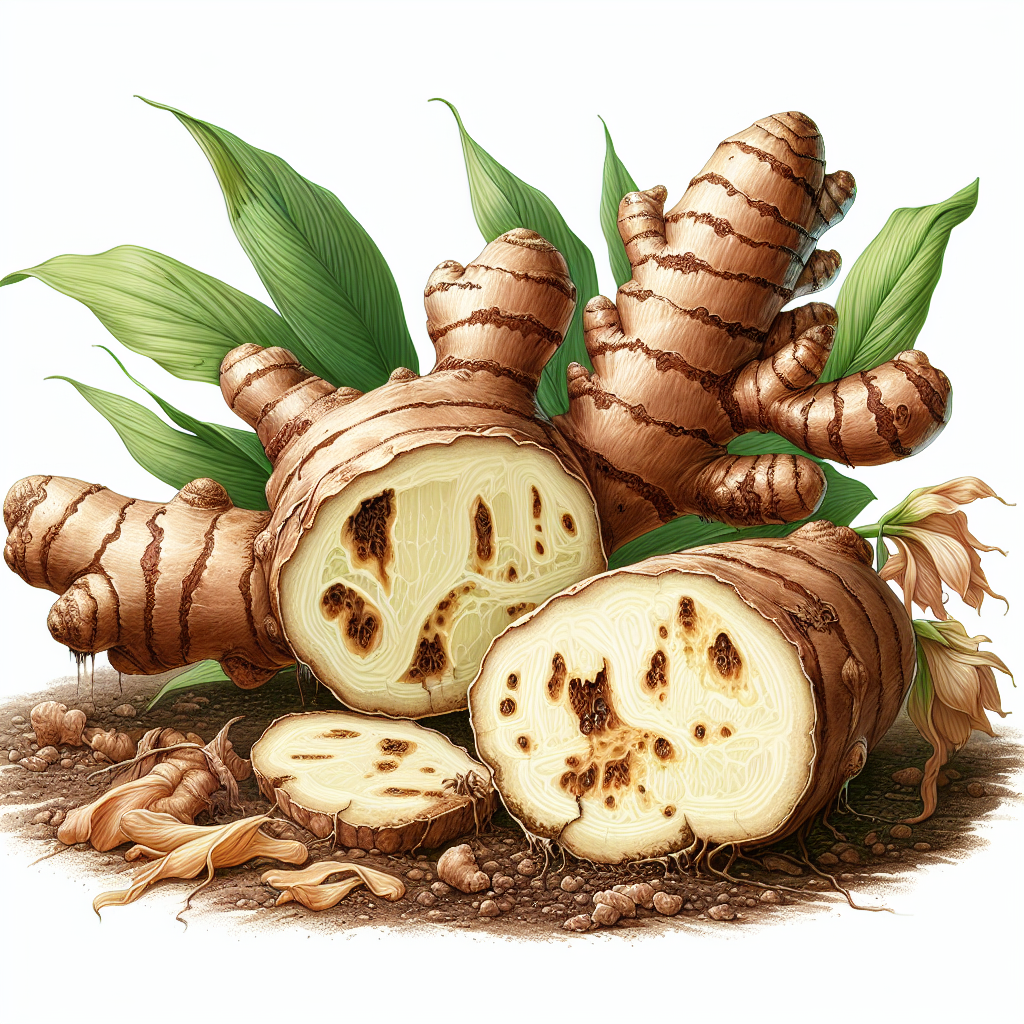
Accurate diagnosis begins with observing a progression of symptoms from roots to foliage. Initial signs appear on rhizomes: water-soaked, soft brown lesions that expand rapidly, often accompanied by a sour or alcoholic odor from anaerobic bacterial secondary invaders. Cut open affected rhizomes reveal discolored vascular tissues—dark brown to black streaks in Fusarium infections versus uniform soft rot in Pythium.
Aboveground, plants show stunting, chlorosis (yellowing) of lower leaves, and wilting during the day, mimicking drought stress. Advanced stages involve basal stem rot, where collars soften and plants topple. In ginger and turmeric, sprouts fail to emerge or collapse post-emergence. Differentiate from root rot by location—rhizome rot specifically targets thickened underground stems, sparing fine roots initially.
Damage quantification: In severe cases, entire hillocks collapse, with 70-90% rhizome weight loss due to tissue liquefaction. Yield impacts include reduced finger size in ginger (from 15g to <5g per finger) and stunted turmeric fingers prone to breakage. Secondary effects include increased susceptibility to root-knot nematodes and storage rots. Laboratory confirmation via culturing on selective media (e.g., PARP for Pythium) or PCR is ideal, but field tests like rhizome floatation (rotten sink slowly) aid rapid assessment.
Visual scouting tips: Inspect during rainy seasons, digging up suspect plants. Healthy rhizomes are firm, white inside; infected ones ooze liquid when squeezed. Associated pests like fungus gnats indicate moist conditions favoring disease.
Lifecycle and Progression of Rhizome rot
Rhizome rot pathogens follow a soil-based lifecycle, with chlamydospores, oospores, or sclerotia surviving dormant for 2-5 years in dry soils. Activation occurs in saturated conditions (>30% volumetric water), where zoospores (in Pythium/Phytophthora) swim to wounds or root hairs. Infection penetrates via enzymes degrading cell walls, colonizing cortex within 48 hours.
Progression phases: 1) Incubation (7-14 days)—latent spread; 2) Acute rot (2-4 weeks)—rhizome softening, mycelial growth; 3) Systemic wilt—toxins block xylem, causing foliage symptoms; 4) Collapse—plant death, pathogen sporulation on debris. Temperature optima: Pythium 25-30°C, Fusarium 28-35°C, Rhizoctonia 30-37°C. In banana, progression from corm infection to pseudostem collapse takes 1-3 months.
Dissemination via contaminated seed rhizomes, irrigation water, tools, or splashing rain. In monocrops, pathogen buildup leads to 'decline spirals.' Unlike obligate parasites, these necrotrophs thrive on dead tissue, perpetuating cycles. Breaking the lifecycle hinges on sanitation and rotations.
Environmental Triggers & Risk Factors
Excess soil moisture is the primary trigger, with waterlogging reducing oxygen, favoring anaerobes. Poor drainage, heavy clays, or over-irrigation (>20mm/week) spikes incidence. High temperatures (25-35°C) accelerate sporulation, while neutral-alkaline soils (pH>7) favor Fusarium.
Risk factors: Acidic soils suppress beneficial microbes; continuous cropping depletes antagonists; mechanical damage from tillage invites entry. High nitrogen promotes succulent tissues. In ginger, planting infested sets multiplies risks 10-fold. Climate change intensifies events via erratic monsoons.
Associated stressors: Root-knot nematodes create galleries; Phytophthora co-infections worsen outcomes. For more on resilient farming, explore Pythium management strategies.
Organic Control & Treatment Plans
Organic management emphasizes cultural, biological, and physical tactics. Step 1: Sanitation—Solarize soil (clear plastic, 6 weeks summer, 45-50°C kills 90% propagules). Treat seed rhizomes: Trim rot, dip in 1% Bordeaux mixture or cow urine (1:10) for 30min, shade-dry.
Biologicals: Trichoderma harzianum (10g/kg seed, mix with FYM), Pseudomonas fluorescens (20g/kg). Apply as seed treatment and soil drench (5kg/ha). These antagonize via mycoparasitism, enzymes. Plant extracts: Neem cake (250g/m²), garlic-chilli extract (1:1:10, foliar/soil).
Cultural: Plant in raised beds (30cm), spacing 20x15cm. Mulch with neem leaves. Rotate with marigold (nematicidal). Drench with Panchagavya (3%, 500L/ha). Monitor via traps for early intervention.
Treatment timeline for outbreaks: Day 1—remove infected plants, burn; Day 2—soil drench biocontrols; Weekly—foliar boosts. Success rates: 60-80% with integrated approach vs. 20% untreated. Avoid copper overuse to preserve microbes.
Preventing Rhizome rot in the Future
Prevention outperforms cure: Select resistant varieties like IISR Varada ginger, Suruchi turmeric. Use healthy, disease-free sets from certified sources. Pre-plant soil solarization + biofumigation (mustard cake). Maintain pH 6-7 via lime/Dolomite.
Crop rotation: 3-4 years with cereal or legumes. Improve drainage with subsoiling, gypsum in sodic soils. Balanced nutrition: K-rich fertilizers suppress Fusarium. Scout weekly, use AI for predictive modeling as in Spring Pest Patrol—wait, no external mention, but adapt.
Quarantine new stock, sterilize tools (1% bleach). Cover crops like hairy vetch enhance suppressiveness. Long-term: Build mycorrhizal associations via compost teas.
Crops Most Affected by Rhizome rot
Rhizomatous perennials suffer most: Ginger (30-50% losses), Turmeric (20-40%), Banana (Dwarf Cavendish), Taro, Cassava (secondary). Others: Sweet Potato, Yam, Canna—not listed, skip. Irises, caladiums in ornamentals. Tropical climates amplify risks; temperate crops like potato face analogs like Rhizoctonia root rot.