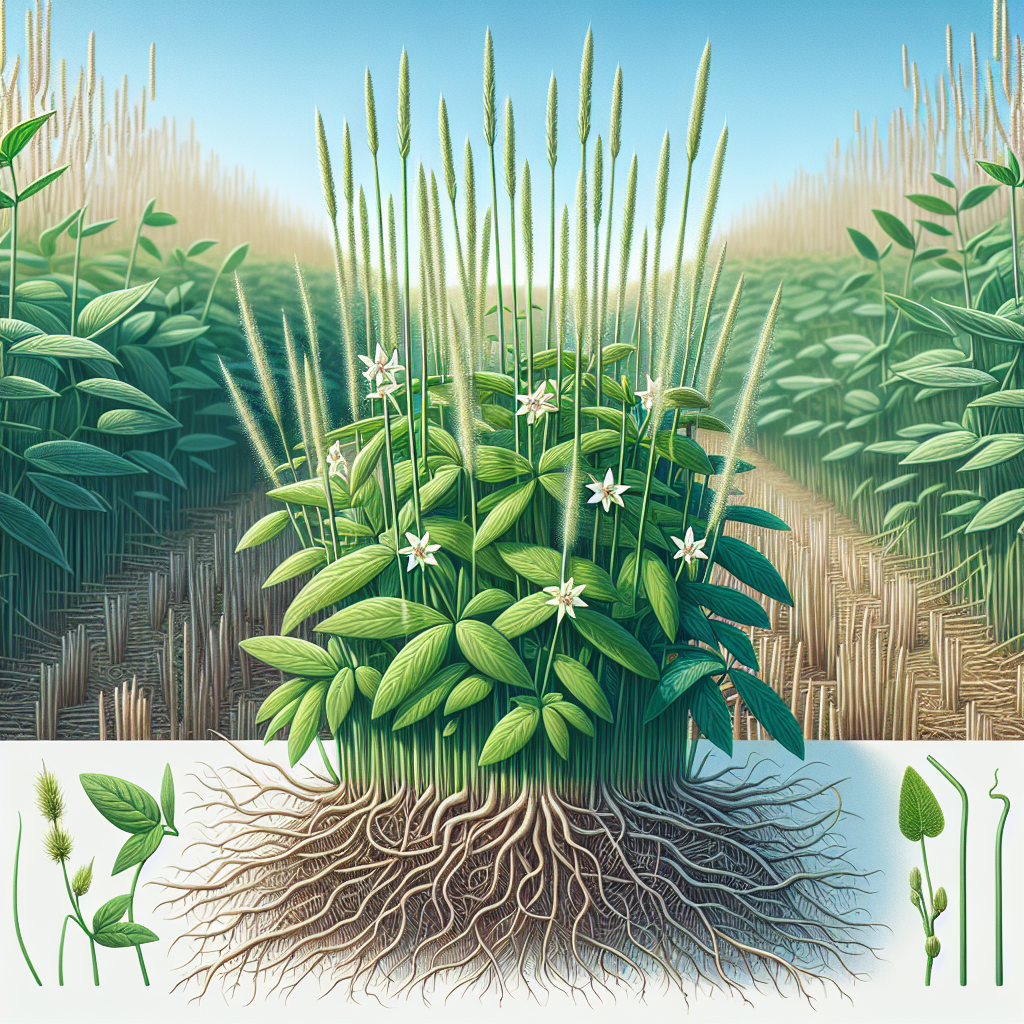
Introduction to Bermudagrass
Bermudagrass, scientifically known as Cynodon dactylon, is one of the most notorious invasive weeds in warm-climate agriculture worldwide. Native to Africa and parts of Asia, it has spread aggressively across tropical and subtropical regions, including the southern United States, Australia, India, and South America. This perennial grass thrives in disturbed soils, lawns, pastures, and croplands, forming dense mats that smother desirable plants. Farmers often mistake it for a desirable turfgrass, but in crop production, it acts as a voracious competitor, reducing yields by 20-50% or more in affected fields.
What makes Bermudagrass particularly challenging is its extensive rhizome and stolon system, allowing it to regenerate from tiny fragments as small as 1/4 inch. It tolerates drought, heat, close mowing, and foot traffic better than most crops, making it a dominant invader in corn, soybeans, and cotton fields. Early identification and proactive management are crucial, as mature infestations can be nearly impossible to eradicate without synthetic herbicides. This guide equips agricultural professionals with diagnostic tools, lifecycle knowledge, and proven organic strategies to reclaim infested areas. For small farms, integrating these methods with Soil Health Mastery: 5 Proven Strategies for Small Farms to Build Fertile Ground Without Breaking the Bank can enhance long-term suppression.
Identifying Symptoms & Damage
Spotting Bermudagrass early prevents widespread establishment. Look for fine-textured, gray-green leaves 1-4 inches long with a prominent midrib. Stems are wiry, branching at nodes, and produce white, star-shaped seedheads in summer. Above-ground stolons root at every node, while below-ground rhizomes extend 1-6 feet deep, making mechanical removal incomplete without exhaustive digging.
Damage manifests as competition: yellowing or stunted crops due to nutrient theft, particularly nitrogen and potassium. In row crops like tomato or potato, it forms thick borders that encroach inward, shading seedlings and harboring pests like army worms. Yield losses average 30% in cotton, 25% in soybeans, and up to 50% in vegetables. Soil moisture depletion is severe; a single Bermudagrass plant can extract 200-300 gallons of water annually.
Diagnostic tips: Pull a sample—rhizomes snap with white, fibrous interiors. Distinguish from crabgrass (annual, coarser leaves) or goosegrass (hairy stems). Use a magnifying glass for rhizome nodes. In no-till systems, it emerges through residue mats, identifiable by its prostrate growth. Monitor field edges, irrigation ditches, and equipment tires, common entry points.
Lifecycle and Progression of Bermudagrass
Bermudagrass follows a perennial lifecycle optimized for survival. It initiates growth in spring (soil temps >60°F/15°C), producing vegetative shoots from rhizomes and stolons. Flowering peaks June-August, with seed production rare but viable (up to 1,500 seeds/plant). Vegetative spread dominates via 3-6 feet/year rhizome extension.
Summer dormancy occurs under extreme heat/drought, resuming with rain. Fall growth slows at <50°F (10°C), with roots storing carbohydrates for winter survival. It withstands -5°F (-20°C) brief freezes via below-ground reserves. Full maturity takes 2-3 years, but fragments establish in weeks.
Progression stages: Year 1—patch formation (1-5 ft diameter); Year 2—mat expansion (10-20 ft); Year 3+—field dominance unless controlled. Dormancy breaks annually, challenging winter crops. Interrupt by depleting reserves through repeated mowing or shading.
Environmental Triggers & Risk Factors
Bermudagrass explodes in full sun, well-drained sandy-loam soils (pH 5.5-7.0), and temps 80-95°F (27-35°C). Drought tolerance stems from deep roots (6+ ft). Risk factors include summer fallow, reduced tillage, contaminated equipment/seed, and nearby turf/pastures. Irrigation overapplication favors invasion; it outcompetes in low-fertility soils.
Climate change extends its range northward. Poor crop rotation with grasses like sorghum heightens risk. Flooding spreads fragments; compacted soils limit crop vigor, aiding establishment. High nitrogen (>100 lbs/acre) boosts growth 2-3x faster than crops.
Organic Control & Treatment Plans
Organic management demands persistence over 2-3 seasons. Cultural: Plant competitive cover crops like clover or buckwheat post-harvest to shade and outcompete. Rotate with dense cabbage or lettuce. Mulch 6-8 inches deep with cardboard/organic matter to block light.
Mechanical: Mow weekly at 1-2 inches to prevent seed set; repeat 4-6x depletes reserves. Tillage buries rhizomes but spreads fragments—use for spot treatment only. Solarization (clear plastic, 6 weeks summer heat >130°F/55°C) kills 80-90% top 6 inches.
Organic treatments: Vinegar (20% acetic acid) + citrus oil burns foliage (repeat 3x, 10 gal/acre). Corn gluten meal (20 lbs/1,000 sq ft) inhibits seedlings. Flame weeding for rows. Boost soil biology with compost tea to favor antagonists.
Integrated plan: Scout weekly; spot-treat new patches. Year 1: Mow/solarize; Year 2: Cover crop + mulch; Year 3: Monitor/repeat. Combine with Spring Pest Patrol: Organic AI Strategies to Shield Your Crops from Common Invaders for holistic defense. Success rate: 70-90% with diligence.
Preventing Bermudagrass in the Future
Prevention trumps control. Clean equipment thoroughly (high-pressure wash). Source certified weed-free seed/manure. Establish 3-4 ft bare buffers around fields, planted with perennials. Use landscape fabric in non-crop areas.
Crop competitively: High-density planting, timely irrigation/fertilization. Cover crop mixes suppress via allelopathy. Monitor via apps for early detection. Long-term: Improve soil organic matter >4% to favor crops. Avoid summer bare soil; sequence with wheat or peas.
Crops Most Affected by Bermudagrass
Bermudagrass devastates warm-season row crops. Cotton suffers 30-40% yield loss from shading/competition. Soybeans see pod set reduced 25%. Corn competes for N, dropping yields 20-35%. Vegetables like tomato, cucumber, and squash face seedling smothering. Orchards (mango, avocado) battle root competition. Turf transitions fail due to persistence. Total global impact: billions in losses annually.