Introduction to Beauveria bassiana
Beauveria bassiana is a naturally occurring soil-borne fungus renowned in agricultural entomology as one of the most effective biological control agents against insect pests. Unlike traditional chemical pesticides, this entomopathogenic fungus specifically targets arthropods, penetrating their exoskeleton via spores and causing death through mycelial growth and toxin production. Farmers and growers have harnessed B. bassiana for decades in integrated pest management (IPM) programs, particularly in organic farming systems where synthetic insecticides are avoided. Its safety profile is exceptional: the Environmental Protection Agency (EPA) classifies it as a low-risk biopesticide with no known adverse effects on non-target organisms like pollinators, birds, or humans when used as directed.
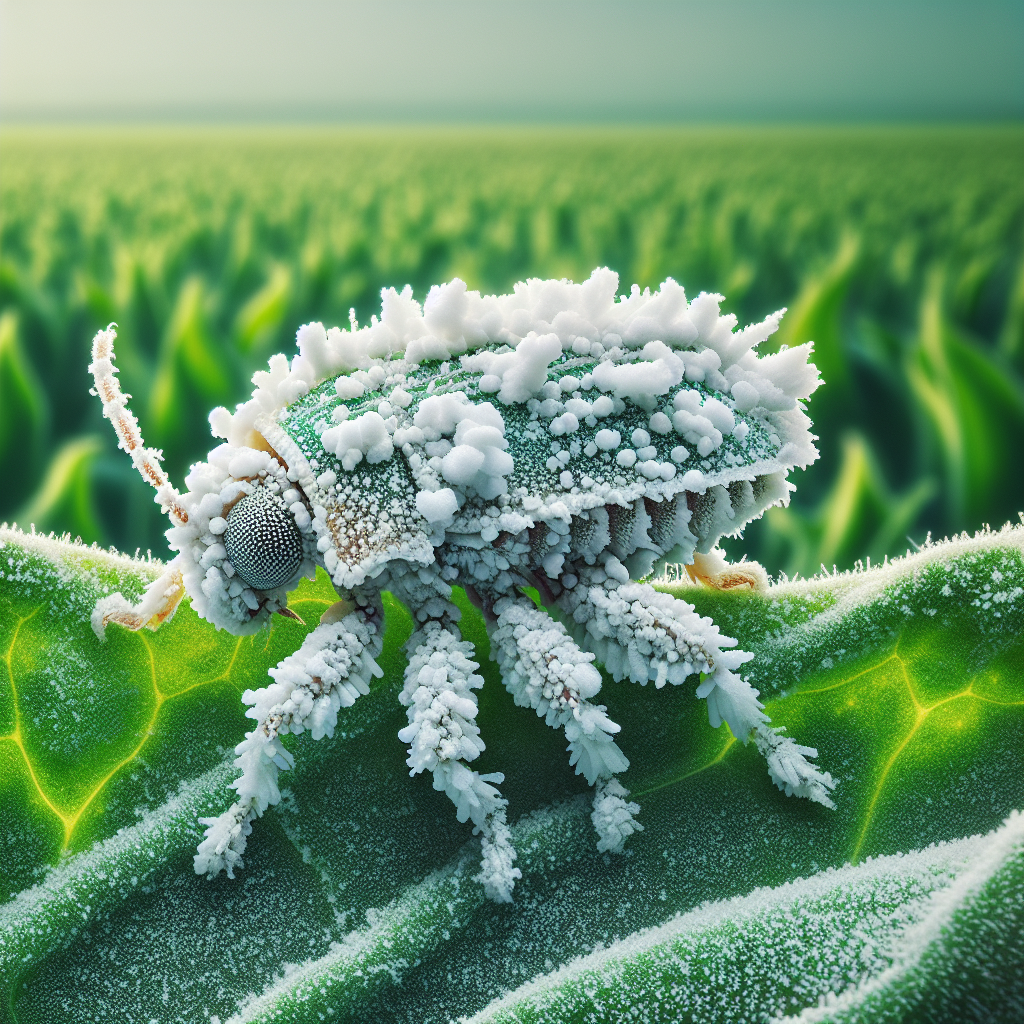
In practical terms, Beauveria bassiana manifests as a white, powdery coating on infected insects, often visible in fields under high humidity conditions. Commercial formulations such as wettable powders, oil-based suspensions, and granular products make it accessible for small-scale and large-scale operations alike. Its broad host range includes over 700 insect species, from aphids to whiteflies and beetles, making it a cornerstone of sustainable pest control. This guide provides definitive diagnostic criteria, lifecycle insights, environmental considerations, organic application strategies, prevention of misuse, and highlights crops where it excels. By understanding its dynamics, growers can reduce chemical inputs by up to 50%, boost yields, and comply with organic certifications.
Identifying Symptoms & Damage
Beauveria bassiana does not infect plants directly; instead, symptoms are observed on pest insects. Early signs include lethargic behavior in affected insects, such as reduced feeding and movement. Within 3-7 days post-infection, a distinctive white mycelial growth emerges from the insect's body, resembling a fuzzy mold. This fungal mat, often described as 'white muscardine,' covers the cadaver completely under optimal conditions (high humidity >90% RH). Dead insects may appear mummified, with rigid bodies and powdery spores that readily disperse.
Damage to crops is indirect, stemming from pest population crashes. For instance, in soybeans fields, infected soybean aphids halt defoliation, preserving leaf area for photosynthesis. Scout by examining 20-50 insects per 10 plants; if >20% show white fungal growth, an epizootic (natural outbreak) is underway. Differentiate from other entomopathogens: Metarhizium anisopliae produces greenish spores, while B. bassiana is purely white. No plant symptoms like chlorosis or wilting occur—absence of these confirms it's not a phytopathogen like Fusarium. Use a hand lens (10x) for confirmation; lab diagnostics via microscopy reveal banana-shaped conidia (2-3 μm wide).
In storage, infected pests like storage beetles on grains can contaminate produce with spores, though harmless to humans. Monitor with yellow sticky traps; spike in cadavers signals efficacy. Economic thresholds vary: apply if pest densities exceed 10-20 per leaf in vegetables.
Lifecycle and Progression of Beauveria bassiana
The lifecycle of Beauveria bassiana is a classic fungal path: spore germination, host penetration, mycelial proliferation, and sporulation. Conidia (asexual spores) land on an insect cuticle, germinate in 12-24 hours under 25-30°C and >90% RH, producing hyphae that breach via enzymes (chitinases, proteases). Inside the hemocoel, yeast-like blastospores multiply, depleting nutrients and releasing beauvericin toxin, killing the host in 2-5 days. Post-mortem, mycelium erupts, forming conidiophores that release billions of new spores within 3-7 days.
Progression depends on host: soft-bodied pests like whiteflies succumb faster (48 hours) than hard-shelled beetles (5-10 days). Environmental cues trigger conidiation; UV light degrades spores in <1 day, hence nocturnal applications. In soil, it persists as mycelium or chlamydospores for months, recycling via cadavers. Epizootics amplify naturally: one infected insect produces 10^9 spores, enough to infect 1,000 more. Crop rotation disrupts reservoirs, but mulching enhances persistence. Full cycle: 7-14 days, with 80-95% mortality in susceptible populations.
Environmental Triggers & Risk Factors
Optimal conditions for Beauveria bassiana proliferation include temperatures of 20-30°C, relative humidity >85%, and shaded microclimates. High rainfall or overhead irrigation accelerates spread by washing spores onto pests. Risk factors for low efficacy: direct sunlight (UV kills 90% spores in 4 hours), temperatures >35°C (halts germination), or fungicide residues like copper-based sprays that inhibit growth.
Pest susceptibility varies; stressed insects (e.g., drought-weakened aphids) are prime targets. Overuse risks fungal adaptation in pests, though rare due to genetic diversity. In greenhouses, enclosed humidity boosts efficacy 2-3x vs. fields. Soil pH 5-7 favors persistence; acidic soils (>pH 8) limit. Companion crops like marigold provide shade, enhancing outbreaks. Monitor weather via hyper-local forecasts to time applications during dew periods. See Why 80% of Small Farms Battle Weather Disasters - And How Hyper-Local AI Forecasts Can Save Your Harvest for predictive tools.
Organic Control & Treatment Plans
Beauveria bassiana IS the organic control—deploy as a biopesticide. Products like Botanigard or Naturalis (10^12 spores/g) are OMRI-listed. Application: 1-2 quarts/acre in 50-100 gal water, with 0.1% oil adjuvant for adhesion. Spray evenings, reapply every 7-10 days or post-rain. Integrate with IPM: release predators like ladybugs post-peak kill.
Step-by-step plan:
- Scout pests weekly.
- Apply at 10^7-10^9 spores/cm² coverage.
- Irrigate lightly pre-spray for humidity.
- Avoid broad-spectrum sprays 7 days prior/post.
- Monitor mortality; expect 50-90% control in 7 days.
For cotton, targets Helicoverpa species; in corn, controls corn earworm. Combine with neem for synergism. Storage treatment: dust grains with 0.5% powder. Cost: $20-50/acre, ROI via 20-30% yield gains.
Preventing Beauveria bassiana in the Future
Prevention focuses on conserving natural epizootics while avoiding suppression. Maintain soil moisture and organic matter to sustain endemic populations. Plant diverse rotations with clover cover crops to harbor the fungus. Scout early; enhance via border sprays. Avoid prophylactic fungicides; use targeted IPM.
Build resilience: healthy plants resist secondary pests. Mulch to retain humidity, plant refuges for beneficials. Long-term: inoculate soil with commercial strains annually. Monitor via trap crops. For small farms, zoning aids prevention—see Why Zoning Your Small Farm Chaos into Profit Zones Feels Impossible - And How AI Changes Everything. Thresholds: intervene chemically only if <20% infection.
Crops Most Affected by Beauveria bassiana
B. bassiana thrives on crops hosting susceptible pests: corn (earworms, borers), soybeans (aphids, loopers), cotton (bollworm), potato (Colorado potato beetle), tomato (whiteflies, mites). Also excels in sugarcane, coffee, and vegetables like cucumber against thrips. Ornamentals and forestry benefit too. Yields increase 15-40% via pest suppression. Tailor strains: BBA-12 for lepidoptera, GHA for broad-spectrum.