Introduction to Bacterial Leaf Blight
Bacterial Leaf Blight (BLB), also known as rice bacterial blight, stands as one of the most destructive diseases in cereal production worldwide, particularly devastating rice crops which supply staple food for over half the global population. Caused mainly by the pathogen Xanthomonas oryzae pv. oryzae (Xoo), this disease triggers rapid tissue necrosis, leading to yield reductions of up to 50% in severe epidemics. First identified in Japan in 1901, BLB has since spread across Asia, Africa, and parts of the Americas, exacerbated by intensive monoculture farming and changing climate patterns.
The pathogen thrives in warm, humid environments typical of tropical and subtropical rice paddies, entering plants through natural openings or wounds. Unlike fungal blights, BLB spreads systemically via vascular tissues, causing wilting and grain sterility. For farmers growing Basmati Rice or Jasmine Rice, vigilance is essential as susceptible varieties can lose entire harvests. This definitive guide equips agricultural professionals, smallholders, and researchers with diagnostic tools, lifecycle understanding, organic management plans, and proactive prevention tactics to combat BLB effectively. By integrating cultural practices, resistant varieties, and biological controls, sustainable yields can be preserved even in high-risk zones.
Understanding BLB's impact extends beyond rice; related Xanthomonas strains affect corn, wheat, and sugarcane, making cross-crop knowledge vital. Early intervention minimizes secondary infections like leaf spot diseases or downy mildew, ensuring robust crop health. With global rice demand projected to rise 20% by 2030, mastering BLB management is non-negotiable for food security.
Identifying Symptoms & Damage
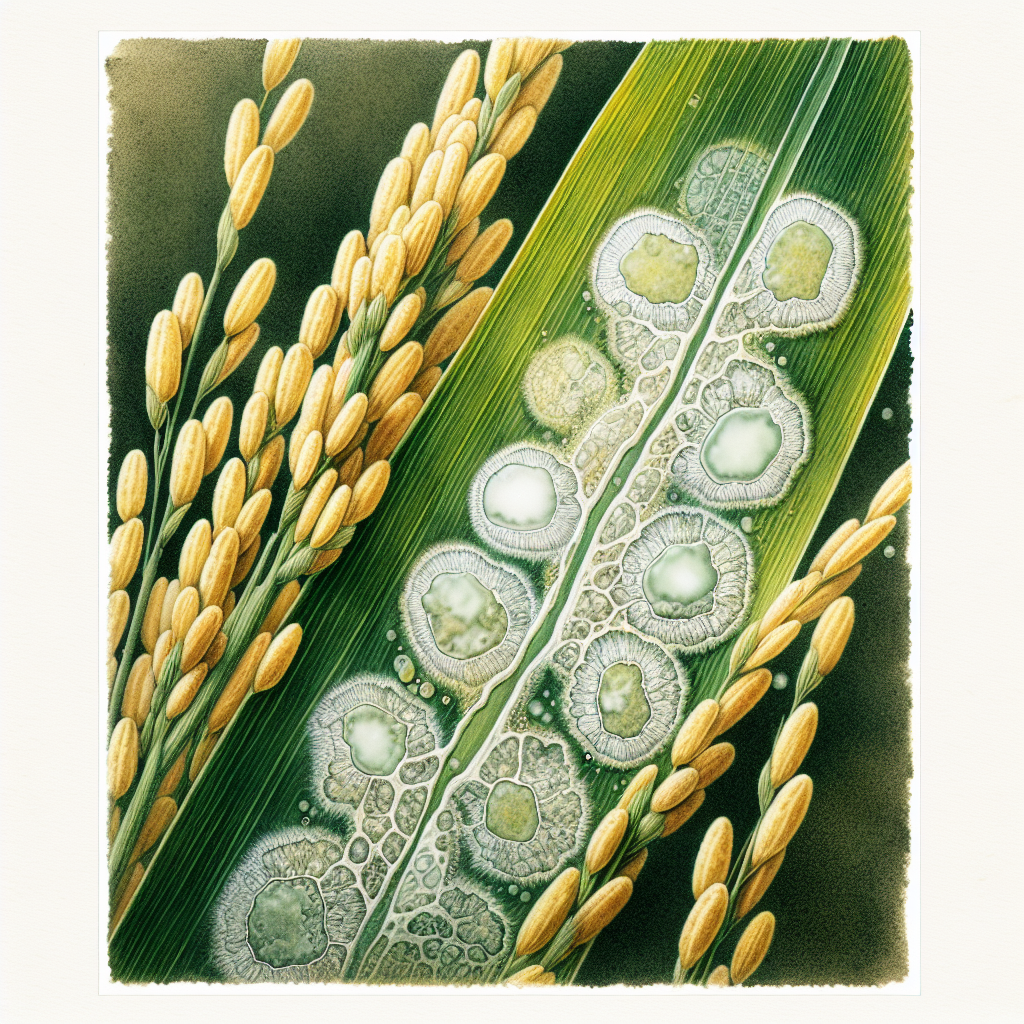
Accurate diagnosis of Bacterial Leaf Blight hinges on recognizing its distinctive symptoms, which evolve rapidly post-infection. Initial signs appear 7-10 days after inoculation as small, water-soaked lesions on young leaves, often starting at leaf tips or margins. These lesions are translucent when held against light, turning grayish-white with wavy margins as they elongate, sometimes reaching the leaf base.
Within 3-5 days, centers become creamy yellow, surrounded by yellowish-green halos; older lesions turn gray-white with yellow borders. A key diagnostic feature is the systemic progression: infected leaves roll upwards, wilt, and dry prematurely, mimicking drought stress. On the adaxial surface, bacterial ooze forms yellowish streaks under humid conditions, drying into beige beads. In severe cases, 'kresek' (Hindi for contraction) occurs, where entire seedlings collapse.
Damage assessment reveals 20-30% yield loss in moderate infections, escalating to 50-70% when panicles are affected, causing grain sterility and unfilled spikelets. Differentiate BLB from Northern Corn Leaf Blight or Septoria leaf spot by bacterial streaming test: cut affected tissue and suspend in water; cloudy exudate confirms Xanthomonas. Use lab confirmation via PCR for pathovar-specific genes. Economic thresholds: scout fields weekly from tillering stage; intervene at 1-5% incidence. Neglected infections compound with aphids vectors, amplifying spread.
Lifecycle and Progression of Bacterial Leaf Blight
Xanthomonas oryzae pv. oryzae completes its lifecycle in 10-14 days under optimal conditions (28-34°C, >80% humidity), cycling between plant hosts and environmental reservoirs. The pathogen survives as ooze on rice stubble, seeds (up to 20% contamination), and weeds like Leersia spp. Primary inoculum disperses via rain splash, wind-driven rain, or irrigation water, with bacteria entering hydathodes, wounds, or bulliform cells.
Post-penetration, Xoo multiplies in intercellular spaces, producing toxins like diffusible pathogenicity factors that induce hypersensitive responses. Vascular colonization leads to wilting; bacteria exude from xylem, forming droplets. Multiple infection cycles occur per season, peaking during booting to heading stages. Overwinter survival relies on debris (90% inoculum source); seed transmission perpetuates in subsequent crops.
Progression phases: incubation (4-7 days), lesion expansion (angular to linear), systemic spread (10-21 days), and secondary cycles via ooze splash. Virulence factors include TAL effectors manipulating host genes for susceptibility. In wheat, analogous strains show similar polycyclic epidemics. Understanding this enables timed interventions, like draining fields at tillering to disrupt splash dispersal. Long-term, pathogen evolution via mutation demands rotating resistant varieties.
Environmental Triggers & Risk Factors
BLB epidemics surge under specific conditions: temperatures 25-30°C, relative humidity >85%, and prolonged leaf wetness (>6 hours). High nitrogen fertilization promotes succulent tissues, increasing susceptibility; excessive N rates (>150 kg/ha) double infection rates. Flooded paddies facilitate splash dispersal, while alternating wet-dry cycles stress plants, widening stomata.
Risk factors include continuous rice monoculture, narrow genetic diversity (e.g., mega-varieties like IR64), and poor sanitation leaving >20% residue. Typhoons and heavy dews initiate outbreaks; lowland ecologies face 3x higher incidence than uplands. Seed lots with >1% contamination seed epidemics. Climate change intensifies risks with erratic monsoons. For corn growers, overhead irrigation mimics paddy conditions. Mitigate by site-specific weather monitoring—check Why 80% of Small Farms Battle Weather Disasters - And How Hyper-Local AI Forecasts Can Save Your Harvest for predictive tools.
Organic Control & Treatment Plans
Organic management of BLB emphasizes integrated cultural, biological, and botanical strategies, avoiding antibiotics to preserve ecosystems. Cultural Controls (Foundation): Drain fields 2-3 days weekly from tillering to prevent splash; rogue infected plants at 5% threshold. Use clean seeds treated with hot water (52°C/10 min) or solarization. Apply balanced nutrition: K-rich fertilizers (40 kg/ha K2O) enhance resistance; avoid excess N.
Biological Agents: Apply antagonistic bacteria like Pseudomonas fluorescens (5 g/kg seed) or Bacillus subtilis (10^9 CFU/ml foliar spray, 500 L/ha, 3x at 10-day intervals). Trichoderma spp. suppress via mycoparasitism on debris. Botanicals: Spray fermented extracts—garlic (50 g/L) + neem (5 ml/L) + cow urine (diluted 1:20), weekly from vegetative stage. Streptomycin alternatives like kasugamycin (organic-approved in some regions) at 200 ppm.
Treatment Timeline: Week 1: Scout and rogue. Week 2-4: Bio-sprays + drainage. Monitor via disease rating scales (0-9 IRRI standard). For outbreaks, copper oxychloride (1 kg/ha, 3 sprays) as last resort, respecting organic limits. Combine with bacterial blight resistant varieties like XA21-transgenics or IRBB lines. Yields recover 20-40% with timely action. Integrate with companion planting using marigold for nematode diversion, reducing stress.
Preventing Bacterial Leaf Blight in the Future
Prevention is paramount for BLB-free fields, centering on exclusion, sanitation, and resistance. Seed Management: Source certified pathogen-free seeds; test via grow-out (0% threshold). Crop Husbandry: Rotate with peas or lentils (2-year break); deep plow residues post-harvest (>15 cm burial). Time planting to evade peak rains.
Resistant Varieties: Deploy multi-gene pyramids like Improved Samba Mahsuri (Xa21 + Xa33); screen locals via artificial inoculation. Field Practices: Wide spacing (20x15 cm), avoid overhead irrigation; mulch to reduce splash. Quarantine: Inspect transplants; buffer zones around paddies. Monitor via traps for vectors like leafhoppers. Long-term, breed via marker-assisted selection targeting xa5, Xa7. Annual audits cut incidence 80%. Link to broader IPM via Spring Pest Patrol: Organic AI Strategies to Shield Your Crops from Common Invaders.
Crops Most Affected by Bacterial Leaf Blight
Primarily rice (Oryza sativa), with 10-50% global losses; indica varieties most vulnerable. Secondary hosts: corn (X. oryzae pv. zeae), wheat (X. translucens), sugarcane, and sorghum. In solanaceae, related bacterial spot on tomato and eggplant. Leersia weeds serve reservoirs. Emerging threats in quinoa under warming climates.