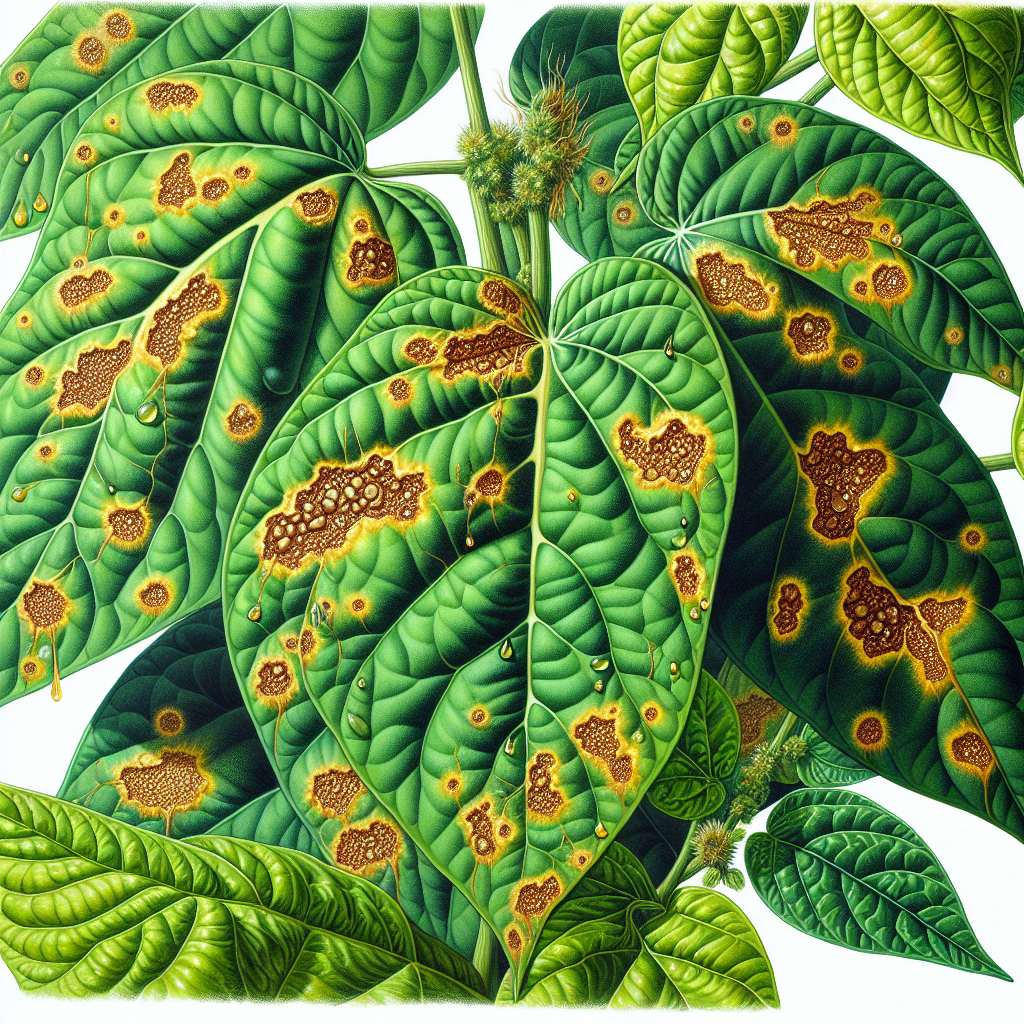
Introduction to Bacterial brown spot
Bacterial brown spot (BBS) is a significant foliar disease impacting legume crops worldwide, particularly beans, caused by the bacterium Pseudomonas syringae pv. phaseolicola and related pathovars. First identified in the early 20th century, it poses a major threat to commercial and small-scale agriculture due to its ability to rapidly defoliate plants under favorable conditions. This guide provides comprehensive diagnostic criteria, lifecycle insights, environmental risk factors, organic management strategies, and prevention tactics tailored for professional growers. Understanding BBS is crucial for maintaining healthy tomato and legume fields, as misdiagnosis can lead to confusion with similar issues like bacterial blight or Alternaria leaf spot. Early detection and intervention can save up to 50% of potential yield losses, making this knowledge essential for sustainable farming. In regions with high humidity, BBS outbreaks can escalate quickly, underscoring the need for vigilant scouting and integrated pest management (IPM) approaches.
Identifying Symptoms & Damage
Accurate identification of bacterial brown spot begins with recognizing its hallmark symptoms on affected foliage. Initial signs appear as small, water-soaked spots on the underside of leaves, typically 1-3 mm in diameter, which evolve into angular brown lesions surrounded by a yellow halo. These spots are distinctly angular due to vein limitations, distinguishing BBS from circular fungal spots. As the disease progresses, lesions coalesce, forming large blighted areas that lead to leaf yellowing, necrosis, and premature defoliation. On pods, symptoms manifest as small, sunken brown spots that render produce unmarketable.
Damage severity varies by crop stage: seedlings show systemic wilting, while mature plants experience reduced photosynthesis and pod set, resulting in 20-70% yield reductions. Differentiate BBS from angular leaf spot by its lack of white bacterial ooze and preference for cooler temperatures. Conduct a simple diagnostic test by scraping lesions; BBS lesions feel slimy when wet, and a cut stem test reveals milky exudate from vascular tissue. Severe infections weaken plants, increasing susceptibility to secondary invaders like aphids or powdery mildew. Regular scouting every 3-5 days during wet periods is vital for timely intervention. Economic thresholds suggest action when 10% of leaves show symptoms.
Lifecycle and Progression of Bacterial brown spot
The lifecycle of bacterial brown spot is tightly linked to environmental moisture and host availability. Pseudomonas syringae pv. phaseolicola overwinters in crop debris, seeds, and on weed hosts as dormant bacteria. In spring, splashing rain or overhead irrigation splashes bacteria onto lower leaves, where they enter through natural openings like stomata or wounds from wind or flea beetles. Optimal infection occurs at 18-25°C (64-77°F) with leaf wetness exceeding 8-12 hours.
Bacteria multiply rapidly within 24-48 hours post-infection, producing toxins that cause tissue necrosis. Latent periods last 3-7 days, after which symptoms emerge. Under prolonged wet conditions, secondary cycles occur every 5-10 days, leading to epidemics. Bacteria exude from lesions in ooze, spreading via wind-driven rain up to 1 km. Infected seeds perpetuate the disease across seasons, with contamination rates up to 5% in symptomatic pods. Understanding this progression allows for predictive modeling; for instance, cease overhead watering during high-risk periods to break the cycle. In soybeans, progression is slower due to partial resistance, but in bush beans, full defoliation can occur within 2 weeks.
Environmental Triggers & Risk Factors
Bacterial brown spot epidemics are triggered by specific environmental cues: cool temperatures (15-24°C), prolonged leaf wetness from rain, dew, or poor air circulation, and high relative humidity (>85%). Overhead irrigation exacerbates spread, as droplets mechanically disseminate bacteria. Risk factors include planting contaminated seeds (up to 30% infection rate), narrow row spacing reducing airflow, and excessive nitrogen promoting lush foliage susceptible to infection.
Soil with high clay content retains moisture, favoring disease, while fields near water bodies face higher dew loads. Crop rotation history matters; continuous legume monocultures amplify inoculum. Weed hosts like pigweed harbor bacteria, acting as reservoirs. Climate change intensifies risks with erratic rains. For pepper growers, intercropping with non-hosts mitigates spread. Monitor weather forecasts—initiate copper sprays preemptively before 12-hour wetness events. Why 80% of Small Farms Battle Weather Disasters - And How Hyper-Local AI Forecasts Can Save Your Harvest offers tools for precise risk assessment.
Organic Control & Treatment Plans
Organic management of bacterial brown spot emphasizes prevention but includes curative options. Upon confirmation, apply copper-based bactericides like copper octanoate or hydroxide at 2-4 lbs/acre, timed for early morning when stomata open, repeating every 7-10 days up to 3 applications. Integrate Thyme or garlic extracts as natural antimicrobials, sprayed weekly. Remove and destroy infected debris immediately to reduce inoculum by 90%.
Biological controls include Bacillus subtilis or Pseudomonas fluorescens applied preventively. For seedlings, seed treatments with hydrogen peroxide or streptomycin alternatives (where permitted) reduce primary infection. Prune lower leaves to improve airflow, and apply kaolin clay barriers to deter bacterial deposition. In severe cases, rogue out 20% infected plants to halt spread. Companion planting with marigold suppresses via allelopathy. Track progress with weekly ratings; aim for <5% incidence post-treatment. Combine with Soil Health Mastery: 5 Proven Strategies for Small Farms to Build Fertile Ground Without Breaking the Bank for resilient plants.
Preventing Bacterial brown spot in the Future
Long-term prevention hinges on cultural practices: use certified pathogen-free seeds treated with hot water (50°C for 25 min) or bio-disinfectants. Rotate crops with non-legumes like corn for 2-3 years to starve inoculum. Select resistant varieties such as 'Provider' beans or hybrid peas. Optimize spacing (18-24 inches rows) and staking for airflow. Avoid overhead irrigation; drip systems reduce wetness by 70%.
Sanitize tools with 10% bleach between plants. Fall tillage buries debris, promoting decomposition. Mulch with straw to moderate soil splash. Scout weekly using 10x hand lens for early watersoaks. Build soil health with compost to enhance plant vigor against infection. Monitor via traps for vectors like leafhoppers. Annual planning includes pre-season soil tests for pH (6.0-7.0 optimal). Educate workers on hygiene. These steps can reduce incidence by 85% over seasons.
Crops Most Affected by Bacterial brown spot
Bacterial brown spot primarily targets legumes: bush and pole beans (Phaseolus vulgaris) suffer most, with losses up to 60%. Snap beans, lima beans, and chickpeas are highly susceptible. Soybeans show milder symptoms but serve as reservoirs. Less common on peas, lentils, and fava beans. Among solanaceae, bell pepper and eggplant occasionally affected under wet conditions. Rare reports on potato foliage. Tropical legumes like mung beans face risks in humid zones. Focus prevention on primary hosts; interplant with resistant cucumber to dilute inoculum. Global hotspots include the U.S. Midwest, Latin America, and Asia's bean belts.