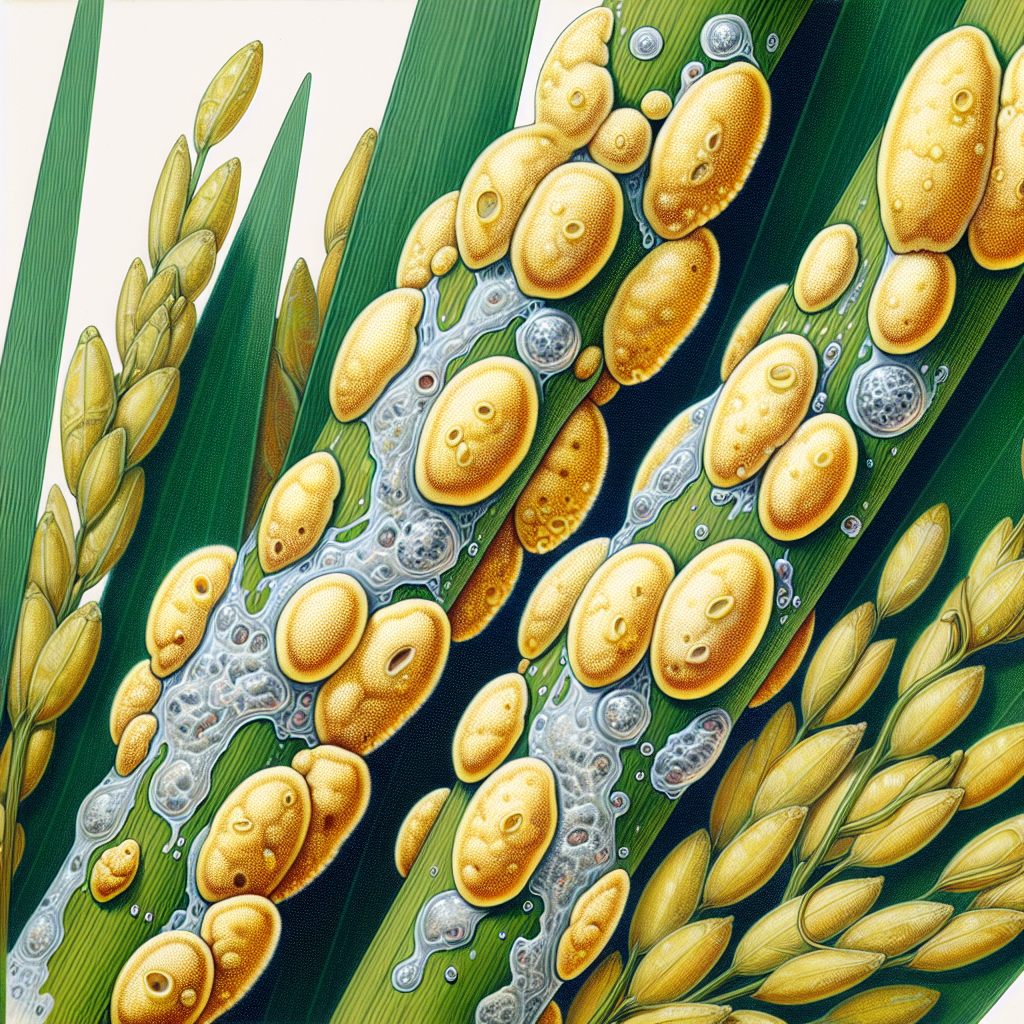
Introduction to Bacterial blight (Xanthomonas)
Bacterial blight (Xanthomonas) represents one of the most destructive bacterial diseases in agriculture, caused by various pathovars of the Xanthomonas genus, such as Xanthomonas oryzae pv. oryzae on rice, Xanthomonas campestris pv. campestris on crucifers, and Xanthomonas axonopodis pv. citri on citrus. This pathogen thrives in warm, humid environments, entering plants through natural openings or wounds and spreading rapidly via rain splash, irrigation, or contaminated tools. Globally, it inflicts billions in economic losses annually, particularly in tropical and subtropical regions where staple crops like rice suffer up to 50% yield reductions during epidemics.
Understanding bacterial blight is crucial for modern farming, as it mimics fungal diseases but requires distinct management. Unlike fungal blights, Xanthomonas produces systemic infections with characteristic angular lesions and ooze. For more on related conditions, see bacterial blight. This guide equips growers with professional diagnostic tools, organic treatments, and prevention protocols to safeguard yields. Early intervention can save crops, emphasizing the need for vigilant scouting and integrated pest management (IPM).
Identifying Symptoms & Damage
Symptoms of bacterial blight typically appear 7-14 days after infection, starting as small, water-soaked spots on leaves. These lesions are translucent when held to light, turning grayish-white with yellow halos as they expand into angular shapes bounded by veins. On tomato plants, spots may coalesce, leading to leaf blight and defoliation; on rice, they elongate into kresek (wilting) along leaf margins.
Advanced stages reveal bacterial ooze—sticky, whitish strands that dry into brittle beads under humidity. Stems develop dark streaks in vascular tissue, causing wilting and lodging. Fruit infections, common on peppers and citrus, show raised, corky lesions or cankers. Differentiate from fungal spots like Alternaria leaf spot by the angular shape and ooze; a definitive test involves slicing tissue and observing milky exudate.
Damage severity varies: seedlings succumb to damping-off, while mature plants face 20-70% yield loss. On corn, it causes leaf blight and ear rot, reducing grain quality. Economic impact is profound in high-value crops like bell pepper, where marketable fruit drops by 40%. Scout weekly during wet seasons, using a 10x hand lens to spot early lesions. For small farms, check out this blog on AI plant diagnosis to avoid costly misidentifications.
Lifecycle and Progression of Bacterial blight (Xanthomonas)
Xanthomonas bacteria are rod-shaped, Gram-negative pathogens that survive as epiphytes on plant debris, seeds, or weeds for up to 6 months. Primary infection occurs via stomata, hydathodes, or wounds during rain or overhead irrigation, with bacteria multiplying in the intercellular spaces. Under optimal conditions (28-30°C, >90% humidity), populations explode, producing enzymes that degrade cell walls.
The disease progresses systemically: bacteria move via xylem, causing wilting. Secondary spread via rain splash creates polycyclic epidemics, with multiple infection cycles per season. On rice, initial hill infections spread to panicles, causing grain sterility. Latent infections in seeds perpetuate the cycle, with up to 20% contaminated lots.
Epidemics peak during monsoon seasons, favored by dense canopies and nitrogen excess. Bacteria produce biofilms and EPS (extracellular polysaccharides) for persistence. Overwintering in crop residue underscores residue management. Compared to Pseudomonas syringae, Xanthomonas is more aggressive in warm climates, completing a cycle in 5-7 days.
Environmental Triggers & Risk Factors
Warm temperatures (25-35°C) and high humidity (>80%) are prime triggers, with free water on leaves essential for 6+ hours. Rain splash and wind disseminate bacteria up to 10 meters. Overhead irrigation and dense planting exacerbate spread, as does high nitrogen promoting succulent growth.
Risk factors include infested seeds (common in commercial rice), contaminated tools, and volunteer plants harboring pathogens. Poor drainage leads to soil splash, while wounds from thrips or hail provide entry. Susceptible varieties like older wheat cultivars amplify damage. Climate change intensifies outbreaks via prolonged wet periods. Avoid monocultures and scout after storms.
Organic Control & Treatment Plans
Organic management hinges on exclusion and sanitation, as no curative bactericides exist. Start with certified disease-free seeds, hot water treating at 52°C for 10 minutes for rice. Remove and destroy infected debris, burying >30cm deep or composting at 60°C.
Copper-based sprays (e.g., Bordeaux mixture) suppress surface bacteria; apply preventively at 7-10 day intervals during wet weather, alternating with potassium bicarbonate. Biocontrols like Pseudomonas fluorescens or Bacillus subtilis compete effectively; drench soils and foliar spray weekly. Plant biofumigants like mustard to suppress soil survival.
Resistant varieties (e.g., XA21 gene in rice) and crop rotation with non-hosts (3-4 years) are pillars. Improve airflow via pruning and spacing. For outbreaks, rogue infected plants promptly. Integrate with aphids control, as they vector strains. Monitor via AI tools for timely sprays. Success rates exceed 70% with IPM.
Preventing Bacterial blight (Xanthomonas) in the Future
Prevention is paramount: use clean seeds, sanitize tools with 10% bleach, and avoid overhead watering—drip irrigate instead. Rotate crops, avoiding solanaceous families consecutively. Choose resistant cultivars like IR24 rice or Mountain Merit tomato. Apply micronutrients (manganese, zinc) to boost tolerance.
Cultural practices: wide spacing (30-50cm), balanced NPK fertilization, and mulching reduce humidity. Eradicate weeds like barnyard grass harboring Xanthomonas. Quarantine new stock. Field sanitation post-harvest: deep plow residue. Long-term, breed for R-genes and use cover crops. Annual planning prevents recurrence, saving 30-50% potential losses.
Crops Most Affected by Bacterial blight (Xanthomonas)
Rice tops the list, with X. oryzae pv. oryzae causing 10-50% losses in Asia. Tomato and potato suffer leaf spots and fruit rot from X. perforans and X. axonopodis. Citrus faces canker (X. citri), devastating orange production. Wheat, corn, soybeans, and cassava also vulnerable, alongside brassicas and beans. Tropical crops like mango and banana report strains. Global incidence spans 100+ hosts, prioritizing surveillance in humid zones.