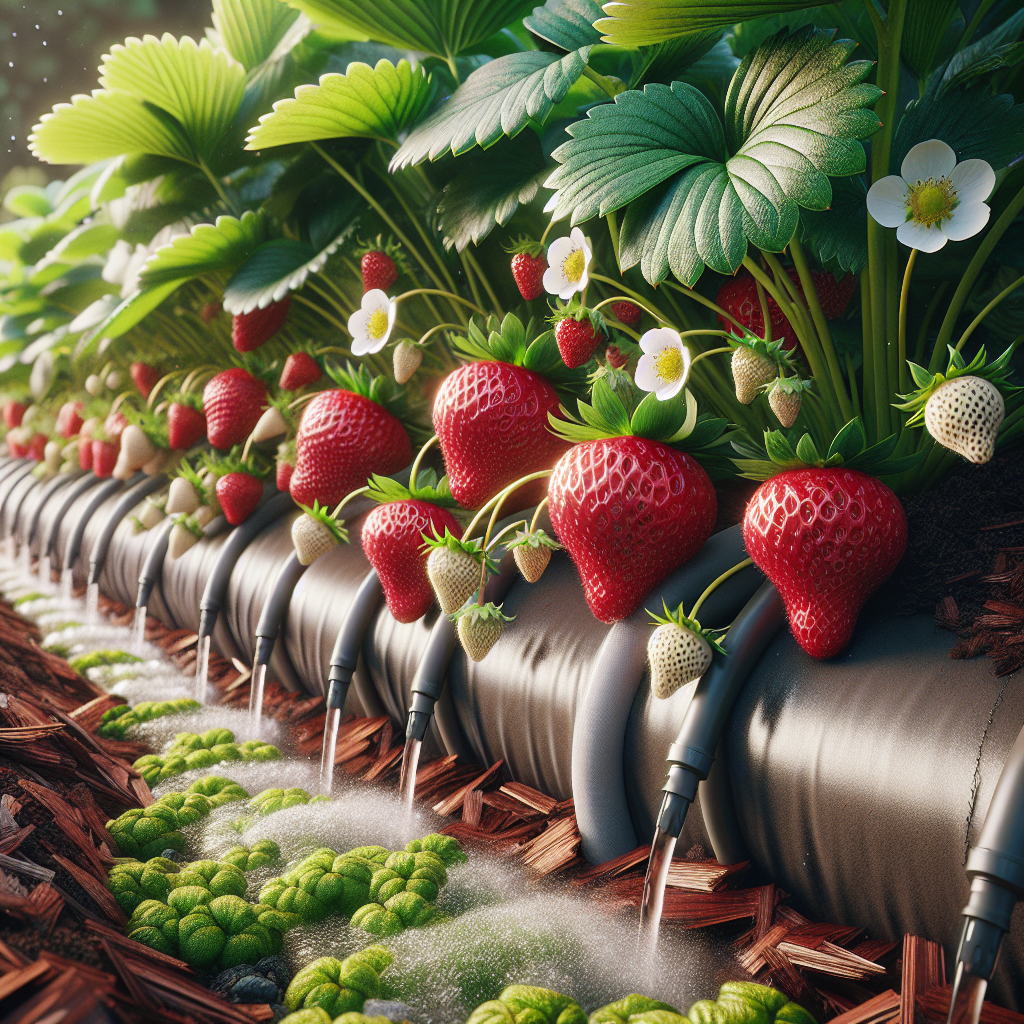
Introduction to Albion Strawberry
Developed by the University of California breeding program and released in the early 2000s, this cultivar quickly became one of the most important day-neutral strawberries for fresh-market production. Its reputation rests on a rare combination of traits: large conical berries, strong firmness, attractive exterior color, good shelf life, and a notably long production season when temperatures remain within a favorable range.
Unlike short-day strawberries that concentrate their crop in a narrow spring window, Albion tends to flower and fruit repeatedly under moderate temperatures and adequate nutrition. In practical terms, that means growers can harvest over many weeks or months rather than relying on a single flush. This makes it especially valuable for market gardens, pick-your-own operations, protected culture, and home growers who want steady production.
Albion is not always the heaviest-yielding cultivar in every environment, but it often compensates with premium berry quality. Fruit is typically sweeter and more aromatic than many shipping-oriented cultivars when allowed to ripen properly. The berries are firm enough to tolerate handling better than softer heirloom types, yet they still require gentle harvest and rapid cooling.
The main management challenge with this variety is balance. If pushed too hard with nitrogen, plants can become excessively vegetative and fruit quality may suffer. If water is inconsistent, berries may size poorly, plants become stressed, and disease susceptibility rises. In hot conditions above about 30°C to 32°C (86°F to 90°F), flowering and fruit set can decline, and berries may become misshapen or less flavorful. In very cold winters, crowns may need mulch or tunnel protection.
For general background on species-level cultivation, see our Strawberry guide. For broader fertility principles that strongly influence berry flavor and plant resilience, the article on soil health is also relevant.
Botanical Profile of Albion Strawberry
This cultivar belongs to Fragaria × ananassa, the cultivated garden strawberry, a hybrid species derived historically from wild American strawberry lineages. It is a herbaceous perennial grown commercially as a short-lived perennial or annual, depending on climate, production system, and disease pressure.
Albion is classified as day-neutral, though in practice temperature interacts strongly with flowering behavior. Day-neutral plants initiate flowers over a broad range of day lengths, but optimum performance usually occurs when daytime temperatures are moderate and nights are not excessively warm. Under cool to mild conditions, Albion can maintain a steady cycle of vegetative growth, flowering, fruiting, and runner production.
Key plant traits include:
- Growth habit: upright to moderately spreading, with a strong crown and vigorous canopy.
- Leaves: trifoliate, medium to dark green, with serrated margins and a slightly leathery texture compared with softer cultivars.
- Flowers: white, typically held at or slightly above the foliage when plants are healthy, improving pollinator access and reducing some fruit-soil contact.
- Fruit: large, long-conic to very symmetrical, bright red externally with firm flesh and good internal color when fully ripe.
- Flavor profile: high sugar potential with pleasant acidity, especially when harvested fully colored and grown under full sun with balanced fertility.
- Runnering: moderate; enough for propagation, but generally less aggressive than some older June-bearing cultivars under fruiting conditions.
One of Albion's celebrated traits is fruit firmness. This is valuable not just for shipping but also for disease management, because firmer berries are somewhat less prone to immediate collapse after minor handling injury. Even so, firm fruit should not be confused with rugged fruit; strawberries remain highly perishable because they lack a protective rind and have a high respiration rate.
Albion also shows useful tolerance to some root disease pressures relative to less resilient cultivars, though tolerance is never immunity. Poor drainage, high salinity, over-irrigation, or repeated planting into contaminated ground can still cause severe losses.
Soil, pH, and Climate Requirements for Albion Strawberry
This variety performs best in deep, friable, well-drained sandy loam or loam with high organic matter and excellent aeration. The ideal root zone should hold moisture evenly while draining quickly enough that oxygen remains available to the crowns and feeder roots. If water stands in the bed for more than a few hours after irrigation or rainfall, the site is too wet unless significant drainage improvements are made.
Target soil pH is 5.8 to 6.5, with the sweet spot often around 6.0 to 6.2. At this range, most essential nutrients remain available without excessively stimulating some soil-borne disease problems. When pH drops below about 5.5, calcium and magnesium availability can decline and root function may suffer. When pH rises above about 6.8, iron, manganese, and zinc can become less available, leading to chlorosis, reduced vigor, and lower berry quality.
Before planting, a professional soil test should evaluate:
- pH and buffer pH
- organic matter percentage
- cation exchange capacity
- phosphorus, potassium, calcium, magnesium, sulfur
- soluble salts or electrical conductivity
- boron and key micronutrients where local deficiencies are common
Albion is moderately sensitive to salinity. A root zone electrical conductivity that is too high can reduce plant establishment, burn root tips, and produce marginal leaf necrosis. Salinity issues are especially common in high tunnels, heavily fertigated systems, and arid climates with mineralized irrigation water. If using drip irrigation, periodic leaching may be needed, but only where drainage is excellent.
Climate-wise, Albion excels in mild coastal, Mediterranean, and temperate regions where spring, early summer, and autumn remain moderate. Ideal average growing temperatures are roughly 15°C to 26°C (59°F to 79°F). Flowering and fruit quality are best when daytime highs are warm but not extreme and night temperatures remain cool enough to support sugar accumulation and pigment development.
Heat stress signs include:
- smaller berries
- pale shoulders or uneven ripening
- reduced flower initiation
- soft fruit in spite of the cultivar's natural firmness
- scorched leaf edges
- midday wilting even when soil is moist
Cold stress signs include:
- blackened blossoms after frost
- stalled growth
- crown injury in freeze-thaw cycles
- misshapen first fruit from damaged flower parts
In heavier soils, raised beds 20 to 30 cm high are strongly recommended. Plastic mulch or organic mulch helps keep fruit clean, reduces weeds, stabilizes moisture, and limits soil splash that spreads pathogens.
Step-by-Step Planting & Propagation
Start with certified disease-free plants from a reputable nursery. For Albion, plug plants generally establish faster and more uniformly than bare-root plants, though both can succeed. Avoid using unknown runners from old backyard patches if your goal is reliable performance; latent viruses, root rots, and nematodes can silently reduce vigor for years.
Prepare the site 3 to 6 weeks ahead. Remove perennial weeds thoroughly, because strawberries compete poorly during establishment. Incorporate well-finished compost if organic matter is low, but avoid large amounts of undecomposed manure. Fresh or partially composted manures encourage excessive vegetative growth, can contribute salts, and may increase food safety risks near harvest.
Shape raised beds. Commercial-style beds are commonly 60 to 75 cm wide at the top with paths between them. Good bed geometry improves drainage and positions drip lines close to the root zone.
Install irrigation before planting. One or two drip lines per bed are standard depending on bed width and soil texture. In sandy soils, two lines improve lateral wetting and root distribution. Aim for a consistently moist zone 10 to 20 cm deep rather than frequent shallow surface wetting.
Apply mulch. Black plastic is common in annual systems because it warms the soil, suppresses weeds, and keeps fruit clean. In cooler regions, black mulch improves early growth. In hotter climates, white-on-black mulch may reduce root-zone overheating. Organic straw mulch is useful in perennial or low-input systems, though it can harbor slugs if overapplied.
Plant at the correct depth. This is one of the most important details. The crown should sit exactly at soil level. If buried too deep, the crown may rot. If planted too high, roots dry out and establishment is poor. Spread roots downward and outward rather than bunching them upward in a J-shape.
Spacing. For garden or small-farm production, place plants about 25 to 35 cm apart within rows. Double-row spacing on raised beds often works well, with rows 25 to 35 cm apart. Wider spacing improves airflow and lowers disease pressure; tighter spacing can increase early yield but often raises humidity around the canopy.
Irrigate immediately after planting. The root zone should be fully moistened after transplanting. During the first 7 to 14 days, maintain even moisture so new feeder roots develop before plants face drying cycles.
Remove early flowers when establishment is weak. If planting late, into stressful heat, or with underdeveloped transplants, pinching the first flush of flowers for 2 to 4 weeks can redirect energy into crown and root growth. Stronger plants then support better long-term yields.
Propagation is usually by runners. Select healthy mother plants showing strong vigor, true-to-type fruit shape, no mosaic symptoms, and no obvious mite or disease damage. Peg runners into clean media or cell trays once daughter plants form visible root initials. Sever the runner from the mother plant only after the daughter has rooted adequately. For professional production, however, purchased certified plugs are almost always safer than farm-saved propagation stock.
Care & Maintenance regimes for Albion Strawberry
Irrigation should be precise rather than generous. Albion performs best when the soil remains consistently moist but never saturated. In practical terms, the top 2 to 3 cm of soil under mulch may dry slightly between irrigations, but the active root zone below should remain evenly damp. In sandy soils during fruiting, plants may need light daily irrigation through drip. In loamy soils, irrigation may be needed every 2 to 3 days depending on weather. A rough target is to maintain about 70% to 85% of field capacity in the root zone.
Signs of underwatering include dull or slightly blue-green leaves, reduced berry size, dry calyx tissue, slow ripening, and berries with poor gloss. Signs of overwatering include persistent wilt despite wet soil, yellowing older leaves, soft crowns, algae or fungus gnat activity around the bed, and fruit with bland flavor due to diluted sugars. Overwatered roots become oxygen-starved, making plants vulnerable to Phytophthora and other crown or root rots.
Nutrition should emphasize steady, moderate feeding rather than aggressive fertilization. A balanced program often includes:
- modest nitrogen during establishment
- increased potassium during flowering and fruit fill
- adequate calcium for cell wall integrity and firmness
- magnesium and micronutrients as indicated by tissue tests
Too much nitrogen produces lush foliage, soft tissue, reduced fruit flavor, and greater botrytis risk. Too little nitrogen leads to pale leaves, thin crowns, and reduced continuous flowering. Tissue testing during peak vegetative and early fruiting periods is ideal for fine-tuning fertigation.
Remove dead or diseased leaves promptly, especially in humid climates. This improves air movement and lowers inoculum levels for foliar disease. However, avoid over-pruning healthy leaves, because strawberries rely on active foliage to support constant flowering and fruit fill.
Runner management depends on production goals. For fruit production, remove most runners as they appear so energy remains concentrated in crowns and fruit. For nursery propagation, allow selected runners to root from disease-free stock plants only. Uncontrolled runners create dense mats that trap humidity, increase disease pressure, and produce many small berries.
Mulch maintenance matters. Keep berries from contacting bare soil. If using straw, fluff and replace compacted layers so air can still circulate. If using plastic, monitor planting holes, where weeds and moisture fluctuations can still become problems.
Pollination is usually adequate outdoors, but tunnels or cool weather can reduce bee movement. Poor pollination causes misshapen berries, often with one side underdeveloped. Encouraging pollinators and avoiding insecticide sprays during bloom greatly improves fruit symmetry.
Pests, Diseases & Organic Management
Albion's long fruiting season means it can face repeated pest and disease waves, so prevention is far more effective than rescue treatments.
Common insect and mite pests include aphids, thrips, spider mites, tarnished plant bug, slugs, and sap beetles. aphids cluster on tender growth and can vector viruses. thrips scar flowers and young fruit, sometimes causing bronzing or seedy-looking berry surfaces. spider mites are favored by hot, dusty conditions and cause stippled leaves and overall decline. tarnished plant bug feeding on flowers can produce cat-faced or nubbin berries.
Organic management starts with habitat and sanitation:
- keep beds weed-free to remove alternate hosts
- avoid excess nitrogen that attracts sap-feeding pests
- use reflective or clean mulches where appropriate
- scout weekly, checking leaf undersides, flowers, and developing fruit
- remove overripe or damaged berries promptly
Beneficial insects can be conserved by planting insectary borders such as Yarrow and Thyme nearby, where they will not compete directly with the strawberry bed. Slug pressure often rises under thick, wet mulch, so irrigate early in the day, reduce hiding places, and use iron phosphate bait if needed.
Key diseases include botrytis gray mold, powdery mildew, anthracnose fruit rot, leaf spot, leaf scorch, Verticillium wilt, and crown/root rots caused by Phytophthora or related pathogens. Botrytis is particularly destructive when flowers stay wet for long periods or plant canopies are crowded. It often begins on blossoms and later appears as fuzzy gray sporulation on ripening fruit.
Organic disease suppression relies on an integrated system:
- plant certified clean stock
- use raised beds and drip irrigation
- maintain spacing for airflow
- avoid overhead watering during bloom and harvest
- remove diseased fruit and senescent tissue
- rotate out of solanaceous or previously infested beds where wilt pathogens are known; even fields once used for crops like Tomato may merit extra caution if soil-borne disease history is poor
- apply permitted biologicals or protectants preventively, not after severe outbreak
powdery mildew can appear even in relatively dry conditions, especially in tunnels with humid air and poor ventilation. Look for upward-curling leaves, purplish blotches, and white powdery growth. Improve ventilation first, then use sulfur or biological fungicides where allowed and appropriate to temperature.
Crown rot suspicion should trigger immediate plant removal and root-zone inspection. A healthy crown is firm and pale inside when cut. A diseased crown often shows brown to orange discoloration, tissue collapse, and a sour or decaying odor. If many plants fail in patches, suspect waterlogging or soil-borne pathogens rather than nutrient deficiency alone.
birds can become a major harvest pest once berries color. Netting is often more effective than scare tactics. Install it before the first full blush stage rather than after birds have learned the location.
Harvesting, Curing & Optimal Storage
Harvest when berries are fully colored over nearly the entire surface, because strawberries do not continue to sweeten meaningfully after picking. Albion develops its best flavor when allowed to reach full red color with a glossy finish, though for shipping a berry may be picked just before maximum softness if local market conditions require a little extra firmness.
Pick during the coolest part of the morning after dew has dried but before field heat accumulates. Wet harvest increases disease spread and shortens shelf life. Handle berries only by the stem and cap, not by squeezing the fruit body. Detach with a short stem attached to reduce bruising and juice leakage.
Harvest frequency is usually every 2 to 3 days in active season, and daily in warm weather when ripening accelerates. Delayed picking leads to overripe fruit, sap beetles, botrytis spread, and lower market quality.
Unlike crops that require true curing, strawberries need rapid field heat removal. If the term curing is used at all here, it refers only to the brief post-harvest settling period before cooling and packing, not to a deliberate drying process like onions or garlic. The correct practice is immediate shade, fast sorting, and prompt pre-cooling.
For best storage:
- cool fruit to 0°C to 2°C (32°F to 36°F) as quickly as possible
- maintain 90% to 95% relative humidity
- avoid free moisture on berries
- store in shallow containers to reduce crushing
- do not wash until just before use
At optimal temperature, Albion often stores better than softer cultivars because of its inherent firmness, but quality still declines rapidly after a few days. Expect best fresh-market quality within 3 to 7 days depending on harvest maturity, sanitation, and cold-chain consistency. Any break in refrigeration sharply shortens shelf life.
Cull berries with mold, leaking juice, or bruising immediately. One infected fruit in a clamshell can spread decay to the rest of the pack. For local direct sales, flavor peaks when fruit is harvested fully ripe and sold within 24 to 48 hours.
Companion Planting for Albion Strawberry
The best companions are those that either repel pests, attract beneficial insects, or occupy different root and canopy niches without overshading the bed. Good partners should also share similar irrigation needs or be planted close enough to help but far enough away not to crowd the crowns.
Garlic is one of the most useful companions because its pungent foliage may help confuse some pests, and its upright habit takes little horizontal space. Plant it on bed edges or in nearby rows rather than between tightly spaced strawberry plants.
Onion offers many of the same benefits as garlic and can fit neatly along borders. It is especially useful where growers want a low, non-shading allium barrier around berry beds.
Clover can function as a managed living mulch in pathways, helping reduce erosion, improve soil structure, and support pollinators when kept mowed low. It should not be allowed to invade the crowns, where it would compete for moisture and encourage excessive humidity.
Thyme works well near bed ends or bordering paths because it attracts beneficial insects and remains low-growing. It also tolerates relatively leaner soil than strawberries, so it should not be fertigated as heavily.
Avoid aggressive companions that sprawl into the berry canopy, tall crops that cast shade during flowering, and species with very different irrigation demands. Fennel is often considered a poor neighbor because of allelopathic effects, and sprawling cucurbits can quickly reduce airflow and increase disease pressure. The most successful companion strategy for Albion is usually a clean, well-spaced main crop with supportive border plantings rather than crowded interplanting inside the row.