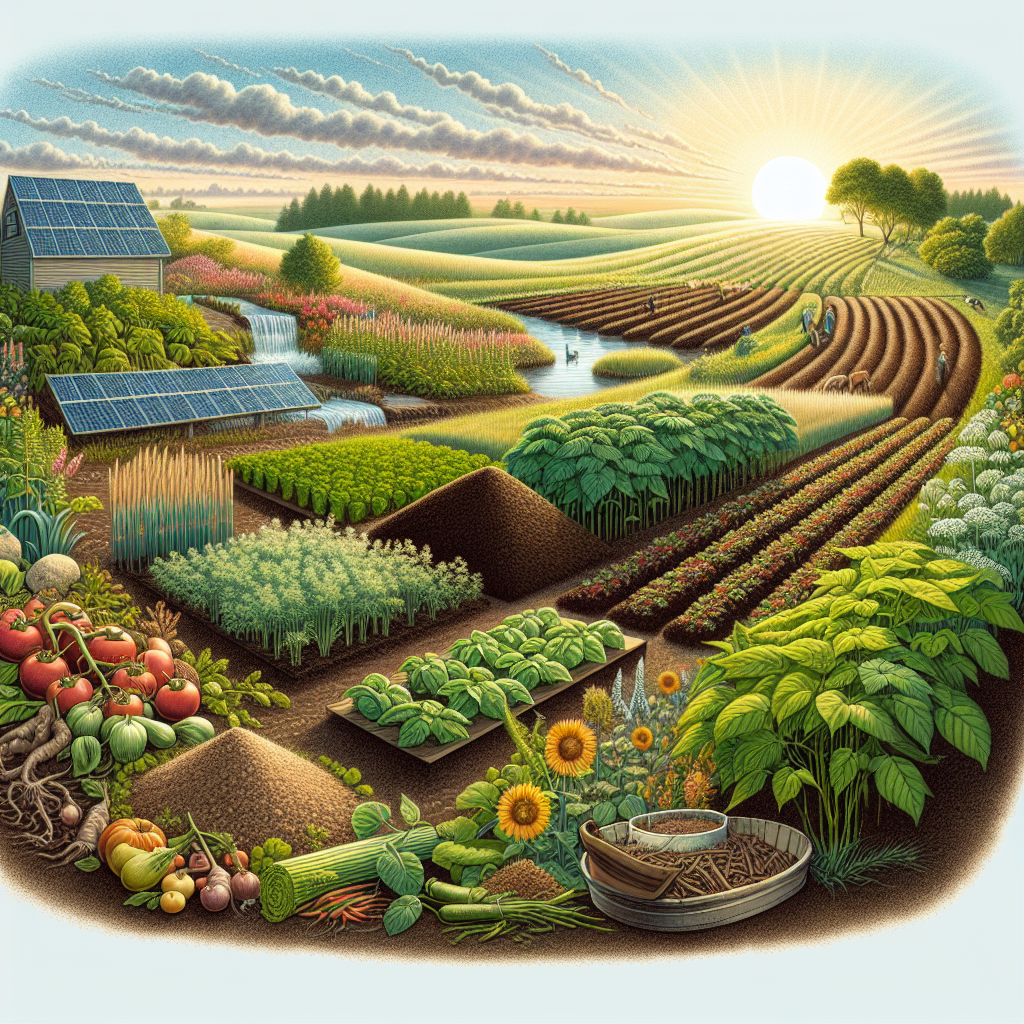
How to Accelerate Sustainable Agriculture Development: Organic Strategies for Farmers and Growers
Introduction
Sustainable agriculture is essential for long-term food security, environmental health, and economic viability in farming. Yet, its widespread adoption lags due to various challenges. Accelerating its development means shifting from conventional, input-heavy methods to regenerative, organic-first approaches that restore soil, enhance biodiversity, and reduce reliance on synthetic chemicals. This guide provides practical steps for farmers, gardeners, and growers to implement changes quickly, whether managing small gardens or large-scale operations. By focusing on organic solutions, you can improve soil fertility, cut costs, and build resilience against climate variability--key to thriving in modern agriculture.
For example, integrating sustainable practices in crops like tomato gardens or wheat fields can yield healthier plants and higher productivity within one season.
Common Causes of Slow Sustainable Agriculture Adoption
Despite its benefits, sustainable agriculture develops slowly due to several interconnected barriers. Understanding these helps target solutions effectively.
| Barrier | Description | Impact on Farmers |
|---|---|---|
| High Initial Costs | Transitioning to organic inputs, equipment for no-till farming, or cover crop seeds requires upfront investment. | Delays adoption, especially for smallholders; average startup costs can exceed $500 per acre. |
| Knowledge Gaps | Lack of training on regenerative techniques like composting or integrated pest management (IPM). | Leads to failed trials and skepticism; 40% of farmers cite insufficient expertise as a hurdle. |
| Market and Policy Pressures | Demand for high-volume, uniform produce favors conventional methods; subsidies often support chemical use. | Economic disincentives; organic premiums take time to realize. |
| Soil Degradation Legacy | Years of monocropping and tillage have depleted soils, making organic transitions challenging. | Reduced yields in early years; nutrient imbalances persist. |
| Climate and Resource Variability | Unpredictable weather affects confidence in low-input systems. | Risk aversion; water scarcity amplifies issues. |
| Resistance to Change | Cultural habits and supply chain inertia slow innovation. | Generational knowledge gaps hinder progress. |
These causes create a cycle, but targeted organic interventions can break it, accelerating development by 2-3 years per farm.
Step-by-Step Organic Solutions
Implement these organic-first strategies sequentially for rapid results. Start small--test on 10-20% of your land--to build confidence and data.
Step 1: Assess and Restore Soil Health
Begin with soil testing (pH, nutrients, organic matter). Aim for 4-6% organic matter content.
- Compost Application: Mix farmyard manure or vermicompost at 2-4 tons per acre. For potato fields, this boosts tuber yields by 20-30% in year one.
- No-Till Farming: Use roller-crimpers on cover crops like clover to suppress weeds without plowing, preserving microbial life.
- Timeline Table:
| Week | Action | Expected Outcome |
|---|---|---|
| 1-2 | Test soil, plant cover crops (e.g., rye or vetch). | Stabilizes soil structure. |
| 4-6 | Apply compost; inoculate with mycorrhizal fungi. | Increases water retention by 15%. |
| 8+ | Monitor with simple probes. | Organic matter rises 0.5% annually. |
Step 2: Diversify Crops and Rotate
Monocultures deplete soils; rotation builds fertility.
- Plant legumes like chickpeas or peas to fix nitrogen naturally.
- Intercrop: Pair corn with beans and squash (Three Sisters method) for pest deterrence and yield synergy.
- For orchards, underplant apple trees with Thai basil to repel insects organically.
Step 3: Implement Integrated Pest and Disease Management
Shift to biological controls.
- Beneficial Insects: Sow yarrow or nasturtium as trap crops to attract predators.
- Neem Oil Sprays: Dilute 1:100 for eggplant aphids; safe and effective.
- Biopesticides: Bacillus thuringiensis (Bt) for caterpillars on cabbage.
Step 4: Optimize Water and Climate Resilience
- Mulching: Use straw or wood chips to retain 30% more moisture.
- Rainwater Harvesting: Swales and ponds for rice paddies reduce irrigation by 50%.
- Drought-Tolerant Varieties: Switch to sorghum or millet in dry areas.
Step 5: Scale with Community and Tech
- Join farmer networks for seed swaps and knowledge sharing.
- Use low-cost tools like broadforks for aeration.
- Track progress with journals or apps for carbon sequestration credits.
These steps can increase yields 15-25% organically within 1-2 seasons, per USDA studies on regenerative farms.
Prevention Tips for Long-Term Success
Sustaining acceleration requires proactive habits:
- Annual Soil Testing: Every fall to adjust amendments.
- Crop Rotation Planning: Use a 4-year cycle: legumes → grains → roots → greens.
- Biodiversity Boost: Plant 20+ species per acre, including hedgerows with sunflower for pollinators.
- Education Investment: Attend workshops; mentor youth for knowledge transfer.
- Policy Advocacy: Support organic subsidies; certify fields for premiums.
- Monitor Metrics: Track soil organic matter, yield per acre, and input costs quarterly.
| Practice | Frequency | Benefit |
|---|---|---|
| Cover Cropping | Yearly | Prevents erosion, adds 50-100 lbs N/acre. |
| Composting | Seasonal | Cuts fertilizer needs by 40%. |
| IPM Scouting | Weekly | Reduces sprays by 70%. |
By embedding these, farms achieve net-zero emissions and profitability faster. For banana plantations, mulching prevents weeds while enriching volcanic soils.
Sustainable agriculture isn't just ethical--it's economically superior long-term. Start today, scale tomorrow, and harvest resilience.