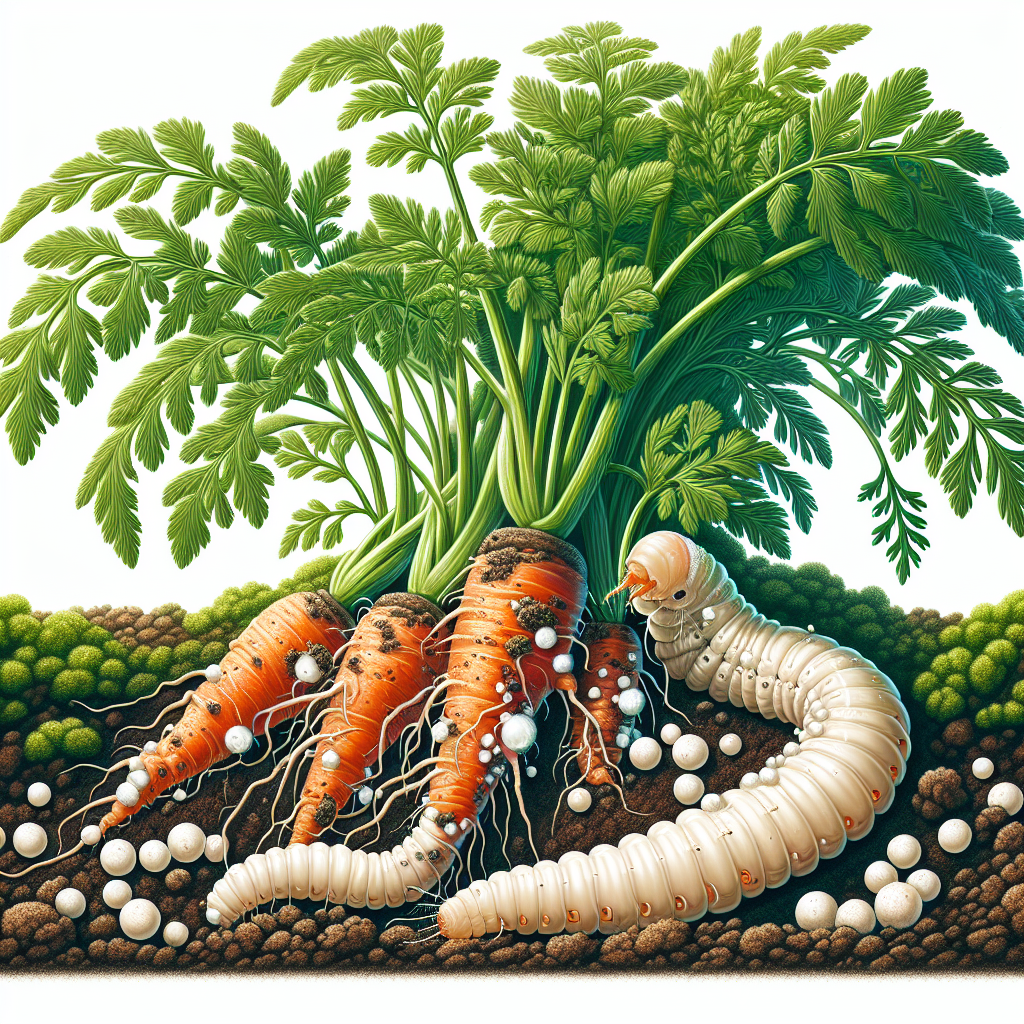
Introduction to Maggots
Maggots, the larval stage of various fly species in the order Diptera, represent one of the most insidious pests in agriculture. These soft-bodied, legless larvae thrive in decaying organic matter, moist soils, and wounded plant tissues, burrowing into seeds, roots, stems, and fruits to feed voraciously. Common culprits include seedcorn maggots (Delia platura), onion maggots (Delia antiqua), and cabbage root maggots (Delia radicum), each targeting specific crops but sharing devastating impacts like seedling death, stunted growth, and reduced marketable yields.
In commercial farming and home gardens alike, maggot infestations can wipe out entire plantings, especially during cool, wet springs when flies lay eggs in soil near germinating seeds. Early detection is critical, as maggots develop rapidly—often completing their lifecycle in 2-4 weeks—leading to secondary infections from root rot or Pythium. This comprehensive guide equips growers with diagnostic tools, lifecycle knowledge, organic controls, and prevention strategies to safeguard crops. For more on integrated pest management, check out this insightful Spring Pest Patrol: Organic AI Strategies to Shield Your Crops from Common Invaders.
Understanding maggots requires recognizing them not as a single species but as a symptom of poor sanitation and environmental conditions favoring fly proliferation. Global agriculture loses millions annually to maggot damage, with small farms particularly vulnerable due to limited resources for monitoring. Proactive management transforms these crop destroyers into a manageable challenge, ensuring bountiful harvests.
Identifying Symptoms & Damage
Diagnosing maggot infestations demands keen observation of both above- and below-ground signs. Seedlings emerge stunted or fail entirely, with thin, wilting stems exhibiting a characteristic 'blue-gray' hue from vascular disruption. Digging reveals creamy-white, tapered larvae (3-10 mm long) coiled in tunnels within roots, stems, or seed casings, often accompanied by brown, watery rot.
Surface clues include clusters of tiny (1 mm) white eggs on soil near plants, adult flies hovering low, or frass (maggot excrement) as slimy trails. In fruits like tomato or onion, entry holes ooze putrid liquid, signaling internal feeding that invites bacterial soft rots. Damage severity escalates in patches: healthy rows contrast with barren spots where 80-100% seedling loss occurs.
Differentiate maggots from wireworms (hard-bodied) or cutworms (nocturnal surface feeders) by their soft, hookless bodies and preference for moist, organic-rich soil. Use a soil float test: mix suspect soil with water; maggots float to the surface. Yield impacts are profound—up to 50% in beans, 70% in early carrots—necessitating immediate intervention to halt progression.
Lifecycle and Progression of Maggots
Maggots follow a complete metamorphosis: egg, larva (maggot), pupa, adult fly. Females lay 100-250 eggs in batches on soil, plant wounds, or decaying matter, hatching in 1-4 days under optimal 15-25°C (59-77°F) and high humidity. Larvae feed for 1-3 weeks, molting three times, growing from 1 mm to 12 mm while tunneling through tissues.
Pupation occurs in soil as reddish-brown capsules (4-8 mm), lasting 5-20 days before grayish flies (5-10 mm) emerge. Multiple generations (3-8 per season) overlap, with diapause in pupae overwintering in cold climates. Progression accelerates in wet springs: eggs → maggots in 2 days, full cycle in 14-21 days. For specifics, see Seedcorn Maggot, a prime example infesting germinating seeds.
Monitoring traps (yellow sticky cards) track adult flights, peaking after rain. Lifecycle knowledge enables timed interventions, disrupting reproduction before peak larval damage.
Environmental Triggers & Risk Factors
Maggots flourish in cool (10-20°C), wet conditions mimicking their breeding sites in compost or manure. Overly rich, undisturbed soil from heavy organic amendments attracts flies; compacted, poorly drained fields exacerbate issues. Risk spikes post-rain when females oviposit near fresh plantings.
Crop residues, weeds, and nearby rotting vegetation serve as reservoirs. Direct-seeded cool-season crops in spring/fall face highest threats. Acidic soils (pH <6.0) and excessive nitrogen promote succulent growth, ideal for larvae. Climate change extends seasons, boosting generations in warming regions.
Mitigate by assessing field history: prior maggot sites warrant caution. Companion risks include cabbage near beans, sharing root maggot species.
Organic Control & Treatment Plans
Organic management integrates cultural, biological, and mechanical tactics. Cultural: Delay planting 2-3 weeks post-rain; use transplants over direct seeding. Till soil pre-planting to expose pupae to predators/sun. Apply 2-4 cm straw mulch post-emergence to deter oviposition.
Biological: Introduce beneficial nematodes (Steinernema feltiae) at 10^6/m² in evenings; they parasitize 70-90% larvae. Promote ground beetles via cover crops. Mechanical: Solarize soil (clear plastic, 4-6 weeks summer) kills pupae/eggs. Hand-remove larvae from small plots, drown in soapy water.
Approved inputs: Diatomaceous earth (DE) barriers around stems; neem oil drenches (1-2% weekly). Bt (Bacillus thuringiensis) targets some leaf-mining maggots. Rotate with non-hosts like grains. For Seedcorn Maggot specifics, seed treatments with spinosad (OMRI-listed) protect germinants.
Integrated plan: Scout weekly, act at first eggs. Combine nematodes + mulch for 85% control. Monitor efficacy; reapply post-rain.
Preventing Maggots in the Future
Prevention hinges on sanitation and disruption. Destroy crop debris promptly; deep-plow (15-20 cm) buries pupae beyond emergence. Crop rotation (2-3 years off-hosts like corn) breaks cycles. Use fine mesh row covers until flowering, excluding flies.
Enhance soil health: balanced fertility reduces succulent tissues. Plant resistant varieties (e.g., maggot-tolerant onions). Time sowings to avoid peak flights (use traps). Border traps with yellow boards + ammonium lures capture adults.
Long-term: encourage predators via hedgerows (marigold, yarrow). Soil solarization annually in high-risk fields. Track via journals; predict outbreaks from weather patterns.
Crops Most Affected by Maggots
Root/brassica crops suffer most: onion, garlic, cabbage, carrot, radish. Legumes like beans/peas lose seedlings to seedcorn maggots. Crucifers (broccoli, cauliflower) host root maggots. Alliums and cucurbits (cucumber) face bulb/fruit maggots. Cool-season direct-seeds in wet climates hit hardest; potato tubers occasionally infested. Early detection saves these staples.