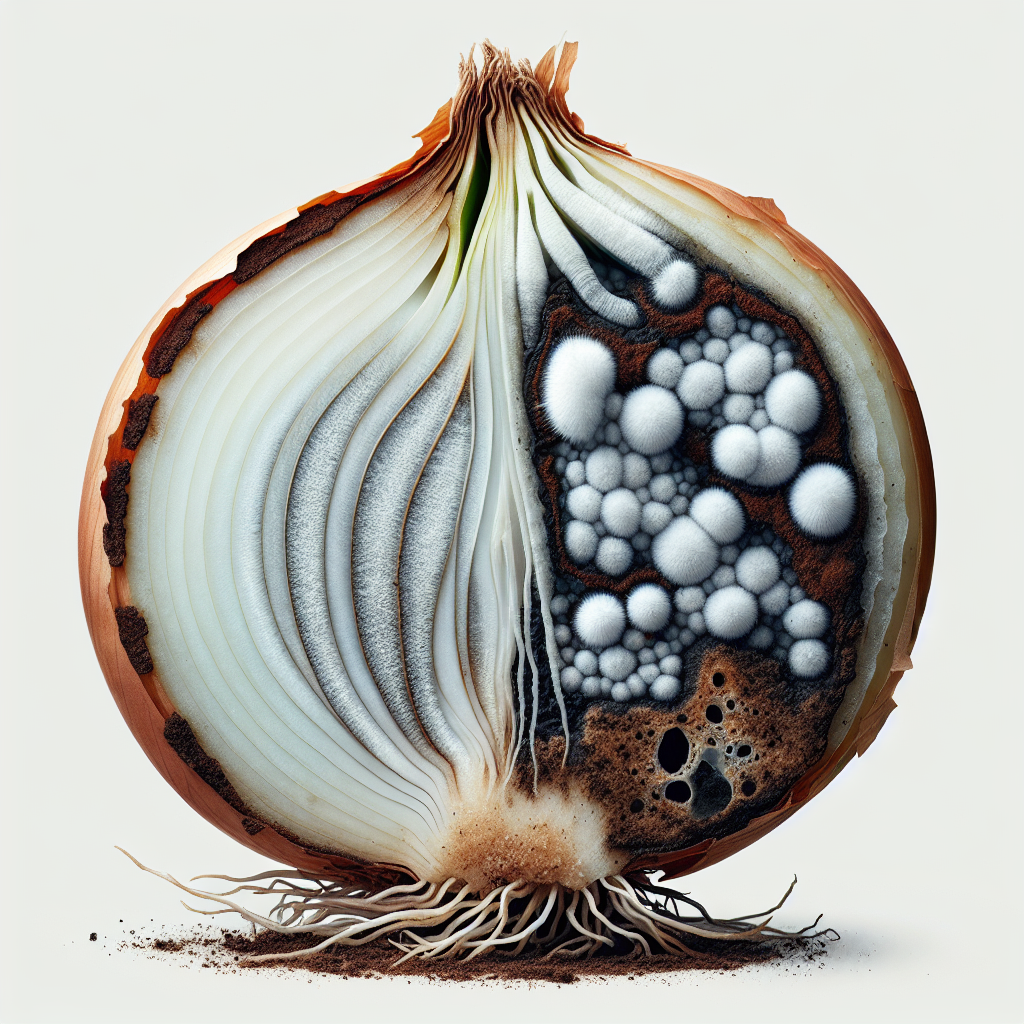
Introduction to Fusarium basal rot
Fusarium basal rot (FBR) is one of the most devastating diseases impacting allium crops worldwide, particularly onion and garlic production. Caused by the soilborne fungus Fusarium oxysporum f. sp. cepae, this pathogen attacks the basal plate—the critical junction where roots meet the bulb—leading to rot, plant collapse, and up to 100% yield loss in severely affected fields. First identified in the early 20th century, FBR has become a persistent challenge for commercial growers and small-scale farmers alike due to the fungus's ability to survive in soil for years as chlamydospores.
The disease thrives in warm conditions and spreads via infected transplants, contaminated soil, equipment, or irrigation water. Unlike foliar diseases, FBR is insidious, often going unnoticed until harvest when bulbs show internal decay. Global onion production, valued at over $20 billion annually, faces ongoing threats from FBR, with hotspots in the Netherlands, Japan, and the United States. Early diagnosis and integrated management are essential to minimize losses. This guide provides professional-grade diagnostic criteria, lifecycle insights, and organic control strategies tailored for sustainable agriculture. For small farms struggling with misdiagnosis, check out Why Misidentifying Plants Costs Small Farms Thousands - And How AI Camera Diagnosis Fixes It Fast.
Understanding FBR's biology is key to prevention. The fungus produces three types of spores: macroconidia for dispersal, microconidia for reproduction, and durable chlamydospores for long-term survival. Infection occurs through root wounds or natural openings, with symptoms progressing from root discoloration to basal plate decay. In advanced stages, plants exhibit stunting and premature senescence, mimicking nutrient deficiencies or Fusarium wilt. Accurate identification prevents misapplication of treatments and wasted resources.
Identifying Symptoms & Damage
Diagnosing Fusarium basal rot requires careful inspection of roots, basal plates, and bulbs, as aboveground symptoms are nonspecific. Initial signs appear 4-6 weeks after planting in warm soils (above 24°C/75°F). Roots turn dark brown to black, becoming brittle and sparse—a hallmark of FBR distinct from root rot caused by Pythium or Phytophthora, which produce water-soaked lesions.
Examine the basal plate: healthy tissue is firm and white; infected areas show reddish-brown to dark brown discoloration, often with a dry, shriveled texture. Slice bulbs longitudinally to reveal internal rot starting at the base, progressing upward with white fungal mycelium in severe cases. Affected plants wilt during the day, recover slightly at night, and eventually yellow from the tips inward. Drooping leaves with grayish-white tips indicate advanced infection.
Field diagnosis involves a 'pull test': gently tug plants; infected ones detach easily due to root loss. At harvest, infected bulbs are undersized, lightweight, with thin necks and soft scales. Secondary invaders like bacteria cause foul odors, but primary FBR rot is dry. Yield impacts are profound: 20-50% losses in moderate epidemics, up to 100% in monoculture fields. Differentiate from Rhizoctonia (sclerotic bodies) or nematodes (root-knot nematodes) via lab confirmation—plate root segments on selective media for F. oxysporum growth.
Economic damage extends post-harvest: infected bulbs fail storage, leading to 30-70% losses. In Elephant Ear Garlic, symptoms mimic bulb dehydration, but microscopy reveals banana-shaped macroconidia. Scout fields weekly during root growth, using a 10x hand lens for early mycelium detection.
Lifecycle and Progression of Fusarium basal rot
Fusarium oxysporum f. sp. cepae follows a complex lifecycle adapted for soil persistence. The fungus overwinters as chlamydospores (resting spores) in soil, plant debris, or alternate hosts like weeds. These thick-walled structures survive 5-10 years, resisting tillage, flooding, and biocontrol agents.
In spring, warming soils (optimal 25-30°C/77-86°F) trigger spore germination. Macroconidia (multiseptate, sickle-shaped) and microconidia spread via splashing rain, irrigation, or wind to root tips. Infection penetrates through wounds from transplanting, cultivation, or nematodes. Inside the plant, the fungus colonizes vascular tissue, producing toxins that block water uptake.
Progression spans three phases: latent (2-4 weeks, symptomless colonization), acute (wilting, root rot), and chronic (basal plate necrosis, plant death). Sporulation peaks in humid conditions, producing pinkish spore masses on rotted tissue. Under stress, plants translocate carbohydrates to roots, feeding the fungus and accelerating spread.
The pathogen forms a disease triangle with susceptible hosts and conducive environments. Crop rotation disrupts the cycle, but short rotations (less than 4 years) build inoculum. Learn more about related Fusarium issues in Fusarium (disease).
Environmental Triggers & Risk Factors
FBR epidemics correlate with specific conditions favoring pathogen activity over plant defense. High soil temperatures (24-32°C/75-90°F) reduce onion root extension, trapping propagules near infection courts. Poor drainage and compacted soils retain moisture, promoting spore germination—sandy loams with pH 6.0-7.0 are most vulnerable.
Over-fertilization with nitrogen delays maturity, extending susceptibility windows. Acidic soils (pH <5.5) stress plants, while excessive irrigation leaches calcium, weakening cell walls. Monocropping alliums builds inoculum to 10^4 CFU/g soil, threshold for outbreaks.
Risk factors include infested transplants (20-50% infected sets common), volunteer onions, and weeds like nutsedge harboring the fungus. Mechanical injury from tillage introduces spores. Climate change exacerbates risks with warmer soils and erratic rains. In Thai Basil intercropping, shared irrigation vectors FBR to alliums.
Organic Control & Treatment Plans
No cure exists for FBR; management emphasizes suppression. Start with certified disease-free sets or seeds treated with hot water (50°C/122°F for 20 min). Plant resistant varieties like 'Copra' onion or 'New York Early' garlic.
Crop rotation: 4-6 years away from alliums, incorporating brassicas or grains to starve the fungus. Solarization—covering moist soil with plastic for 4-6 weeks in summer—reduces inoculum by 70-90%. Biofumigation with mustard cover crops releases isothiocyanates toxic to Fusarium.
Soil amendments: Trichoderma harzianum (commercial biocontrol) colonizes roots, outcompeting pathogen (apply 10^9 CFU/g at planting). Compost teas with lactic acid bacteria suppress sporulation. Avoid overhead irrigation; use drip for 80% efficacy gain.
Cultural tweaks: plant in cool weather (<20°C/68°F), space 10-15 cm for airflow, and rogue infected plants weekly. Post-harvest, cure bulbs at 30°C/86°F, 65% humidity for 2 weeks to toughen necks. Organic fungicides like Serenade (Bacillus subtilis) provide 40-60% control via induced resistance.
Integrated plans: monitor with baiting assays, rotate with clover, and amend with calcium nitrate. In trials, combining rotation, biocontrol, and sanitation yields 75% reduction.
Preventing Fusarium basal rot in the Future
Long-term prevention hinges on breaking the soil inoculum cycle. Conduct soil assays pre-planting; levels >500 CFU/g warrant fallowing. Use grafted plants or tissue culture for sterile starts.
Enhance soil health: incorporate mycorrhizal fungi to boost root vigor, add organic matter for microbial diversity suppressing Fusarium. Mulch with straw to moderate soil temps. Scout for early weeds and nematodes, as they vector infection.
Farm hygiene: disinfect tools with 10% bleach, clean equipment between fields, and avoid surface water irrigation. Select fields with history of non-alliums. Resistant hybrids now cover 60% of acreage, dropping incidence 50%.
Future tech: marker-assisted breeding for multi-race resistance, and cover crop cocktails with Brassica juncea. For small farms, AI-driven rotation planning optimizes prevention—see Soil Health Mastery: 5 Proven Strategies for Small Farms to Build Fertile Ground Without Breaking the Bank. Annual planning prevents 90% of outbreaks.
Crops Most Affected by Fusarium basal rot
Primarily alliums: onion (50% global losses), garlic, leeks, shallots. Bulb onions suffer most due to long soil residence. Elephant Garlic shows 30-70% infection in endemic areas. Less severe on multipliers.
Secondary hosts: chives (not listed but related), wild alliums. Non-alliums like tomato face similar Fusarium strains, but FBR-specific to cepae. In rotations, avoid ginger or turmeric due to shared soil pathogens. Global hotspots: Vidalia onions (GA, USA), Dutch exports.