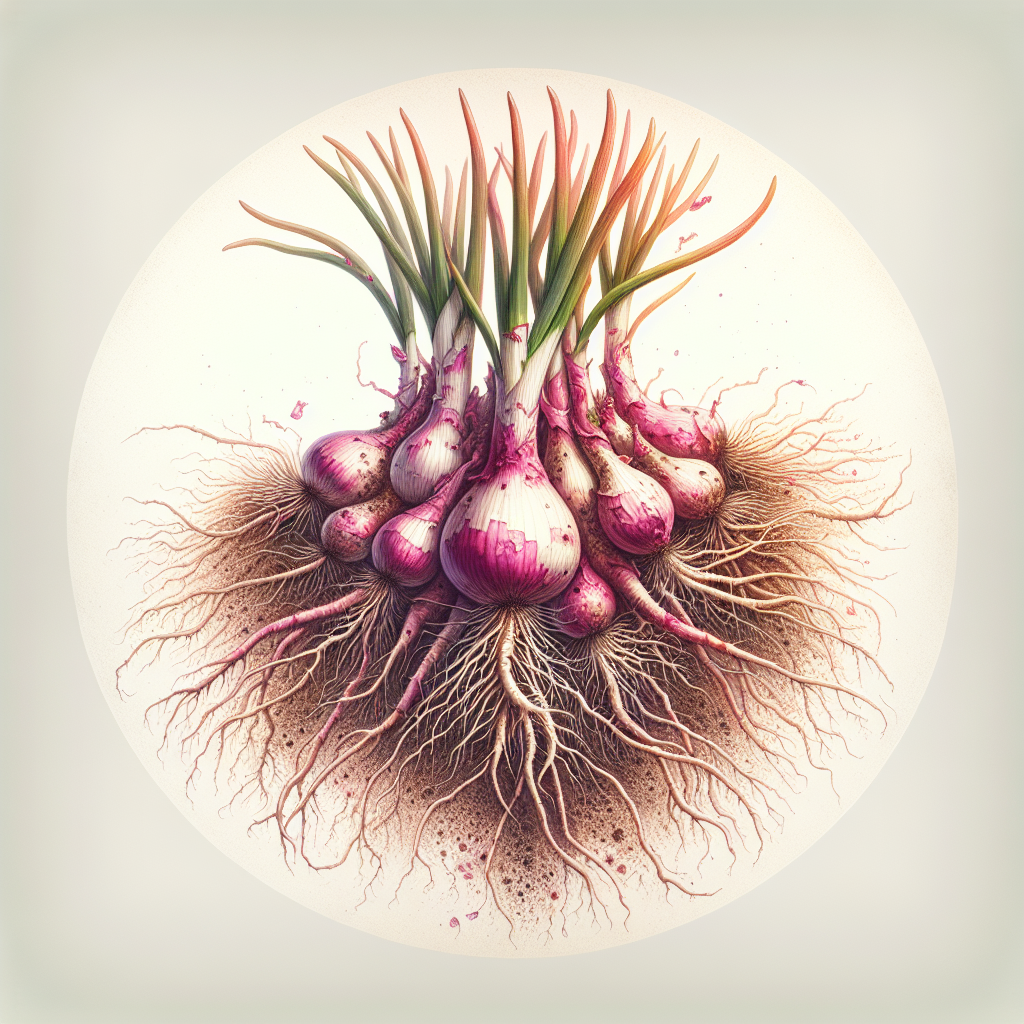
Introduction to Pink root
Pink root, caused by the soilborne fungus Phymatotrichopsis omnivora (formerly Phymatotrichum omnivorum), is one of the most challenging diseases for onion growers worldwide. This pathogen thrives in warm, alkaline soils and can persist in fields for decades, making it a persistent threat to onion production. First identified in the early 1900s in the southern United States, pink root has since spread to onion-growing regions in Texas, California, Mexico, and parts of South America, costing producers millions in lost yields annually.
The disease attacks the roots, turning them a distinctive pink to reddish-purple color, which impairs water and nutrient uptake. Infected plants exhibit stunted growth, yellowing foliage, and reduced bulb size, often leading to 20-50% yield reductions in severe cases. While onions are the primary host, the fungus also impacts garlic, shallots, and other Allium species. Unlike foliar diseases, pink root is invisible above ground until symptoms appear, emphasizing the need for proactive soil management.
Understanding pink root's biology is key to effective control. The fungus produces sclerotia—hard, resting structures—that survive in soil for over 10 years. These sclerotia germinate in response to host roots, infecting fine feeder roots and spreading systemically. Warm temperatures (75-95°F or 24-35°C) and pH levels above 7.0 accelerate disease development. For small farms, early diagnosis and integrated strategies can minimize losses. Learn more about Soil Health Mastery: 5 Proven Strategies for Small Farms to Build Fertile Ground Without Breaking the Bank to bolster defenses against soilborne threats like pink root.
Identifying Symptoms & Damage
Diagnosing pink root requires careful root inspection, as aboveground signs mimic nutrient deficiencies or drought stress. The hallmark symptom is the pink to salmon-colored discoloration of infected roots, starting at the tips and progressing upward. Healthy roots are white and fibrous; pink root-infected ones become brittle, shortened, and sparse, often with secondary invasion by root rot pathogens like Pythium or Fusarium.
Foliar symptoms appear 2-4 weeks after root infection: younger leaves yellow and wilt, while older leaves dry out from the tip downward, resembling Fusarium wilt. Plants may lean or lodge due to weakened root systems. Bulb development is severely compromised—small, soft bulbs with thin necks and poor scales. In advanced stages, entire plants collapse, especially under heat or water stress.
To confirm, gently wash roots under running water. Pink discoloration intensifies upon exposure to air. Cross-sections reveal darkened vascular tissues. Yield impacts are profound: mild infections reduce bulb size by 10-20%; severe cases cause 50-100% stand loss. Differentiate from root-knot nematodes, which cause galls, or Thielaviopsis black root rot, marked by black lesions. Lab tests via soil sampling or ELISA assays provide definitive identification. Regular scouting in susceptible fields, particularly after warm rains, is essential.
Lifecycle and Progression of Pink root
Phymatotrichopsis omnivora has a complex lifecycle adapted to long-term soil survival. Sclerotia, the primary inoculum, overwinter in soil at depths up to 12 inches, remaining viable for 5-15 years. Germination occurs when host roots release exudates, typically in spring when soil temperatures exceed 75°F. Hyphae penetrate root tips, colonizing the cortex and causing the characteristic pink pigmentation from fungal metabolites.
The fungus spreads via mycelial growth through soil (up to 3 feet radially from infected plants) and splashing water. Optimal infection happens at 85°F soil temperature and soil moisture of 20-30%. No airborne spores are produced, limiting long-distance spread but favoring persistence in infested fields. Disease progression is temperature-dependent: rapid in summer, dormant in winter.
A single cycle infects roots within 48 hours, killing feeder roots in 7-10 days. Secondary cycles occur as sclerotia form on dead roots, perpetuating the disease. Crop debris decomposes, releasing more sclerotia. Understanding this lifecycle underscores rotation's importance—non-host crops interrupt germination for years. In monoculture onion fields, incidence builds exponentially over seasons.
Environmental Triggers & Risk Factors
Pink root flourishes in specific conditions: warm, sandy loam soils with pH 7.2-8.5, low organic matter (<1%), and temperatures above 80°F. High soil compaction and poor drainage exacerbate issues by keeping soils wet. Acidic amendments like sulfur lower pH, suppressing sclerotia germination.
Risk factors include continuous Allium cropping, which builds inoculum; over-fertilization with nitrogen, promoting succulent roots; and irrigation practices causing waterlogging. Fields previously planted to cotton or susceptible weeds like pigweed harbor the pathogen. Climate change extends warm periods, increasing outbreak risks. Susceptibility varies by variety—short-day onions suffer more than long-day types. Monitor soil tests annually for pH and nematodes, as co-infections with plant-parasitic nematodes amplify damage.
Organic Control & Treatment Plans
No curative organic treatments exist, but integrated management suppresses pink root effectively. Start with resistant varieties like 'Texas Sweet', 'Granex', or 'Candy' onions, which tolerate infection without yield loss.
Crop Rotation: Rotate with non-hosts like corn, grains, or legumes for 3-5 years. Grasses like sorghum starve the fungus.
Soil Amendments: Apply elemental sulfur (500-1000 lbs/acre) to drop pH to 6.5; incorporate green manures like clover or hairy vetch to boost organic matter and suppress sclerotia.
Biological Controls: Trichoderma-based biopesticides (e.g., RootShield) colonize roots, outcompeting P. omnivora. Compost teas with mycorrhizal fungi enhance root vigor.
Cultural Practices: Plant in raised beds for drainage; avoid overhead irrigation; rogue infected plants early. Solarization—covering moist soil with plastic for 4-6 weeks in summer—kills sclerotia in top 6 inches.
Organic Fungicides: Seed treatments with Bacillus subtilis or Streptomyces griseoviridis provide early protection. Foliar biostimulants like seaweed extracts bolster plant resilience.
Monitor progress with root digs every 2 weeks. Combine with Spring Pest Patrol: Organic AI Strategies to Shield Your Crops from Common Invaders for holistic defense.
Preventing Pink root in the Future
Prevention hinges on breaking the lifecycle through long-term soil stewardship. Conduct pre-plant soil assays for P. omnivora via baiting or PCR tests. Select certified, disease-free seed and transplants.
Implement 4-year rotations: Year 1 onions, Year 2 grains, Year 3 legumes, Year 4 brassicas like cabbage. Maintain soil pH 6.0-6.8 with lime or sulfur as needed. Build organic matter to 3% via cover crops, reducing sclerotia viability.
Use precision irrigation (drip systems) to avoid wet feet. Mulch with straw to moderate soil temperature. Scout weekly, removing 90% of infected plants before bulbing. Flooding fields (if feasible) for 2-3 months drowns sclerotia.
For new fields, avoid infested sites. Biofumigants like mustard cover crops release glucosinolates toxic to fungi. Track weather for warm spells triggering outbreaks. Sustainable practices yield 20-30% higher long-term.
Crops Most Affected by Pink root
Onions top the list, with 90% of commercial losses. Garlic shows similar root pinkening and stunting. Shallots, leeks, and chives suffer bulb deformation. Minor hosts include cotton, alfalfa, and 300+ species, but Alliums are economic drivers. Resistant crops like corn aid rotation.