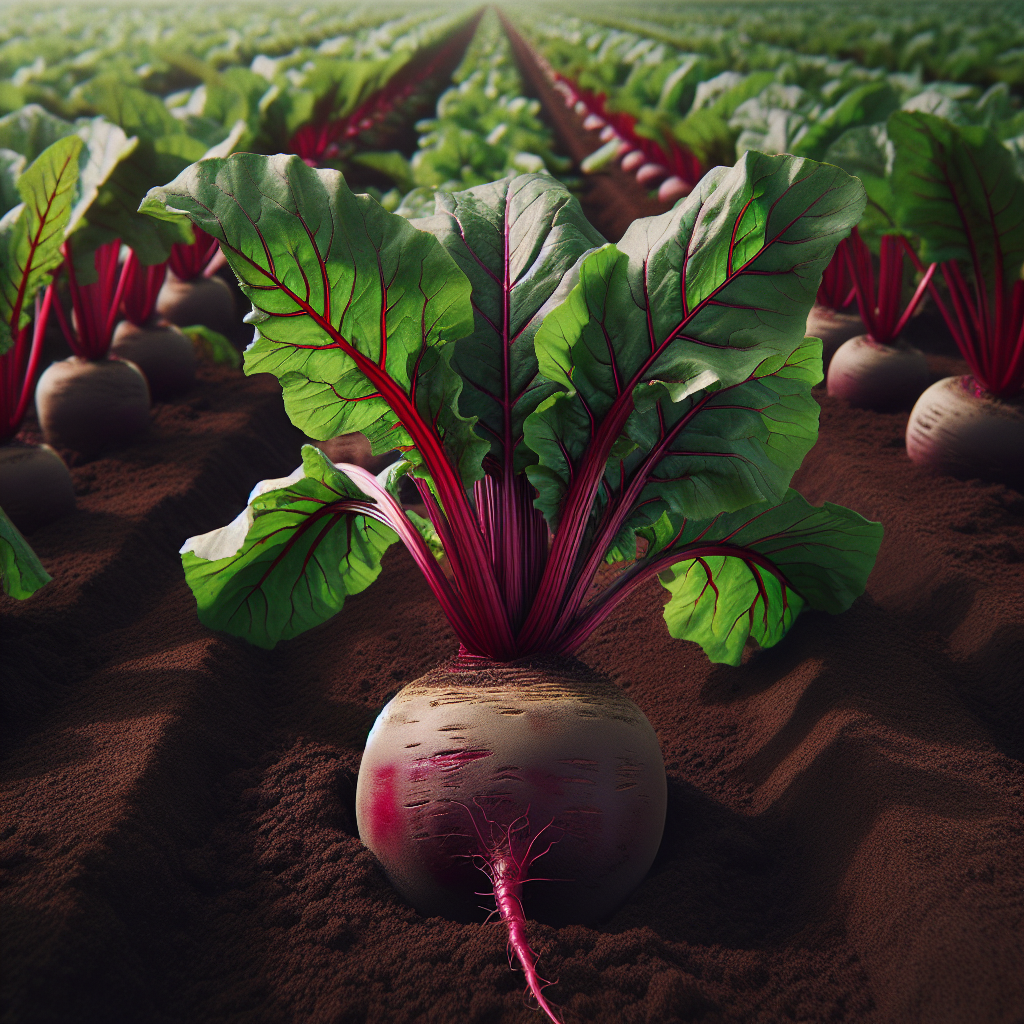
Introduction to Detroit Dark Red Beet
Few beet varieties have earned the long-standing trust of growers the way this one has. Detroit Dark Red is a historic heirloom table beet introduced in the late 19th century and selected for smooth, nearly globe-shaped roots, strong tops, rich internal color, and consistent flavor. It became a standard for fresh market and processing because it balances traits growers care about most: reliable germination in cool soils, attractive roots with relatively small crowns, good leaf quality for bunching, and strong culinary versatility.
This variety is especially well suited to cool-season production. It performs best when roots size up in mild weather, which helps preserve sweetness, uniform shape, and the deep red pigmentation associated with high betalain content. In hot weather, roots can become more fibrous, zoning may become more visible, and flavor may turn more earthy and less sweet. For that reason, professional growers often target spring and late summer sowings for harvest in early summer or autumn.
Detroit Dark Red is also useful beyond the root. The tops are edible, nutritious, and marketable, making it a dual-purpose crop. For growers interested in succession planting, it is one of the most forgiving beet varieties because it matures fairly predictably and can be harvested young as baby beets, bunched at mid-size, or held for larger roots if moisture remains even.
For broader beet background, see our Beet guide. If you want rotation and mixed-planting ideas, the fall companion planting guide is also useful.
Botanical Profile of Detroit Dark Red Beet
This cultivar belongs to the species Beta vulgaris, the same species that includes chard, fodder beets, and sugar beets. The edible storage organ commonly called the root is botanically a swollen hypocotyl-root complex rather than a true root alone. That distinction matters in cultivation because any stress that interrupts uniform cell expansion—especially moisture fluctuation, compaction, or excessive nitrogen—can distort shape and reduce market quality.
Detroit Dark Red is typically described as a round to slightly flattened globe beet with smooth skin and dark red flesh. Internal zoning, the lighter concentric rings visible in some beet varieties, is usually less pronounced than in inferior strains, though environment still influences expression. Roots commonly mature at 5-8 cm across for premium table use, but they can grow larger if left in the ground. Oversizing often reduces tenderness.
The foliage is medium to tall, with green leaves and red veins to reddish petioles. Strong tops are an asset during bunch harvest, but extremely lush top growth can signal excess nitrogen, which often comes at the expense of root quality. Like other beets, the plant is biennial by life cycle: it forms a storage organ in the first season and flowers after vernalization in the second. Commercially, it is grown as an annual for root production.
The seed sold to growers is actually a multigerm seedball in many strains, meaning one "seed" may produce multiple seedlings. This is why thinning is often essential unless a monogerm strain is specifically purchased. Germination is epigeal and relatively good in cool soils compared with many warm-season vegetables, though emergence can be slow in crusted ground.
Soil, pH, and Climate Requirements for Detroit Dark Red Beet
Best results come from loose, stone-free, well-drained soil with high biological activity and moderate fertility. Sandy loam to fine loam is ideal because it allows even swelling of the root while holding enough moisture for uninterrupted growth. Heavy clay can still produce acceptable crops if deeply prepared and enriched with mature organic matter, but it increases the risk of misshapen roots, surface Scab, and harvest difficulty.
A target soil pH of 6.2-7.2 is ideal. Beets tolerate slightly alkaline conditions better than many vegetables, but strongly acidic soils below about 6.0 can reduce nutrient uptake, particularly boron availability, and increase the risk of blackened internal tissues, corkiness, or poor root development. If soil tests show low boron, correct cautiously; boron is needed only in trace amounts, and excess can become toxic quickly.
Detroit Dark Red responds well to soil that has been improved with fully decomposed compost applied before planting at roughly 2-5 cm over the bed and incorporated shallowly. Avoid fresh manure, especially immediately before sowing. Fresh or partially decomposed manure drives excessive vegetative growth, increases branching and forked roots, and can raise soluble salts enough to impair emergence.
This is fundamentally a cool-season crop. Optimal air temperatures for growth are about 10-24°C, with the sweetest and most refined roots typically produced when daytime temperatures remain moderate and nights are cool. Seeds can germinate in soils as low as 7-10°C, but emergence is faster at 15-24°C. Young plants tolerate light frosts, and mature roots can withstand brief cold spells if mulched, but repeated hard freezes may damage crowns and storage quality.
In hot climates, production is best scheduled for the coolest part of the year. Sustained temperatures above 27-30°C slow root enlargement and can make flavor stronger and texture coarser. Heat also increases the importance of steady irrigation, because rapid soil drying followed by heavy watering can cause growth cracks or woody texture.
Aim for full sun in cooler regions and at least 6 hours of direct light everywhere. In warm areas, very light afternoon shade can help preserve leaf quality and reduce heat stress, but too much shade leads to weak tops and undersized roots.
Step-by-Step Planting & Propagation
Direct sowing is the standard and strongly preferred method. Transplanting is possible only at a very young stage, but it commonly causes root deformity, setback, or inconsistent sizing, so professional production nearly always relies on direct seeding.
Prepare a fine, level seedbed. Remove stones, clods, and fresh debris. A crumbly surface texture is important because beet seedlings are not especially forceful when emerging.
Pre-irrigate if soil is dry. The top 2-4 cm should be evenly moist at sowing. Beet seedballs need sustained moisture to soften and germinate uniformly.
Sow seed 1.25-2 cm deep. In cool or heavy soils, stay closer to 1.25 cm; in warmer, lighter soils, 2 cm is acceptable. Deeper sowing can slow emergence and reduce stand density.
Space rows 25-45 cm apart for garden and hand-scale production. In intensive beds, sow in bands or multiple close rows with enough access for thinning and weeding.
Place seeds 2.5-5 cm apart if thinning is planned, or slightly wider if using precision methods. Because many seeds are multigerm, final spacing matters more than initial drop spacing.
Keep the seed zone continuously moist until emergence. Depending on temperature, seedlings usually emerge in 5-14 days, sometimes longer in cold soil. Surface crusting is a common cause of poor stands; a very light organic mulch or row cover can help moderate this.
Thin early. When seedlings reach 2.5-5 cm tall, thin to 5-7.5 cm apart for standard roots, 2.5-4 cm for baby beets, or 7.5-10 cm for larger storage roots. Delayed thinning reduces early growth and causes competition-induced misshaping.
Succession sow every 2-3 weeks in spring for continuous harvest. For autumn storage crops, sow late summer according to local frost dates so roots bulk during cooling weather. Many growers soak seedballs for 2-4 hours before sowing to improve uniformity, but avoid prolonged soaking that can deplete oxygen around the embryo.
If using row cover, install immediately after sowing to improve warmth, reduce flea beetle feeding on cotyledons, and protect the seedbed from heavy rain impact. Remove or vent covers as temperatures rise.
Care & Maintenance regimes for Detroit Dark Red Beet
Water management is the single most important factor after stand establishment. Maintain soil moisture at a consistently moderate level, roughly equivalent to 60-80% of field capacity in the root zone. Practically, the soil should feel cool and slightly moist 5-8 cm below the surface, never powder-dry and never sticky or airless for extended periods. A crop that alternates between drought stress and saturation will often develop coarse texture, growth rings, cracking, or dull flavor.
As a rule, provide about 2.5 cm of water per week from rainfall or irrigation during mild weather, increasing in sandy soils or windy conditions. During root bulking, avoid large infrequent irrigations. Two lighter irrigations are usually better than one drenching event because they reduce swelling stress and nutrient leaching. Signs of underwatering include slowed top growth, dull or wilted leaves during the cool morning hours, and roots that remain small and tough. Signs of overwatering include yellowing lower leaves, a sour smell in the bed, persistent surface algae, and roots with increased disease susceptibility or poor skin finish.
Nitrogen should be moderate, not excessive. A balanced preplant fertility program based on soil testing is best. Beets do not need rich, high-nitrogen feeding to produce well; too much nitrogen delays root bulking and promotes oversized tops. If growth stalls and foliage is pale green rather than the normal healthy medium green with reddish veining, a light sidedress of nitrogen may help when plants are 7-10 cm tall. Stop nitrogen-heavy feeding once roots begin swelling visibly.
Potassium supports water regulation, sugar movement, and root quality. Phosphorus is important early for establishment, especially in cool soils. Boron deficiency, though not always common, is one micronutrient issue worth monitoring in beets. Deficient plants may show internal black spots, corky tissue, or brittle, malformed growth. Always correct micronutrients from a lab-based recommendation rather than guesswork.
Weed control matters greatly in the first 4-6 weeks. Young beets are not highly competitive, and early weed pressure reduces root size significantly. Use shallow cultivation only. Deep hoeing near the row can nick developing roots and increase deformity. Once tops expand and rows begin to shade the soil, competition decreases.
Mulching with a light layer of weed-free straw or shredded leaves after seedlings are established can stabilize soil moisture and reduce crusting, but do not bury crowns. In humid regions, overly heavy mulch pressed against stems can increase disease risk.
For baby leaf or beet greens production, outer leaves can be harvested selectively without destroying the crop, but avoid removing too many at once. Root enlargement depends on adequate foliage. As a guideline, never remove more than one-third of the leaf area from any plant you intend to keep for root harvest.
Pests, Diseases & Organic Management
Detroit Dark Red is generally reliable, but several pests and pathogens can reduce quality.
Leafminers are among the most common foliage pests. Larvae tunnel between leaf surfaces, creating pale blotches that lower marketability and photosynthetic capacity. Remove and destroy infested leaves early, rotate crops, and use fine insect netting or row cover during peak egg-laying periods.
Flea beetles chew tiny shot-holes in young leaves, especially during dry springs. Damage is usually cosmetic on established plants but can seriously weaken seedlings. Floating row covers, good moisture management, and rapid early growth are the best organic defenses.
Aphids can cluster on leaf undersides and transmit viral diseases. Strong water sprays, habitat for beneficial insects, and avoiding excess nitrogen are useful preventive strategies.
Beet leafhopper is important in some dry western regions because it can transmit curly top virus. In areas where this disease is common, physical exclusion with row cover during early growth is often the most effective nonchemical strategy.
Damping-off can affect germinating seeds and young seedlings in cold, wet, poorly aerated soil. Prevention is better than cure: use well-drained beds, avoid overwatering, and do not sow into compacted ground.
Cercospora leaf spot produces small circular lesions with tan centers and reddish-purple margins. It thrives in warm, humid conditions and can defoliate plants, reducing root sizing. Space adequately for airflow, irrigate at soil level rather than overhead when possible, rotate away from beets and chard for at least 2-3 years, and remove infected debris after harvest.
Downy mildew may appear in cool, humid conditions, often causing yellowed patches and grayish growth on leaf undersides. Good air movement, careful irrigation timing, and crop rotation reduce pressure.
Scab can roughen root surfaces, especially in alkaline, dry soils with inconsistent moisture. This is one reason steady irrigation is crucial even though beets tolerate some drought.
Root rots caused by waterlogging are especially damaging in dense soil. If roots show blackened, soft, or foul-smelling tissue, improve drainage immediately and avoid planting beets in that bed until structure improves.
Organic management should focus on prevention through rotation, sanitation, steady growth, and physical exclusion. Avoid planting beets after related crops such as chard or spinach if disease pressure was present. Onion can be useful nearby in mixed plantings because its scent may help confuse some pests, but it is not a cure-all.
Harvesting, Curing & Optimal Storage
Harvest timing depends on intended use. Baby beets are often pulled when 2.5-4 cm across. The classic premium stage for Detroit Dark Red is around 5-7.5 cm in diameter, when roots are tender, richly colored, and easiest to bunch uniformly. Larger roots can still be good, especially in cool weather, but once they exceed roughly 8-10 cm, texture often becomes denser and more fibrous.
Use a fork or broadfork to loosen soil in heavier beds rather than yanking directly by the tops. Pulling from compacted ground can snap petioles and damage shoulders. Harvest when soil is slightly moist, not muddy; this reduces skin abrasion and makes washing easier.
Trim tops promptly to about 2.5 cm above the crown for storage roots. Removing leaves prevents moisture loss, but cutting too close can cause bleeding and shorten shelf life. If bunching for fresh market, leave attractive tops attached and hydrocool or shade them immediately after harvest to preserve turgidity.
Beets do not require curing in the same sense as onions or winter squash, but they do benefit from gentle handling and rapid postharvest cooling. Brush off loose soil if long-term storage is planned; do not aggressively scrub roots destined for storage, because damaged skin increases rot.
For optimal storage, keep roots at 0-2°C with 95-98% relative humidity. Under these conditions, Detroit Dark Red can store for 3-5 months, sometimes longer if harvested at proper maturity and kept free of wounds. In practical homestead storage, pack roots in damp sand, sawdust, or perforated bags in a root cellar. The medium should be moist enough to limit shriveling but never wet enough to promote rot. Good roots remain firm, smooth, and heavy for their size.
Avoid storing with ethylene-sensitive leafy greens in poorly ventilated spaces if tops are still attached. If roots begin to soften, wrinkle, or show black lesions around the crown, sort immediately and remove compromised specimens before decay spreads.
Companion Planting for Detroit Dark Red Beet
The most useful companions are crops that occupy different root zones, help with pest distraction, or make efficient use of bed space without creating heavy competition. Lettuce is an excellent partner because it matures quickly, shades the soil surface lightly, and coexists well with the slower swelling beet roots. Onion fits well in adjacent rows and is commonly used in diversified beds because its upright habit leaves space for beet foliage.
Garlic is another strong companion in mixed gardens and small farms, particularly where growers want a pungent allium near root crops. Cabbage can also pair well if spacing is generous and fertility is sufficient, though heavy brassica canopies should not be allowed to shade beet rows excessively.
Avoid pairing with highly sprawling, nutrient-hungry crops that quickly overrun the bed. Also avoid repeating closely related chenopod crops in the same space, such as spinach or chard, if disease issues have occurred, because they can share pests and foliar pathogens.
A practical mixed bed for this variety often uses alternating rows of beets and onions, with lettuce tucked into outer edges for an early harvest before beet canopies fully expand. The best companion strategy is not magic; it is thoughtful spatial planning that preserves light, airflow, and root room.