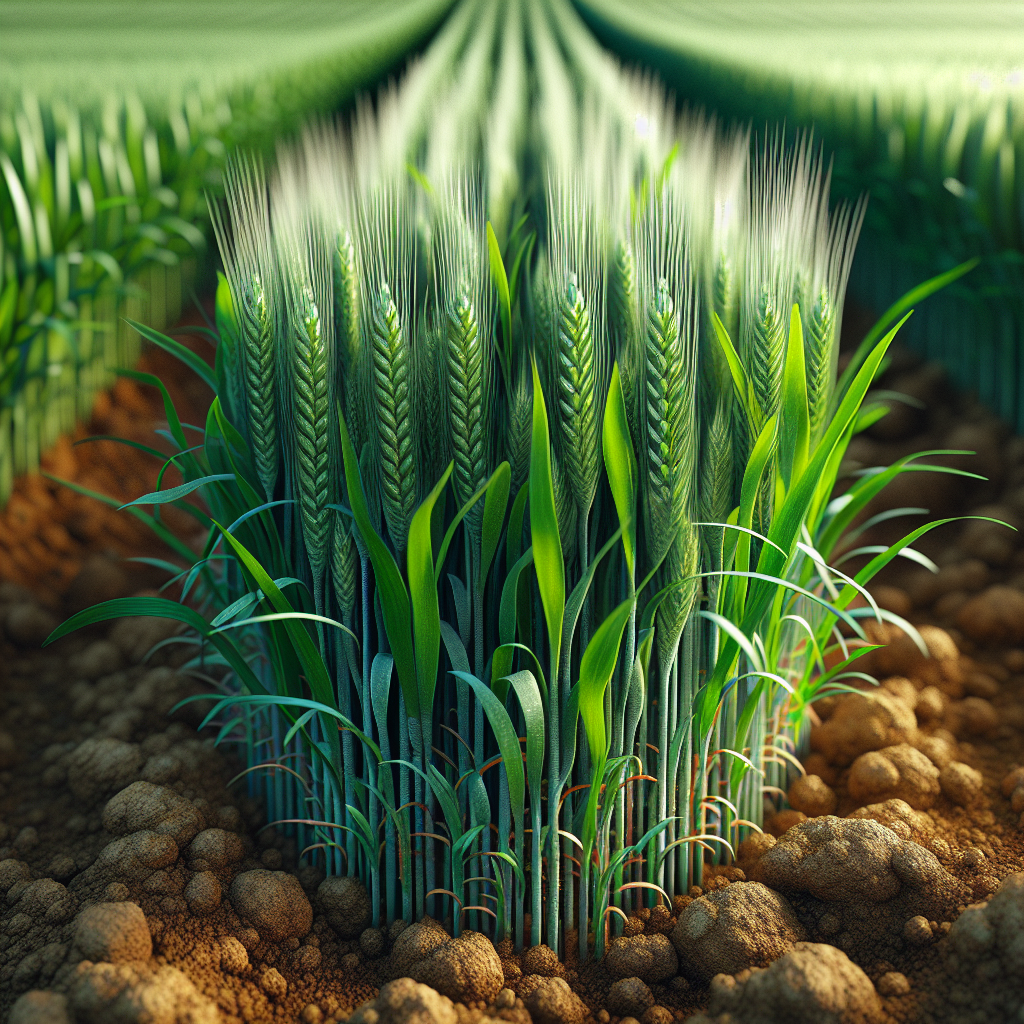
Introduction to Winter Triticale
A relatively modern cereal, this crop is a human-made hybrid between wheat and rye, bred to capture the yield quality of wheat and the rugged adaptability of rye. In practical farming, it occupies a valuable niche: it performs well on lighter or lower-fertility soils than many wheats, offers excellent spring forage and silage potential, and often provides more biomass than standard small grains. Its winter growth habit allows fall establishment, root development before dormancy, and an early spring surge that protects soil from erosion while scavenging residual nutrients.
Historically, triticale breeding accelerated in the late 19th and especially 20th centuries after cytogenetic barriers between wheat and rye were better understood. Modern winter types are far more uniform, fertile, and productive than early hybrids. Today, growers use it for dual-purpose systems, livestock feed, whole-crop silage, grain, straw, and as a winter cover integrated into regenerative rotations. For growers already familiar with wheat, winter triticale often feels familiar in planting and harvest operations, but it generally tolerates poorer conditions and produces heavier forage.
The crop is particularly attractive where autumn seeding windows are reliable, winters are cold enough to induce vernalization, and spring moisture supports rapid stem elongation. It is less commonly grown for human flour than wheat because gluten characteristics are weaker and less predictable, but it excels in feed and mixed-farm systems. On dairy and livestock farms, winter triticale is often preferred for boot-stage or early heading silage because it balances digestibility, tonnage, and a wide spring harvest window.
Botanical Profile of Winter Triticale
This cereal belongs to the nothogenus × Triticosecale, reflecting its hybrid origin from Triticum spp. and Secale cereale. Winter forms require a period of cold exposure to transition fully from vegetative growth to reproductive development. Botanically, plants resemble wheat in spike form and grain type but often inherit rye-like vigor, taller straw, and stronger tolerance for cold, acidity, and lower fertility.
Key morphological traits include fibrous roots with strong soil-binding ability, erect culms, narrow flat leaves, and terminal spikes rather than panicles. Plant height varies widely by cultivar and fertility level, often from 90 to 150 cm, with forage-oriented cultivars tending taller. The spike may be somewhat longer and more open than wheat, depending on breeding background. Awns may be present or absent. Kernels are generally larger than rye and can be shriveled if grain filling is stressed by heat, disease, or nitrogen imbalance.
Growth stages closely parallel other winter cereals: germination, seedling establishment, tillering in autumn, winter dormancy or semi-dormancy, spring tiller activation, stem elongation, booting, heading, flowering, grain fill, and physiological maturity. Productive stands rely heavily on autumn tillering. Strong fall establishment usually determines spring biomass potential, weed suppression, and lodging resistance.
Winter types differ from spring triticale in vernalization requirement, stand persistence through freeze-thaw cycles, and usually greater biomass production. Modern cultivars are bred for one or more priorities: winter survival, forage yield, grain yield, disease tolerance, standability, or digestibility. In forage systems, cultivar selection should favor winter hardiness, disease resistance, straw strength, and consistent heading date suited to the local silage schedule.
Soil, pH, and Climate Requirements for Winter Triticale
This crop is remarkably adaptable, but top performance still depends on matching soil and climate to its biology. It grows best in well-drained loams, silt loams, clay loams, and fertile sandy loams with moderate water-holding capacity. Compared with many wheats, it tolerates lower fertility and slightly more acidic soils, but it does not thrive in prolonged waterlogging. Saturated conditions after planting can reduce emergence, increase seedling disease, and weaken crown development before winter.
Ideal soil pH is typically 5.8 to 7.2, with the strongest nutrient availability and root activity often occurring around pH 6.2 to 6.8. It can perform acceptably below pH 5.8 better than some wheat cultivars, but aluminum toxicity and phosphorus tie-up become increasingly limiting in strongly acidic ground. If pH falls below about 5.5, lime is usually justified well ahead of planting. Apply agricultural lime several months before seeding, preferably before the preceding crop or during summer fallow, so pH adjustment reaches the rooting zone by autumn.
Drainage is critical. The crop tolerates cool, moist conditions, yet crown survival declines in fields that pond repeatedly in winter or early spring. Compacted layers at 10 to 25 cm depth are especially harmful because they restrict rooting, reduce oxygen, and increase heaving risk. Penetrometer resistance above roughly 2 MPa in moist soil often signals a subsoil restriction worth correcting through rotation, organic matter building, or strategic tillage.
Climatically, it is best suited to temperate regions with cool autumns, cold winters, and mild to moderate springs. Optimum germination occurs around 12 to 20°C, though seed will sprout at lower temperatures if moisture is adequate. Seedlings establish best when planted into soils still warm enough for rapid root and tiller formation, usually when 5 cm soil temperatures average 7 to 15°C. Good winter survival depends on entering dormancy with 3 to 5 leaves, a formed crown, and ideally 2 to 4 tillers.
Cold tolerance is generally excellent, often exceeding many winter wheats, especially where snow cover insulates crowns. However, risks rise when lush fall growth develops under excessive nitrogen, when late planting leaves seedlings underdeveloped, or when ice sheeting suffocates plants. Hot, dry springs shorten grain fill and reduce test weight, though silage systems are less affected because harvest occurs earlier.
For moisture, annual precipitation of 450 to 900 mm can support the crop depending on soil type and management. During establishment, the top 2.5 to 5 cm of soil should remain evenly moist but not sticky or anaerobic. In practical terms, a squeeze of soil from seeding depth should feel cool and cohesive, not release free water. During stem elongation and booting, the crop benefits from roughly 50 to 75% of field capacity in the active root zone. Drought during this stage reduces tiller survival, stem growth, and spike size. By contrast, overwatering shows up as yellow lower leaves, purpling from restricted roots, shallow root systems, patchy stunting in low spots, and a sour smell in saturated soil.
A strong fertility program begins with soil testing. Nitrogen needs vary with intended use. For grain, total nitrogen commonly ranges from 70 to 140 kg/ha depending on yield goal, residual N, previous manure, and rotation. For silage or forage, higher rates may be justified, but excess nitrogen can increase lodging, nitrate risk in forage, and delayed maturity. Phosphorus and potassium should be maintained at moderate to high levels, especially where early rooting and winter survival are priorities. Sulfur can be yield-limiting on sandy or low-organic-matter soils, and manganese, copper, or zinc deficiencies may appear in high-pH fields.
For broader rotation planning and residue-based fertility strategies, see soil health tips.
Step-by-Step Planting & Propagation
Propagation is by seed, and certified seed is strongly recommended. Because this crop is a hybridized cereal, saved seed may show reduced uniformity depending on source quality and prior isolation, and farm-saved seed also increases the risk of seed-borne disease and poor germination.
Select the field carefully. The best preceding crops are early-harvested legumes, silage corn, potatoes, or short-season annuals that allow timely fall seedbed preparation. Avoid fields with persistent standing water, severe compaction, or heavy infestations of winter annual weeds.
Test soil 2 to 4 months before planting. Correct pH and major nutrient deficiencies before sowing. Where manure is used, incorporate or apply at agronomic rates based on nitrogen and phosphorus loading, not convenience.
Prepare a firm seedbed. Whether using conventional tillage or no-till, the goal is consistent seed-to-soil contact at a uniform depth. In tilled systems, avoid powdery seedbeds that crust after rain. In no-till, residue should be evenly spread and planting equipment adjusted to cut through surface cover without hairpinning.
Time planting for strong autumn establishment. In many temperate regions, sow 2 to 4 weeks before the local fly-free or safe winter cereal date, or approximately 4 to 6 weeks before expected hard freeze. Earlier planting often increases tillering and forage yield, but excessively early sowing can encourage lush growth, Aphids, and disease.
Set seeding rate by purpose and planting date. For grain, a common target is 250 to 400 viable seeds per square meter, often translating to roughly 90 to 150 kg/ha depending on kernel size. For forage or silage, rates may be slightly higher to maximize dense biomass stands. Increase seeding rate 10 to 20% for late planting, heavy residue, or marginal seedbeds.
Drill seed 2.5 to 4 cm deep in fine-textured soils and 4 to 5 cm in drier, lighter soils where moisture sits deeper. Uneven depth is a major cause of patchy emergence and nonuniform tillering.
Use row spacing of 15 to 20 cm for standard grain drilling. Narrower spacing improves canopy closure and weed suppression. Broadcast seeding is possible but less precise and usually requires a higher seed rate plus light incorporation or rolling.
Apply starter nutrients if needed. Banding modest phosphorus near the row can improve early vigor in cold soils, especially where soil tests are low.
Monitor emergence within 7 to 14 days depending on temperature. Aim for a uniform plant population with healthy green seedlings anchored firmly in moist soil. Plants that pull easily may indicate poor root establishment or seedling disease.
In grazing systems, allow plants to anchor well before turnout. A practical rule is to wait until roots resist a gentle tug and plants have at least 15 to 20 cm of top growth. Grazing too early weakens crowns and reduces winter survival.
Care & Maintenance regimes for Winter Triticale
Autumn management is about stand establishment, root growth, and tillering. After emergence, inspect fields for skips, crusting, insect feeding, and compaction from planting traffic. Healthy seedlings should have upright leaves, pale white roots, and no water-soaked lesions at the base. If autumn drought limits tillering, irrigation in irrigated systems can be worthwhile, bringing the upper 15 to 20 cm of soil back near field capacity without ponding. A typical replenishment irrigation may be 20 to 35 mm depending on soil texture.
Nitrogen management is best split in most systems. A small portion may be applied at or near planting if soils are low in residual N, but heavy fall nitrogen should usually be avoided because it can stimulate excessive top growth, winter injury, and lodging. The main spring application is typically made at green-up through early stem elongation. For grain, match rate to realistic yield targets and expected protein goals. For forage, apply enough for biomass production but avoid late heavy N that can elevate forage nitrate concentrations, especially after drought, frost, or sudden cloudy weather.
Irrigation, where used, should follow crop stage and rooting depth rather than calendar scheduling. During tillering and spring regrowth, maintain moderate moisture through the upper 30 to 60 cm. Signs of drought stress include bluish-green foliage, rolled leaves by midday, slowed canopy expansion, and reduced tiller survival. Chronic overwatering shows as shallow roots, yellowing lower canopy, increased disease, and soft, weak stems prone to lodging. Avoid frequent light irrigation; instead, irrigate deeply enough to wet the active root zone, then allow partial drawdown before the next event.
Weed control depends heavily on early canopy closure. Dense stands seeded on time often suppress winter annual weeds well. Still, fields should be scouted in autumn and again in early spring. Problem weeds include chickweed, henbit, wild mustard, volunteer cereals, and ryegrass. Mechanical control options are limited once established, so prevention through rotation, clean seed, stale seedbeds, and strong crop competition is essential. In organic systems, planting into a clean seedbed and using higher seeding rates are especially important.
Lodging management matters in high-fertility fields. Tall forage cultivars and overfertilized stands are more vulnerable, especially after heavy spring rain and wind. Balance nitrogen with sulfur and potassium, avoid excessive manure N, and choose cultivars with good straw strength where grain harvest is intended.
In dual-purpose systems, rotational grazing can work well. Begin after adequate anchorage, remove livestock before soils become muddy, and stop grazing by the first hollow stem stage if a grain harvest is still desired. Grazing below 7 to 10 cm stubble height can reduce regrowth and reproductive potential.
Pests, Diseases & Organic Management
This crop is generally resilient, but it is not immune to pest and disease pressure. The most common disease issues include Powdery Mildew, Rusts, Septoria-type Leaf Blotches, Fusarium Head Blight in humid flowering conditions, Ergot in some environments, Snow Mold under prolonged snow cover, and root or Crown Rots in poorly drained fields.
Rusts can move quickly in mild, humid spring weather. Look for orange, yellow, or brown pustules on leaves and stems, often beginning in lower or mid-canopy areas. Powdery Mildew appears as white, dusty fungal growth on leaves, especially in dense, lush stands with high humidity. Septoria and related blotches produce elongated tan to brown lesions with chlorosis around them. Fusarium Head Blight is particularly concerning in grain systems because it can reduce yield and contaminate grain with mycotoxins.
Organic disease management begins before planting. Use resistant or tolerant cultivars, rotate away from cereals for at least one season where disease pressure is high, avoid over-dense stands, balance nitrogen, and improve air movement by avoiding excessive lushness. Residue management matters because many foliar pathogens overwinter on crop debris. In high-risk regions, rotating with broadleaf crops such as soybeans can reduce inoculum carryover compared with continuous cereal production.
Insect pests may include Aphids, Armyworms, Cutworms, Hessian Fly in some areas, Cereal Leaf Beetle, and Wireworms. Aphids are important not only for feeding damage but for transmitting Barley Yellow Dwarf Virus. Scout in autumn and spring by checking random plants across field zones. Thresholds vary by region and intended use, but natural enemies often suppress Aphids when broad-spectrum insecticides are avoided.
Organic insect management relies on field scouting, crop rotation, planting date adjustment, and preserving beneficial insects. Avoid overly early sowing in areas where aphid flights are common. Maintain border habitat for predators and parasitoids, but keep grassy volunteer hosts controlled near field edges. If Armyworms are present, inspect lodged or dense areas where larvae hide during the day. Birds, ground beetles, and parasitic wasps often help suppress outbreaks.
Weed, insect, and disease prevention are tightly linked. Dense but not over-fertilized stands, good drainage, balanced nutrition, clean seed, and rotation remain the strongest low-input strategy. In organic systems, success usually comes from stacking many modest advantages rather than relying on any one intervention.
Harvesting, Curing & Optimal Storage
Harvest timing depends entirely on end use. For grazing, utilization begins in vegetative stages once the stand is anchored and sufficiently tall. For high-quality silage, many growers target late boot to early heading, or up to early milk stage depending on desired tonnage and digestibility. Earlier cutting increases protein and digestibility but reduces yield; later cutting increases fiber and lowers forage quality.
For silage, ideal whole-plant dry matter is often around 30 to 40%, depending on storage system. Material that is too wet can ferment poorly and seep; too dry and it packs badly, increasing heating and spoilage. Chop length should match the storage structure and moisture content, with attention to tight packing and rapid sealing. Nitrate testing is wise if the crop experienced drought, frost, hail, or high nitrogen fertilization before harvest.
For grain, harvest when kernels reach hard dough to full maturity and grain moisture usually falls near 13 to 15% for direct combining. Delayed harvest increases shattering, lodging losses, sprouting risk in wet weather, and disease staining. Combine settings often need fine-tuning because triticale kernels can be larger and the straw tougher than wheat. Cylinder or rotor speed should be high enough to thresh cleanly but not so aggressive that grain cracks or excessive fines are created.
After combining, grain intended for storage should be cleaned and dried promptly. Safe long-term storage moisture is generally 12 to 13% or lower, with cooler temperatures improving stability. At 14% moisture, storage duration shortens considerably unless grain is cooled and monitored closely. Aerate bins to keep grain temperature low and uniform; warm pockets encourage mold, insect activity, and caking.
For seed storage, even stricter care is needed. Use sound, disease-free lots, dry to safe moisture, and store in cool, low-humidity conditions. Test germination before planting season rather than assuming viability. Straw can be baled after grain harvest, but only when adequately dry to prevent heating. Because straw volume can be high, remove or spread residues evenly to avoid planting challenges in following crops.
Companion Planting for Winter Triticale
In broadacre cereal systems, companion planting is better understood as interseeding, undersowing, or rotational pairing rather than the close mixed-bed model used in vegetable gardens. The most useful companions are species that improve nitrogen cycling, support pollinators and beneficial insects along field margins, reduce erosion, or provide living ground cover without overwhelming the cereal.
Clover is one of the most practical partners, especially as an undersown legume in lower-intensity systems or after spring harvest windows. It contributes nitrogen, protects soil, and can extend forage value if managed carefully. In some systems, frost-seeding clover into established winter cereal stands in late winter works well where spring moisture is dependable.
Peas can complement triticale in forage mixtures, especially for baleage or silage, boosting crude protein and improving feed value. The balance is important: too much pea biomass may increase lodging, while too little provides minimal nutritional benefit. Mixed seeding rates should be adjusted to local experience and harvest equipment.
Daikon Radish is more commonly paired in sequence or cover-crop blends than truly grown alongside a full-season winter cereal stand, but it is highly valuable before or after triticale for breaking surface compaction, scavenging nutrients, and improving infiltration. It is especially useful where livestock traffic or harvest equipment has created shallow density layers.
Sunflower is less a direct in-row companion and more a strategic border or pollinator-strip associate. Its value lies in supporting beneficial insects and diversifying field edges, not in sharing the same dense cereal canopy.
In practical terms, the best companion strategy depends on your production goal. For grain, keep mixtures simple and compatible with harvest. For forage, legume blends may add feed quality. For soil improvement, undersown legumes and rotational brassicas usually provide the strongest return. Fall planning, seeding depth compatibility, and competition management matter far more than novelty in making these combinations succeed.