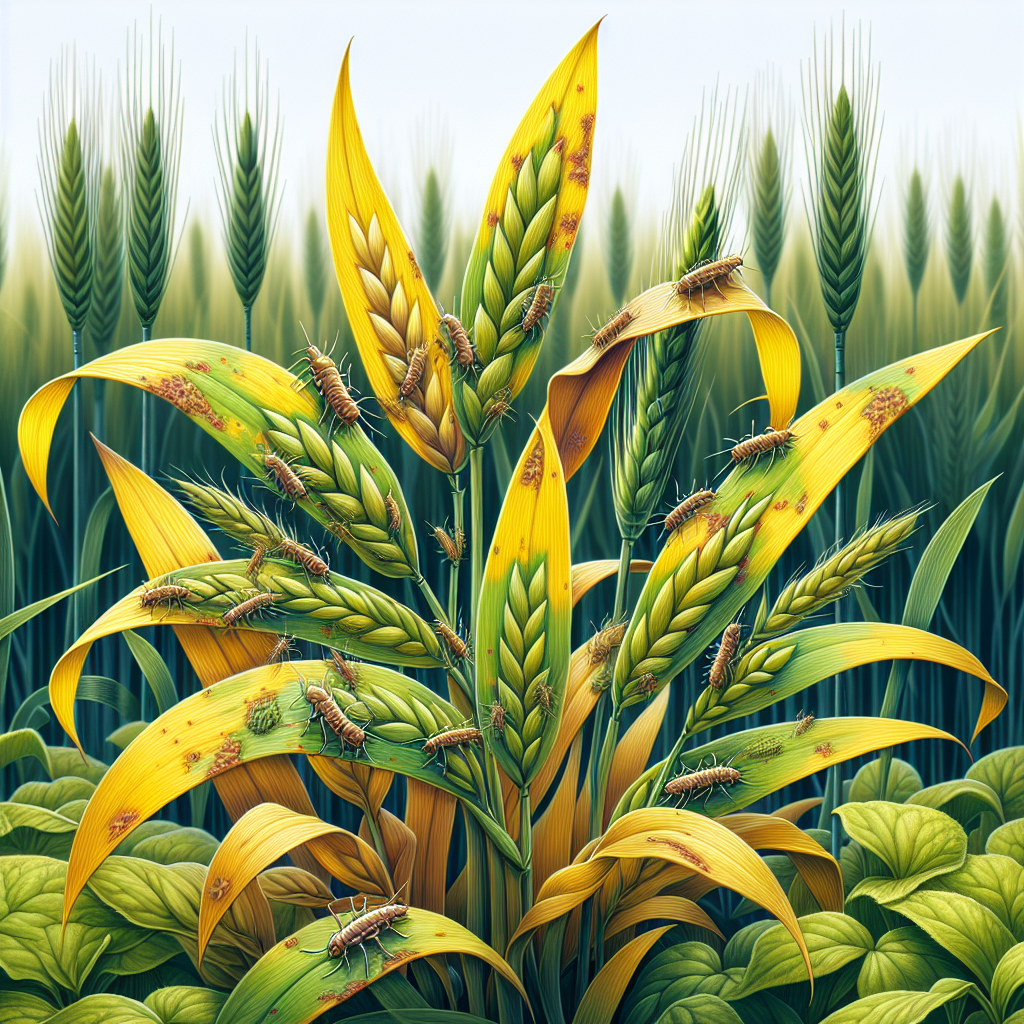
Introduction to Barley yellow dwarf virus
Barley yellow dwarf virus (BYDV) stands as one of the most economically devastating viral diseases affecting cereal crops worldwide. First identified in the early 20th century, BYDV belongs to the Luteoviridae family and comprises several strains including PAV, MAV, RMV, and RPV, each with varying host ranges and symptom severity. Primarily transmitted by aphids in a persistent manner, the virus infects over 100 grass species, with barley, wheat, oats, and rye being prime targets.
Farmers face yield losses ranging from 10-30% in mild infections to over 70% in severe outbreaks, particularly in cool, temperate regions. The virus disrupts phloem transport, leading to characteristic yellowing and stunting. Early detection and integrated management are crucial, as no curative treatments exist. This comprehensive guide equips agricultural professionals with diagnostic tools, lifecycle insights, organic control strategies, and long-term prevention tactics to safeguard Barley crops and maintain profitability. Understanding BYDV's biology enables proactive defense against this persistent threat. For more on small farm resilience, check this insightful blog post.
Identifying Symptoms & Damage
Accurate diagnosis of BYDV hinges on recognizing its distinctive symptoms, which vary by host, strain, growth stage, and environmental conditions. In barley, initial signs appear 10-20 days post-infection as yellowing of the flag leaf tips and margins, progressing inward to create a straw-yellow band. Leaves may curl upward or roll, with severe cases showing purple-reddish discoloration in cooler temperatures.
Stunting is a hallmark: infected plants are 20-50% shorter, with reduced tillering and smaller heads. Mature plants exhibit 'dwarfing,' barren or shriveled grains, and empty rachises. Yield impacts include fewer kernels per spike, lower seed weight, and poor test weight. Differentiate BYDV from nutrient deficiencies like nitrogen shortage (uniform yellowing) or rusts (pustules present). Aphid presence—wingless forms on undersides—confirms suspicion; send samples for ELISA or PCR testing.
In wheat, symptoms mimic barley but with more pronounced reddening. Oats show severe mosaic and streaking. Damage escalates with early infection: tillering-stage attacks slash yields most. Economic thresholds: 5-10% symptomatic plants warrant action. Scout fields weekly from fall planting, focusing edges near volunteer grains or corn fields, common virus reservoirs.
Lifecycle and Progression of Barley yellow dwarf virus
BYDV lacks a soil phase or seed transmission; aphids drive its epidemiology. Over 25 aphid species vector it, with bird cherry-oat aphid (Rhopalosiphum padi), grain aphid (Sitobion avenae), and rose-grain aphid (Rhopalosiphum maidis) most efficient. Transmission is circulative-persistent: aphids acquire virus in 1-2 hours feeding on infected phloem, retain lifelong (up to 30 days), but don't pass transovarially.
Lifecycle aligns with aphid generations: fall migrants from grasses infect winter cereals, spring colonizers amplify in crops. Virus incubates 7-14 days in plants before symptoms. Progression: systemic spread via phloem limits to new growth post-infection. No latent period in aphids, enabling rapid epidemics. Overwintering occurs in perennial grasses, volunteer cereals, and mild-climate cereals. Peak spread in cool (50-70°F), windy conditions favoring aphid flights.
Strains differ: PAV most virulent on barley, MAV on oats. Secondary spread within fields via winged aphids. Harvest residues host viruliferous aphids, perpetuating cycles. Breaking this requires synchronized aphid monitoring and intervention.
Environmental Triggers & Risk Factors
BYDV thrives in temperate climates with cool springs (45-65°F) ideal for aphid reproduction. High-risk factors include early-sown fall cereals overlapping aphid flights (September-November), lush nitrogen-fertilized fields attracting aphids, and proximity to grassy weeds or last season's volunteers. Dense plantings (>300 plants/m²) facilitate spread; windbreaks reduce flights but trap aphids.
Mild winters boost overwintering aphids; drought stresses plants, worsening symptoms. Volunteer oats, rye, or wheat serve reservoirs. Tillage delays expose residues, prolonging sources. High aphid thresholds (>10/leaf) predict outbreaks. Climate change extends ranges northward, intensifying risks. Monitor with suction traps or yellow pan traps; regional forecasts guide planting.
Organic Control & Treatment Plans
No chemical cures exist; focus on vector suppression and cultural disruption. Organic strategies emphasize prevention, but acute infestations demand action.
Aphid Management: Deploy natural enemies—ladybugs, lacewings, syrphid flies—via habitat diversification. Insecticidal soaps or neem oil target early colonizers (threshold: 5 aphids/tiller). Pyrethrins for outbreaks, rotated to avoid resistance. Reflective mulches deter alates.
Resistant Varieties: Plant tolerant cultivars like 'Harrington' barley or 'Leggett' oats, reducing losses 50%.
Treatment Timeline:
- Pre-plant: Destroy volunteers, deep plow residues.
- At-planting: Seed treatments with organic azadirachtin.
- Early season: Scout, release predatory mites.
- Mid-season: Rogue infected plants, apply oils.
Biologicals: Beauveria bassiana or entomopathogenic nematodes for soil-dwelling aphids. Companion plantings with clover or yarrow attract beneficials. Mineral oils smother aphids without residues. Integrated plans cut populations 70-90%. For aphids details, see the Barley wiki.
Preventing Barley yellow dwarf virus in the Future
Long-term control integrates cultural, biological, and varietal tactics. Delay fall planting 2-3 weeks to miss peak aphid flights. Use certified, virus-free seed. Rotate with non-hosts like potato or soybeans (2-3 years). Eliminate volunteers and grassy weeds pre-planting.
Winter annuals as barriers reduce influx. Foliar mineral oils at early tillering block transmission (70% efficacy). Monitor aphids via sticky traps; act below thresholds. Breed for tolerance; scout borders first. Clean equipment prevents mechanical spread. Long rotations, diverse landscapes minimize reservoirs. Annual planning, resistant stock yield sustainable protection.
Crops Most Affected by Barley yellow dwarf virus
BYDV strikes grasses hardest: barley (30-70% losses), wheat (10-50%), oats (20-80%), rye (mild). Turfgrasses, pasture ryegrasses suffer. Corn occasionally via rice strain. Forage impacts: reduced quality, persistence. Global toll: billions in losses yearly.