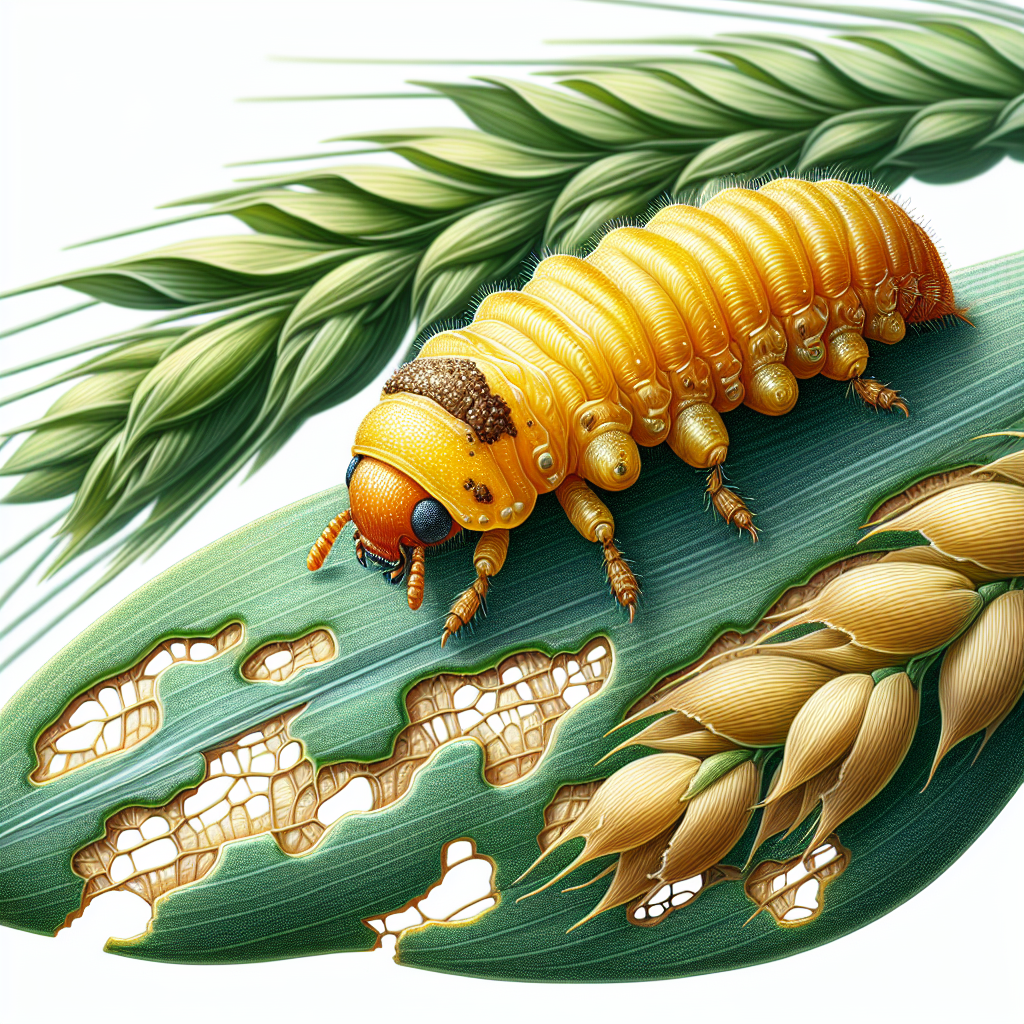
Introduction to Cereal leaf beetle
The cereal leaf beetle, scientifically known as Oulema melanopus, is a notorious pest that poses serious threats to cereal grain production worldwide. First identified in Europe, it was accidentally introduced to North America in the late 1950s and has since established populations across the United States and Canada, particularly in the Midwest and Pacific Northwest. Adult beetles are shiny blue-green, about 4-6 mm long, with reddish legs and antennae, while larvae are yellow-orange grubs covered in slimy brown feces, resembling small slugs. This pest targets young cereal plants during critical growth stages, feeding voraciously on leaf tissue. Damage from cereal leaf beetle can lead to 20-50% yield reductions in severe infestations, making early detection and integrated management essential for farmers growing wheat, barley, and oats. Understanding its biology and implementing timely controls can protect harvests and maintain profitability in grain farming operations.
Identifying Symptoms & Damage
Recognizing cereal leaf beetle damage is crucial for timely intervention. Adult beetles create narrow, longitudinal feeding slits along leaf blades, often starting from the leaf tip. These slits appear as ragged edges, but adults cause minimal damage compared to larvae. Larval feeding is the primary concern: young grubs chew parallel to the leaf veins, skeletonizing the tissue between veins and leaving only the epidermis and veins intact. Severely damaged leaves look like sheer fabric, with large, whitish transparent areas. In heavy infestations, larvae may clip leaf tips entirely, stunting plant growth.
Look for the characteristic 'fecal shield' on larvae—a protective coating of their own slimy excrement that makes them slippery and hard to dislodge. Damage is most evident from tillering to flag leaf stages, when plants are most vulnerable. Yellowing, wilting, or premature senescence follows extensive skeletonization, reducing photosynthetic capacity and grain fill. Yield losses correlate directly with defoliation levels: 25% defoliation might cause 10-15% yield drop, escalating to over 40% with 50%+ defoliation. Differentiate from other pests like flea beetles (which create shot-hole damage) or leaf-feeding caterpillars (which consume larger irregular patches). Scout fields weekly, checking 20-30 plants per 10 acres, focusing on field margins where beetles first invade. For more on Spring Pest Patrol: Organic AI Strategies to Shield Your Crops from Common Invaders, explore advanced monitoring techniques.
Lifecycle and Progression of Cereal leaf beetle
The cereal leaf beetle completes one to two generations per year, depending on climate. Adults overwinter in field debris, hedgerows, or under leaf litter, emerging in early spring (March-April in temperate regions) when cereals are at the 2-3 leaf stage. Females lay orange-yellow eggs in rows of 1-4 on leaf undersides, producing 200-800 eggs over 4-6 weeks. Eggs hatch in 3-7 days into tiny grubs that pass through four instars over 2-3 weeks, growing to 8 mm.
Larvae feed aggressively for 10-20 days before dropping to the soil to pupate in earthen cells 2-5 cm deep. Pupation lasts 5-10 days, yielding new adults by late May-June. These summer adults feed minimally, mate, and lay eggs for the second generation (in warmer areas). Second-generation larvae peak in July-August, pupating to overwintering adults by fall. Total lifecycle: 30-60 days. Population dynamics favor warm, dry springs; cold snaps or heavy rain disrupt egg hatch and larval survival. Understanding this progression allows precise timing of controls—target eggs/young larvae for best efficacy.
Environmental Triggers & Risk Factors
Cereal leaf beetle thrives in moderate climates with temperatures of 20-30°C (68-86°F) and low humidity, which enhance adult dispersal and larval survival. Infestations spike after mild winters, as overwintering adults survive better above -10°C. Fields near overwintering sites like grassy borders or previous cereal stubble are high-risk. Continuous cereal monocultures exacerbate outbreaks, as beetles prefer these hosts. No-till or reduced tillage preserves pupal stages in soil, increasing next-season pressure.
Early planting exposes tender tillers to peak adult emergence, while dense stands hinder natural enemies. Nitrogen-rich soils promote lush foliage attractive to gravid females. Drought stress weakens plants, amplifying damage impact. Regional outbreaks often follow southerly winds carrying adults from southern latitudes. Monitor weather data: prolonged warm spells (>25°C for 2 weeks) signal egg-laying surges. Crop rotation with non-hosts like corn or soybeans reduces risk by 70-90%. Assess field history—prior infestations predict recurrence.
Organic Control & Treatment Plans
Organic management emphasizes prevention and biological controls. Cultural practices: Rotate cereals with peas or legumes to break lifecycle; destroy residues post-harvest via deep plowing. Plant resistant varieties like 'RonL' wheat or 'Hays' barley, which deter oviposition.
Biological controls: Conserve natural enemies—tachinid parasitoids (Cotesia plutellae), predaceous ground beetles, and ladybugs attack eggs/larvae. Release ladybugs if needed, but prioritize habitat. Encourage birds with perches. Mechanical: Hand-collect adults in small fields; vacuum larvae early morning when cool. Edge treatments with row covers protect margins.
Organic-approved sprays: Apply neem oil (azadirachtin) at egg hatch (neem disrupts molting); insecticidal soaps smother larvae (reapply after rain). Pyrethrum or spinosad targets young larvae—scout for 15-20% defoliation threshold. BTK (Bacillus thuringiensis) ineffective against beetles. Time applications at egg hatch (400 degree-days base 10°C). Integrate: trap crops like early oats lure beetles away. Monitor with yellow sticky traps (10/acre). For detailed scouting, see wheat profiles.
Preventing Cereal leaf beetle in the Future
Long-term prevention hinges on integrated pest management (IPM). Delay planting 1-2 weeks to miss peak adult flight, reducing egg pressure by 50%. Use trap strips of susceptible varieties to concentrate beetles for destruction. Tillage buries pupae, cutting next-year emergence 60-80%. Promote biodiversity: interplant with clover or marigold to boost predators.
Resistant cultivars are key—choose those certified by regional extension services. Field sanitation: mow borders, eliminate volunteer cereals. Monitor overwintering sites pre-planting. Threshold-based spraying prevents unnecessary applications. Educate on early scouting: examine 100 stems/10 acres, treat if >1 larva/stem or 20% defoliation. Track populations via apps for hyper-local alerts. Rotate with sorghum or fallow periods. Long-term, select fields with good drainage to minimize pupal survival in wet soils. Annual IPM audits ensure sustained low populations.
Crops Most Affected by Cereal leaf beetle
Cereal leaf beetle primarily attacks small grains. Wheat (Triticum aestivum) suffers most, with spring and winter varieties equally vulnerable; flag leaf damage slashes yields. Barley (Hordeum vulgare) sees skeletonized tillers reducing malt quality. Oats (Avena sativa) impacted during boot stage, causing lodging. Rye (Secale cereale) moderately affected but more tolerant. Occasional damage to corn seedlings and wild grasses like brome serves as reservoirs. Forage grasses rarely economic issue. Grains beyond milk stage resist heavy damage. Focus protection on these core hosts for effective management.