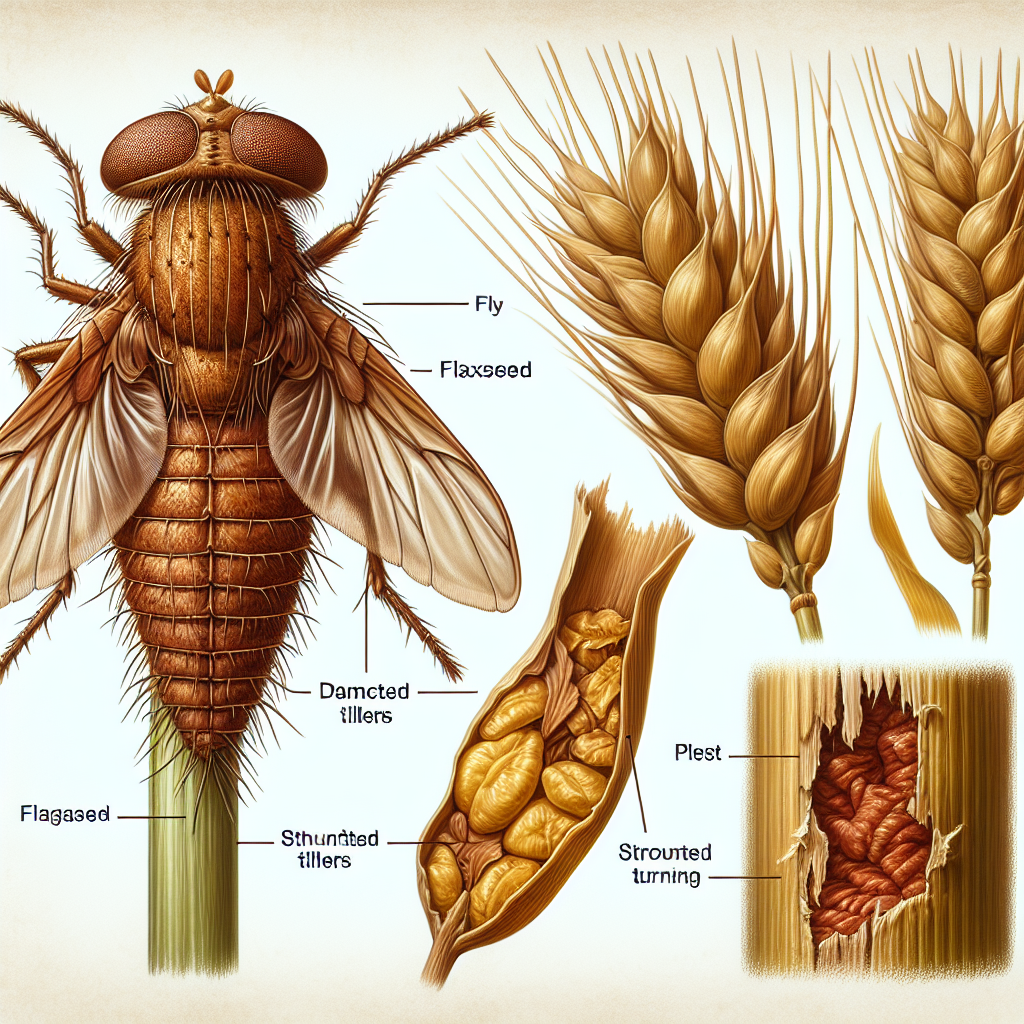
Introduction to Hessian fly
The Hessian fly, scientifically known as Mayetiola destructor (Say), ranks among the most destructive pests targeting cereal crops worldwide, particularly in wheat-growing regions of North America, Europe, and Asia. First identified in the United States during the late 18th century—rumored to have arrived with Hessian mercenaries during the Revolutionary War—this small gall midge has plagued farmers for over two centuries. Adult flies measure just 2-3 mm long, with females distinguished by their bright red abdomen and black body, while males are slightly smaller and duller.
Despite its diminutive size, the Hessian fly inflicts massive economic damage, with historical outbreaks reducing wheat yields by up to 40% or more in severe cases. Larvae feed at the base of young plants, injecting toxins that disrupt nutrient flow, leading to stunted growth, dead hearts, and plant lodging. This pest thrives in temperate climates, completing multiple generations per season synchronized with crop growth stages. Understanding its biology is crucial for effective integrated pest management (IPM), as chemical controls often fall short against its cryptic lifecycle. For small-scale and commercial growers alike, proactive scouting and resistant varieties form the backbone of defense. Recent studies from agricultural extensions emphasize delaying planting and crop rotation as primary strategies, potentially cutting infestation rates by 70-90%.
Identifying Symptoms & Damage
Accurate diagnosis hinges on recognizing Hessian fly-specific symptoms, which mimic nutrient deficiencies or other stresses like fusarium head blight or wheat streak mosaic virus. Early infestations appear as 'dead hearts' in seedlings: central leaves turn yellow, wither, and die while outer leaves remain green. Affected plants exhibit dark green, thickened, and upright tillers—a classic 'Hessian fly rosette' formation contrasting normal floppy growth.
As larvae mature, stems weaken at the crown, causing plants to lodge or break at soil level, especially post-rain or wind. Inspect bases for flaxseed-shaped puparia (0.5-1 mm, mahogany-brown), often clinging to sheaths or crowns. Damage peaks during fall and spring generations, with tillering plants most vulnerable. Yield losses correlate directly with infestation density: 10 puparia per plant can slash yields by 20-30%, while 50+ lead to total stand failure.
Differentiate from cutworms (which sever stems cleanly) or aphids (which cause honeydew and sooty mold). Dig up suspect plants, wash roots, and check for white-to-orange maggots or puparia under magnification. Field scouting involves pulling 20-30 plants per 10 acres weekly from emergence to jointing, noting puparia counts. Digital tools and extension apps now aid rapid ID, boosting accuracy for non-experts.
Lifecycle and Progression of Hessian fly
Hessian fly's multivoltine lifecycle—typically 2-5 generations annually—aligns tightly with host phenology, complicating control. Overwintering puparia ('flaxseeds') reside at the crown-soil interface, enduring cold via diapause triggered by short days and cool temperatures (<10°C). Adults emerge in fall (first generation) or spring (subsequent ones), with females laying 20-50 eggs per clutch on upper leaf surfaces near bases.
Eggs hatch in 3-7 days into tiny white-orange larvae that migrate to crowns, feeding and injecting saliva toxins for 2-3 weeks. Larvae then pupate on plants, forming characteristic flaxseeds. Summer generations (toxicogenic) cause severe damage; overwintering ones (non-toxicogenic) less so. Full cycle spans 25-40 days at 20°C, with development halting below 7°C or above 30°C.
Peak flights coincide with wheat growth stages: fall tillering for G1, spring jointing-flag leaf for G2-G4. Monitoring with yellow sticky traps or degree-day models (base 8.3°C) predicts emergence. Puparia persist years in soil, serving as reservoirs—up to 80% viability after 2 years. This resilience demands long-term rotation strategies.
Environmental Triggers & Risk Factors
Hessian fly outbreaks surge under specific conditions: cool, moist fall weather (10-20°C, >70% RH) favors egg-laying and larval survival, while mild winters allow higher puparial survival (90%+ above -10°C). Early-planted wheat (before mid-October in southern U.S.) exposes tillers during peak adult activity, amplifying risk. Volunteer wheat or barley residues harbor puparia, with densities exceeding 100/m² triggering epidemics.
Soil types influence persistence: no-till fields retain 2-3x more puparia than tilled ones due to surface protection. Proximity to last season's wheat (<400m) increases infestation 5-fold via adult dispersal (up to 5km). Climate change extends generations in warming regions, per USDA models projecting 10-20% yield hits by 2050. Compounding factors include stem rust or drought-stressed plants, which larvae exploit more readily.
Risk mapping integrates GIS data on prior infestations, planting dates, and weather forecasts. High-risk zones warrant delayed seeding or trap crops like rye.
Organic Control & Treatment Plans
Organic management prioritizes cultural, biological, and mechanical tactics, avoiding synthetics. Resistant Varieties: Plant H-26 or Tam-110 wheat lines, offering 70-95% antibiosis (larval mortality) or tolerance (reduced damage). Rotate with non-hosts like corn or soybeans for 2+ years, dropping puparia 90%.
Delayed Planting: Shift seeding 2-3 weeks post-fly-free date (local extension calendars), evading G1. Trap strips of rye or early wheat lure adults, tilled post-oviposition. Tillage: Moldboard plowing buries puparia >10cm, killing 80% via desiccation. Biologicals shine: predatory beetles (Bembidion spp.) and parasitic wasps (Homoporus destructor) provide 20-40% natural control; enhance with floral borders (yarrow, thyme).
Organic Sprays: Neem oil or spinosad at egg hatch (scout-timed) suppresses 50-70%, safe for pollinators. Silica or kaolin clay barriers deter oviposition. Integrated plans combine: scout weekly, till residues, rotate, plant resistant seed. Spring Pest Patrol: Organic AI Strategies to Shield Your Crops from Common Invaders details tech-aided timing. Threshold: 5-10 puparia/plant triggers action. Success stories show 85% yield protection.
Preventing Hessian fly in the Future
Long-term prevention builds resilient systems. Scout fields pre-plant, destroying volunteers. Use certified seed from low-infestation areas. Crop rotation (wheat-soybeans-corn) breaks cycles, with cover crops like clover suppressing soil puparia via allelopathy. Clean equipment prevents puparia spread.
Soil health boosts tolerance: balanced fertility (adequate K, low N) yields sturdy crowns. Monitor forecasts for fly-free dates, adjusting via Why Timing Kills Small Farm Profits - And How AI Task Scheduling Saves Your Harvests. Destroy residues promptly post-harvest. Resistant varieties evolve via breeding; check regional trials. Farm-level IPM reduces populations 95% over 3 years, per extension data.
Crops Most Affected by Hessian fly
Primarily attacks wheat (all types: winter, spring, durum), with losses up to $50M annually in U.S. Great Plains. Barley suffers moderate damage; rye and triticale show tolerance. Occasionally infests oats, rye, and wild grasses, but wheat comprises 95% impact. Susceptible varieties like soft red winter wheat face highest risk; avoid in endemic zones.