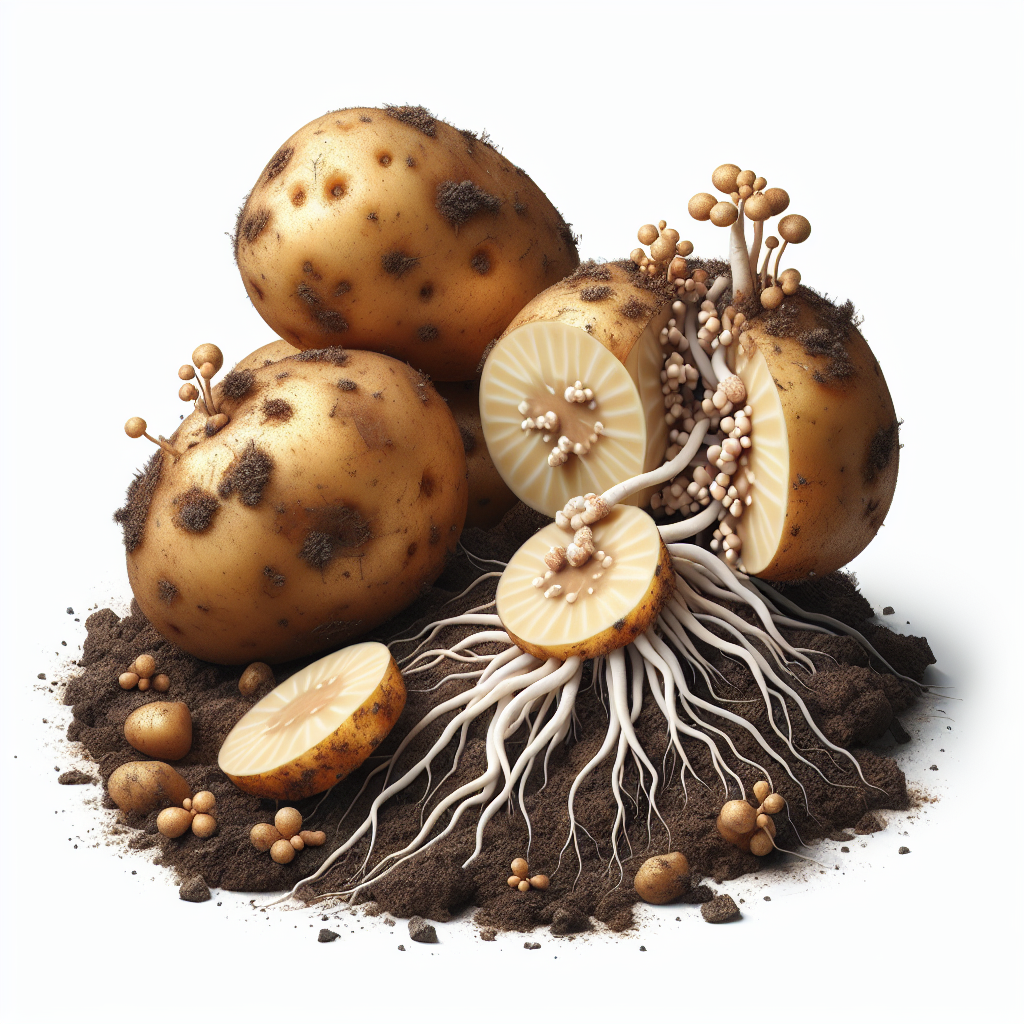
Introduction to Tuber and root rots
Tuber and root rots represent one of the most destructive groups of diseases in agriculture, primarily caused by soilborne pathogens such as oomycetes like Pythium and Phytophthora, fungi including Rhizoctonia and Fusarium, and occasionally bacteria. These pathogens thrive in poorly drained, waterlogged soils, attacking the roots and tubers of crops, leading to rot, nutrient uptake failure, and eventual plant collapse. Globally, they cause billions in losses annually, particularly in humid, warm climates where irrigation is common.
Unlike foliar diseases, tuber and root rots are insidious because symptoms often appear only after significant underground damage has occurred. They spread via contaminated soil, water, tools, and infected planting material. Early detection is challenging, making prevention critical. This guide provides professional-grade diagnostic criteria, lifecycle insights, organic management strategies, and prevention tactics tailored for small farms and commercial growers. By understanding these rots, farmers can protect high-value crops like potato, sweet potato, cassava, carrots, and more. For more on integrated farm management, check this insightful piece on Soil Health Mastery: 5 Proven Strategies for Small Farms to Build Fertile Ground Without Breaking the Bank.
Identifying Symptoms & Damage
Diagnosis begins with observing above-ground signs, but confirmation requires root inspection. Initial symptoms include stunted growth, yellowing lower leaves (chlorosis), and wilting during the day, even with adequate moisture. Plants may appear healthy until suddenly collapsing, a hallmark of advanced root damage.
Root and Tuber Symptoms:
- Water-soaked, dark brown to black lesions on roots that progress to mushy rot.
- Stringy, shredded roots (e.g., Pythium) or firm, sunken lesions with white mycelium (Rhizoctonia).
- Tubers show firm, corky brown rot internally, often with cavities; soft, foul-smelling decay indicates bacterial involvement.
- Secondary symptoms: Pinkish spore masses (Fusarium) or grayish fuzz (Rhizoctonia sclerotia).
Diagnostic Tips:
- Gently dig up suspect plants; healthy roots are white and fibrous.
- Slice tubers longitudinally to check for vascular discoloration or rot.
- Differentiate from root-knot nematodes by absence of galls; from drought by soil moisture presence.
- Lab confirmation via culturing or PCR is ideal for precise pathogen ID.
Damage escalates rapidly in warm, wet conditions, reducing yields by 30-100%. In carrot fields, forked roots and cavities render produce unmarketable; in potatoes, entire hills rot in storage.
Lifecycle and Progression of Tuber and root rots
These pathogens persist as oospores (Pythium/Phytophthora), sclerotia (Rhizoctonia), or chlamydospores (Fusarium) in soil for years, surviving drought and flooding. Infection starts at wounds or root tips when zoospores swim in saturated soil, encysting and penetrating.
Progression Stages:
- Dormancy: Resting structures in soil or debris.
- Activation: Germination triggered by root exudates and moisture.
- Infection: Hyphae colonize cortex, advancing to vascular tissue.
- Symptom Expression: 7-14 days post-infection; wilting as xylem clogs.
- Spread: Via splashing water, tools, or runoff; airborne spores rare.
- Survival: New resting structures form on decayed tissue.
Cycles repeat multiple times per season in perennials. In annuals like onion, post-harvest tuber rot continues in storage if infected.
Environmental Triggers & Risk Factors
Optimal conditions: 20-30°C soil temps, prolonged leaf wetness >48 hours, pH 5.5-6.5. Key triggers:
- Overwatering/Irrigation: Furrow or overhead systems splash inoculum.
- Poor Drainage: Compacted clay soils retain water.
- Crop Rotation Deficits: Monocropping builds pathogen load.
- Contaminated Inputs: Infected seed tubers/pieces, unsterilized media.
- Weed Hosts: Many pathogens alternate on wild plants.
- High Nitrogen: Lush roots susceptible to invasion.
Risk amplifies in tropical/subtropical zones or during rainy seasons. Acidic soils favor Phytophthora; neutral-alkaline suit Fusarium.
Organic Control & Treatment Plans
No cure exists post-infection; focus on suppression. Integrated organic plans:
Cultural Controls:
- Remove and destroy infected plants immediately.
- Solarize soil: Clear plastic 4-6 weeks summer (kills 70-90% pathogens).
Biologicals:
- Trichoderma spp. or Bacillus subtilis drenches (colonize roots, outcompete pathogens).
- Mycorrhizal fungi enhance root vigor.
Organic Amendments:
- Compost teas (aerated, 1:10 dilution) weekly.
- Mustard biofumigant cover crops release suppressive volatiles.
- Lime to pH 6.8-7.2 against Phytophthora.
Treatment Protocol:
- Improve drainage: Raised beds, tile drains.
- Apply biofungicides at planting/transplant.
- Foliar calcium (1-2% weekly) strengthens cell walls.
- Hydrogen peroxide (3%) soil drench for emergencies.
Monitor with bait tests (e.g., radish seedlings). Rotate with non-hosts like wheat or corn.
Preventing Tuber and root rots in the Future
Prevention outperforms treatment:
- Site Selection: Well-drained slopes; avoid low spots.
- Resistant Varieties: Choose certified, disease-free seed (e.g., Yukon Gold potato).
- Rotation: 3-4 years with grasses/Brassicas.
- Planting Practices: Hill up soil; avoid deep planting.
- Irrigation: Drip only; water mid-day.
- Sanitation: Disinfect tools (10% bleach); footbaths.
- Cover Crops: Sudangrass or sorghum sudan for biofumigation.
- Mulching: Organic matter moderates soil moisture.
Annual soil tests guide amendments. Scout weekly; early intervention saves crops.
Crops Most Affected by Tuber and root rots
Primarily root/tuber crops:
- Solanaceae: Potato (blackleg, soft rot), tomato.
- Apiaceae: Carrot, onion, garlic.
- Convolvulaceae: [Sweet potato](/wiki/sweet potato).
- Euphorbiaceae: Cassava.
- Araceae: Taro.
- Others: Beet, radish, ginger, yam, peanuts.
Perennials like avocado (Hass Avocado) suffer crown rot variants. Losses peak in intensive systems.