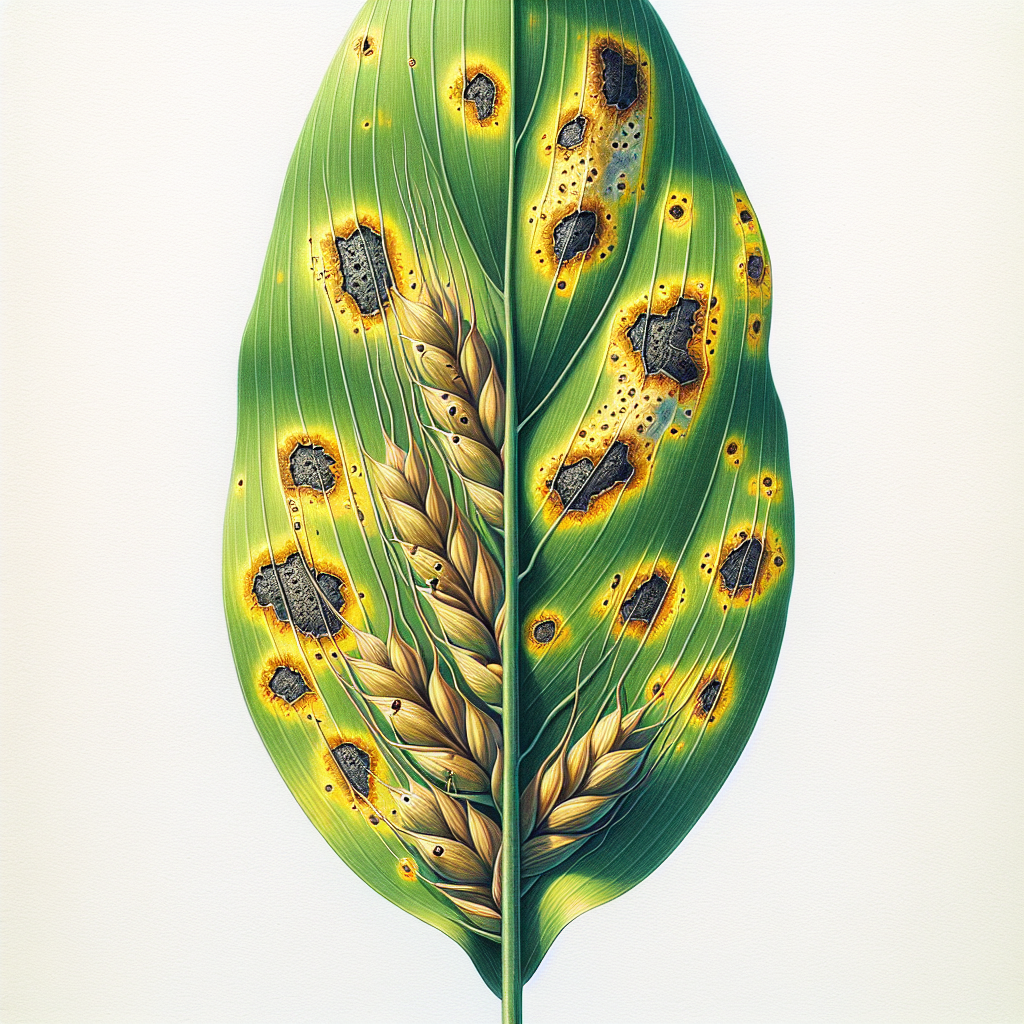
Introduction to Septoria Leaf Blotch
Septoria Leaf Blotch, often simply called Septoria, stands as one of the most destructive foliar diseases in global agriculture, particularly devastating to wheat (/wiki/wheat) and tomato (/wiki/tomato) crops. Caused by fungal pathogens in the Septoria genus—primarily Septoria tritici on cereals and Septoria lycopersici on solanaceous plants—this disease triggers angular to irregular leaf spots that coalesce, leading to premature defoliation, reduced photosynthesis, and yield losses up to 50% in severe cases. First identified in the 19th century, Septoria has evolved into a polycyclic disease, capable of multiple infection cycles per season, making it a persistent challenge for farmers worldwide.
In wheat-growing regions like the U.S. Great Plains, Europe, and Australia, Septoria tritici blotch (STB) accounts for significant economic impacts, with global losses estimated at billions annually. On tomatoes, especially in humid production areas, it manifests as leaf blotch, compromising fruit quality by shading lower leaves and promoting secondary infections. Understanding this disease's biology is crucial for small-scale and commercial growers alike, as early detection and integrated management can preserve harvests. This guide provides professional-grade diagnostics, organic treatments, and prevention strategies optimized for practical farm application. For more on fungal leaf diseases, explore our comprehensive leaf spot diseases resource.
The pathogen thrives in temperate climates but adapts to diverse hosts, underscoring the need for crop-specific approaches. Unlike bacterial spots, Septoria lesions often bear pycnidia—tiny fruiting bodies releasing spores in wet conditions—distinguishing it under magnification. With climate change prolonging wet springs, proactive scouting has never been more vital. Check out this insightful blog on Why Misidentifying Plants Costs Small Farms Thousands - And How AI Camera Diagnosis Fixes It Fast to enhance your diagnostic accuracy.
Identifying Symptoms & Damage
Accurate diagnosis begins with recognizing Septoria's hallmark symptoms, which emerge 7-21 days post-infection. Initial signs appear on lower leaves as small, water-soaked spots evolving into circular to irregular lesions 1/10 to 1/2 inch in diameter. These spots feature tan to light gray centers surrounded by dark brown to black borders, often with tiny black pycnidia visible as dots within the lesion—key for confirmation.
On wheat, lesions start at the leaf base, progressing upward in a 'bottom-up' pattern, with yellow halos in early stages. Severe infections cause blighting, where spots merge, turning entire leaves straw-colored and necrotic. Stems and glumes may show minor spotting, but foliage bears the brunt, reducing grain fill by intercepting light. Yield impacts are profound: 10-20% losses from lower leaf infection escalate to 40-50% if flag leaves are hit before grain fill.
Tomato symptoms mirror this: lower leaves develop spots with grayish-white centers and dark margins, leading to yellowing and drop. Fruit remains unaffected directly, but defoliation exposes them to sunscald, dropping marketable yield by 30-60%. Differentiate from early blight (concentric rings) or Alternaria leaf spot (larger, velvety spots). Use a 10x hand lens for pycnidia; lab confirmation via culturing confirms Septoria spp.
Damage quantification ties to timing: pre-flowering infections slash yields most. Scout weekly from tillering in cereals or post-transplant in tomatoes, noting 1% severity thresholds for action. Economic thresholds vary: in wheat, treat at 5-10% flag leaf area affected.
Lifecycle and Progression of Septoria Leaf Blotch
Septoria's lifecycle is polycyclic, with 5-15 cycles per season, fueled by abundant pycnidiospores. Primary inoculum overwinters in infected crop residue as pycnidia or stromata, releasing ascospores from pseudothecia in spring rain. Splash dispersal (up to 1m vertically) infects lower leaves during cool, wet periods (10-25°C, >48 hours wetness).
Incubation spans 10-21 days, yielding new pycnidia extruding cirri (spore masses) in dew or rain, spreading within canopy via rain splash. Optimal conditions: 15-20°C, 12+ hours leaf wetness. In tomatoes, conidia from debris infect via wounds or stomata. Progression accelerates in dense canopies, moving upward as lower leaves senesce.
Epidemics peak mid-season, driven by microclimate. Unlike powdery mildew, no wind dispersal; rain is key. Residue survival: 6-18 months, longer in no-till. Interrupt via residue management.
Environmental Triggers & Risk Factors
Septoria flourishes in moderate temperatures (10-25°C) with extended leaf wetness from rain, dew, or irrigation. High humidity (>85%) and poor air circulation in dense plantings amplify spread. Risk spikes post-heading in wheat or fruit set in tomatoes.
Key factors: susceptible varieties, narrow-row spacing (<7.5 inches), excessive nitrogen favoring lush foliage, and continuous host cropping. Cool, wet springs (e.g., >200 hours leaf wetness April-May) trigger outbreaks. Clay soils retaining moisture heighten vulnerability. Minimize via wider rows, balanced fertility, and rotation with non-hosts like corn.
Climate models predict increased frequency with wetter springs; monitor forecasts.
Organic Control & Treatment Plans
Organic management integrates cultural, biological, and OMRI-listed fungicides. Start with sanitation: destroy residue by tillage or flaming. Apply copper-based sprays (e.g., Bordeaux mix) at 7-14 day intervals from first symptoms, up to 4-6 applications. Efficacy: 50-70% suppression.
Biologicals like Bacillus subtilis (Serenade) or Trichoderma spp. colonize leaves, outcompeting Septoria (30-50% control). Potassium bicarbonate raises leaf pH, inhibiting germination. Rotate with sulfur burns in greenhouses.
Plan: Scout weekly; apply at 5% severity. Tank-mix with hort oils for adhesion. In wheat, seed treatments with Pseudomonas reduce seedlings. For tomatoes, stake for airflow. Combine with resistant varieties like 'Jupiter' wheat or 'Mountain Merit' tomato. Track via apps for timing.
Preventing Septoria Leaf Blotch in the Future
Prevention hinges on IPM: plant resistant cultivars (e.g., Stagonospora-resistant wheat), rotate 2-3 years with soybeans or brassicas. Space rows 12+ inches, prune lower tomato leaves. Foliar fertilizers with silicon bolster defenses. Bury residue deeply; use cover crops like clover to suppress splash.
Timing: Sow after peak rain windows; avoid overhead irrigation. Mulch reduces splash. Monitor with sticky traps for early warning. Long-term: breed for multi-gene resistance. Annual rotation cuts inoculum 90%.
Crops Most Affected by Septoria Leaf Blotch
Primary hosts: wheat (all classes), barley (/wiki/barley), tomatoes, and related solanaceae like potato (/wiki/potato) and eggplant (/wiki/eggplant). Wheat suffers most economically, with STB endemic in humid zones. Tomatoes rank second in vegetable pathosystems. Minor: oats, rye, wild grasses. Non-hosts: monocots like corn, dicots like legumes.