Introduction to Taro beetles
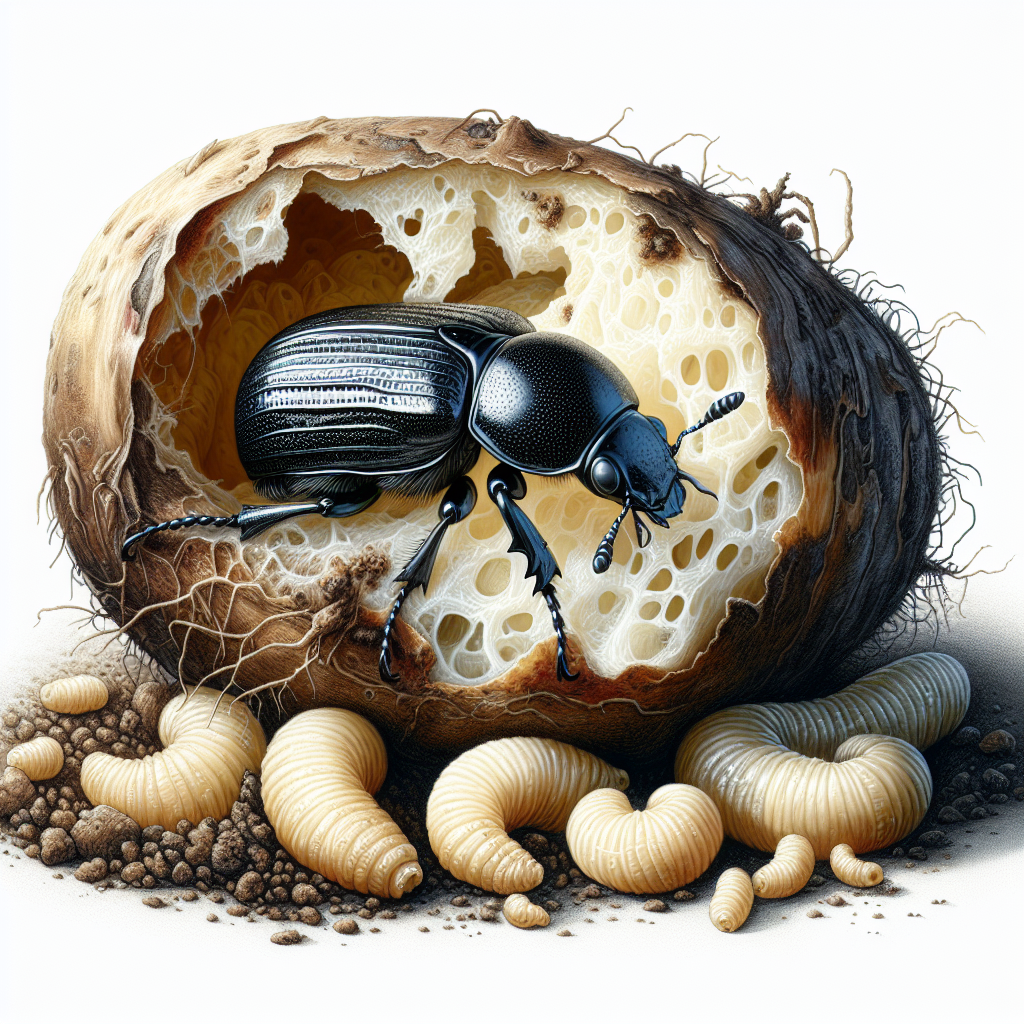
Taro beetles, scientifically known as Papuana species (primarily Papuana huebneri and Papuana sordida), represent one of the most devastating pests for taro (Colocasia esculenta) and other aroid crops worldwide. These scarab beetles, belonging to the family Scarabaeidae, are notorious for their subterranean larvae (grubs) that feed voraciously on corms and roots, often causing complete crop loss if unmanaged. First identified in Papua New Guinea, taro beetles have invaded tropical and subtropical regions including Hawaii, Fiji, Samoa, the Cook Islands, parts of Africa like Nigeria and Ghana, and even parts of Australia and the Caribbean. Adult beetles are shiny black, oval-shaped insects measuring 10-15 mm long, while their creamy-white C-shaped grubs can grow up to 25 mm and persist in soil for months.
The economic impact is staggering: in Pacific Island nations, taro beetles cause annual losses exceeding millions in taro production, a staple food providing up to 50% of carbohydrates in some diets. Unlike surface-feeding pests like aphids or slugs, taro beetles operate below ground, making early detection challenging. This guide provides professional-grade diagnostic tools, lifecycle insights, and proven organic management strategies to protect your taro fields. For small farms, timely intervention is key, as highlighted in Spring Pest Patrol: Organic AI Strategies to Shield Your Crops from Common Invaders. Understanding their biology enables proactive defense, preserving yields and soil health in humid, tropical agroecosystems.
Identifying Symptoms & Damage
Diagnosing taro beetle infestations requires keen observation of both above- and below-ground signs. Early symptoms mimic nutrient deficiencies or root rot, but key indicators set them apart. Plants exhibit sudden wilting, stunting, and yellowing of older leaves, progressing from the outside in. Affected taro stools produce fewer leaves, with petioles becoming soft and collapsing. In severe cases, entire plants topple over, exposing chewed corm tissue.
Excavate around suspect plants to confirm: grubs leave irregular tunnels filled with frass and rotting plant material. Corms show galleries riddled with galleries up to 2 cm wide, often with a foul odor from secondary bacterial infections. Adult beetles emerge at night, feeding on foliage edges, creating notched leaves with skeletonized areas. Unlike wireworms, taro beetle grubs have distinct raster patterns—two rows of short spines on their final abdominal segment.
Damage thresholds vary: 5-10 grubs per plant cause 30-50% yield loss, while over 20 grubs lead to total failure. Scout weekly during rainy seasons by digging 30x30x30 cm soil samples from 10-20 points per hectare. Differentiate from root-knot nematodes by the absence of galls and presence of live grubs. Use a hand lens to spot eggs (1-2 mm, milky-white clusters under leaf litter) or pupae (comma-shaped, reddish-brown) in moist soil.
Lifecycle and Progression of Taro beetles
Taro beetles complete their lifecycle in 4-8 months, depending on temperature and soil moisture, with multiple overlapping generations per year in tropics. Adults (10-15 mm, black, shiny) live 1-3 months, emerging from soil post-rainfall. They fly nocturnally to lights or taro patches, feeding minimally on leaves before mating. Females oviposit 20-60 eggs in soil cracks near roots, preferring pH 5.5-7.0 and temperatures 25-30°C.
Eggs hatch in 7-14 days into 1st instar grubs (3-5 mm), progressing through three instars over 2-6 months. Grubs are the primary damage phase, tunneling into corms and roots, molting as they grow to 25 mm. They overwinter or aestivate deep (30-50 cm) in dry periods, resuming feeding when moist. Pupation occurs in earthen cells 10-20 cm deep, lasting 10-20 days, yielding new adults that remain soil-bound until triggered by rain.
Peak activity aligns with wet seasons: eggs/young grubs in early rains, mature grubs mid-season, adults late-season. In Hawaii, 3-4 generations occur annually. Monitor with pheromone traps or soil cores; populations explode without predators like ground beetles or parasitic wasps.
Environmental Triggers & Risk Factors
Taro beetles thrive in warm (24-32°C), humid (>70% RH) environments with poorly drained, organic-rich soils. Heavy rainfall (>1500 mm/year) triggers adult emergence and egg-laying, as saturated soils ease grub movement. Flooded or waterlogged fields amplify damage, mimicking Phytophthora but driven by beetle proliferation. Continuous taro monoculture exceeds 80% infestation risk within two seasons.
Risk spikes in new plantings from infested soil or floodwater carrying adults. Weedy fields harbor beetles, while compacted soils trap grubs near roots. Climate change extends wet seasons, boosting populations. High-nitrogen fertilizers promote lush growth, attracting females. Proximity to wild aroids like elephant ear taro serves as reservoirs. Assess risk via soil type (loamy > clay), elevation (<500m), and history of termites or other soil pests indicating loose substrate.
Organic Control & Treatment Plans
Organic management emphasizes integrated pest management (IPM) layering cultural, biological, and botanical tactics. Cultural: Rotate taro with non-hosts like cassava or sweet potato for 2-3 years, fallow with mucuna cover crops to starve grubs. Plant in raised beds (30-50 cm) with good drainage; avoid flooding. Hand-dig and destroy grubs during scouting, crushing eggs under leaves.
Biological: Introduce entomopathogenic nematodes (Heterorhabditis bacteriophora) at 10^9 IJs/ha during young grub stages—apply evenings in wet soil for 70-90% mortality. Encourage predators like carabid beetles and birds via hedgerows. Bacillus thuringiensis (Bt) subspecies israelensis targets grubs when injected into corm wounds.
Botanicals & Barriers: Neem oil (azadirachtin 0.03%) drenches soil weekly for 4 weeks, repelling adults and disrupting larval molts. Plant marigold (Tagetes spp.) borders as trap crops and nematicide. Solarize soil (black plastic, 6 weeks summer) kills 80% grubs/eggs. For outbreaks, chitin-based grub baits (e.g., milky spore) lure and infect.
Treatment Timeline: Scout weekly; at 5 grubs/plant, apply nematodes + neem. Reapply post-rain. Monitor 4-6 weeks; combine with clean planting material from hot-water treated corms (50°C, 30 min). Expect 60-85% control with consistency.
Preventing Taro beetles in the Future
Prevention hinges on exclusion and habitat disruption. Source disease-free corms from certified nurseries, hot-water dip (49-52°C, 20-30 min) to kill eggs/grubs without damaging viability. Quarantine new plantings 50m from wild aroids. Use 1m gravel/mulch barriers around fields to deter crawling adults.
Maintain clean cultivation: remove plant debris post-harvest, deep plow (30 cm) to expose grubs to sun/predators. Intercrop with garlic (garlic) or turmeric for repellents. Monitor with yellow sticky traps or pheromone lures (check biweekly). Build soil biodiversity via compost, mycorrhizae, and Thai basil companions to foster antagonists. Long-term, breed resistant taro varieties like 'Mana' or 'Ono'. Annual risk audits via soil sampling prevent reinfestation.
Crops Most Affected by Taro beetles
Taro (Colocasia esculenta, including elephant ear taro) suffers most, with 100% susceptibility. Other aroids like elephant ears (Xanthosoma sagittifolium), tannia, and malanga face similar devastation. Minor hosts include yam, cassava, and sweet potato, though damage is lighter. Wild hosts sustain populations. In Pacific agriculture, taro losses ripple to food security; diversify with less-vulnerable crops like banana or pineapple.