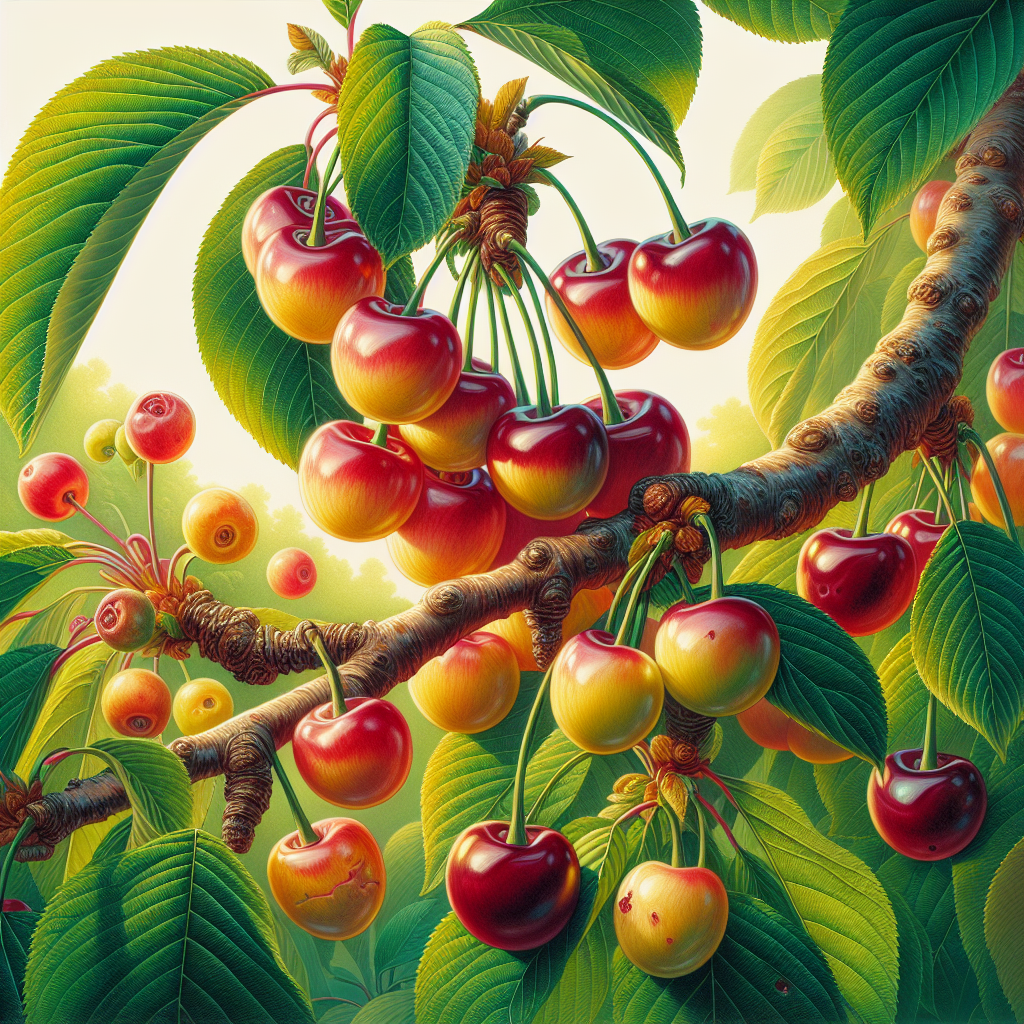
Introduction to Sweet cherry
Sweet cherry (Prunus avium), commonly known as sweet cherry, is one of the most beloved fruit crops worldwide, celebrated for its sweet, succulent fruits used in fresh markets, processing, and desserts. Native to Europe and western Asia, it thrives in temperate climates with cold winters and mild summers, making regions like the Pacific Northwest in the US, Chile, and Turkey major production hubs. However, sweet cherry cultivation is fraught with challenges, including susceptibility to a range of pests like aphids, codling moth, and birds, as well as diseases such as brown rot and powdery mildew. Yield losses can exceed 50% without proper management, underscoring the need for vigilant monitoring and integrated pest management (IPM).
As a deciduous tree reaching 10-30 feet tall, sweet cherry requires well-drained soils, full sun, and 800-1500 chill hours for optimal fruit set. Popular cultivars include Bing Cherry and Rainier Cherry, which dominate commercial production. Economic impact is substantial, with global output valued at over $3 billion annually, yet small-scale growers often struggle with inconsistent yields due to unaddressed pest pressures. This guide equips agricultural professionals with definitive strategies for diagnosis and control. For more on optimizing small farm operations, check out Why Timing Kills Small Farm Profits - And How AI Task Scheduling Saves Your Harvests.
Identifying Symptoms & Damage
Accurate diagnosis is the cornerstone of effective sweet cherry management. Key symptoms include:
Pest Damage: Aphid infestations cause curled leaves, sticky honeydew, and sooty mold. Codling moth larvae bore into fruits, leaving frass-filled entry holes and brown tunnels, rendering fruits unmarketable. Cherry fruit fly punctures appear as dimples with maggot tunnels inside. Birds peck at ripening fruits, causing ragged wounds.
Disease Symptoms: Brown rot manifests as fuzzy gray-brown lesions on blossoms, twigs, and fruits, often leading to mummified fruits. Powdery mildew shows white powdery coatings on leaves and shoots. Bacterial canker causes sunken, gummy lesions on trunks and branches, with amber ooze.
Physiological Damage: Cracking occurs in humid conditions post-rain, splitting fruit skins. Sunburn scorches exposed fruit sides, turning them brown and leathery.
Inspect trees weekly from bud break through harvest. Use a hand lens to spot mites or eggs. Damage thresholds: 5% fruit infestation warrants action. Differentiate from similar issues in peach or plum crops, which share pests like oriental fruit moth.
Lifecycle and Progression of Sweet cherry
Understanding the lifecycle of sweet cherry pests and diseases is crucial for timing interventions. Sweet cherry trees follow a predictable annual cycle:
Dormancy (Winter): Trees rest, vulnerable to bacterial canker and scale insects overwintering on bark.
Bud Break to Bloom (Spring): Aphids and mites colonize new growth. Blossom blight from brown rot peaks here.
Fruit Set and Development (Early Summer): Codling moth eggs hatch, larvae enter fruits. Cherry fruit flies emerge 2-3 weeks pre-harvest.
Ripening and Harvest (Mid-Late Summer): Birds and fruit flies intensify damage. Post-harvest, shot-hole borers attack stressed trees.
Leaf Fall (Fall): Fungal spores spread via leaves.
Pest lifecycles: Codling moth completes 2-3 generations per season, with first flight at 50% pink bud stage. Aphids reproduce parthenogenetically, exploding populations in warm weather. Diseases like powdery mildew sporulate in high humidity. Monitor with pheromone traps and degree-day models for precise predictions.
Environmental Triggers & Risk Factors
Sweet cherry health hinges on environmental balance:
Climate: Excessive rain during bloom triggers brown rot; drought stresses trees, inviting borers. Ideal: 60-80°F days, <70% humidity.
Soil Issues: Poor drainage leads to root rot. Heavy clay or waterlogged soils amplify Phytophthora.
Cultural Practices: Over-fertilization with nitrogen promotes succulent growth attractive to aphids. Narrow row spacing (12-15 ft) reduces airflow, fostering mildew.
Regional Risks: In humid areas like Michigan, fungal diseases dominate; arid California sees mites and sunburn.
Risk factors include monoculture orchards without cover crops, lack of irrigation uniformity, and delayed pruning. Climate change exacerbates extremes, increasing secondary invasions by Japanese beetles.
Organic Control & Treatment Plans
Organic management emphasizes prevention and biological controls:
Cultural Controls: Prune for airflow; remove mummies. Mulch to suppress weeds and retain moisture.
Biological Agents: Release lacewings for aphids, predatory mites for spider mites. Bacillus thuringiensis (Bt) targets codling moth larvae.
Organic Sprays: Neem oil or insecticidal soap for aphids/mites. Surround WP (kaolin clay) deters fruit flies and birds. Copper fungicides for bacterial canker, sulfur for powdery mildew.
IPM Plan:
- Scout weekly.
- Trap crops like cherry tomato divert flies.
- Apply treatments at thresholds: e.g., 1 codling moth/trap/week.
Treatment timeline: Dormant oil for scales, petal fall sprays for worms. Rotate materials to prevent resistance. For spring strategies, see Spring Pest Patrol: Organic AI Strategies to Shield Your Crops from Common Invaders. Yields can improve 20-30% with consistent IPM.
Preventing Sweet cherry in the Future
Prevention is more cost-effective than cure:
Site Selection: Choose well-drained slopes, rootstocks like Gisela for size control and disease resistance.
Sanitation: Destroy prunings, fallen fruit. Netting excludes birds.
Resistant Varieties: Select cultivars like 'Sweetheart' with late maturity to dodge early flies.
Monitoring Tools: Pheromone traps, weather stations for disease models.
Soil Health: Test pH (6.0-7.0), amend with compost. Companion plant with garlic to repel aphids.
Long-term: Diversify with apple interplants. Annual audits reduce recurrence by 70%.
Crops Most Affected by Sweet cherry
While sweet cherry is the primary host, associated pests and diseases impact:
- Stone fruits: Peach, plum share codling moth, brown rot.
- Pome fruits: Apple, pear face aphids, powdery mildew.
- Others: Grapes for birds, strawberry for fruit flies.
Orchard proximity amplifies cross-infestation. Quarantine tools prevent spread.