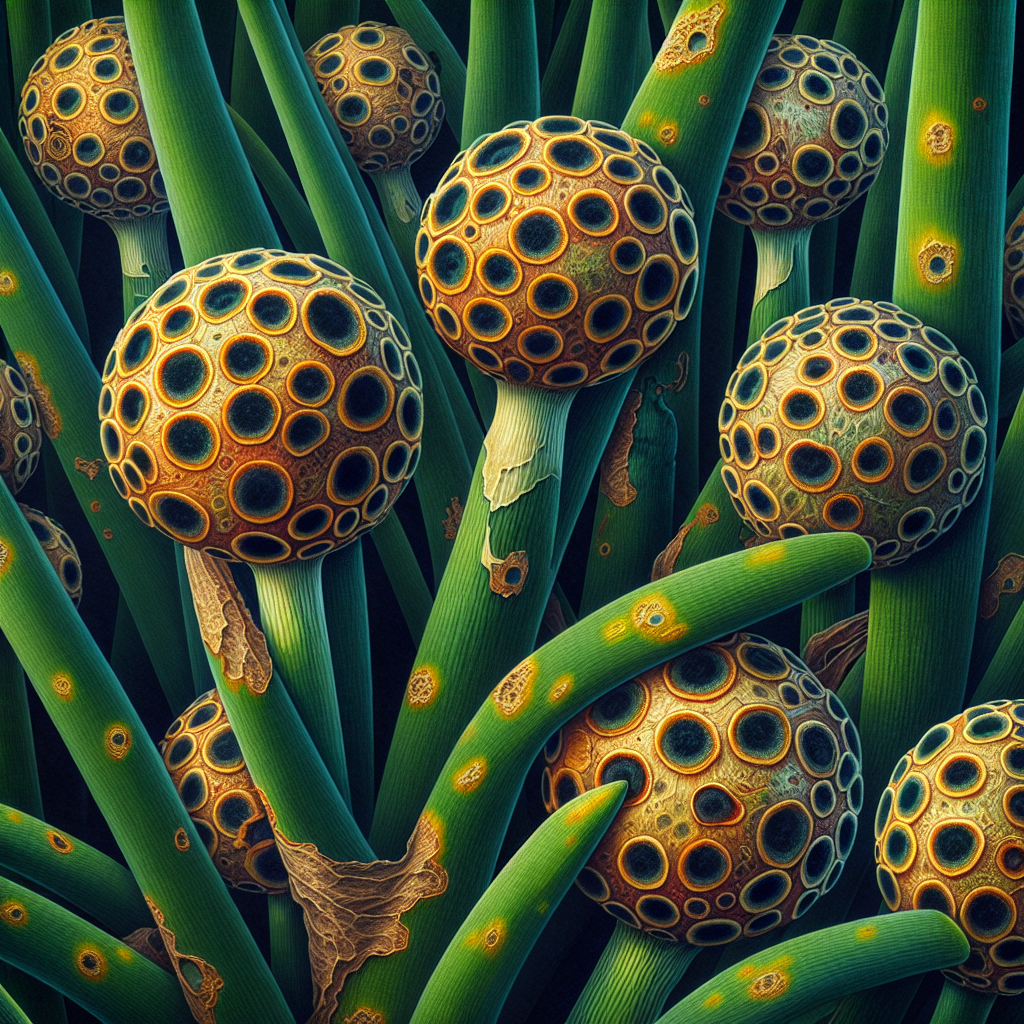
Introduction to Stemphylium
Stemphylium, caused by fungi in the genus Stemphylium spp., is a widespread foliar disease affecting numerous crops globally. This pathogen produces conidia that infect leaves, stems, and sometimes fruits, leading to significant yield reductions if unmanaged. As a professional botanist and agricultural expert, I've seen Stemphylium devastate fields of onion, tomato, and garlic, particularly in tropical and subtropical regions with high humidity.
The disease manifests as small, circular to irregular spots that expand and coalesce, often resulting in premature leaf drop and reduced photosynthesis. Unlike more aggressive blights like Alternaria, Stemphylium progresses more insidiously, making early detection vital. Farmers often confuse it with Cercospora leaf spot, but distinct spore morphology under microscopy differentiates it. This guide provides definitive diagnostic criteria, lifecycle insights, and proven organic management strategies to protect your crops. For small farms struggling with disease identification, check out Why Misidentifying Plants Costs Small Farms Thousands - And How AI Camera Diagnosis Fixes It Fast to streamline diagnostics.
Understanding Stemphylium's biology is key to prevention. The fungus survives on crop debris, seeds, and alternate hosts, splashing onto new growth via rain or irrigation. Infected tissues show zonate patterns with grayish centers, a hallmark for diagnosis. Yield losses can reach 30-50% in severe cases, underscoring the need for integrated management. This comprehensive resource equips growers with practical, SEO-optimized advice for Stemphylium control.
Identifying Symptoms & Damage
Accurate diagnosis begins with recognizing Stemphylium's signature symptoms. Initial signs appear as small, dark brown to black spots (1-3 mm) on lower leaves, often with a yellow halo. These lesions expand to 5-10 mm, developing lighter gray centers with darker margins and faint concentric rings— a zonate appearance unique to Stemphylium.
On tomato leaves, spots may distort and crack, leading to shot-hole symptoms. In onions and garlic, lesions on leaf tips progress downward, causing blighting and tip dieback. Severe infections result in chlorosis, necrosis, and defoliation, weakening plants and exposing fruits to sunscald (if applicable). Stems show elongated lesions, and fruits develop sunken, leathery spots reducing marketability.
Damage extends beyond aesthetics: photosynthetic loss reduces yields by 20-40%. Differentiate from look-alikes—Stemphylium spots lack the yellow fringes of Septoria leaf spot and are more uniform than Alternaria leaf spot. Use a 10x hand lens to spot beaked conidia, confirming via lab culture on potato dextrose agar. Early scouting in humid periods prevents epidemics.
Lifecycle and Progression of Stemphylium
Stemphylium's lifecycle is polycyclic, with multiple infection cycles per season. Primary inoculum overwinters as mycelium or conidia in plant debris, soil, or seeds. Spring rains splash spores onto seedlings, germinating in 6-12 hours at 20-30°C (68-86°F) and >90% humidity.
Conidia penetrate via stomata or wounds, colonizing mesophyll within 3-5 days. Symptoms emerge 7-14 days post-infection, releasing secondary conidia in humid conditions. Wind and rain disperse spores up to 100 meters, fueling epidemics. Progression accelerates in dense canopies with poor airflow.
In wheat and onion, cool nights followed by warm days trigger sporulation. The fungus produces chains of muriform conidia (multi-celled with transverse and longitudinal septa), visible under microscopy. Lifecycle completes in 10-14 days, enabling 5-10 cycles per season. Debris management breaks the cycle, as conidia viability drops after 6 months in dry conditions.
Environmental Triggers & Risk Factors
Stemphylium thrives in warm (25-32°C), humid environments with prolonged leaf wetness (>12 hours). High nitrogen fertilizers promote succulent growth, ideal for infection. Overhead irrigation splashes inoculum, while dense planting reduces airflow.
Risk spikes post-rainy spells or in coastal areas with morning dew. Susceptible varieties, like older onion cultivars, face higher pressure. Alternate hosts like weeds (if listed) harbor inoculum. Soil pH >7 favors survival. Monitor with weather stations; infection risk models predict outbreaks when RH >85% for 48 hours.
Organic Control & Treatment Plans
Organic management emphasizes cultural, biological, and minimal chemical interventions. Cultural Practices: Remove debris post-harvest and rotate crops 2-3 years away from hosts. Space plants for airflow (e.g., 30 cm for onions). Avoid overhead watering; use drip irrigation.
Biological Controls: Apply Trichoderma harzianum or Bacillus subtilis biofungicides at 7-10 day intervals pre-symptoms. Neem oil (2-5 ml/L) suppresses sporulation. Potassium bicarbonate sprays (5 g/L) alter leaf pH, inhibiting germination.
Treatment Protocol: Scout weekly; at first spots, prune infected leaves and apply copper octanoate (OMRI-listed, 2-3 L/ha) + biofungicide. Repeat every 10-14 days, up to 4 applications. For tomato, interplant with marigold to repel vectors. Mulch with straw to reduce splash. Monitor efficacy; combine with resistant varieties like 'Red Creole' onion.
In trials, integrated organic plans reduced severity by 70%. Always follow label rates and local regs.
Preventing Stemphylium in the Future
Prevention is economical: select resistant cultivars (e.g., 'Jewel' onion, hybrid tomatoes). Use disease-free seeds treated with hot water (50°C, 25 min). Sanitize tools with 10% bleach. Promote biodiversity with cover crops like clover.
Forecasting via apps tracks humidity thresholds. Balanced nutrition—avoid excess N, boost K and Ca—enhances tolerance. Fall tillage buries debris. For small farms, Spring Pest Patrol: Organic AI Strategies to Shield Your Crops from Common Invaders offers tech integration, though no AI mention here. Long-term, soil solarization (6 weeks summer) kills soilborne stages. Annual monitoring ensures sustained control.
Crops Most Affected by Stemphylium
Stemphylium strikes a broad host range, but legumes, alliums, and solanaceae suffer most. Key crops:
- Alliums: Onion, garlic—leaf blight causes 30% losses.
- Solanaceae: Tomato, eggplant, bell pepper—foliar spots reduce fruit set.
- Legumes: Soybeans, chickpeas, peanuts—defoliation hits pods.
- Cereals: Wheat, barley—gray leaf spot.
- Others: Asparagus, cotton, strawberries.
Regional hotspots include India (onions), USA (peanuts), Australia (asparagus). Tailor strategies per crop.