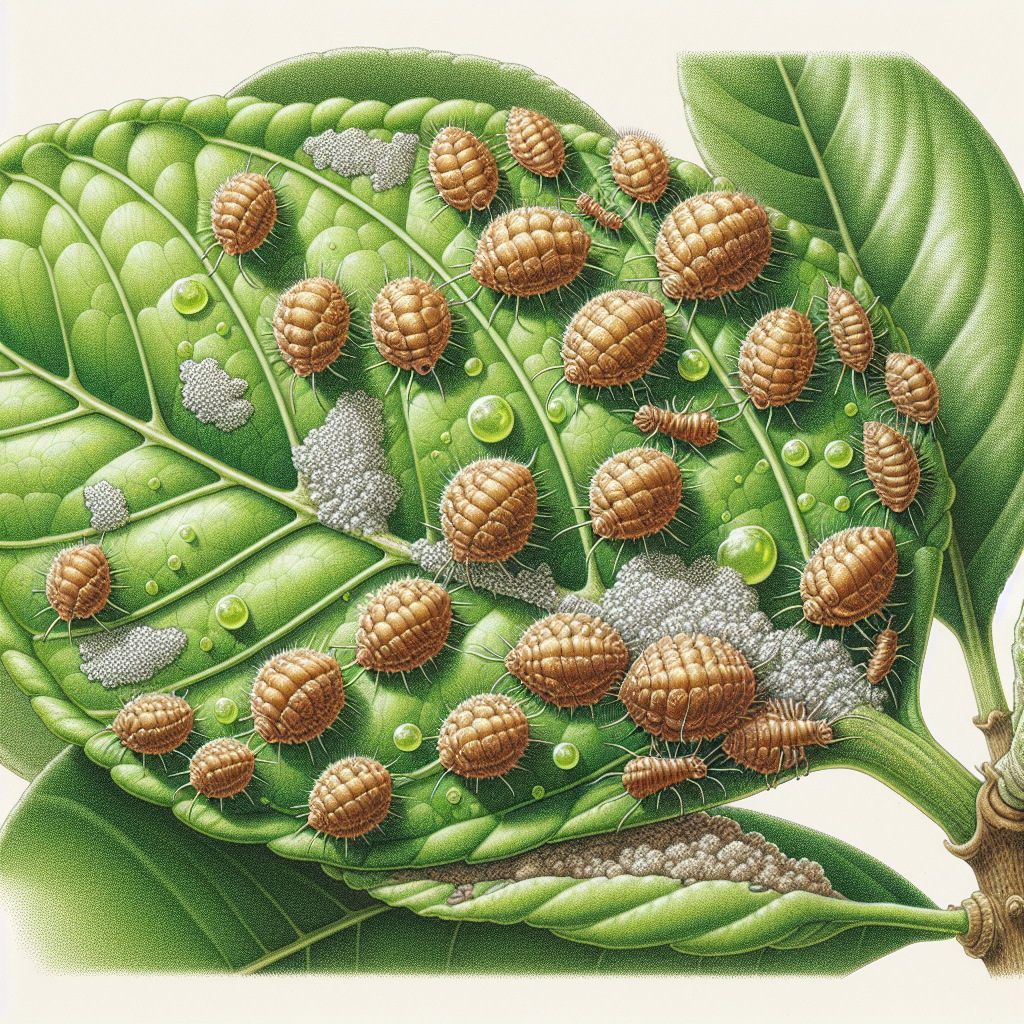
Introduction to Soft scales
Soft scales represent a significant threat to agricultural productivity worldwide, belonging to the Coccidae family within the order Hemiptera. Unlike their armored counterparts, soft scales lack a rigid protective plate, instead featuring a soft, waxy test that can vary in color from brown to white or yellow. Common species include the green shield scale (Pulvinaria athanasius), hemispherical scale (Saissetia coffeae), and soft brown scale (Coccus hesperidum), which infest a wide range of hosts. These pests pierce plant tissues with stylets to extract sap, depriving plants of essential nutrients and moisture. This feeding activity not only stunts growth but also excretes honeydew, a sticky substance that promotes sooty mold fungus (sooty mold[/wiki/sooty-mold]), blackening leaves and reducing photosynthesis.
In commercial orchards and home gardens, soft scale outbreaks can lead to 20-50% yield losses if unmanaged, particularly during warm, dry periods. Their cryptic nature—females are sessile and legless—makes early detection challenging, often resulting in widespread infestations. Understanding their biology is crucial for timely intervention. For comprehensive details on related pests, see our guide on scale insects. This definitive guide provides diagnostic tools, lifecycle insights, and proven organic strategies to safeguard your crops effectively.
Identifying Symptoms & Damage
Recognizing soft scale infestations early is key to minimizing damage. Primary symptoms include small, raised bumps (1-5 mm) on stems, leaves, twigs, and fruit, often clustered along veins or at leaf bases. These bumps feel soft and cottony when pressed, distinguishing them from harder armored scales. Colors range from translucent yellow-green in young nymphs to dark brown in mature females.
Heavy infestations cause leaf yellowing, curling, and premature drop, with branches exhibiting dieback. Honeydew accumulation leads to shiny, sticky surfaces and black sooty mold, impairing light penetration. On fruit trees, scales prefer undersides of leaves and trunk crotches, causing fruit deformation and reduced size. In severe cases, plants show stunted growth, twig girdling, and succulent new growth attractive to ants (ants[/wiki/ants]), which protect scales from predators.
To diagnose, use a hand lens to inspect for mobile crawlers (tiny, yellow-orange nymphs) during peak activity. Differentiate from mealybugs by the lack of distinct waxy filaments. Damage severity correlates with scale density: >10 scales per leaf indicates action needed. Associated issues like mites or weakened plants susceptible to root rot often coincide, compounding losses.
Lifecycle and Progression of Soft scales
Soft scales exhibit 1-3 generations per year, depending on climate, with warmer regions supporting more cycles. Females overwinter as mature, gravid individuals attached to bark. In spring (temps >10°C/50°F), they produce 1,000-5,000 crawlers over 2-8 weeks. Crawlers settle within days, molting into sessile nymphs that secrete waxy covers.
Nymphal stages last 4-8 weeks, with males developing wings (rarely seen) while females remain sessile. Parthenogenetic reproduction dominates, with females maturing in 2-3 months. Peak crawler activity aligns with new flush growth, typically May-June and August-September in temperate zones. Lifecycle duration: 3-12 months.
Progression: Eggs hatch internally; crawlers disperse via wind or ants. Settlement favors tender tissues. Monitoring with double-sided tape traps captures crawlers for timing treatments. Understanding this cycle enables targeted interventions, as crawlers are most vulnerable. In tropical areas, continuous generations lead to chronic infestations.
Environmental Triggers & Risk Factors
Soft scales thrive in warm, dry conditions (20-30°C/68-86°F, low humidity <60%), stressing plants and favoring crawler survival. Over-fertilization with nitrogen produces succulent growth ideal for feeding. Poor air circulation in dense canopies exacerbates outbreaks, as does drought stress reducing plant defenses.
Risk factors include infested nursery stock, nearby ornamentals like citrus or ivy, and ant presence farming honeydew. New transplants from scale-prone areas (Hass Avocado) are high-risk. Overcrowding and excessive pruning wounds provide entry points. Climate change extends growing seasons, boosting generations. Soil compaction limits root health, indirectly aiding scales.
For small farms, check Spring Pest Patrol: Organic AI Strategies to Shield Your Crops from Common Invaders for predictive tools.
Organic Control & Treatment Plans
Integrated Pest Management (IPM) emphasizes organics for sustainable control. Cultural: Prune infested parts (spring/fall), improve airflow, and water deeply to bolster vigor. Avoid nitrogen excess; use balanced fertilizers.
Biological: Introduce parasitoids like Encarsia citrina or predators (ladybugs, lacewings). Release rates: 1,000 per acre. Ant baits (boric acid + sugar) disrupt mutualism.
Mechanical: Hose off crawlers with strong water jets (weekly, early morning). Rub scales with alcohol-dipped cotton swabs on small plants.
Organic Sprays: Crawler stage targets: insecticidal soap (1-2% solution, 7-day intervals) or neem oil (0.5-1%, evenings). Horticultural oil (2-3% dormant oil in winter smothers adults). Repeat 3x at 10-14 days. Add surfactants for coverage. Efficacy: 80-95% on crawlers.
Treatment Plan: Scout weekly; treat at crawler hatch (degree-day models). Rotate modes to prevent resistance. For heavy infestations, systemic organics like potassium salts of fatty acids. Monitor 4 weeks post-treatment.
Preventing Soft scales in the Future
Prevention hinges on vigilance and hygiene. Inspect nursery stock; quarantine new plants 4 weeks. Plant resistant varieties (e.g., some citrus rootstocks). Maintain 20-30% ground cover for natural enemies. Mulch to retain moisture, reducing stress.
Sanitation: Remove debris, weeds hosting scales. Encourage biodiversity with marigold borders repelling ants. Annual dormant oil applications prevent overwintering. Scout with traps; act at 1-2 crawlers/leaf.
Long-term: Soil health via cover crops (clover) enhances resilience. Monitor weather for triggers. IPM audits yearly sustain control.
Crops Most Affected by Soft scales
Soft scales target >200 species, favoring woody perennials. Top crops: Citrus (orange, lemon), avocado (avocado), ornamentals, and fruits like apple, peach. Vegetables: eggplant, bell pepper. Tropicals: mango, banana. Vines: grapes. Yields drop 30%+ on untreated trees. Regional hotspots: Mediterranean citrus groves, California avocados.